Pittsburgh Cemeteries

The Art and Architecture of Death

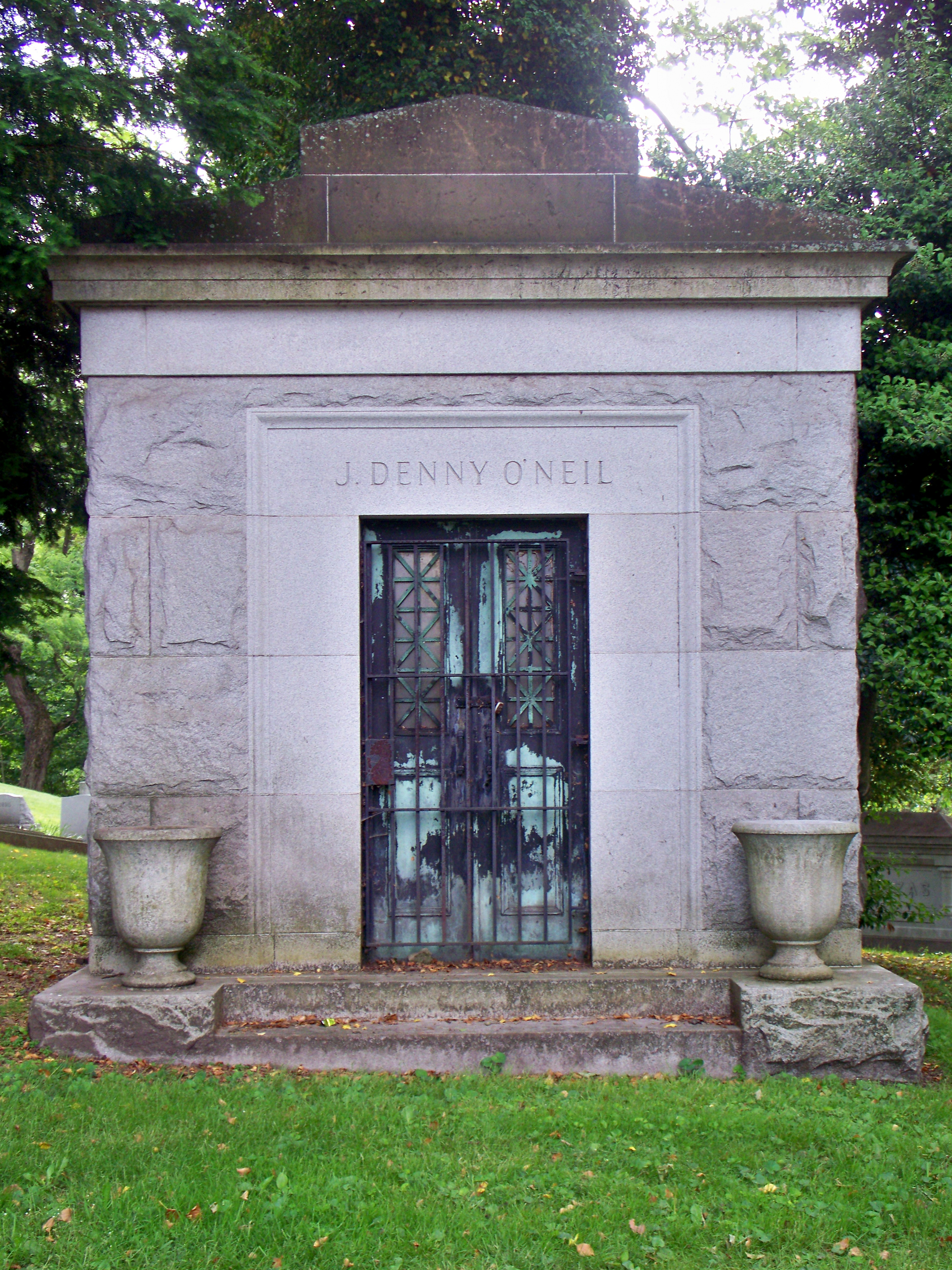
An unusual mausoleum in this unusual cemetery—unusual because its restrained modern-classical style would look at home in other Pittsburgh-area cemeteries, whereas most of the mausoleums here are noticeably different from any standard Pittsburgh style. Cemetery records list a James D. O’Neil (who must be the “J. Denny” of the inscription) as the first interment here; he died in 1915, so that is probably about the date of this mausoleum.
Without the date 1926 on the front, we might be forgiven for supposing this rustic stone vault to be a relic of the Neolithic era. The date, however, is a bit of a mystery: cemetery records list burials here as early as 1889 (and as recent as 1990). Perhaps 1926 is the date of a major reconstruction of the front, and the stonework to either side is earlier.

This mausoleum once had urns flanking the entrance (probably dating from the 1926 construction, if we accept that some of the stonework is earlier), but only the bases remain. The base on the right-hand side is nearly obliterated by the advancing years. Like many mausoleums in this cemetery, it is half underground; and the slope of the drive in front gives us a good indication of the kind of landscape the architects had to deal with.

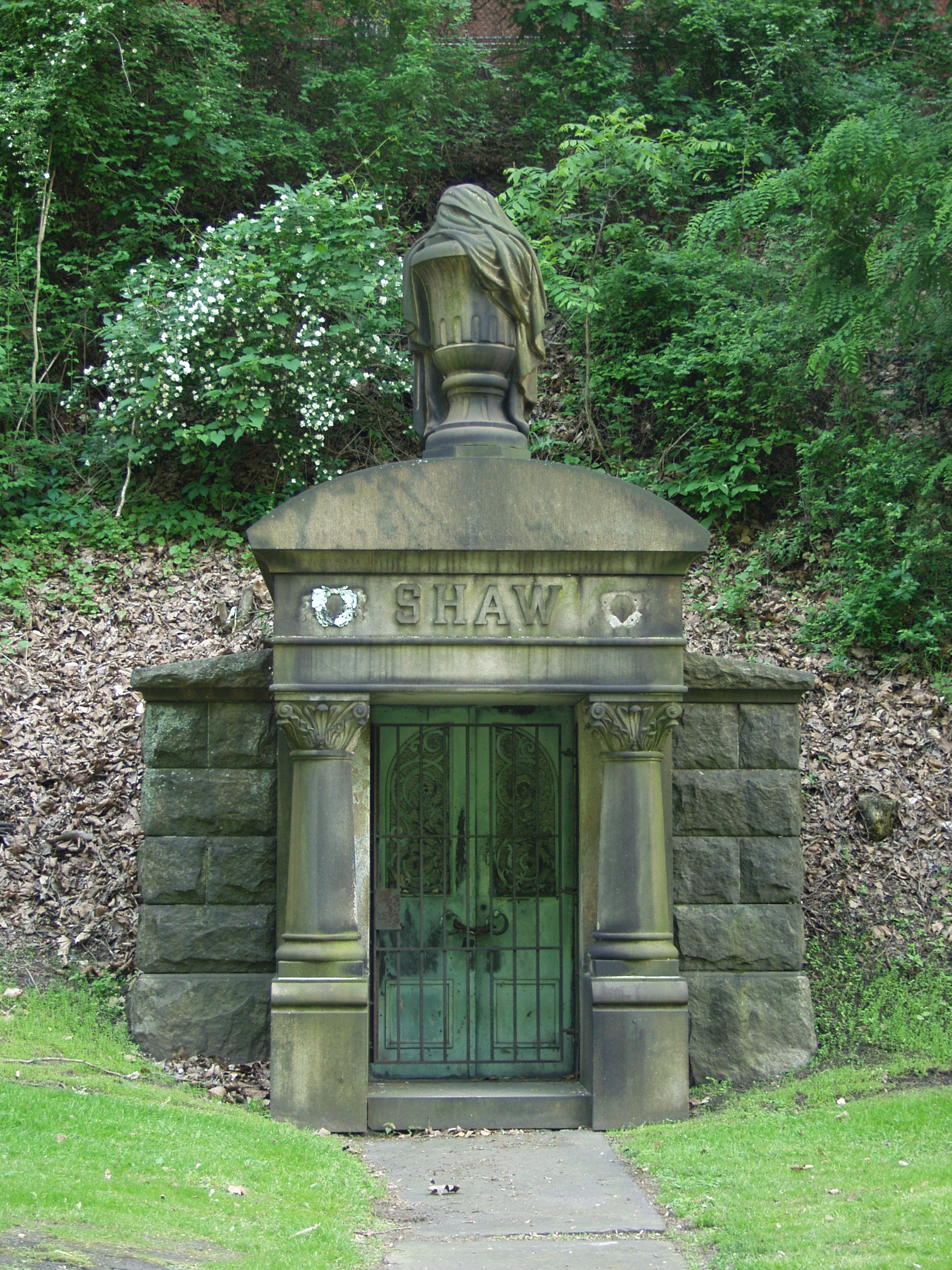
Yet another mausoleum in this cemetery whose style is hard to define; we shall call it Romanesque, because of the rusticated stone, the medieval columns, and the divided arch in the bronze doors. The huge urn on top is almost cartoonish. Two bronze ornaments flanking the inscription have been stolen, probably to be melted down for their trivial worth in metal.

The earliest interment listed here was in 1896, and the most recent in 2001.

Another unusual design from this cemetery. We shall call the style Romanesque because of the prominent round arch and the rusticated stone, but once again the architect has refused to meet our expectations of the Romanesque in the details. You will find nothing quite like it in the Pittsburgh city cemeteries. According to cemetery records, this mausoleum received its first burial in 1883—a few years before the Allegheny County Courthouse opened the floodgates of the Romanesque revival in the Pittsburgh area.