Pittsburgh Cemeteries

The Art and Architecture of Death

DIED
Sept. 18, 1856
In the 56th Yr.
of her age
MARTHA
Wife of
JOSEPH McMURRAY

The influence of printing on grave markers in the 1850s is especially obvious in this one, which, in its broad variety of lettering styles—a different one for each line—looks very much like a printed poster from the same era. Father Pitt cannot quite read the epitaph.

As Father Pitt has mentioned, Ridgelawn Cemetery has the best-preserved collection of stone-fenced family plots in the area. Here is a typical and crowded example.

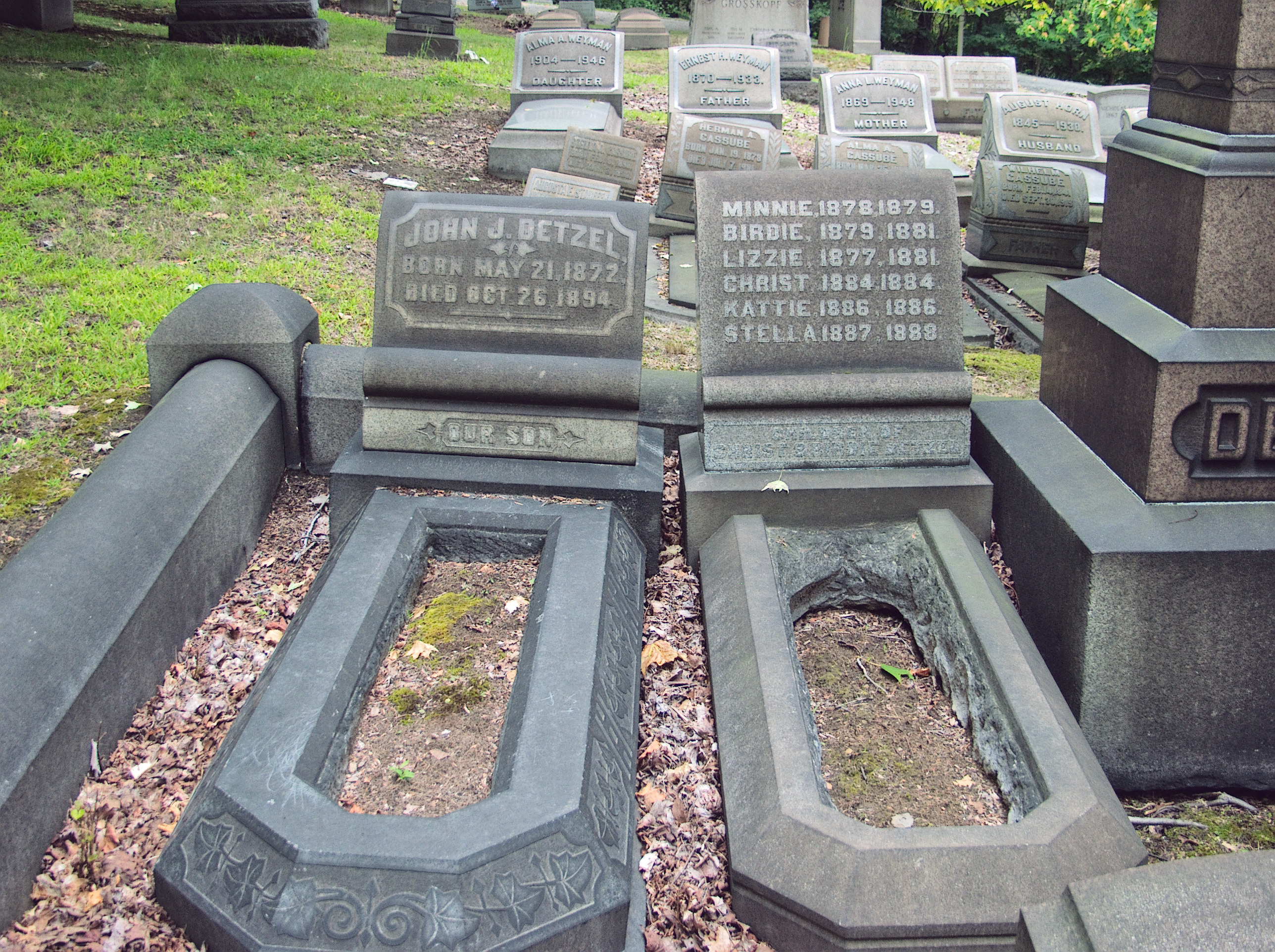
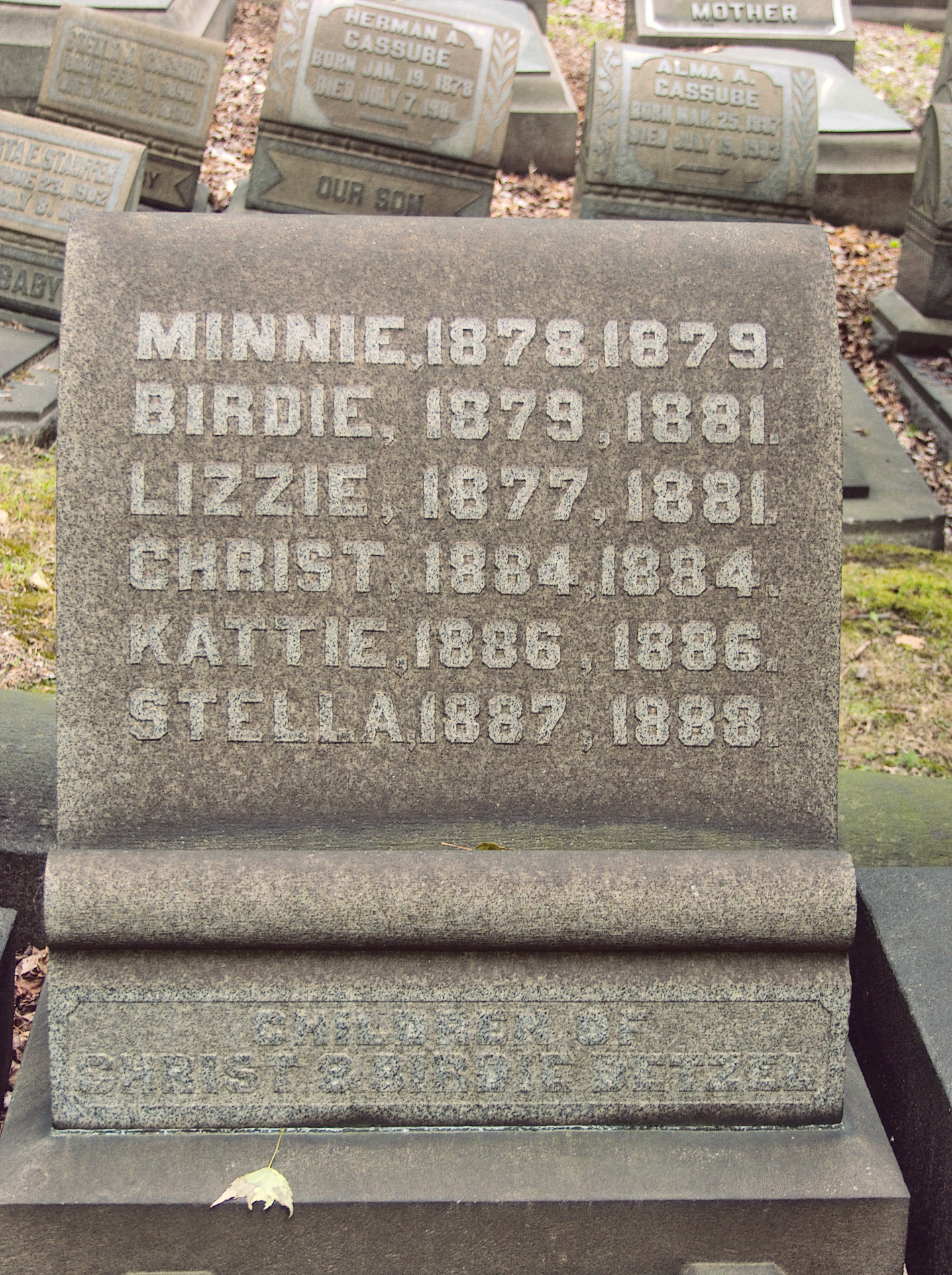
If you should happen to get caught in the middle of a conversation on the Internet in which some ignoramus argues that we do not need to vaccinate against childhood diseases because they were never all that bad, you have old Pa Pitt’s permission to share this picture (which you could do anyway, since it’s released under a CC0 public-domain dedication):

Art Deco was popular only for a few decades in the early and middle twentieth century, and it never became a very popular style for cemetery monuments. But among the wealthy residents of the Homewood Cemetery, a restrained and tasteful Art Deco was quite fashionable in the years from roughly 1930 to 1950. In many cases it takes the form of a streamlining and radical simplification of classical and Gothic styles. Some of these monuments look like pieces of sets from the world’s most somber RKO musical.

In Memory of
BILLINGSLEY MORGAN
Who departed this life
[Marc]h the 7th 1836
[in the —]th year of his age

Here is a pair of tombstones by the same extraordinary folk artist—and, because he actually signed one of them, we know his name: H. Savage. Both are badly damaged, but they form a pair side by side, so old Pa Pitt guesses that the illegible stone marks the resting place of Mrs. Billingsley Morgan. Unlike most Western Pennsylvania tombstones of the 1830s, these are handsomely carved in relief, much like the famous New England tombstones of the colonial era, but without the flying skulls.

Even this unusually artistic and ambitious stonecutter did not sketch out his lettering before beginning the inscription, so that he ran out of space for the name “MORGAN” on Billingsley Morgan’s tombstone.

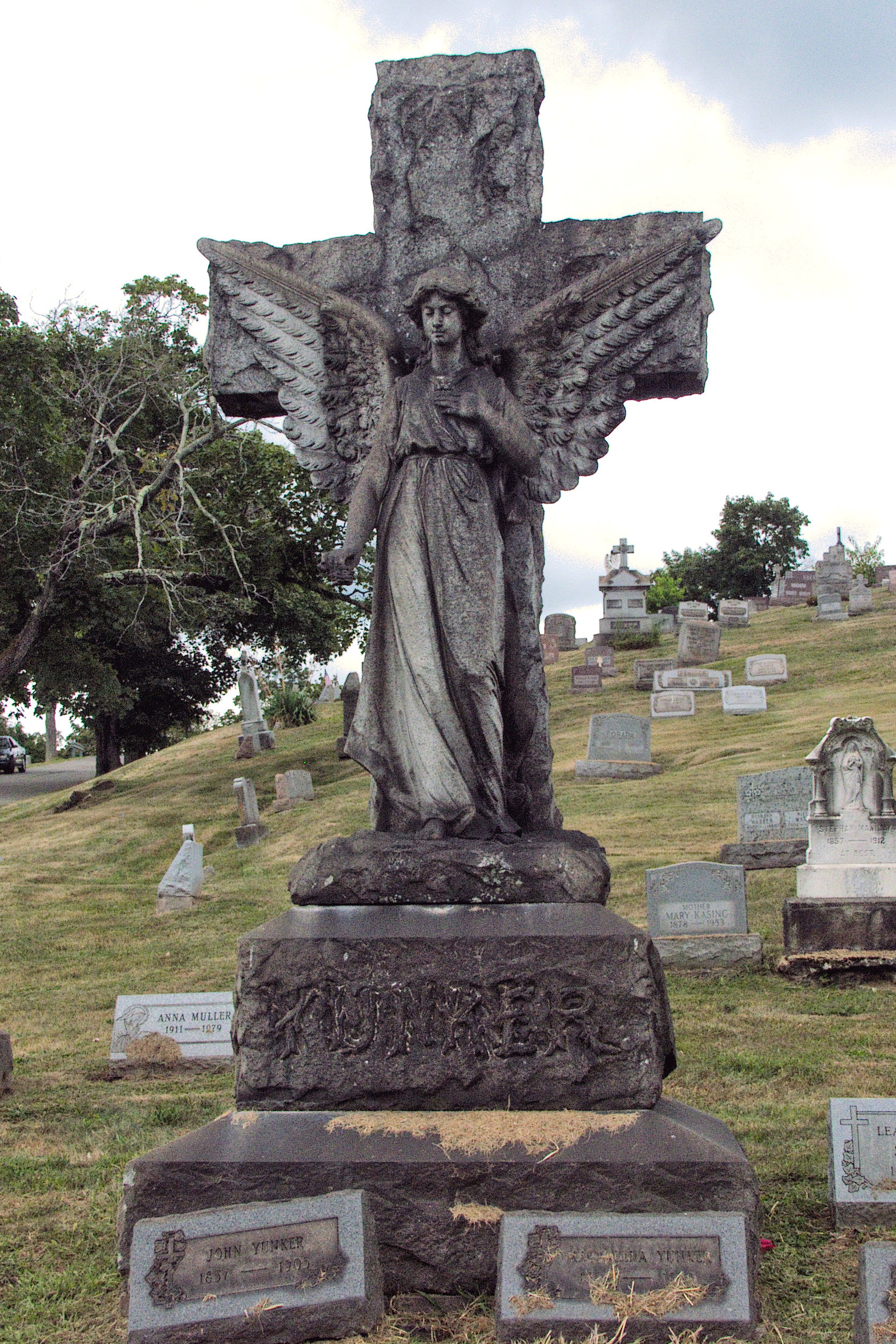
A rustic stone cross with a very good flower-dropping angel standing on a rock, and the family name spelled out in twigs on the base. It probably dates from about 1905, when John Yunker was buried here.

The 1840s were a time when the old art of tombstone-cutting was dying out, and new styles came into vogue—styles that, in many ways, imitated the styles of engravings of the era. Here is a good example: a large tombstone from 1848 that looks very much like an engraved title page of the same era. It no longer has the handmade look of even the best local craftsmen’s work, and it is executed in more expensive stone that turned out to be much less permanent. With some difficulty, we can make out most of the inscription except the epitaph:

JAMES McKOWN
DIED
Feb. 25, 1848
In the 60th year
of his age

The surname “McKown” is damaged, but there are several other McKowns buried in this graveyard, so there is little question about the reading.

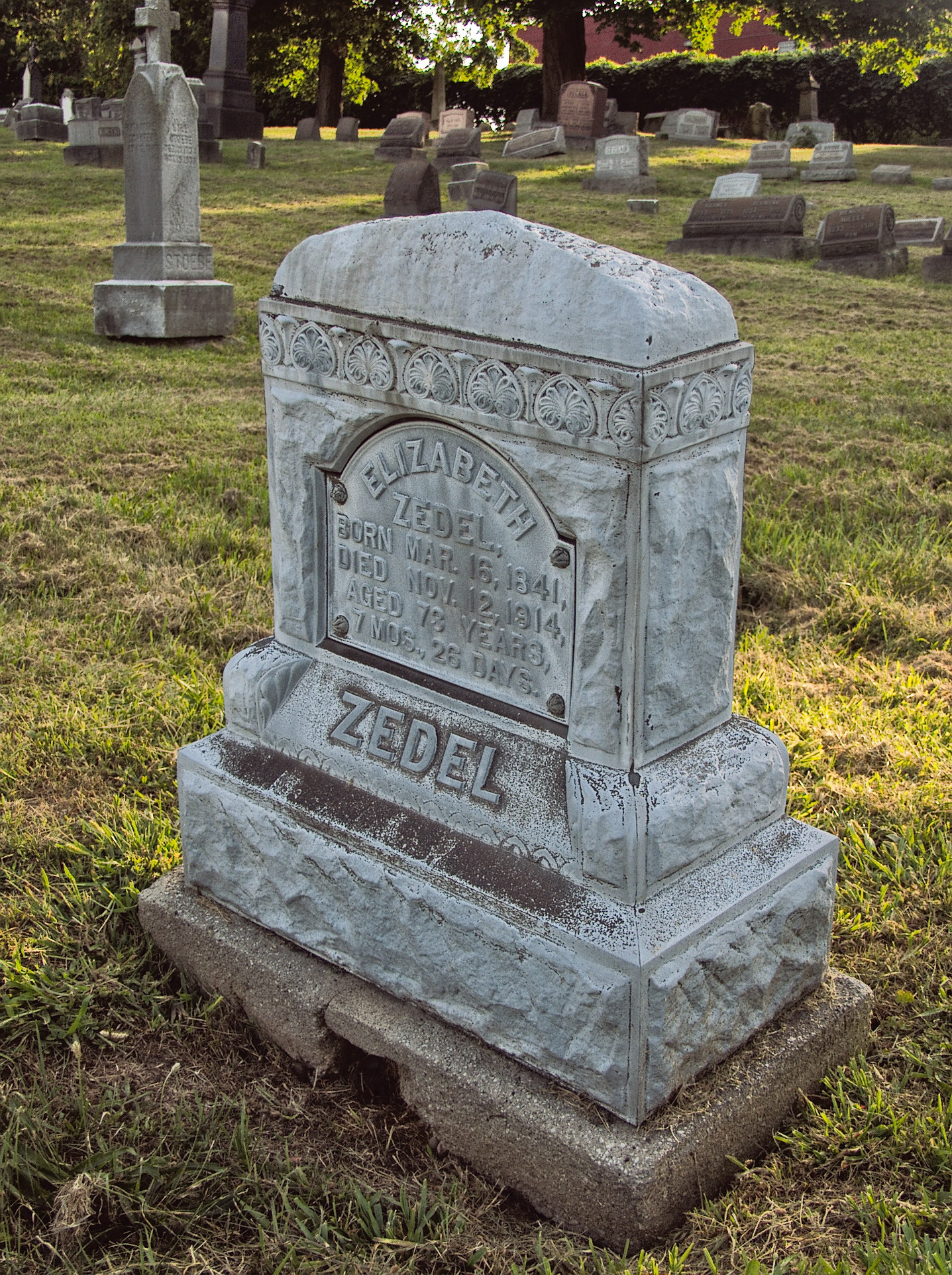
Readers who have explored this site know already that Father Pitt collects zinc monuments. They were mass-produced and considerably cheaper than stone monuments of equivalent size, so that they were often condemned as tasteless and excluded from cemeteries for the better classes of dead people. But they live up to the zinc monument vendors’ extravagant claims: they are as permanent as bronze, or more so, and could be bought in a huge variety of shapes with interchangeable reliefs on the panels.

Here is one of the more modest zinc monuments Father Pitt has found, but it is very well preserved, though many of the stones around it are eroded and illegible.

Here is a stone inscribed by someone who obviously did not make a living creating tombstones. Yet the work is done well enough that the stone is perfectly legible nearly two centuries later, preserving the embarrassing spelling mistake for all time.

As Father Pitt has mentioned earlier, Ridgelawn Cemetery preserves its stone-fenced family plots, once a feature of every “rural” cemetery, more perfectly than any other cemetery in the area. Here we have a typical plot, except for its unusual shape: a main monument in the rear center is surrounded by various smaller monuments for individual members of the family, and the stone wall breaks for an entrance inscribed with the name of the patriarch of the family.