Pittsburgh Cemeteries

The Art and Architecture of Death

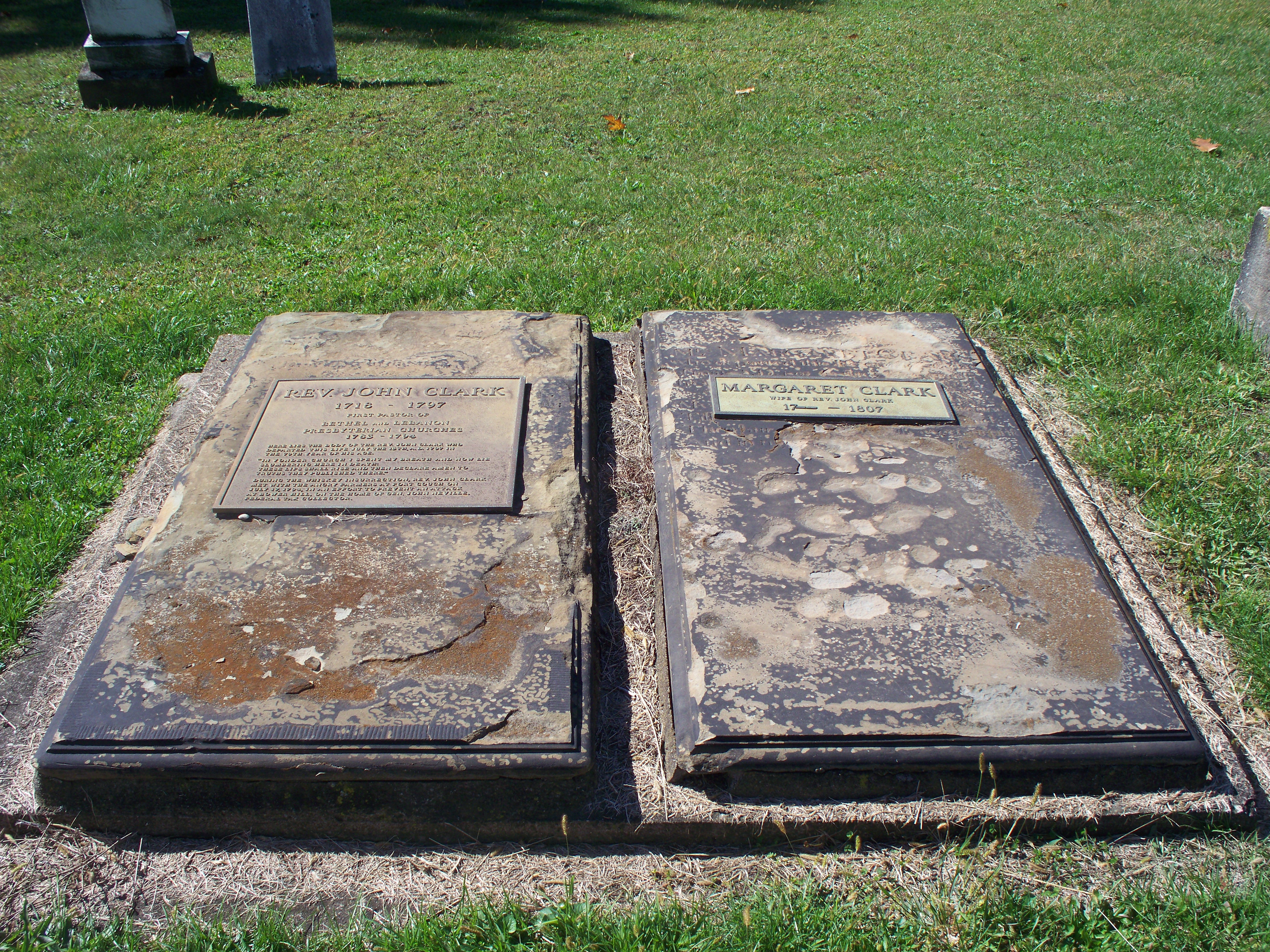
Rev. John and Margaret Clark

Two ledgers marking the grave of a minister of the old Bethel Church and his wife. The inscriptions long ago eroded away, but fortunately the Rev. John’s was duplicated on a bronze tablet.

HERE LIES THE BODY OF THE REV. JOHN CLARK WHO DEPARTED THIS LIFE JULY THE 16TH, A. D. 1797 IN THE 79TH YEAR OF HIS AGE.

“IN YONDER CHURCH I SPENT MY BREATH AND NOW LIE SLUMBERING HERE IN DEATH:
THESE LIPS SHALL RISE AND THEN DECLARE AMEN TO TRUTHS THEY PUBLISHED THERE.”

DURING THE WHISKEY INSURRECTION, REV. JOHN CLARK MET WITH THE ANGRY FARMERS AT FORT COUCH ON JULY 17, 1794, IN AN EFFORT TO PREVENT AN ATTACK AT BOWER HILL, ON THE HOME OF GEN. JOHN NEVILLE, FEDERAL TAX COLLECTOR.

Addendum: Here is an account of that same incident from Hugh Henry Brackenridge, who was an eyewitness to many of the most important events of the Whiskey Rebellion:

“Great pains were taken, at Couche’s fort, by an aged and venerable clergymen, the reverend John Clark, to dissuade the people from the object they had in view. It was to no purpose. They considered him as in his dotage; or as having skill in spiritual affairs; but not in the temporal interests of the country. It may be thought from hence, that dissuasion from no one, could have had effect. That does not follow. Regard might have been paid to the representations of those who were supposed to know the law, and to be able to calculate the probable consequences of the act.”

——Incidents of the Insurrection, Chapter III.

Margaret Clark

Unfortunately the inscription for Mrs. Clark was not duplicated before it vanished, partly eroded and partly obscured by the bronze plaque that replaced it.

Margaret Clark

These pictures were taken in 2015, but have never been published here before.

Illegible monument with photographs

This husband and wife spent more money than average on this monument; it is a large variation of the cross-topped round-shouldered monument popular with Slavic and Italian immigrants, with the addition of a crucifix in relief on the cross. But the inscription has eroded so badly that Father Pitt has not been able to read it. They are buried next to a woman named Anna Scmicz, whose stone is inscribed in Polish, and sometimes old Pa Pitt thinks he can make out the same name on this stone, but he is not sure.

Anna Szmicz

The photographs, however, are still instantly recognizable, though one is damaged. It is possible that Anna Scmicz is the woman in the photograph, since this monument appears to have only one name on it, in which case this is the monument for her husband, whom she outlived and was buried next to some time later.

Mr. Szmicz

Mrs. Szmicz

Giuseppe Galie monument

An unusual Gothic monument with an Italian inscription for a “brave American soldier” in the First World War. Unfortunately the photograph that was originally set in the stone has been lost. Note that the United States government misspelled his name (“Guiseppe” for “Giuseppe”) in his government-issue bronze plaque, below.

Guiseppe Gale plaque

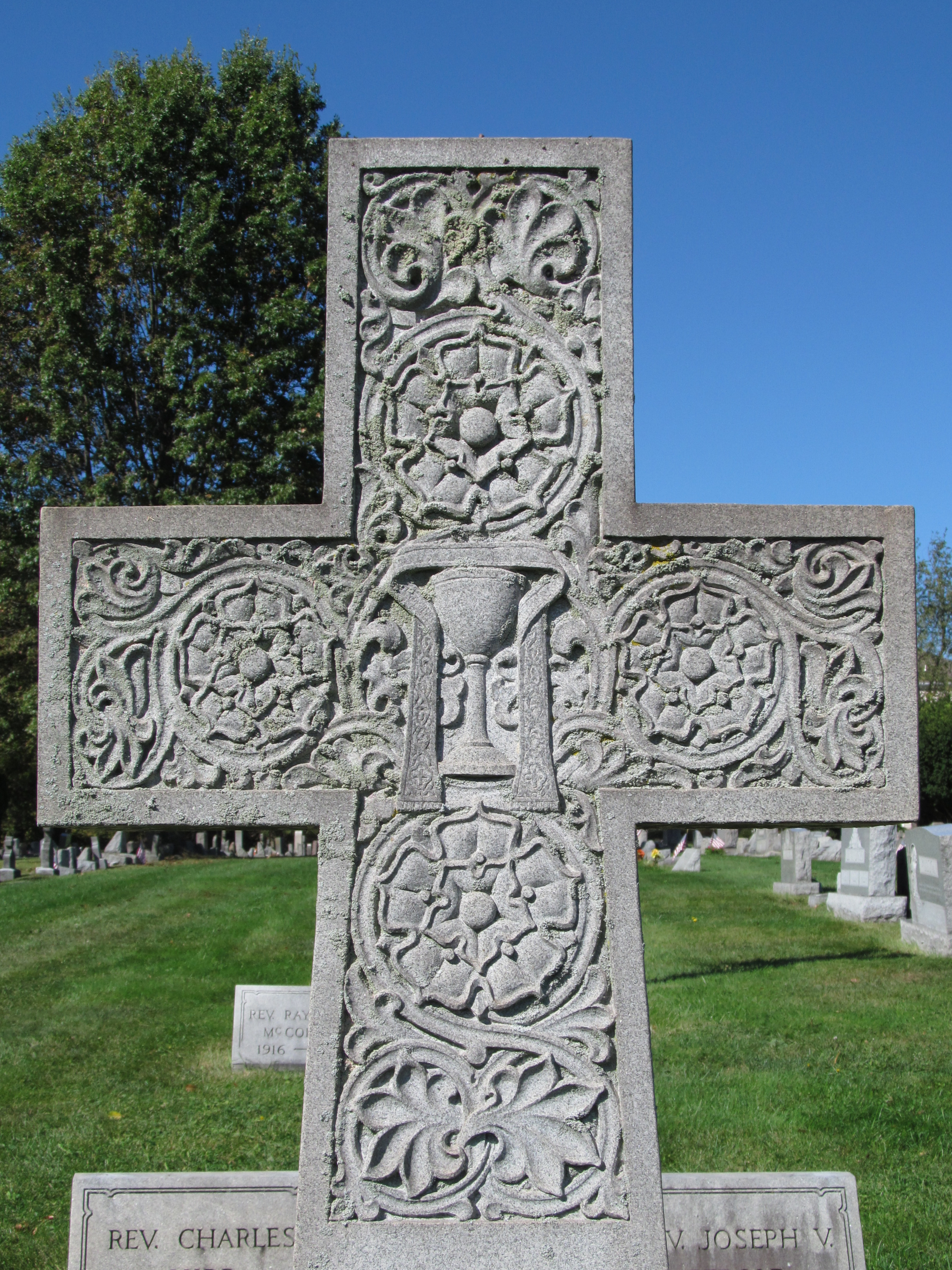
Hipp and Gerold Cross

A tall cross with fine carving and a bit of Art Deco flair for two rectors of St. Ann’s (note the spelling; the parish is now called St. Anne).

Carving

Inscription

HIPP

REV.
CHARLES HIPP
RECTOR OF ST. ANN’S
CHURCH 1907–1918
BORN OCT. 9, 1887
ORDAINED
MAY S6, 1899
DIED NOV. 7, 1918

GEROLD

REV.
JOSEPH V. GEROLD
RECTOR OF ST. ANN’S
CHURCH 1918–1929
BORN AUG. 19, 1876
ORDAINED
JULY 4, 1901
DIED SEPT. 21, 1929

Landscape in Chartiers Cemetery

Evening sun casts shadows from fine old trees in Chartiers Cemetery.

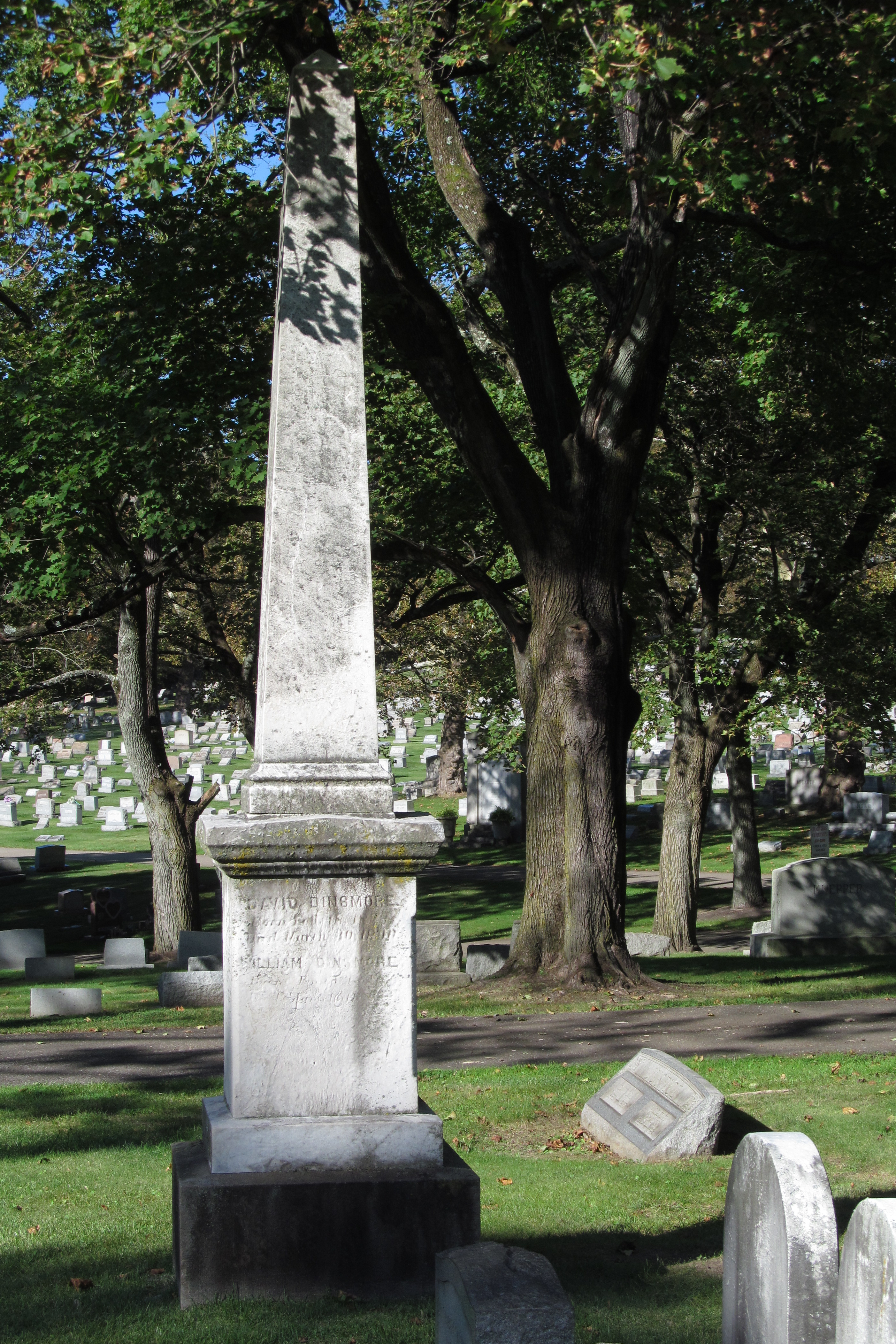
A typical marble obelisk of the Civil War era. The inscriptions are eroded into near illegibility, but one legible death date is 1840. Since the cemetery is not that old, the monument was probably put up in the 1860s, and previously deceased family members were honored on it then.