Pittsburgh Cemeteries

The Art and Architecture of Death

Allegheny Cemetery

Our first great “rural” cemetery, filled with priceless art and architecture.


View Larger Map

With bonus deer. This exceptionally grand monument is in the most romantic interpretation of the Gothic style. Although C. W. Robb lived until 1892, from the style Father Pitt is almost certain that this was put up when his wife Caroline Amelia died in 1869. C. W. married again; his second wife was nearly thirty years younger than he was, and lived until 1936. She shares a small headstone nearby with their daughter, who also died in 1936.

For some reason, Father Pitt suspects that C. W. Robb may have been an organist.

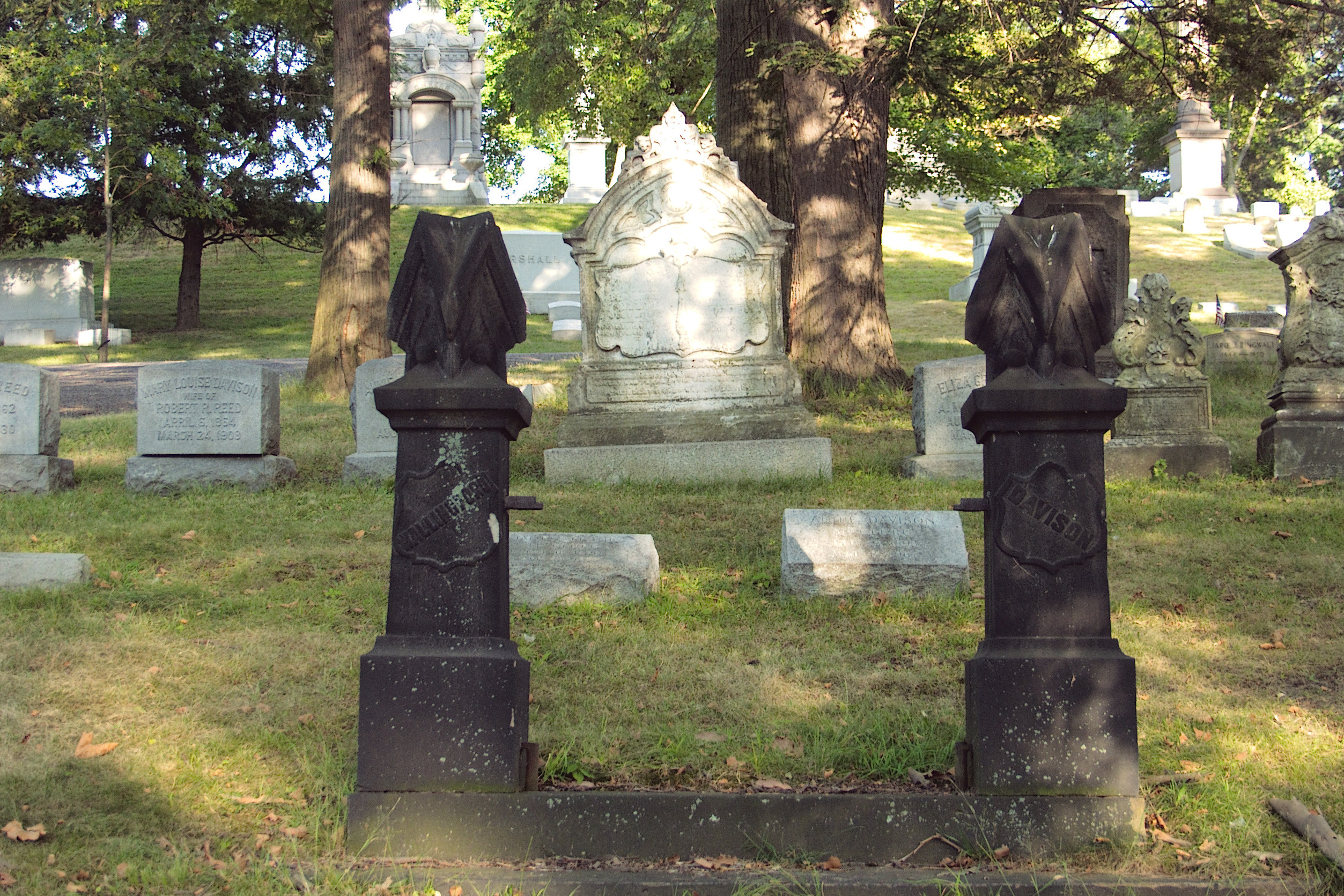
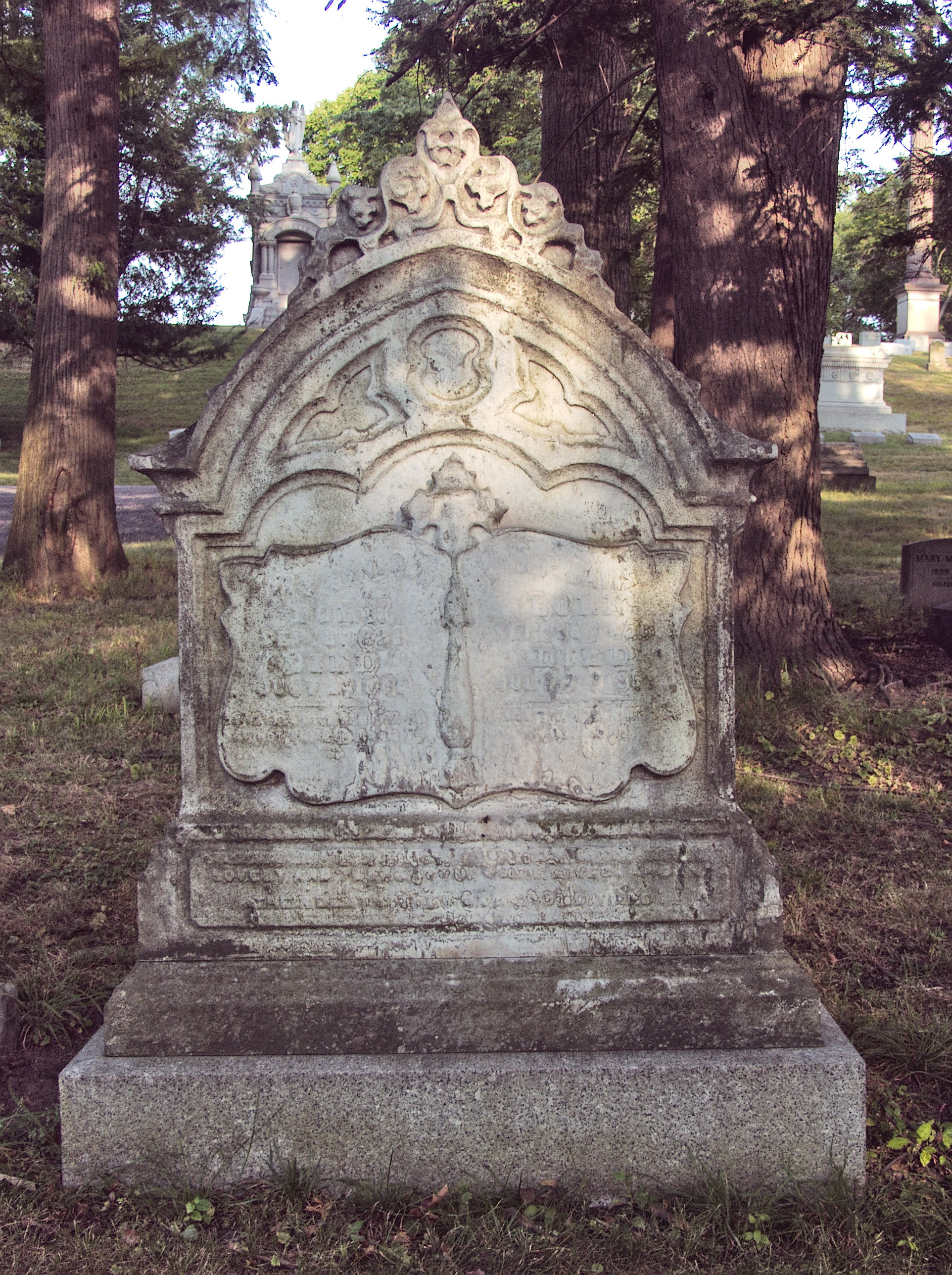
A family plot with a romantic Gothic marble monument, now illegible but still grand in its way. It was once surrounded by an iron fence, but like almost all such fences it has been removed to make life easier for groundskeepers.

We can see where the iron fence once fitted into the stone gateposts.

Almost all the fences and barriers that used to demarcate family plots in the nineteenth century were removed in Allegheny Cemetery, but this one has somehow survived the loud protests of groundskeepers. You will note, however, that the groundskeepers seem to be deliberately avoiding the interior of the plot.

This window commemorates the famous Bay Psalm Book, the first book printed in British America. Everyone learned to sing these rhymed versions of the Psalms, because it was not legal under the rule of the Puritans to sing anything else.

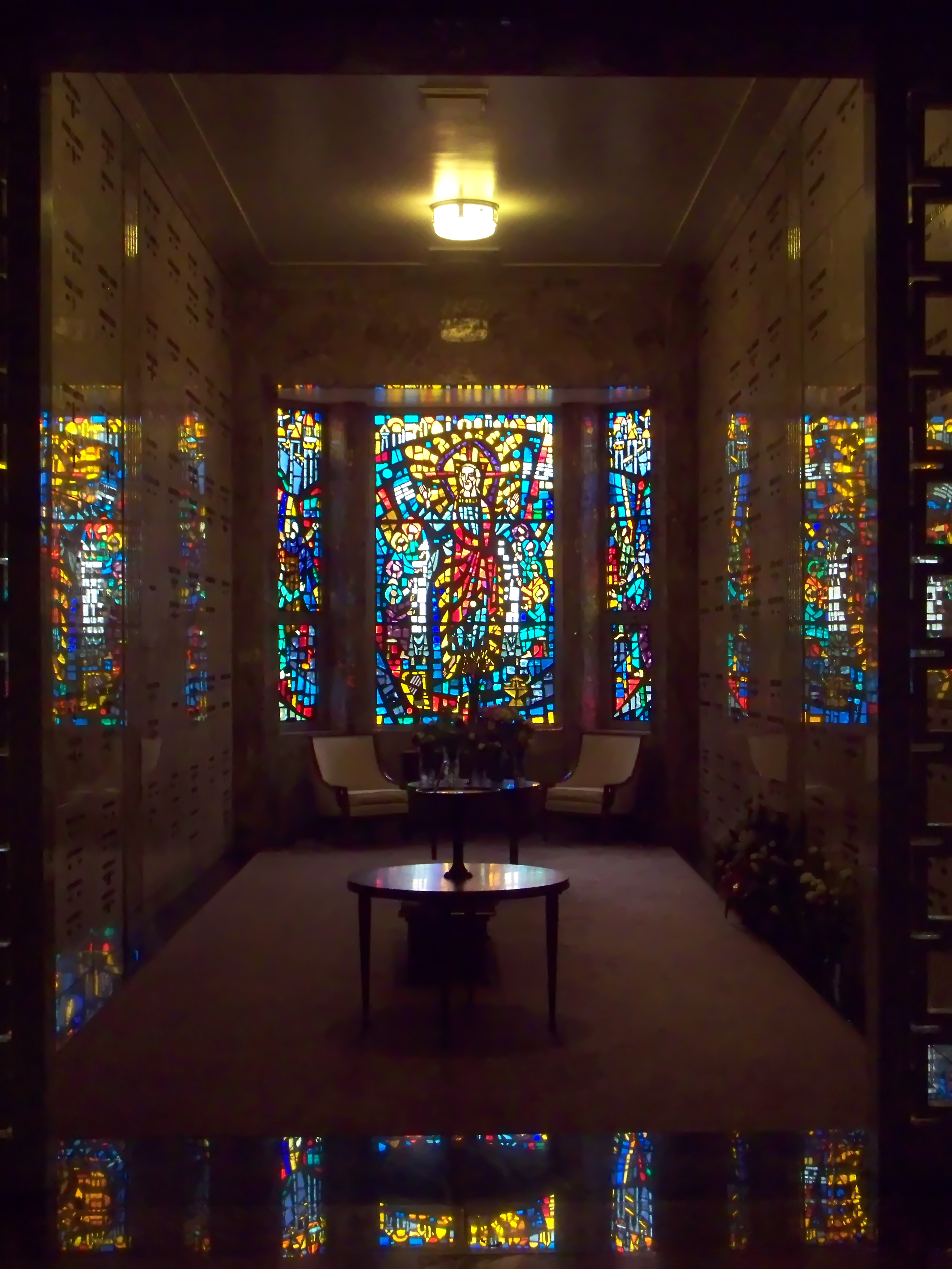
The indoor mausoleum in Allegheny Cemetery was built in 1960 (or 1961, according to the Web site). The architects were Harley and Ellington. It’s now called the “Temple of Memories,” and it’s worth a visit even if you don’t like cemeteries all that much. It’s filled with striking stained glass from the Hunt and Willet studios, and it has a considerable collection of paintings by academic painters of the late nineteenth century that were probably nearly worthless when they were donated, but are coming back into fashion again. But what charms Father Pitt most is that the place is a time machine through which one can enter the early 1960s. Even though it has been expanded since then, the whole mausoleum has an early-1960s atmosphere, complete with appropriate piped-in music. One wanders among the dead feeling more like one of them than like one of the living.

Among the windows in the Allegheny Cemetery Mausoleum or “Temple of Memories” are several devoted to famous works of literature and music. This one illustrates Bunyan’s Pilgrim’s Progress. The stained glass in the mausoleum was done by the Willet studio of Philadelphia and the Hunt studio of Pittsburgh; Father Pitt does not know which one did this window.

Among the windows in the Allegheny Cemetery Mausoleum or “Temple of Memories” are several devoted to famous works of literature and music. This one illustrates Wagner’s Parsifal. The stained glass in the mausoleum was done by the Willet studio of Philadelphia and the Hunt studio of Pittsburgh; Father Pitt does not know which one did this window.

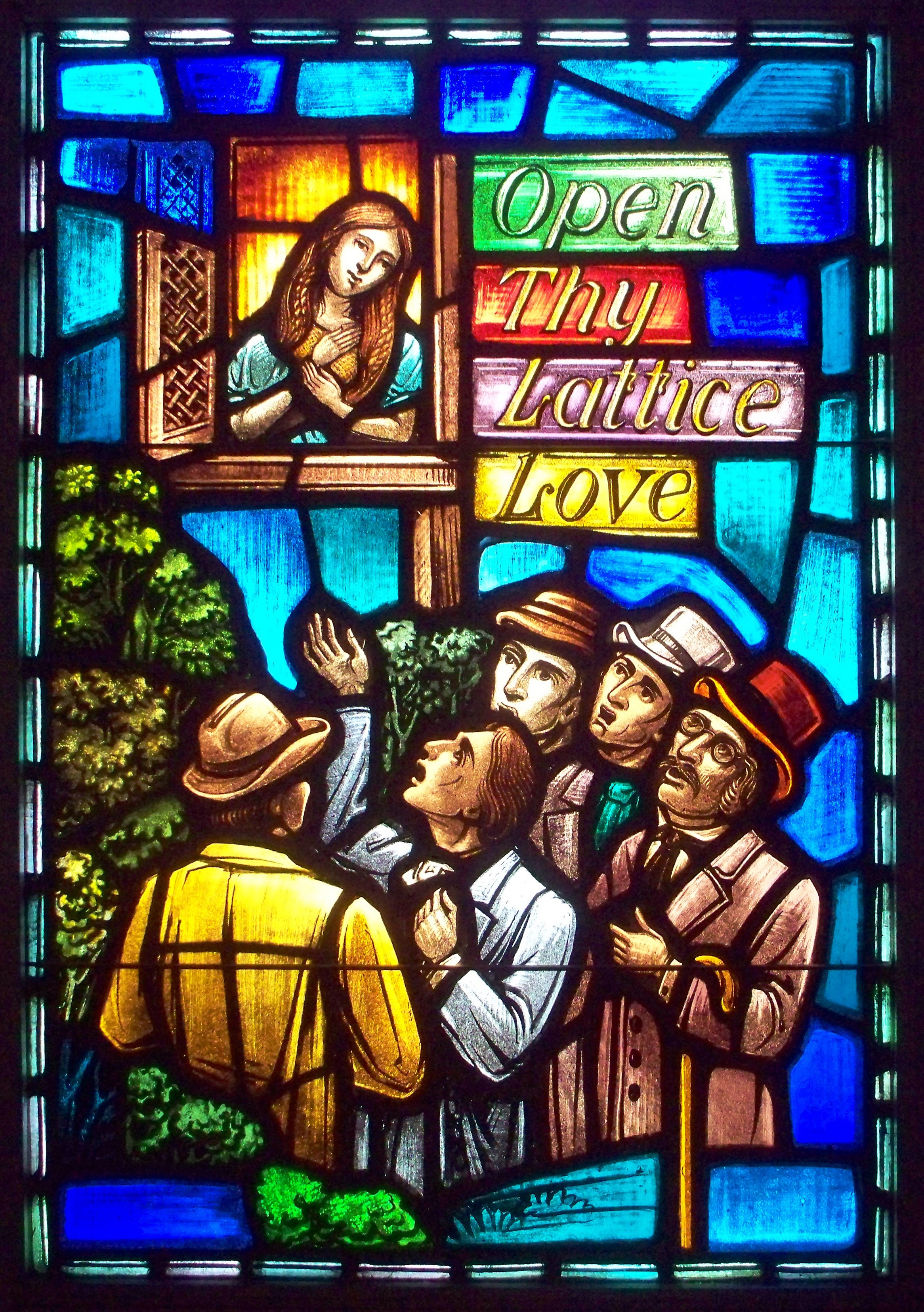
The Allegheny Cemetery Mausoleum, or “Temple of Memories” (as the cemetery calls it now), was built in 1960. It is filled with stained glass by the Willet studio of Philadelphia and the Hunt studio of Pittsburgh. The two distinct styles are very different, but Father Pitt does not know which is which.

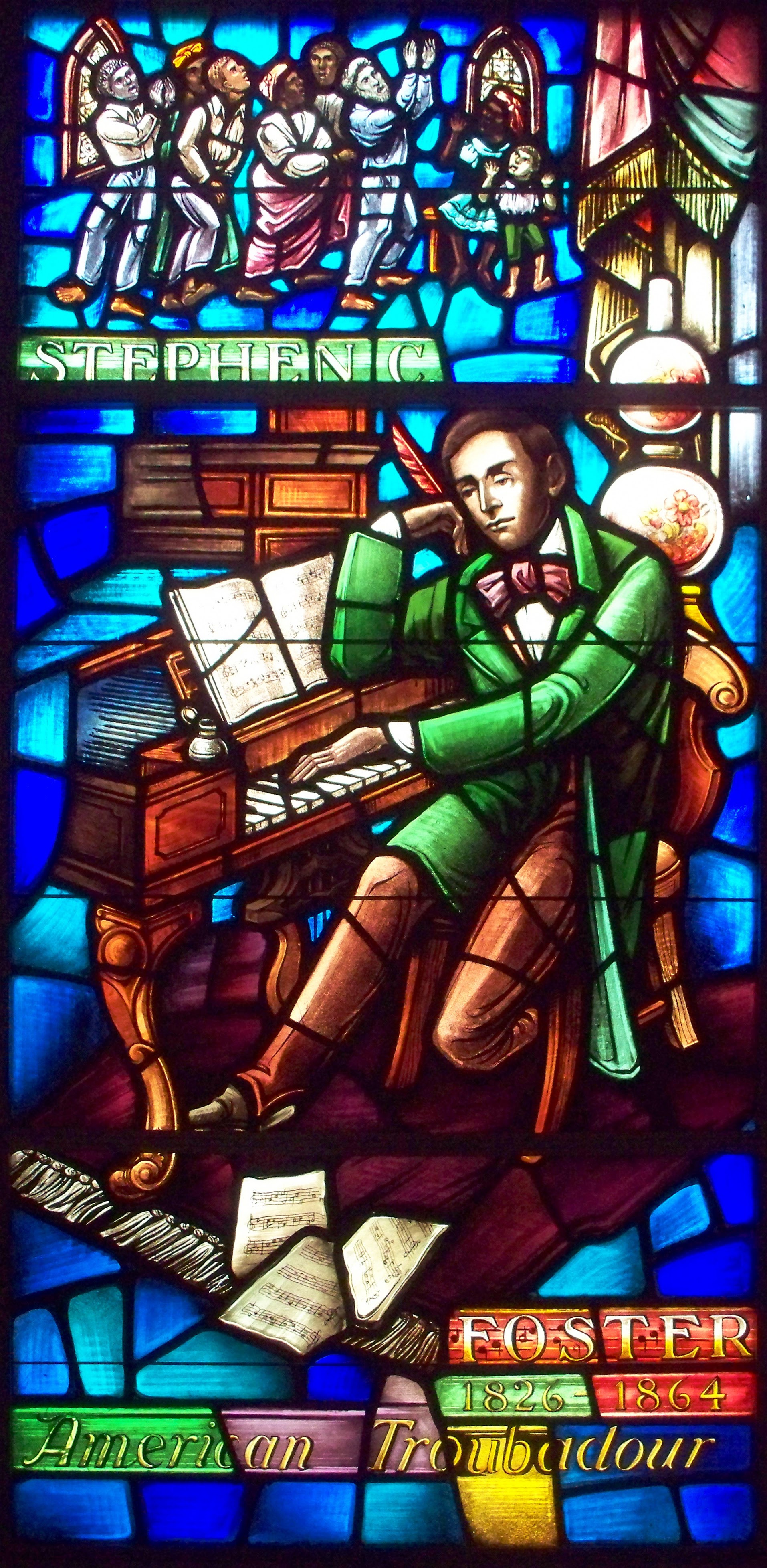
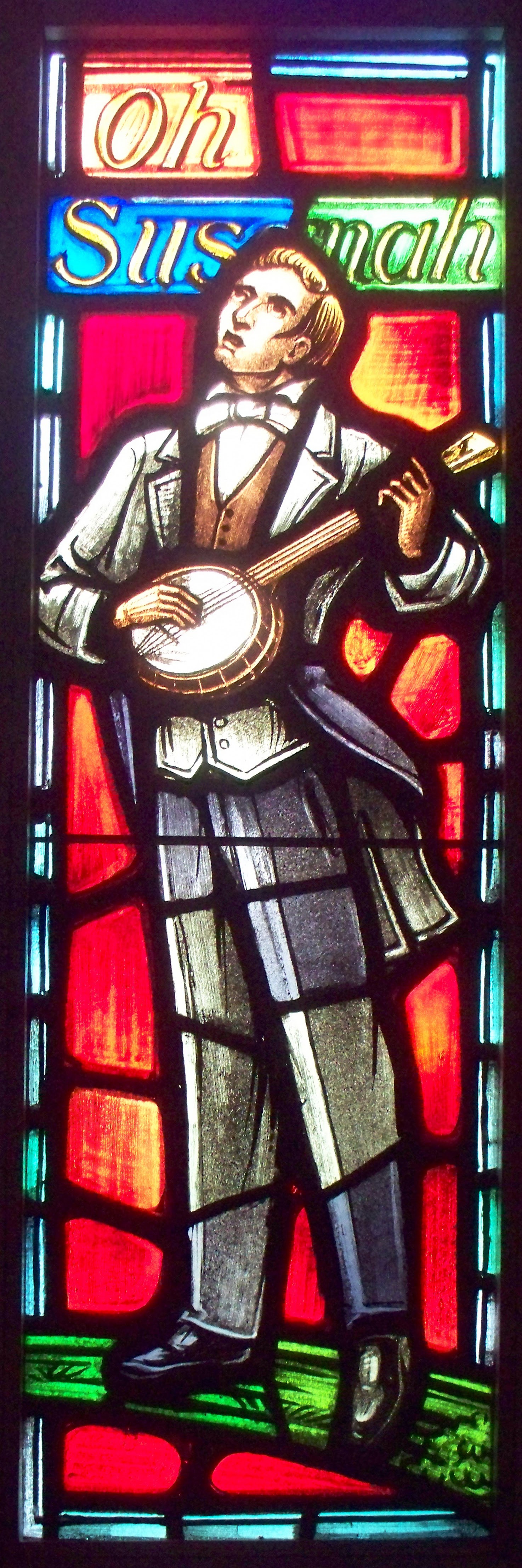
This Stephen Foster window is the centerpiece of the whole first floor of the mausoleum, which is appropriate. Thousands of rich and important people—politicians, robber barons, and even a few honest philanthropists—are buried in Allegheny Cemetery. But the only resident anyone really cares about is Stephen Foster, who made us dance and sing and weep, and died in poverty. (There is also a small cult of Lillian Russell, and Father Pitt would be delighted to see a Lillian Russell window in some future expansion of the mausoleum.)

This window includes something that delighted old Pa Pitt beyond all reason: the only stained-glass representation he has ever seen of a parlor organ.

A certain strain of romanticism is common in monuments of the 1800s, but few go to such extremes of romanticism as this. The profusion of vine-covered vines overwhelms the composition so much that at first it is hard to make any visual sense of the thing. How many different kinds of vines can you identify? Father Pitt finds at least passionflowers, morning glories, and ivy, and the top may be roses, although the erosion makes it hard to tell. If the enormous urn-flower at the foot end came from a vine, it was a vine that wants to eat you.

If there was ever an inscription, it is illegible now; but since the monument occupies a space in the Lewis family plot, we may presume that it belongs to some Lewis or other.

This mausoleum from the early 1920s is an interesting and unusual design: a little bit Egyptian in shape, but without Egyptian details. The gorgeous stained glass inside is full of nautical references, which must refer in some way to the William S. Flower who is recorded as the first burial here in 1924. Does anyone know their significance? A Dr. William S. Flower was a dentist here in the early twentieth century, but Father Pitt cannot guess what sailing ships, hourglasses, and classical dolphins have to do with dentistry.