
The Carnahan family has been prominent in the near South Hills for a long time, and this plot, with its chunky rusticated monument, is lovingly maintained with a garden of ornamental grasses.


The Art and Architecture of Death
A pleasant rural landscape in the urban part of Mount Lebanon, with a few memorable monuments.
The Carnahan family has been prominent in the near South Hills for a long time, and this plot, with its chunky rusticated monument, is lovingly maintained with a garden of ornamental grasses.

This is almost certainly a marble pedestal for a large urn, now missing. By the style it looks as though this monument dates from about the time Katharina Wilbert died in 1875, which is a quarter-century before the foundation of the cemetery; so old Pa Pitt suspects it was moved here from another site. German inscriptions, common elsewhere, are unusual in the upper-middle-class Mount Lebanon Cemetery.

KATHARINA F.
WILBERT
NÉE HAAS
BORN APRIL 15, 1832
DIED SEPTEMBER 24, 1875


Both the mausoleum and the statue on top are identical to the Braun mausoleum in the South Side Cemetery, suggesting that the mausoleum and statue came as a set. This one is missing its bronze doors.

Not many families chose modern architecture for their private mausoleums, but for their clients with modern tastes, a few companies did make up-to-date modernistic mausoleums like this one, a plain cube with an off-center door. The cartoon outline of a stained-glass window on the left is an odd concession to the popular notion that a funerary monument ought to have some sort of decoration. (There is also real stained glass inside, and a rusting iron bench to sit on and contemplate mortality.)
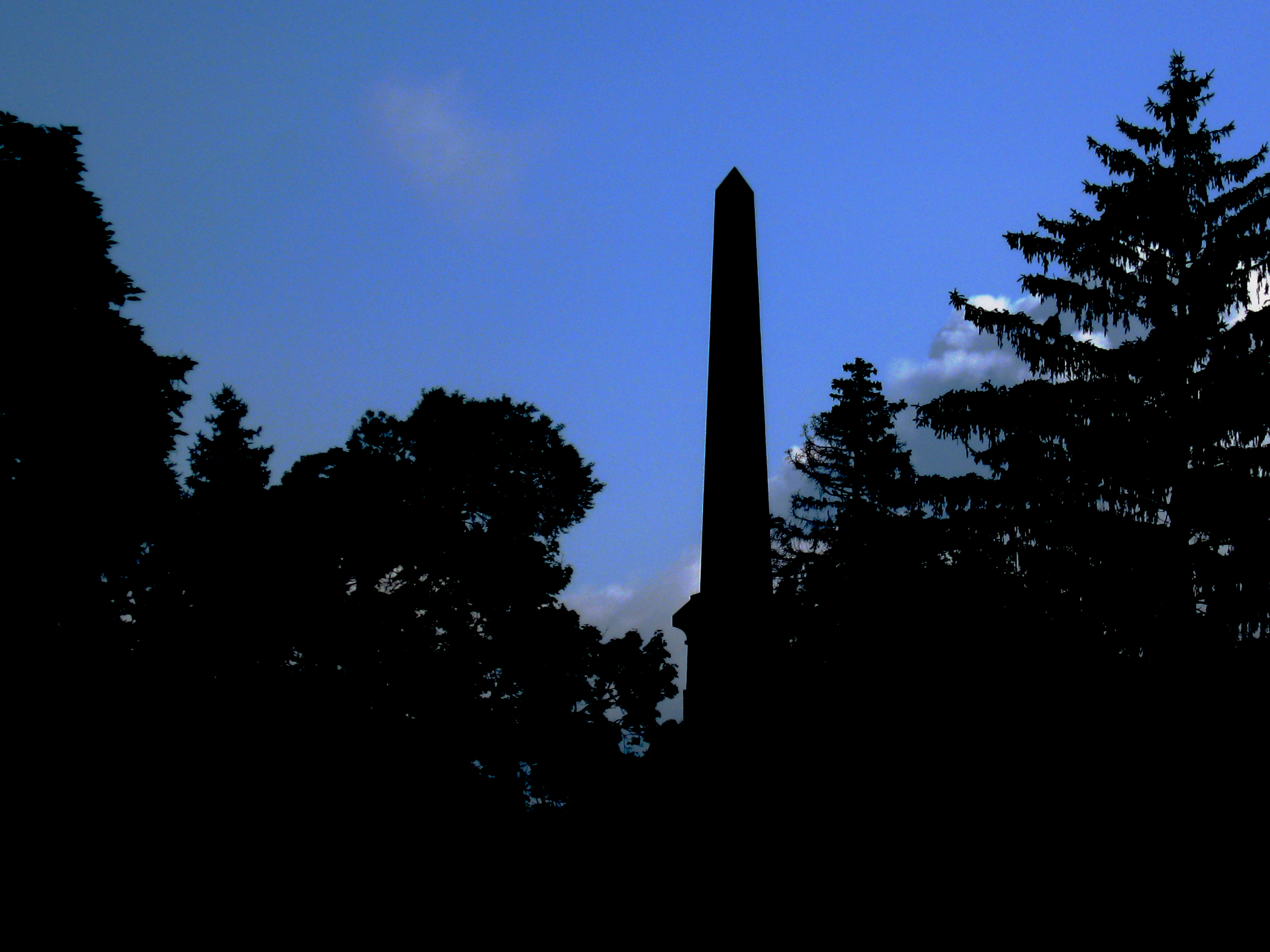
Silhouetted against a morning sky, this obelisk marks the Blum family plot in the oldest part of the cemetery.


Should we call this a fat obelisk or a thin stele? Either way, it serves its function of making the graves of Mr. and Mrs. Haas easy to find. The foliage decoration is notable.

Joseph and Mary Hughey’s descendants must have no trouble at all finding their graves. This immense stone has the most extravagant foliage decoration in the cemetery.
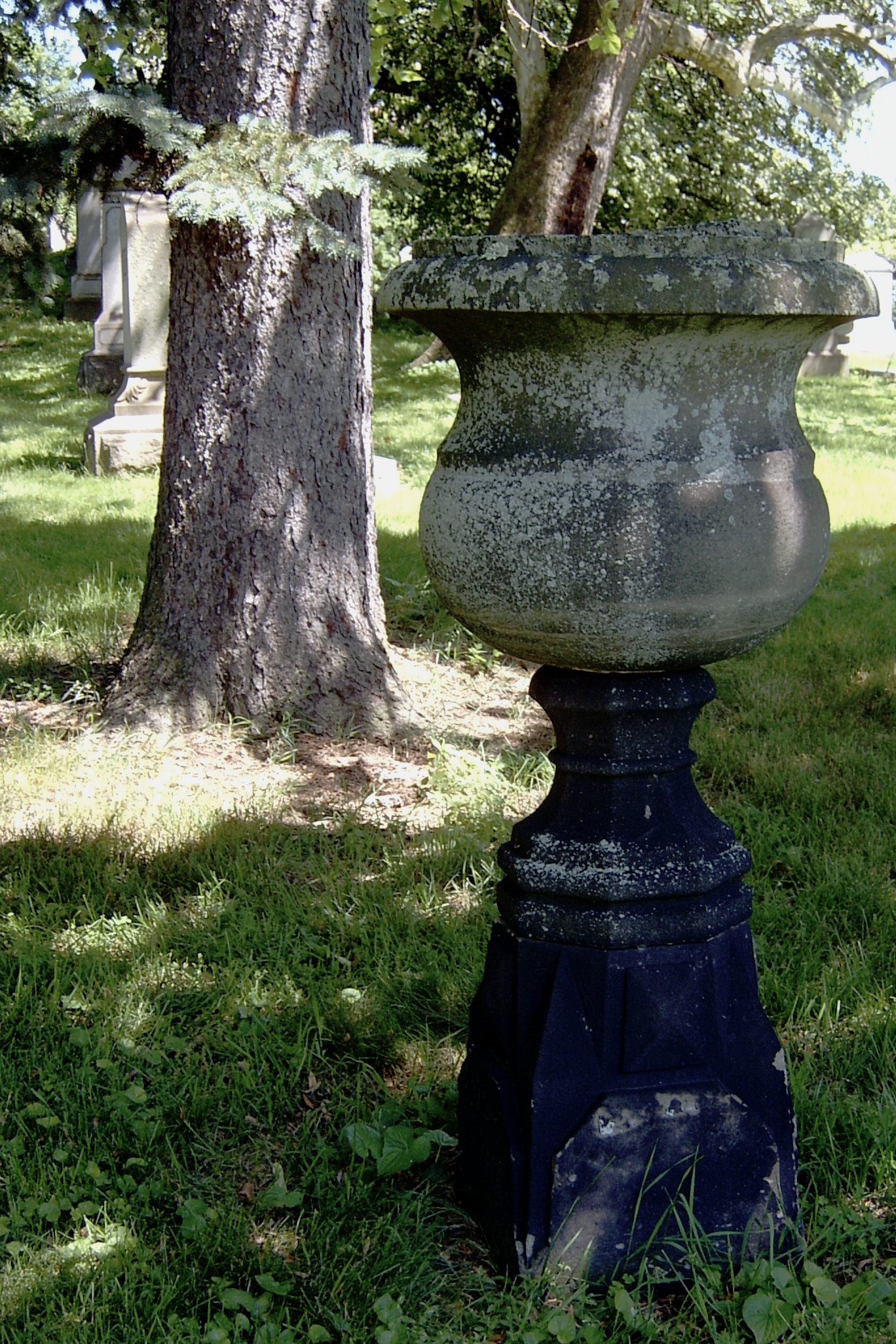
This urn bears no markings, or at least none that old Pa Pitt could find. It is picturesque in its way, whether it marks a grave or whether it is just a landscape decoration.

This fine vernacular-Gothic house serves as the gatehouse and office for the Mount Lebanon Cemetery, which was founded in 1901. It’s charmingly out of place in its neighborhood, which is a later development where most of the houses date from after the First World War.