Pittsburgh Cemeteries

The Art and Architecture of Death

Rev. John and Margaret Clark

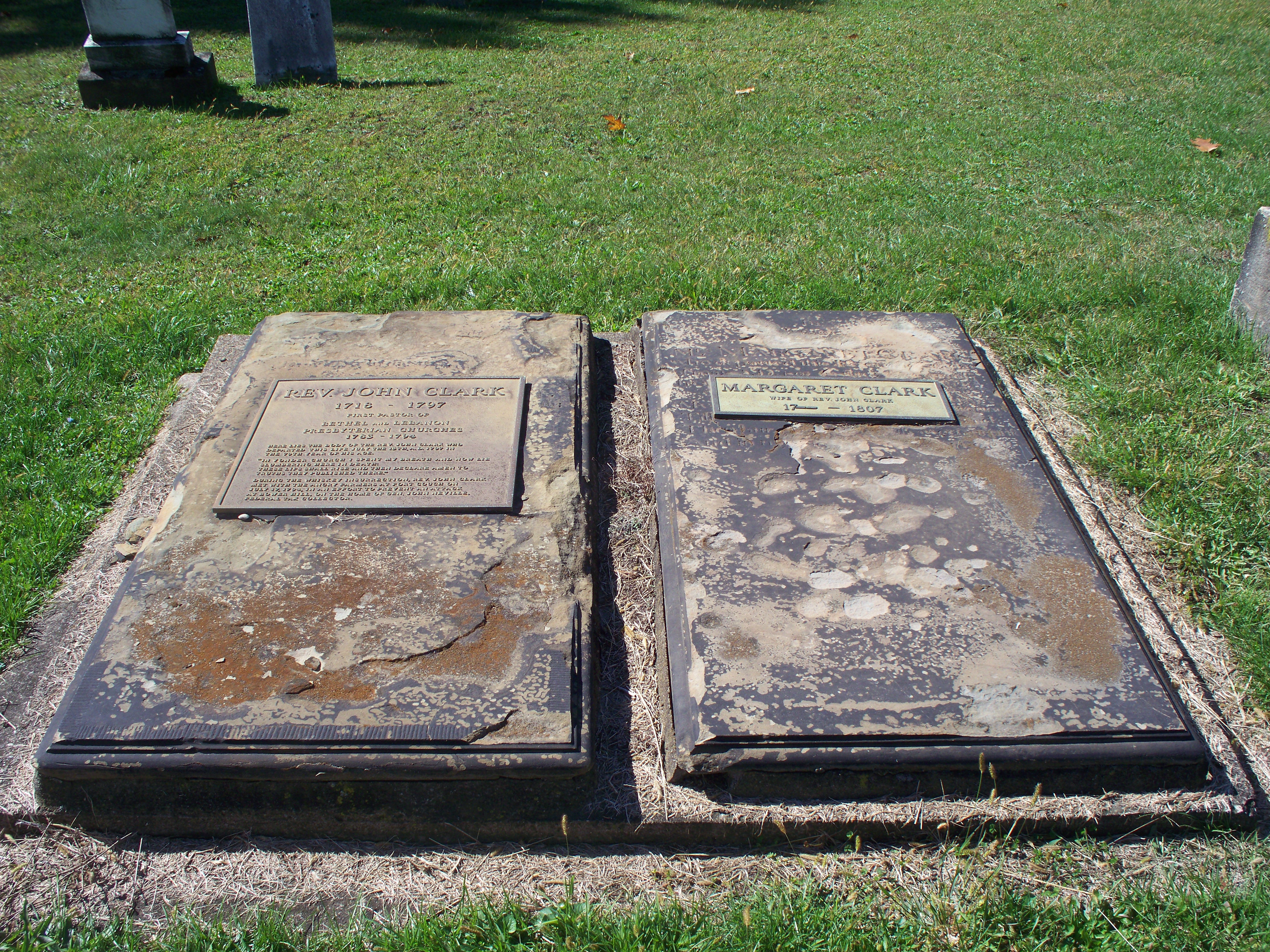
Two ledgers marking the grave of a minister of the old Bethel Church and his wife. The inscriptions long ago eroded away, but fortunately the Rev. John’s was duplicated on a bronze tablet.

HERE LIES THE BODY OF THE REV. JOHN CLARK WHO DEPARTED THIS LIFE JULY THE 16TH, A. D. 1797 IN THE 79TH YEAR OF HIS AGE.

“IN YONDER CHURCH I SPENT MY BREATH AND NOW LIE SLUMBERING HERE IN DEATH:
THESE LIPS SHALL RISE AND THEN DECLARE AMEN TO TRUTHS THEY PUBLISHED THERE.”

DURING THE WHISKEY INSURRECTION, REV. JOHN CLARK MET WITH THE ANGRY FARMERS AT FORT COUCH ON JULY 17, 1794, IN AN EFFORT TO PREVENT AN ATTACK AT BOWER HILL, ON THE HOME OF GEN. JOHN NEVILLE, FEDERAL TAX COLLECTOR.

Addendum: Here is an account of that same incident from Hugh Henry Brackenridge, who was an eyewitness to many of the most important events of the Whiskey Rebellion:

“Great pains were taken, at Couche’s fort, by an aged and venerable clergymen, the reverend John Clark, to dissuade the people from the object they had in view. It was to no purpose. They considered him as in his dotage; or as having skill in spiritual affairs; but not in the temporal interests of the country. It may be thought from hence, that dissuasion from no one, could have had effect. That does not follow. Regard might have been paid to the representations of those who were supposed to know the law, and to be able to calculate the probable consequences of the act.”

——Incidents of the Insurrection, Chapter III.

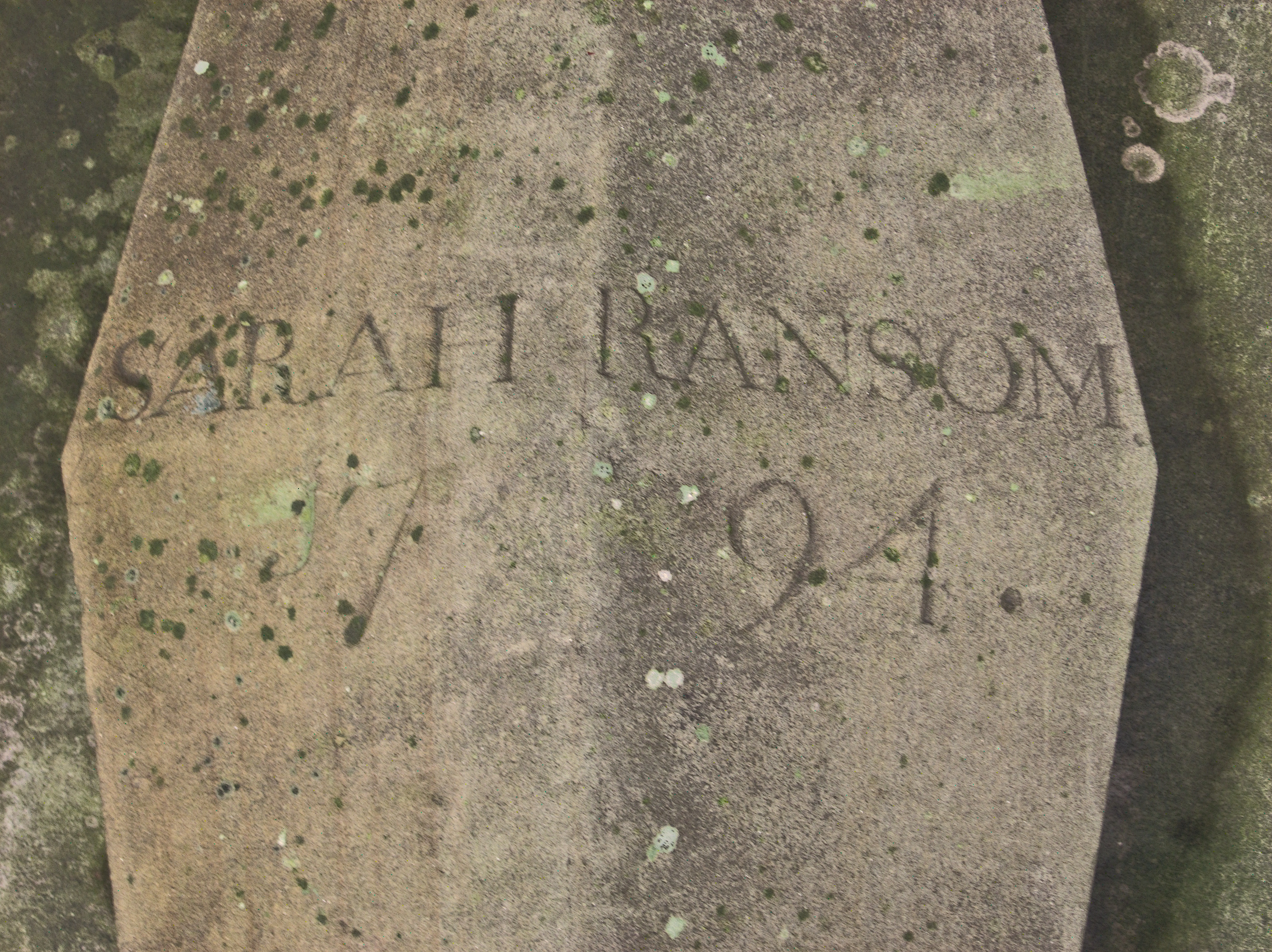
Margaret Clark

Unfortunately the inscription for Mrs. Clark was not duplicated before it vanished, partly eroded and partly obscured by the bronze plaque that replaced it.

Margaret Clark

These pictures were taken in 2015, but have never been published here before.

This little stone lay hidden under the ground until 2008, when a landscaper almost literally stumbled on it. It marks the grave of a small child who died in 1794, and that is all we know about her. But the stone and its inscription are very fine for the era, so we suspect her parents had some money.

in memory of
Agnesſ Dickson
Who died feb. the 11th A.D.
1799 in the 21ſt year of her
age

If this stone was cut when Agness Dickson died in 1799, then it is one of the oldest legible grave markers in the Pittsburgh area. Father Pitt is not sure that it was not put up later, however; it could have been cut at the same time as her parents’ stone in 1817.

Robinson Run Cemetery is a fairly large cemetery near McDonald. It includes a fourteen-acre burying ground that obviously goes back to the 1700s, and many interesting tombstones may be seen there.

The work of this stonecutter is distinctly recognizable, and he has left a few other stones in the same graveyard. His most distinctive quirk is his habit of making a lower-case G like a curly number 3. Following our usual custom, therefore, we shall call him the Master of the Curly G.

On this stone he has made use of the long S twice, and in both cases he gets it wrong. He uses it for the second member of the double S in “Agness,” when it should be the first; and he uses it in the ordinal “21st,” but makes it shorter than the T following (it should be longer, since the long S should have the same dimensions as a lower-case F).

Note the spelling “Agness,” by the way, which seems to have been the usual spelling of that name among the early settlers of western Pennsylvania.