A typical Doric cube of the early twentieth century. The stained glass is rather good. Charles A. Brooks was interred here in 1906, and Anna Cloyde Woodward Brooks in 1931; according to cemetery records, they are the only residents.


The Art and Architecture of Death
A typical Doric cube of the early twentieth century. The stained glass is rather good. Charles A. Brooks was interred here in 1906, and Anna Cloyde Woodward Brooks in 1931; according to cemetery records, they are the only residents.
This window commemorates the famous Bay Psalm Book, the first book printed in British America. Everyone learned to sing these rhymed versions of the Psalms, because it was not legal under the rule of the Puritans to sing anything else.

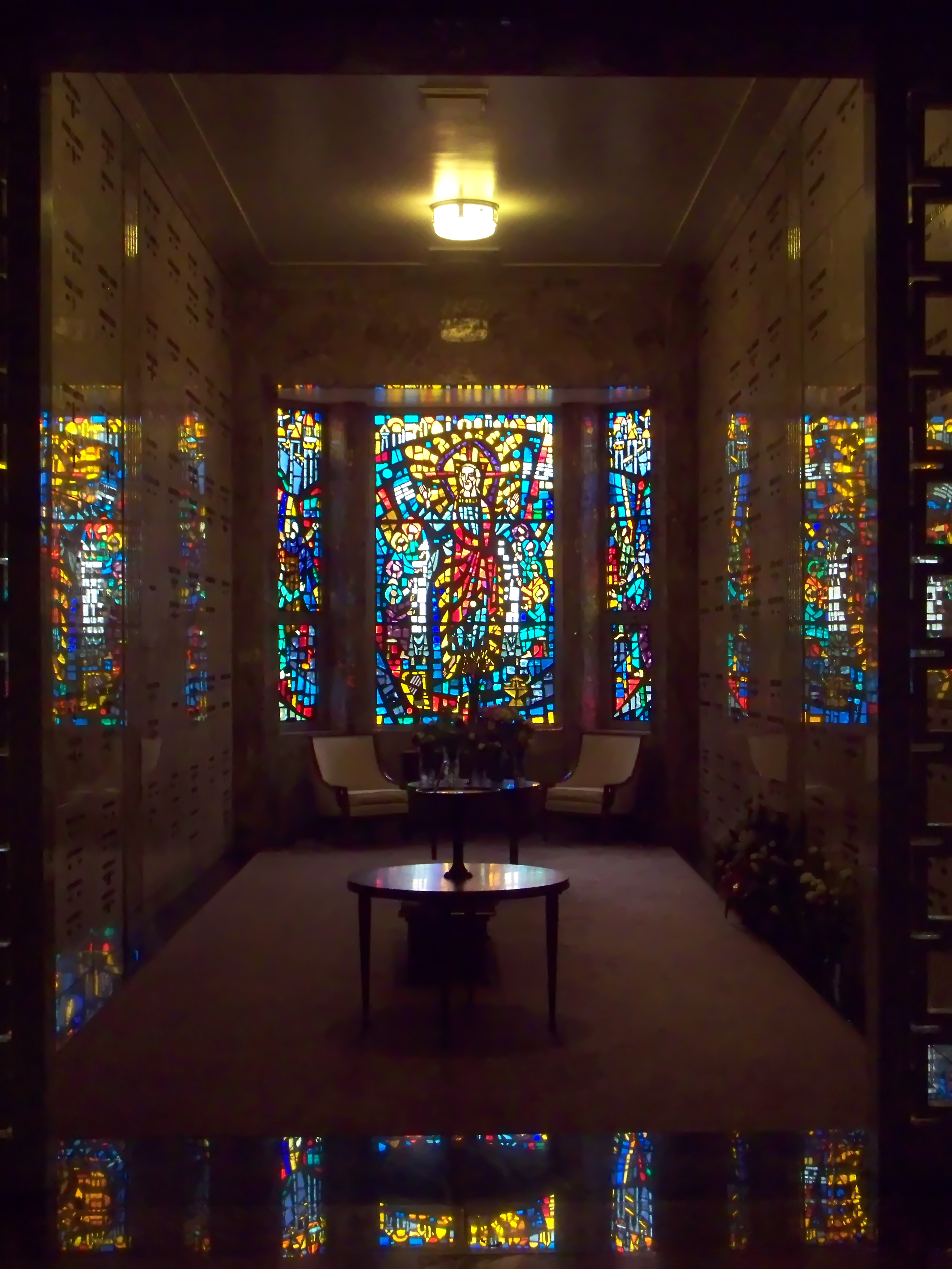
The indoor mausoleum in Allegheny Cemetery was built in 1960 (or 1961, according to the Web site). The architects were Harley and Ellington. It’s now called the “Temple of Memories,” and it’s worth a visit even if you don’t like cemeteries all that much. It’s filled with striking stained glass from the Hunt and Willet studios, and it has a considerable collection of paintings by academic painters of the late nineteenth century that were probably nearly worthless when they were donated, but are coming back into fashion again. But what charms Father Pitt most is that the place is a time machine through which one can enter the early 1960s. Even though it has been expanded since then, the whole mausoleum has an early-1960s atmosphere, complete with appropriate piped-in music. One wanders among the dead feeling more like one of them than like one of the living.


Among the windows in the Allegheny Cemetery Mausoleum or “Temple of Memories” are several devoted to famous works of literature and music. This one illustrates Bunyan’s Pilgrim’s Progress. The stained glass in the mausoleum was done by the Willet studio of Philadelphia and the Hunt studio of Pittsburgh; Father Pitt does not know which one did this window.
Among the windows in the Allegheny Cemetery Mausoleum or “Temple of Memories” are several devoted to famous works of literature and music. This one illustrates Wagner’s Parsifal. The stained glass in the mausoleum was done by the Willet studio of Philadelphia and the Hunt studio of Pittsburgh; Father Pitt does not know which one did this window.
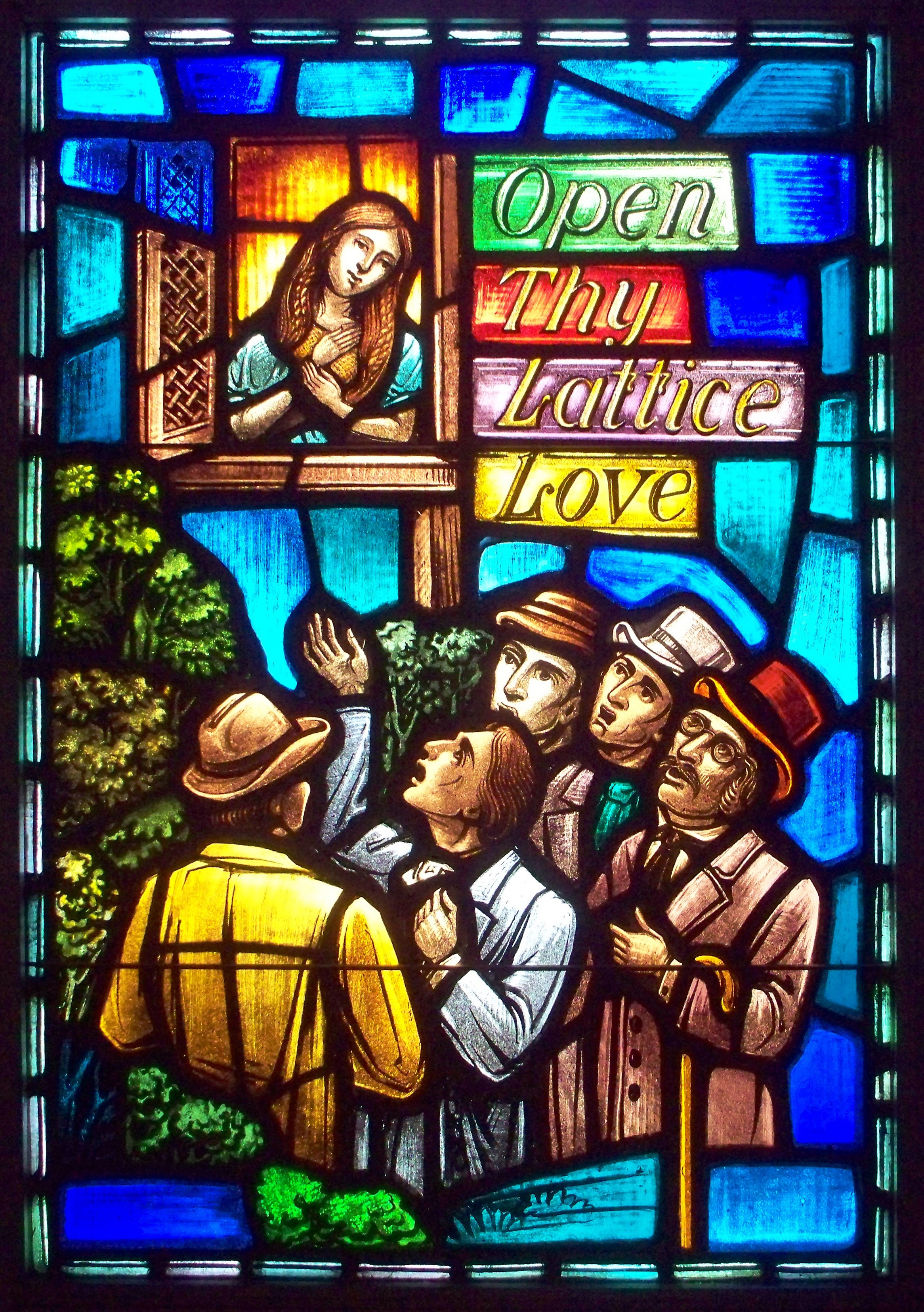
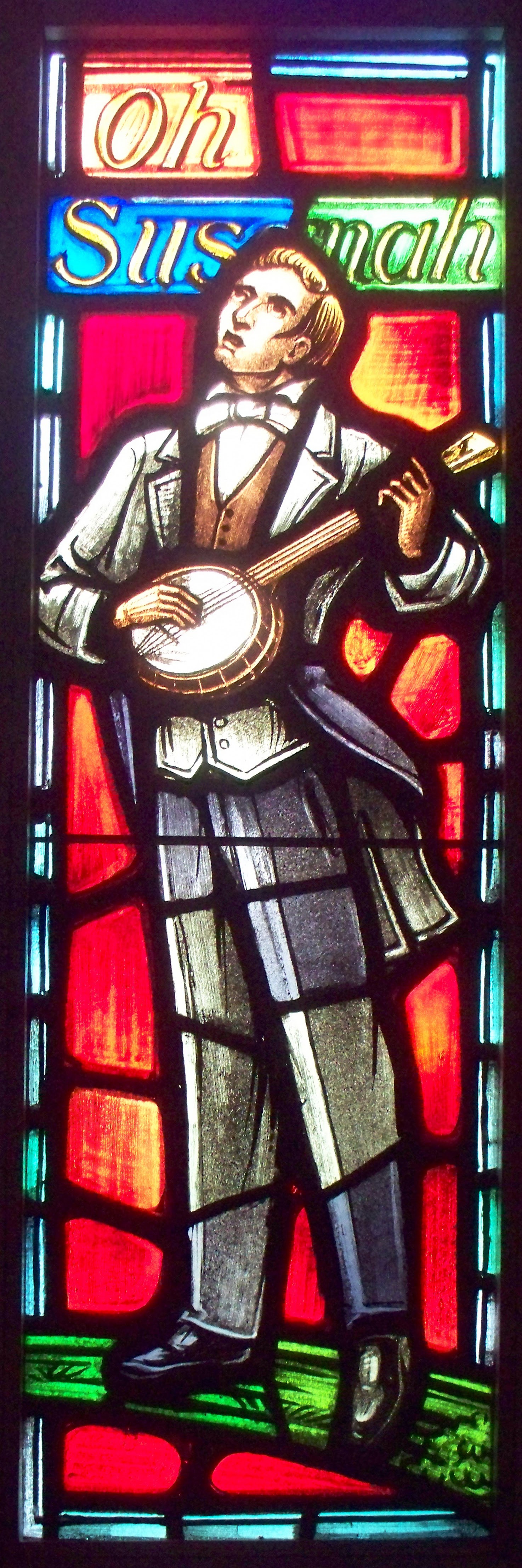
The Allegheny Cemetery Mausoleum, or “Temple of Memories” (as the cemetery calls it now), was built in 1960. It is filled with stained glass by the Willet studio of Philadelphia and the Hunt studio of Pittsburgh. The two distinct styles are very different, but Father Pitt does not know which is which.
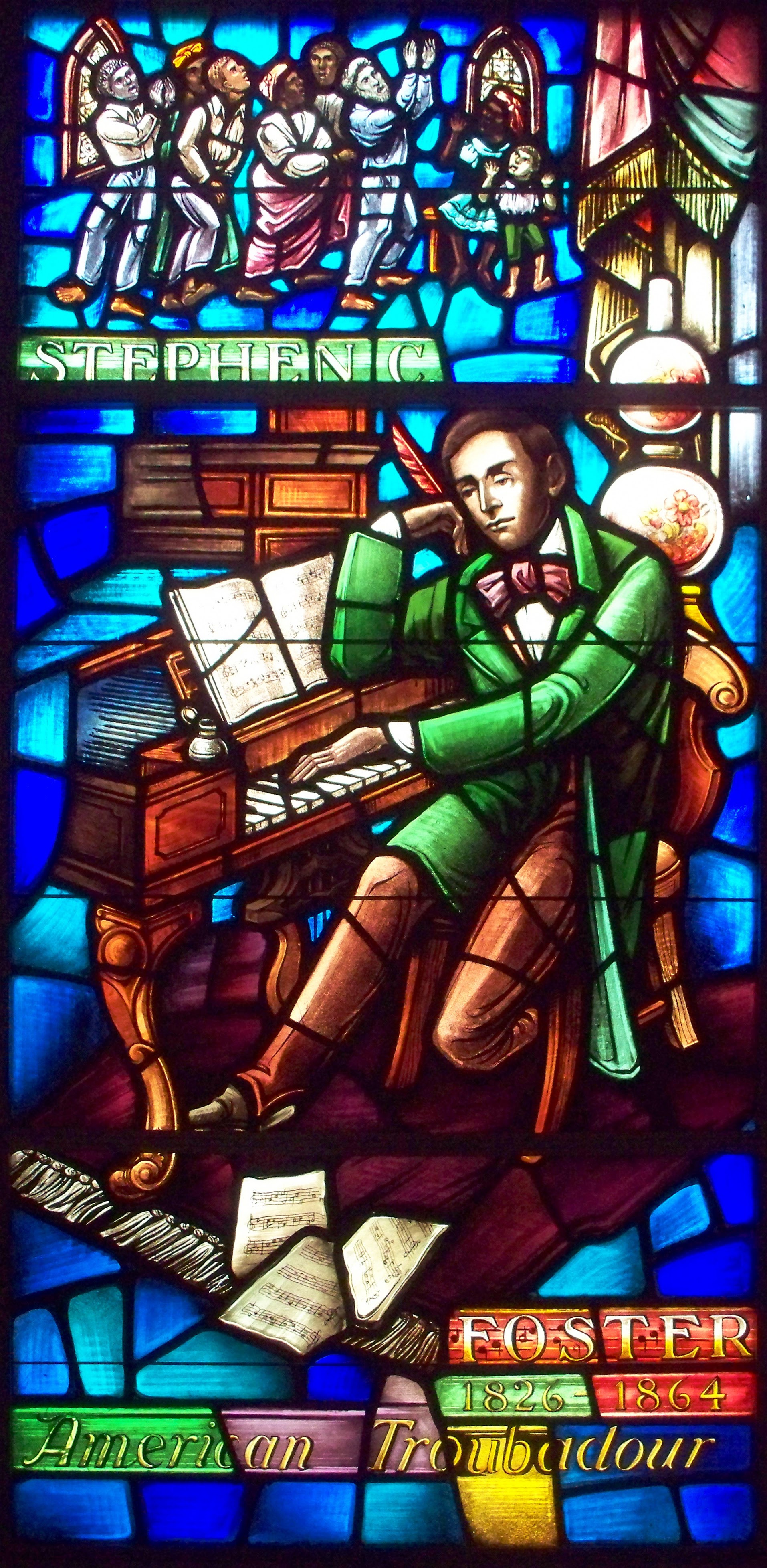
This Stephen Foster window is the centerpiece of the whole first floor of the mausoleum, which is appropriate. Thousands of rich and important people—politicians, robber barons, and even a few honest philanthropists—are buried in Allegheny Cemetery. But the only resident anyone really cares about is Stephen Foster, who made us dance and sing and weep, and died in poverty. (There is also a small cult of Lillian Russell, and Father Pitt would be delighted to see a Lillian Russell window in some future expansion of the mausoleum.)
This window includes something that delighted old Pa Pitt beyond all reason: the only stained-glass representation he has ever seen of a parlor organ.
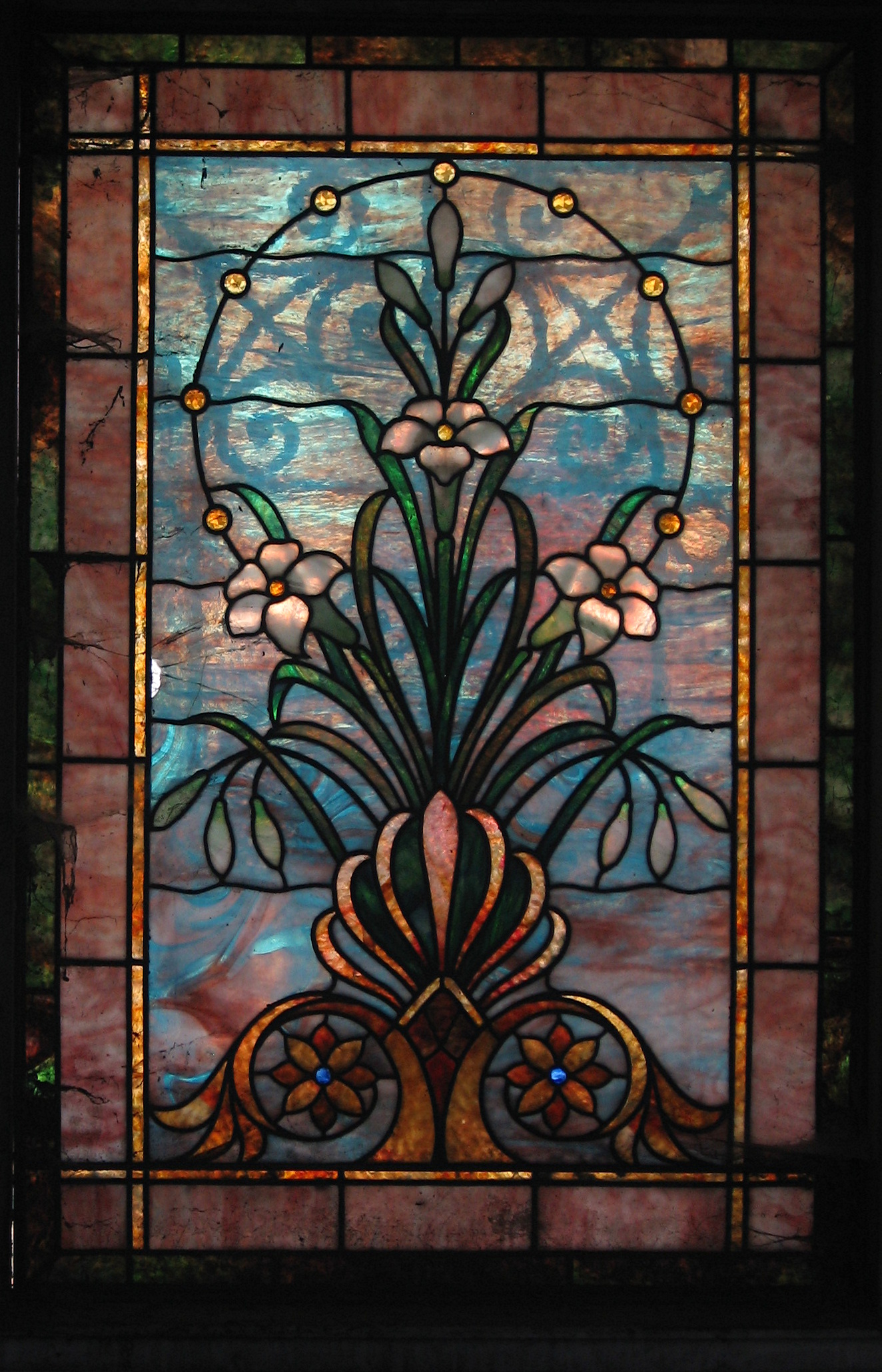
A finely proportioned Modern Ionic mausoleum with an attractive stained-glass window and artistic bronze doors.

Presumably “Theo” is an abbreviation for Theodore, though it could also be Theobald or Theophilus. This is a standard rusticated Doric mausoleum with a good Sacred Heart window.
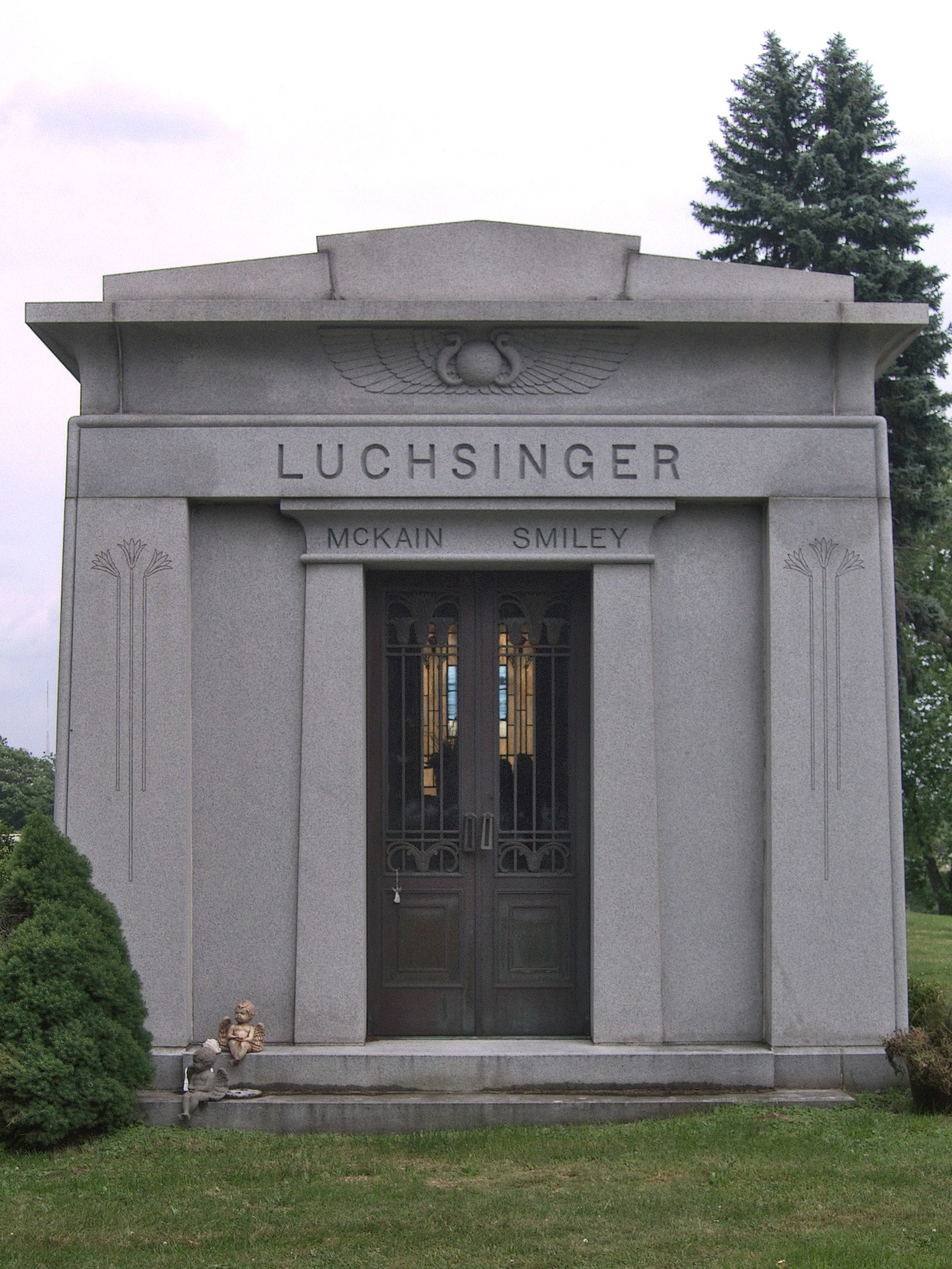
A smallish but still thoroughly Egyptian mausoleum; Father Pitt guesses it is fairly late in the era of the second Egyptian Revival. Inside is a simple but effective stained-glass view of a pyramid.


A plain mausoleum of rusticated stone, this one is exceptional in the South Side Cemetery for retaining its bronze doors; almost all the other mausoleums in the cemetery are now missing their doors, which can be sold as scrap by thieves to dealers who apparently never wonder why someone would happen to be carrying a large ornate door on the back of his truck. There is even a bit of almost-intact stained glass in the back.