
A simple but elegant Ionic mausoleum, seen here with the much more extravagant Brown pyramid in the background.

The Art and Architecture of Death
A simple but elegant Ionic mausoleum, seen here with the much more extravagant Brown pyramid in the background.

A simplified Doric mausoleum without entablature or any of the usual fiddly bits. It dates from 1885, but one could be forgiven for supposing it a twentieth-century modernist’s interpretation of classical style.

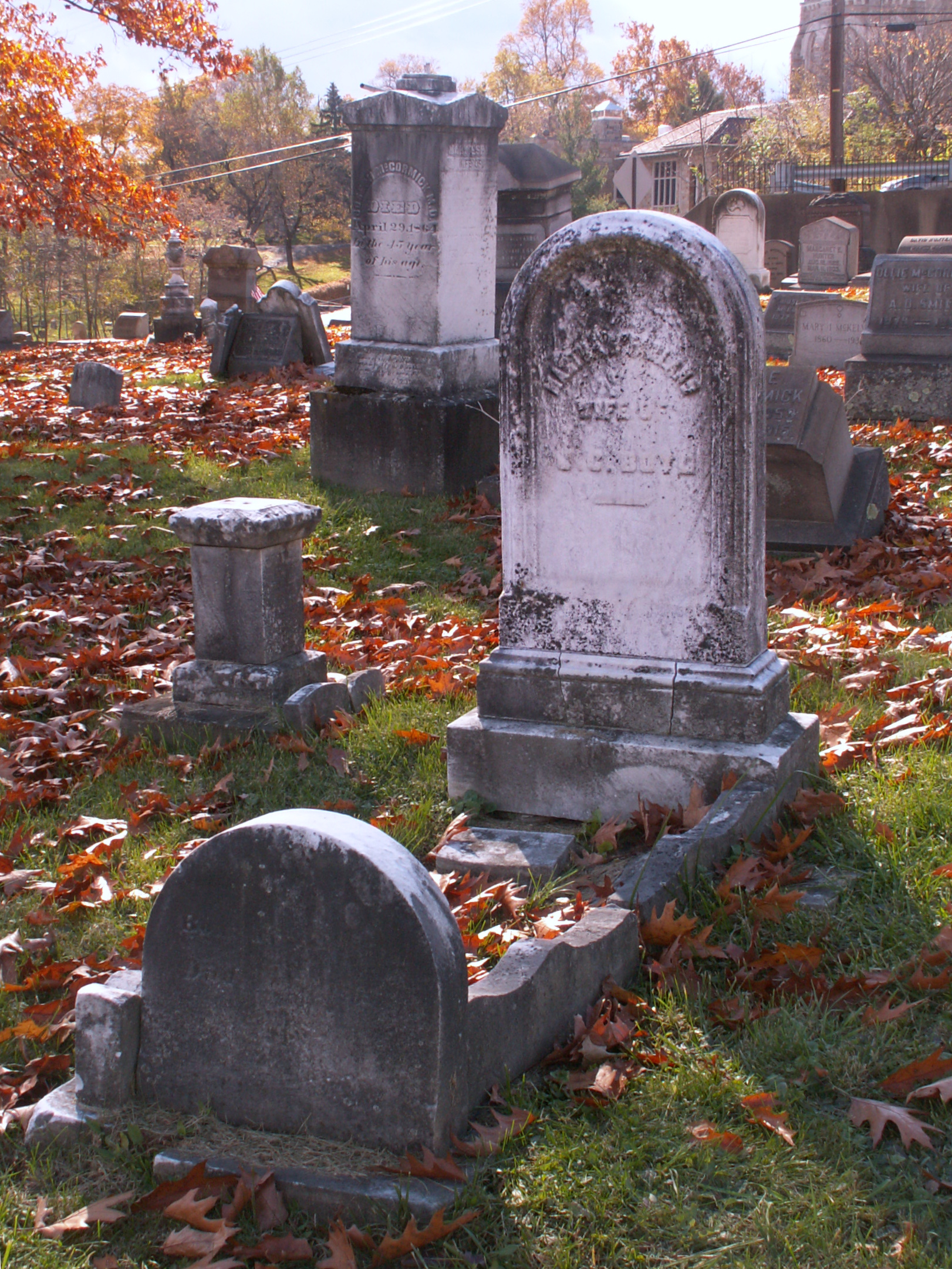
Two women in the Boyd family were given these bed-like romantic graves; the one for Irene Boyd is grander and more ornate, but this one is perhaps in better taste.


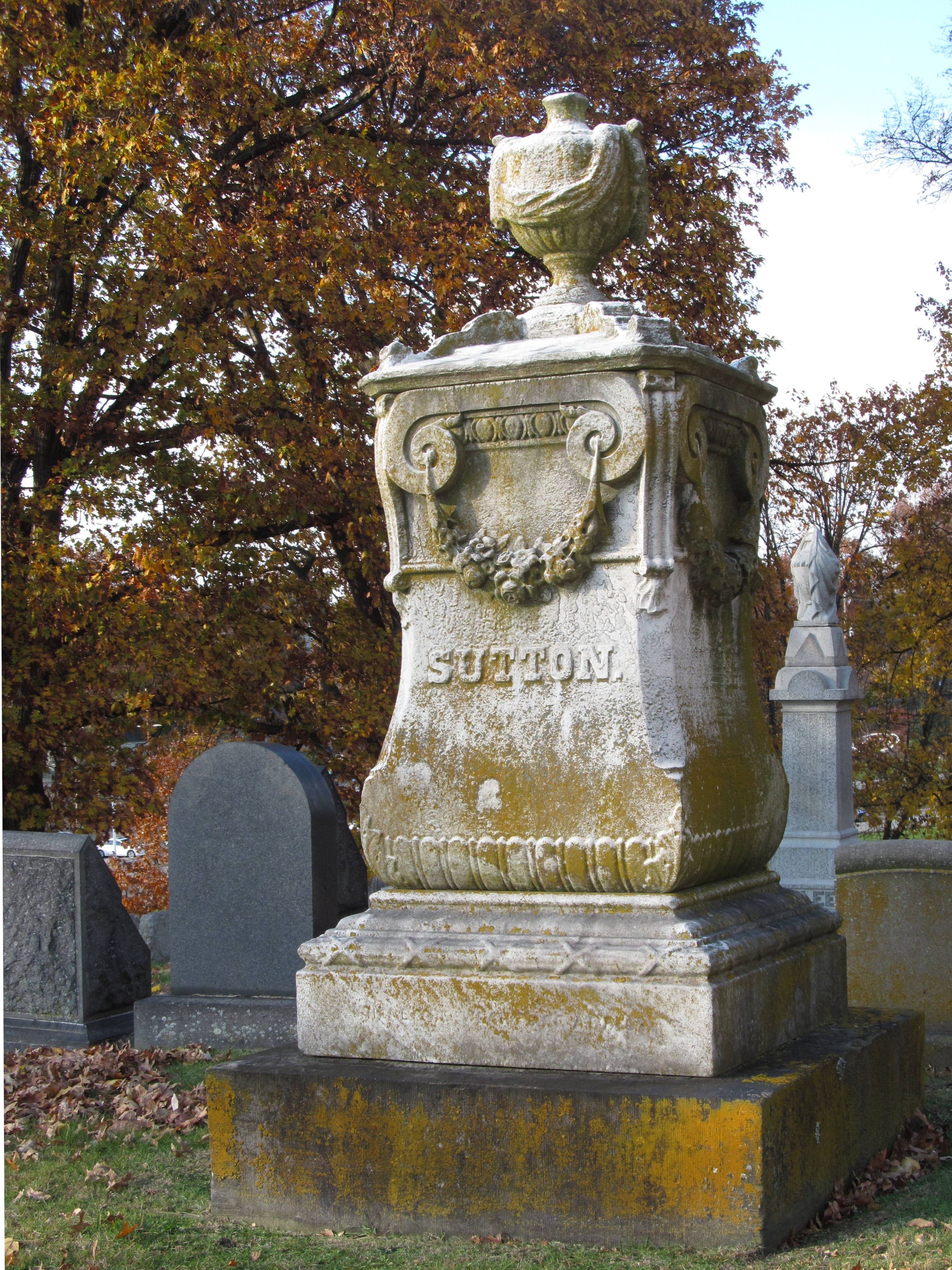
This glorious creation is what happens when monument makers design monuments the way illustrators imagine them: a very romantic interpretation of classical forms, including stylized Ionic capitals, swags, a shrouded urn, and classical foliage. Unfortunately the inscriptions have eroded into illegibility, but in certain lights some of the burial dates seem to be from the 1860s.

The variation in colors is mostly the result of using two different cameras.

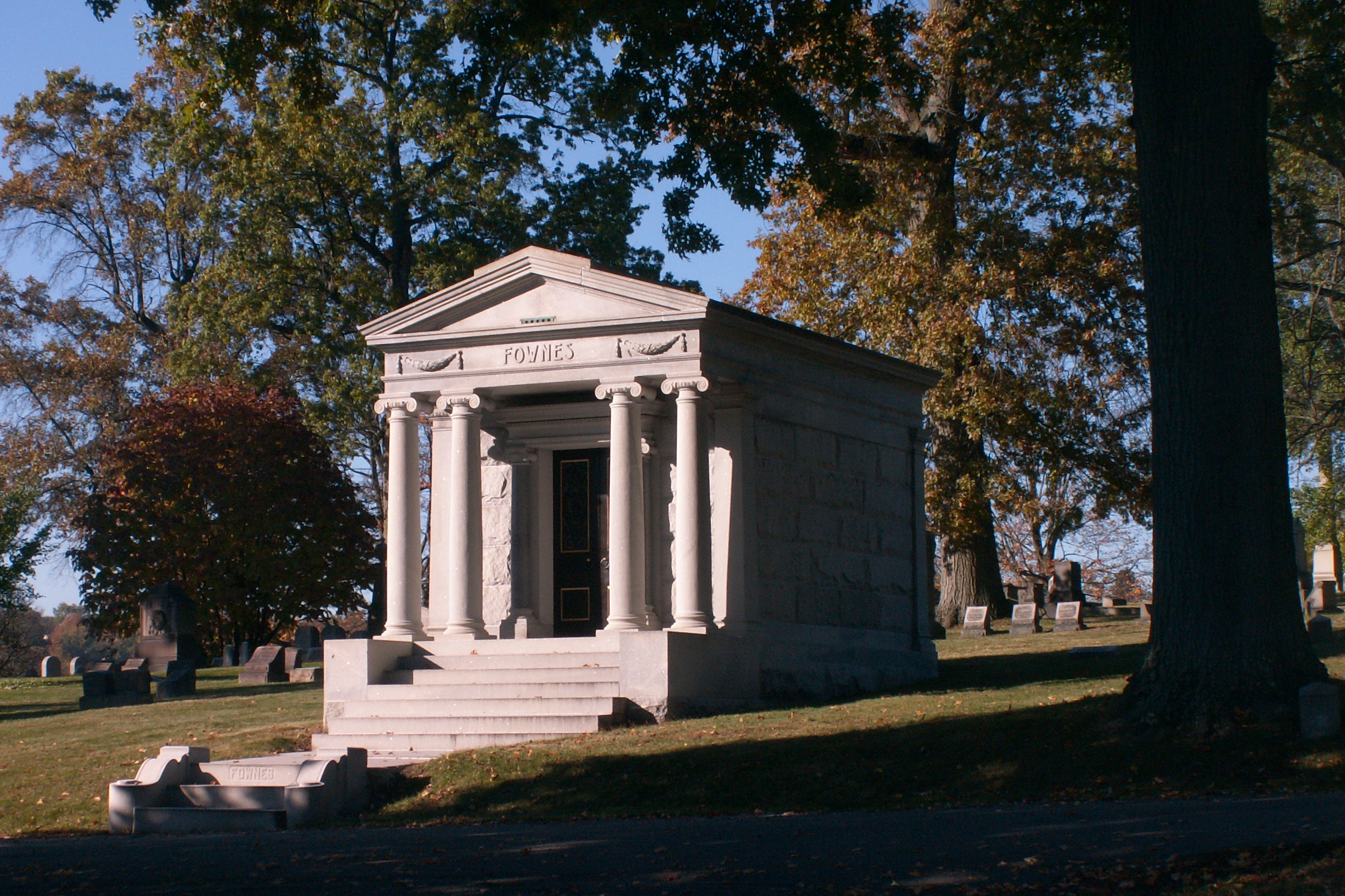
A rich-looking Ionic façade with a Victorian profusion of details, including rusticated stone blocks. It seems to have been a stock model; an exact duplicate was built for the Wilson family in the Union Dale Cemetery.

A particularly florid example of the romantic style that was popular in the middle 1800s. In its current state, it does not seem to have any dates for Irene Boyd: the name “Boyd” is on the back, and the name “Irene” on the front, with the rest of the stone given over to decorative elements. The footstone remembers a child, A. E. Boyd, who was born in 1855 and died in 1872.
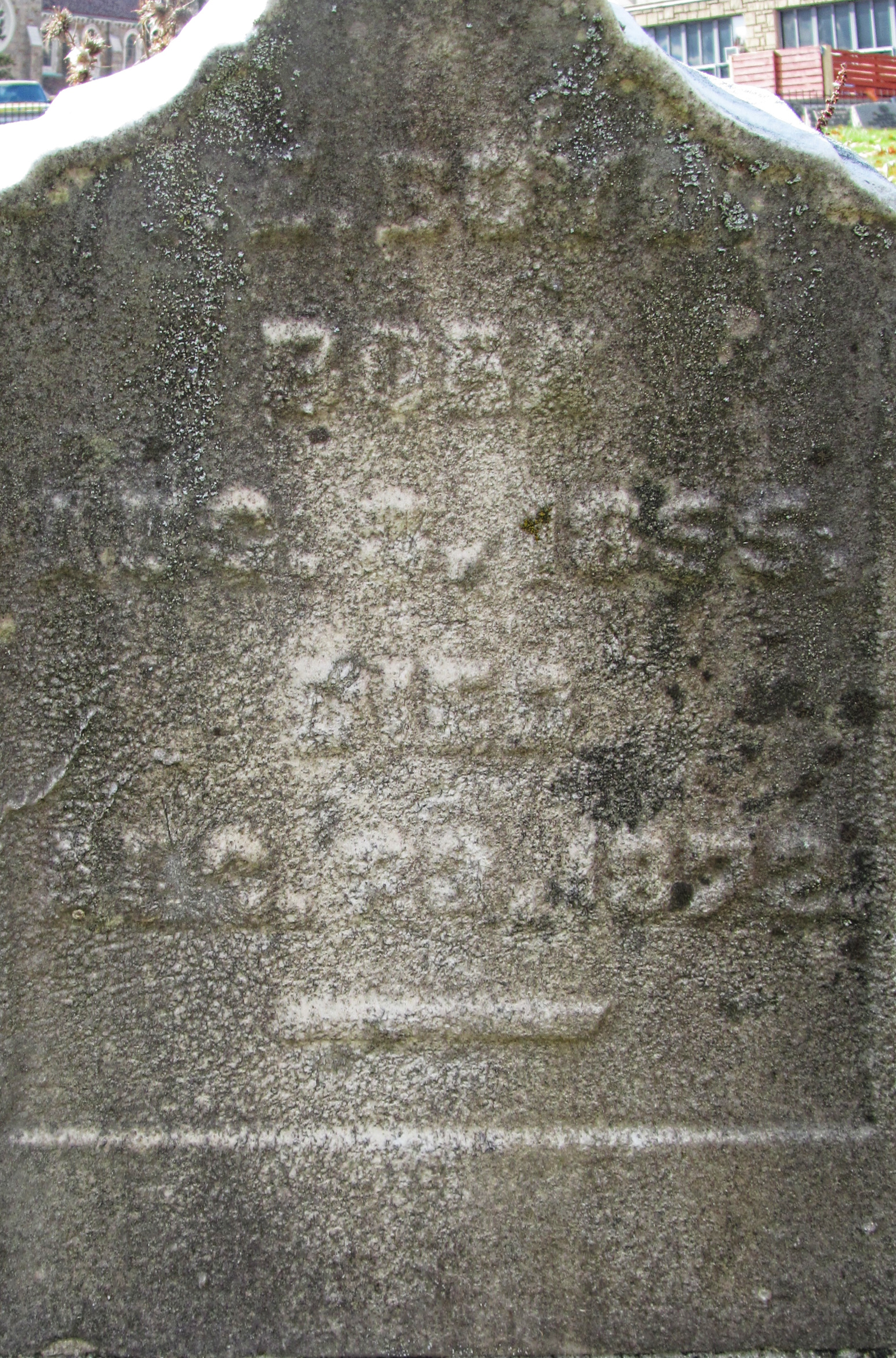
Inscription on the footstone.

The back of the headstone.

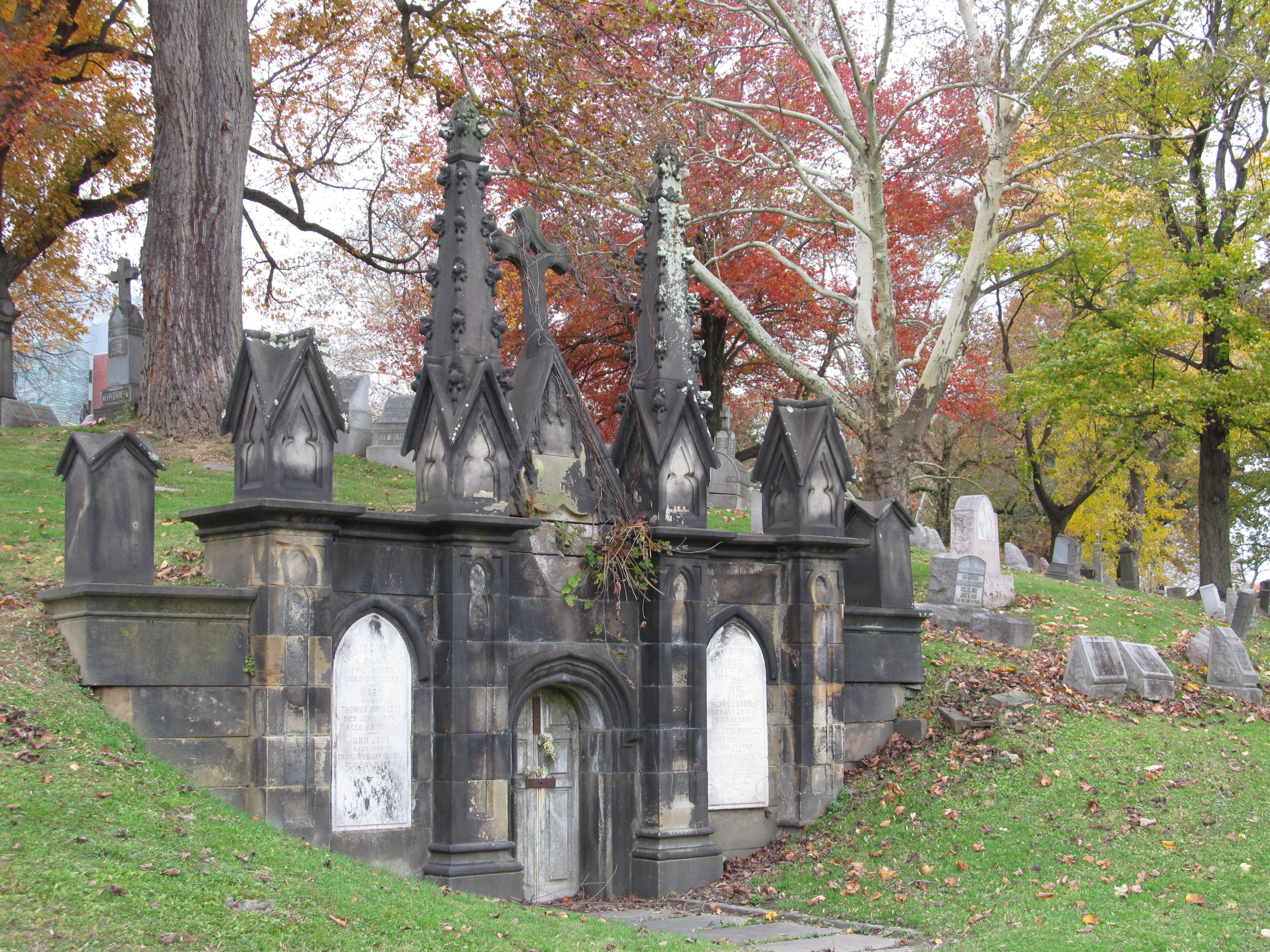
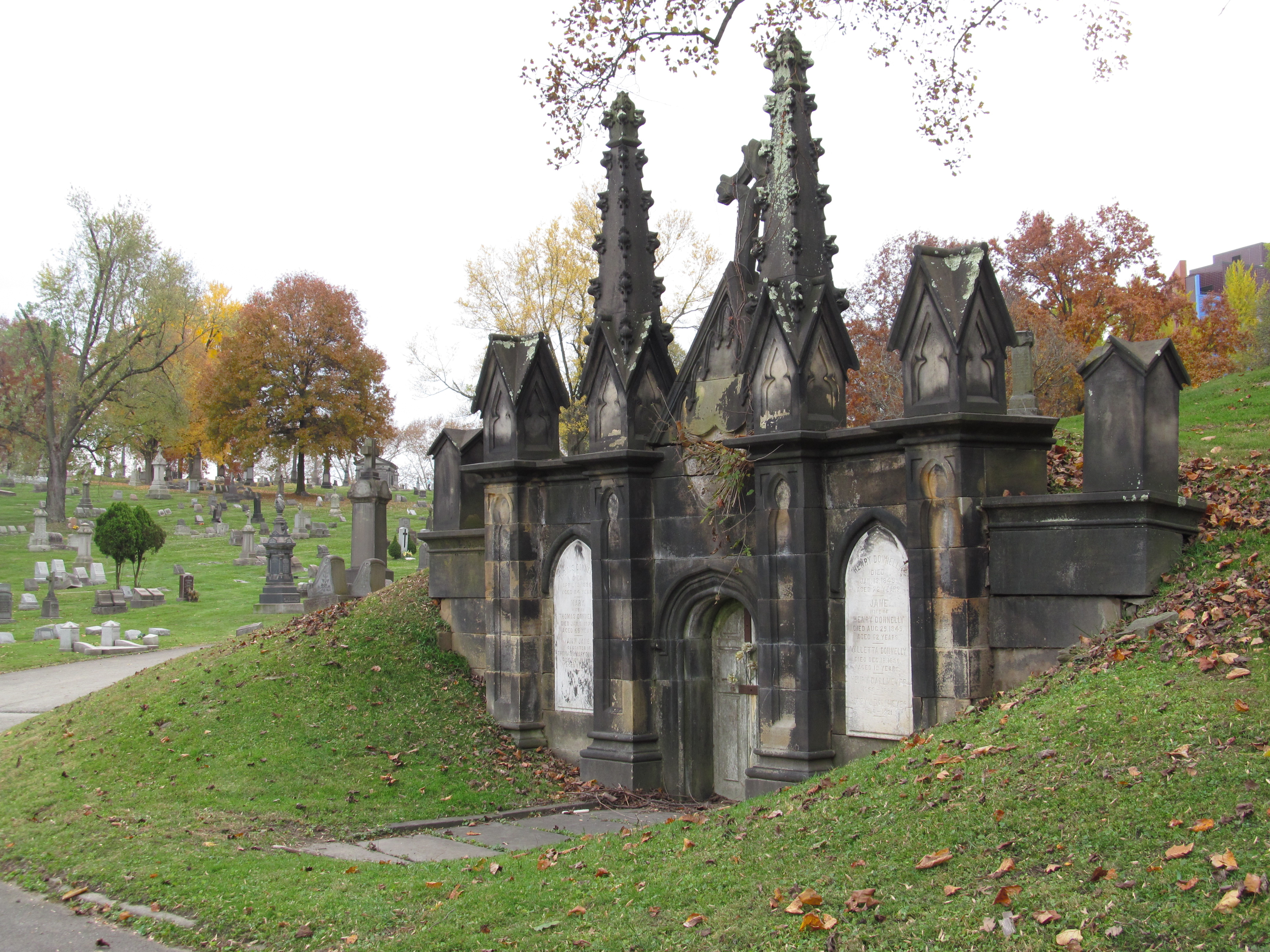
One of the most picturesquely mysterious-looking structures in the city of Pittsburgh: we can imagine it as the setting for an atmospheric scene in an old-fashioned Universal horror movie.

This must have been one of the earliest interments in the cemetery, which opened in 1849, the year Henry Donnelly died. It is perhaps the most striking in-ground mausoleum in Pittsburgh. In the early and middle nineteenth century, these mausoleums cut into a hillside were the usual resting places of the rich; they are most often referred to as “mausoleums,” but sometimes as “vaults,” and perhaps it would be best to use that term, reserving “mausoleum” for a free-standing building. They fell out of favor by the 1870s or so, and proper mausoleums came into fashion.



The cross has gone missing from this typical Slavic tombstone. The inscription is partly Slovenian and partly English; we suspect that “OUR FATHER” came with the stone, and the rest of the inscription was made to order.
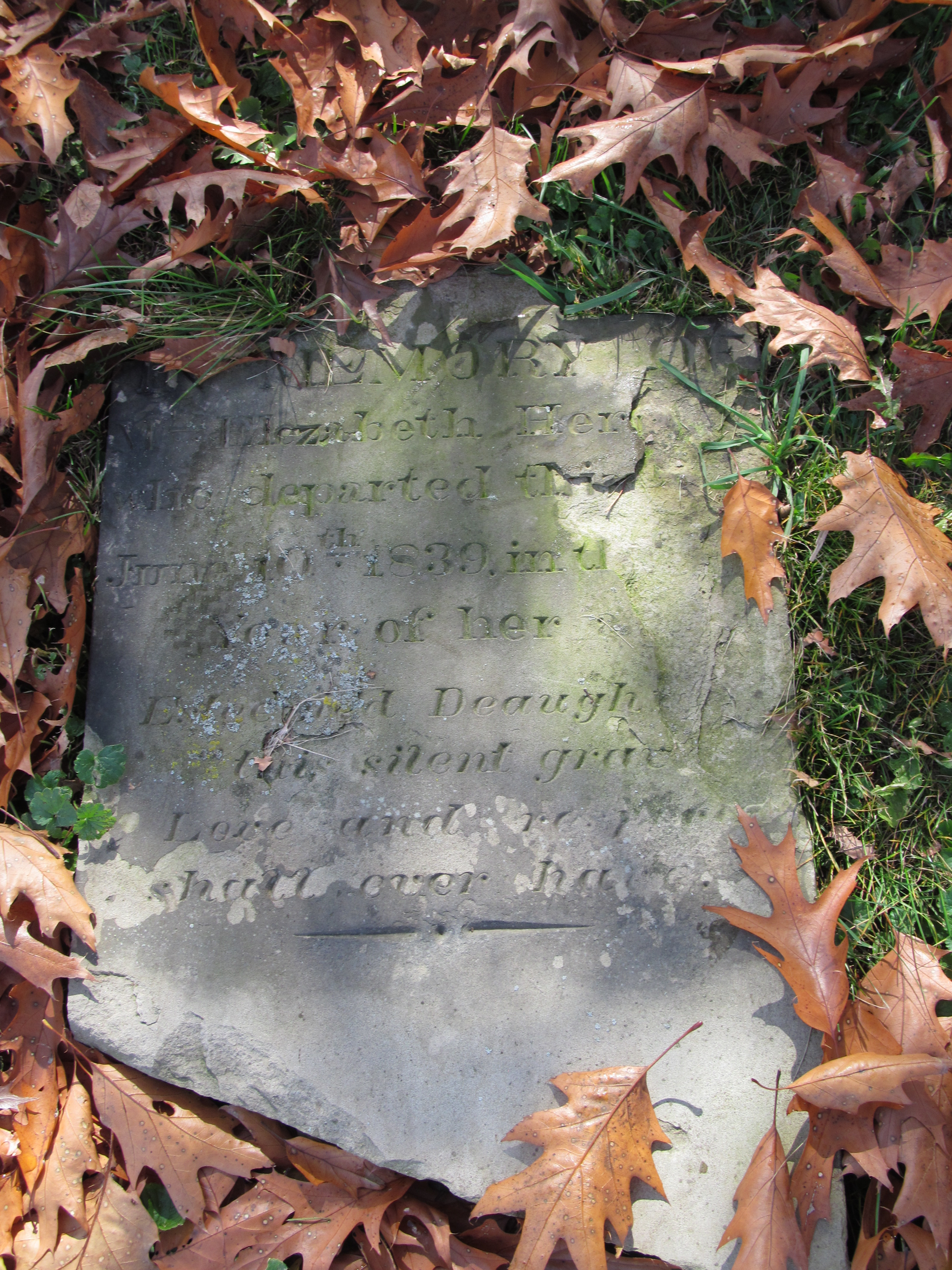
Broken but still mostly legible, except where the stone has flaked away toward the right. We are almost certain of the surname “Henry,” because the stone lies near several other members of the Henry family. Here is how we reconstruct the inscription:
—
Esteemed Deaugh[ter,]
this silent grave
Love and respect [?]
shall ever have.
This epitaph, such as it is, seems to be an original composition; Father Pitt has not found it anywhere else on the Web. The spelling “deaughter” is not unusual for Western Pennsylvania tombstones.


