
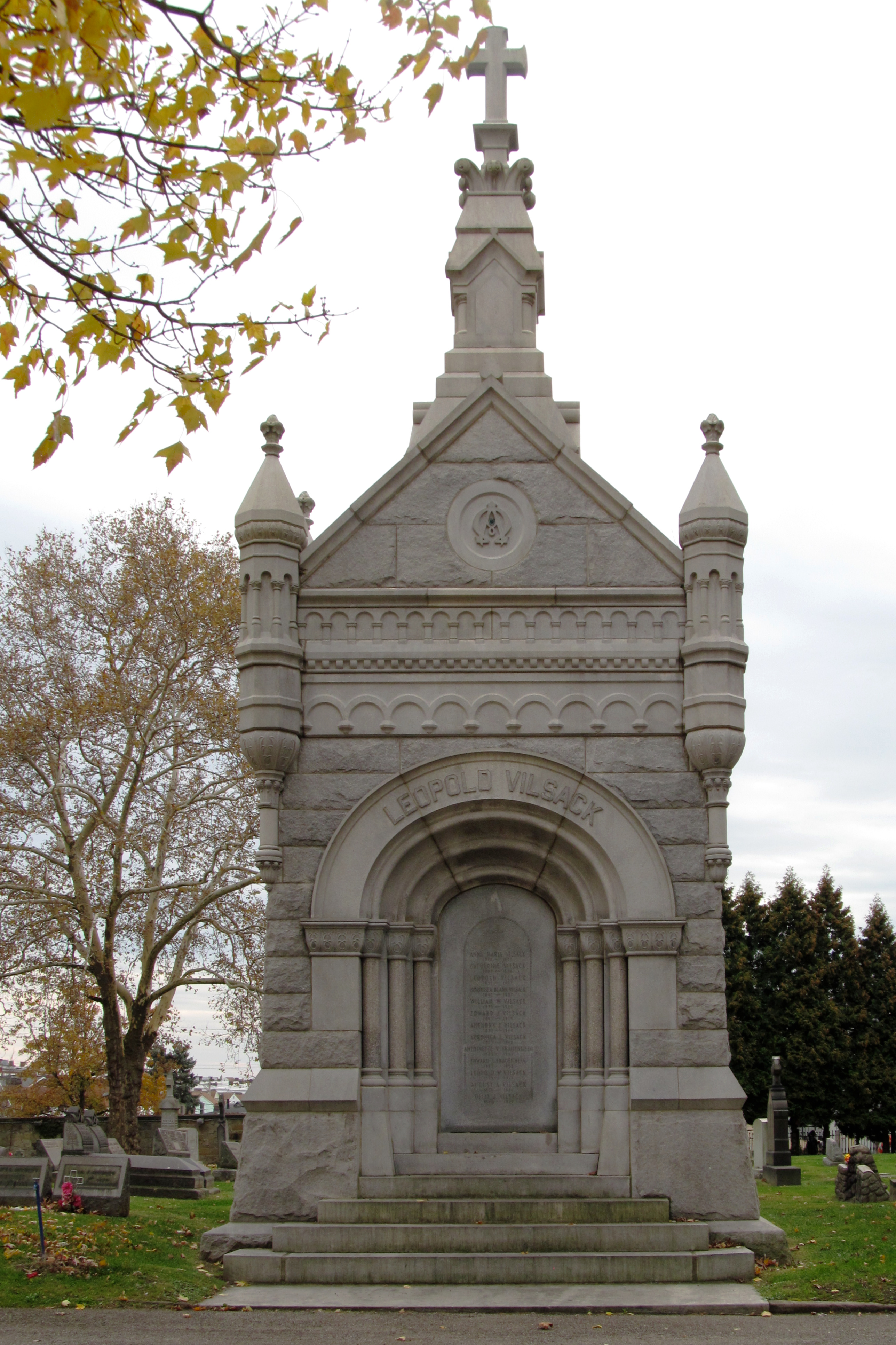
Leopold Vilsack was an early partner in Iron City Brewing, a wise investment that earned him this extravagant Romanesque mausoleum.


The Art and Architecture of Death
Leopold Vilsack was an early partner in Iron City Brewing, a wise investment that earned him this extravagant Romanesque mausoleum.

A typical zinc monument in most respects, except that it bears no inscriptions other than the name “STEWART” on the base. Instead, the various Stewarts have individual stone markers. Since one of the attractions of a zinc monument was that it could bear a number of inscriptions, thus saving the expense of individual markers, we suspect that there may have been a Stewart family argument over the Stewart family plot.

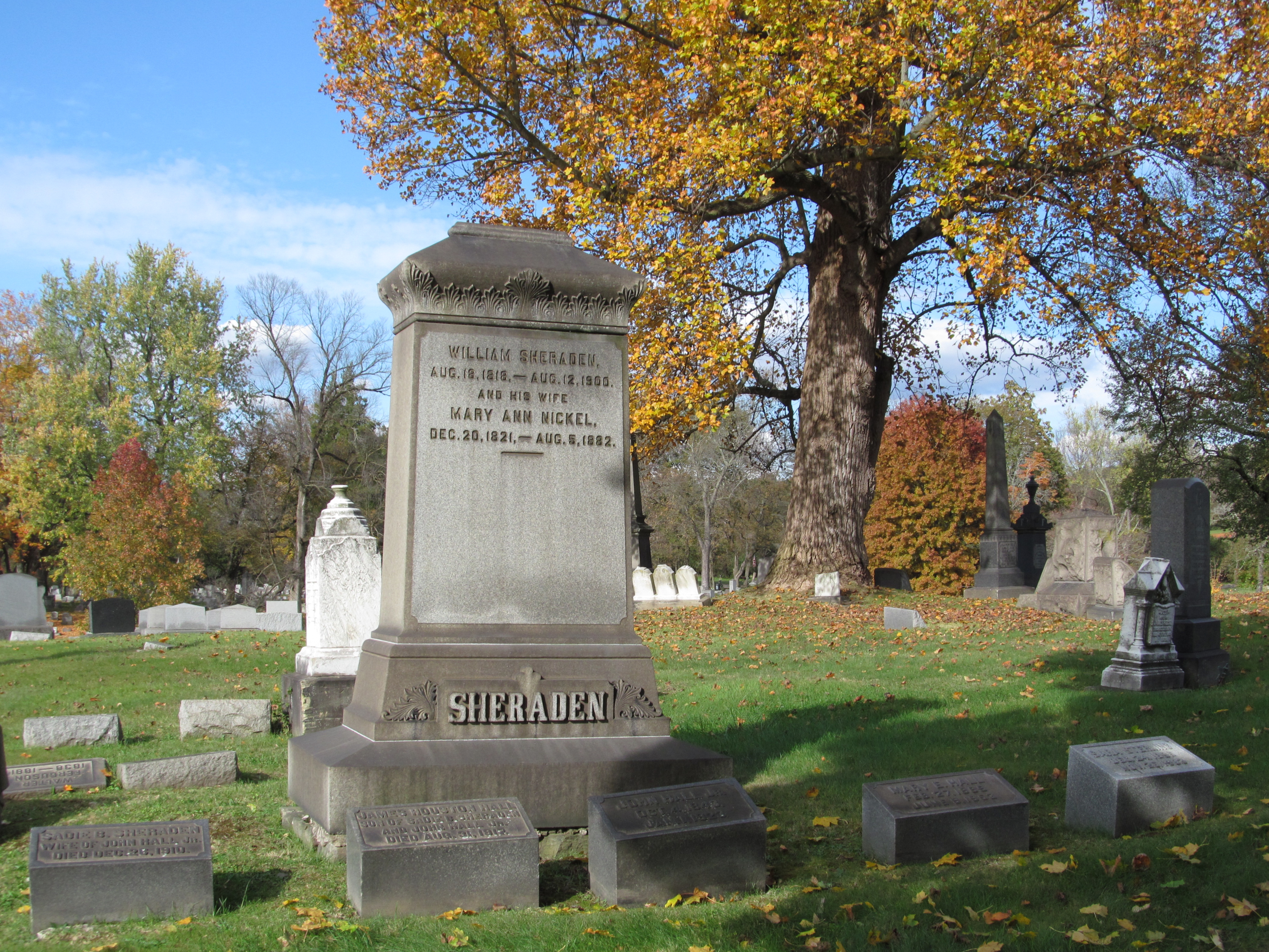
William Sheraden was the founder of the Sheraden borough that later became the Sheraden neighborhood of Pittsburgh. We have featured this monument before, but not with such fine fall colors in the background.

A matched pair of monuments in a late version of the romantic style that was popular in the middle 1800s. August Abbott was born in Saxony, but his inscription is in English, suggesting that his family—unlike many German immigrant families—Americanized in one generation.


The monuments are signed by the stonecutters, and the signatures are different.

Boggs & Lindsey, if we read correctly.

Alex. Boggs—again if we read correctly. Perhaps Lindsey retired or died.

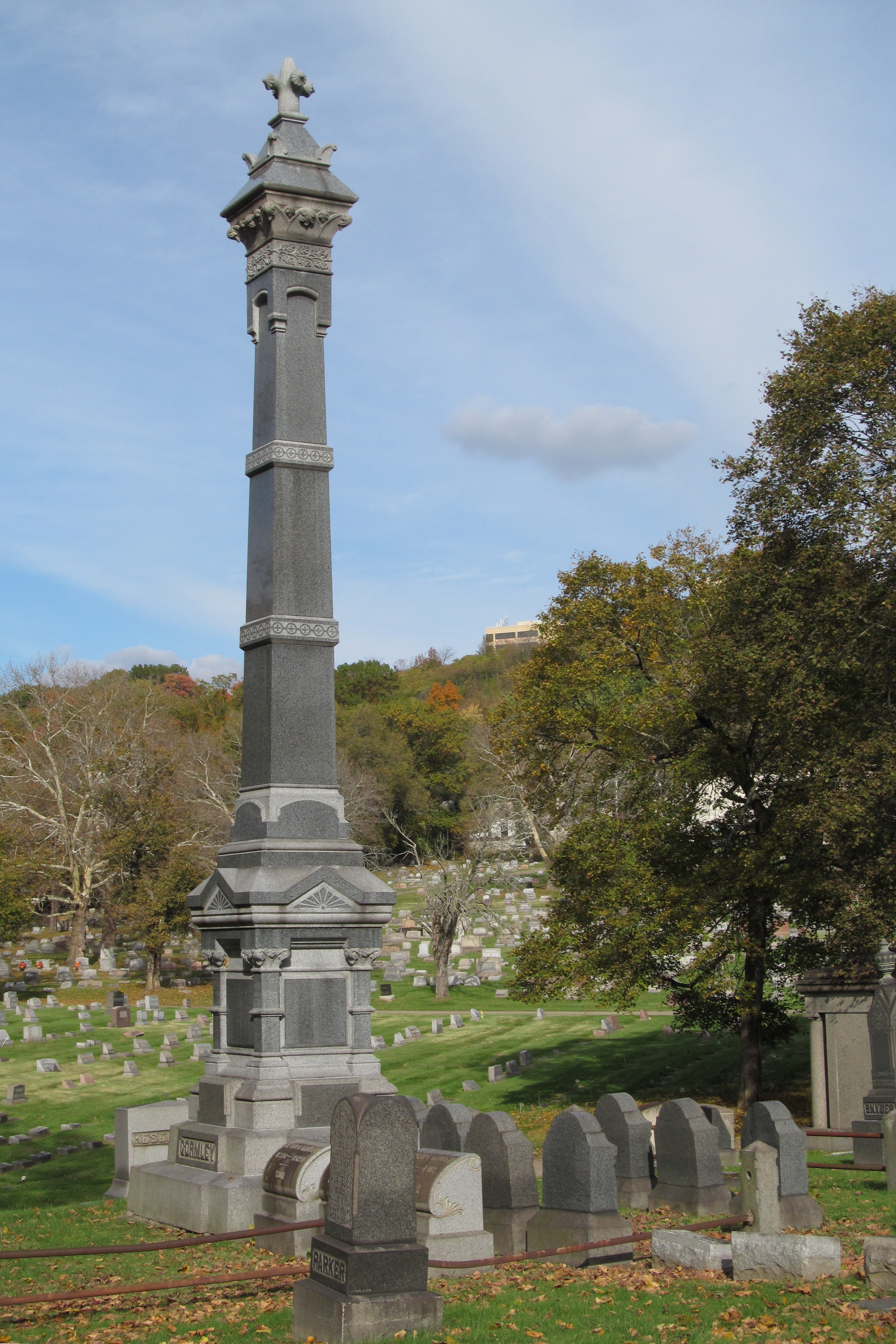
This truly monumental monument is the tallest private memorial in the cemetery; only the Civil War monument is taller. It is nevertheless a monument-dealer’s stock item; an identical monument can be found in Allegheny Cemetery. It marks the family plot of the Gormleys, whose patriarch was named James for several generations, until the last James Gormley was finally buried under the epitaph “THE LAST OF THE LINE.”


Old Pa Pitt hates to throw up his hands and declare a monument “illegible.” It is especially frustrating with this monument, where on one side he can read almost everything but the last name—John something, who died August 16, 1847. That date seems about right for this style of monument, which was quite fashionably artistic for its time. On another face is an even more eroded inscription for someone whose given name was Lizzie, and another name that Father Pitt has not been able to decipher. Perhaps in different light the inscriptions will become clear, and Father Pitt promises to update this article if he succeeds in reading them.


A typical Victorian shaft topped with equally typical shrouded urn. The name Gutbub is unusual, but we have run across it elsewhere: in Zion Cemetery, on a very similar (but not quite identical) monument. That family later changed its name to Goodboy, which is even more unusual.

A very Victorian towering shaft topped with an urn. It probably dates from 1891, when A. R. Sloan died.


This unusual round Doric temple, unlike a closed mausoleum, invites cemetery visitors to step up and under the roof. There the names of the Baum family members interred here are inscribed in an open stone book on a lectern.


