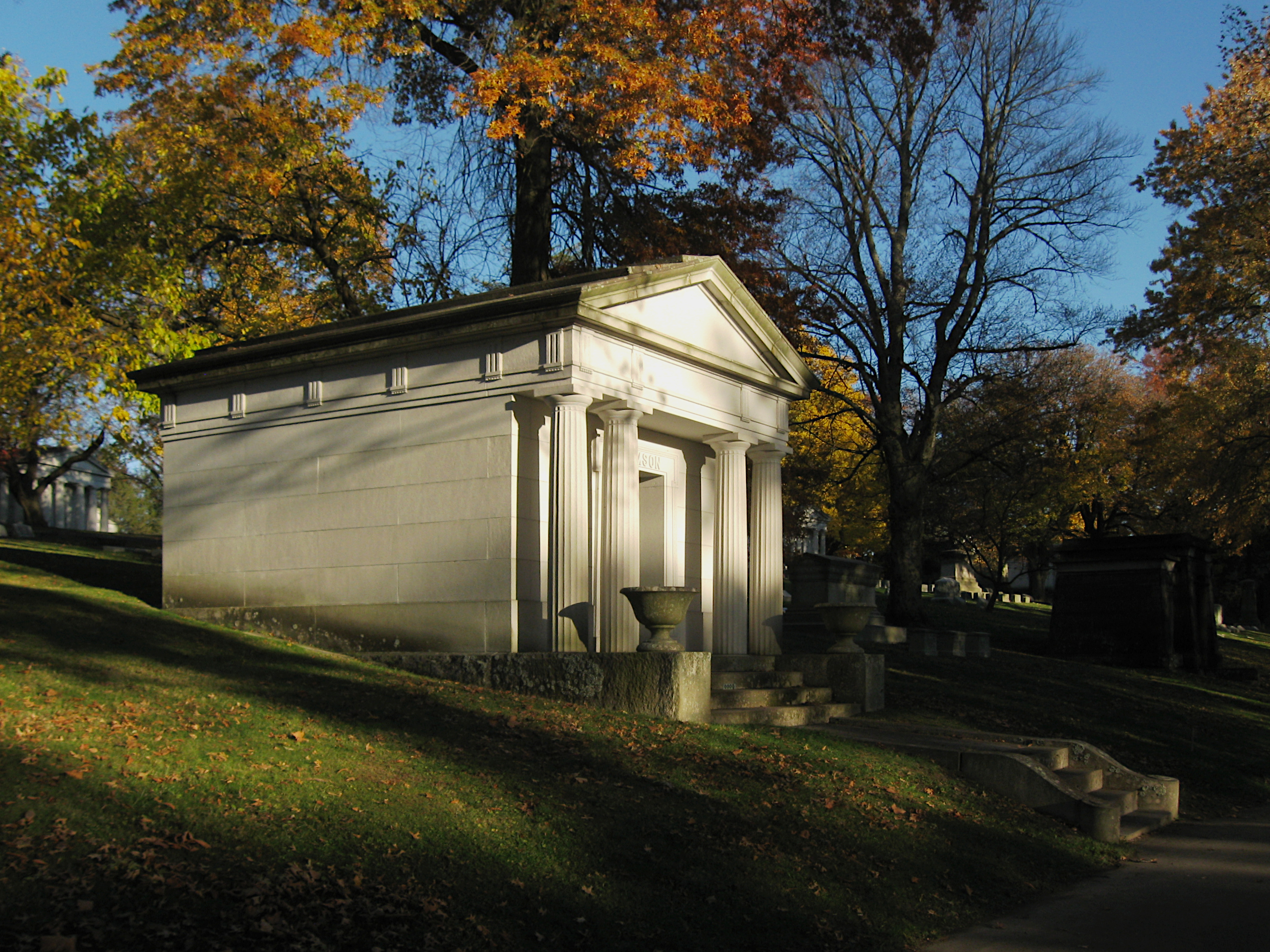
A typical Doric mausoleum made exceptional by its picturesque setting on a hill.


The Art and Architecture of Death

The last resting place of many a robber baron who had lived in the millionaires’ havens of the East End.
A typical Doric mausoleum made exceptional by its picturesque setting on a hill.

A large Doric temple near the entrance to the cemetery. It is very much a gentleman’s mausoleum: it is most distinguished by its lack of distinguishing features, concentrating instead on getting every detail of the style perfectly correct.


A small Doric mausoleum distinguished by its arched doorway, rare in Doric mausoleums in Pittsburgh. (Old Pa Pitt has a backlog of cemetery pictures with fall colors, so don’t be surprised to see more of them this winter.)


The Byzantine style of this elaborate mausoleum is unusual in Pittsburgh. The complexity of the design makes the structure look larger than it is; it is not a small mausoleum, but it is not as big as it looks at first glance.

A Doric mausoleum distinguished by its rusticated stone everywhere but the columns.

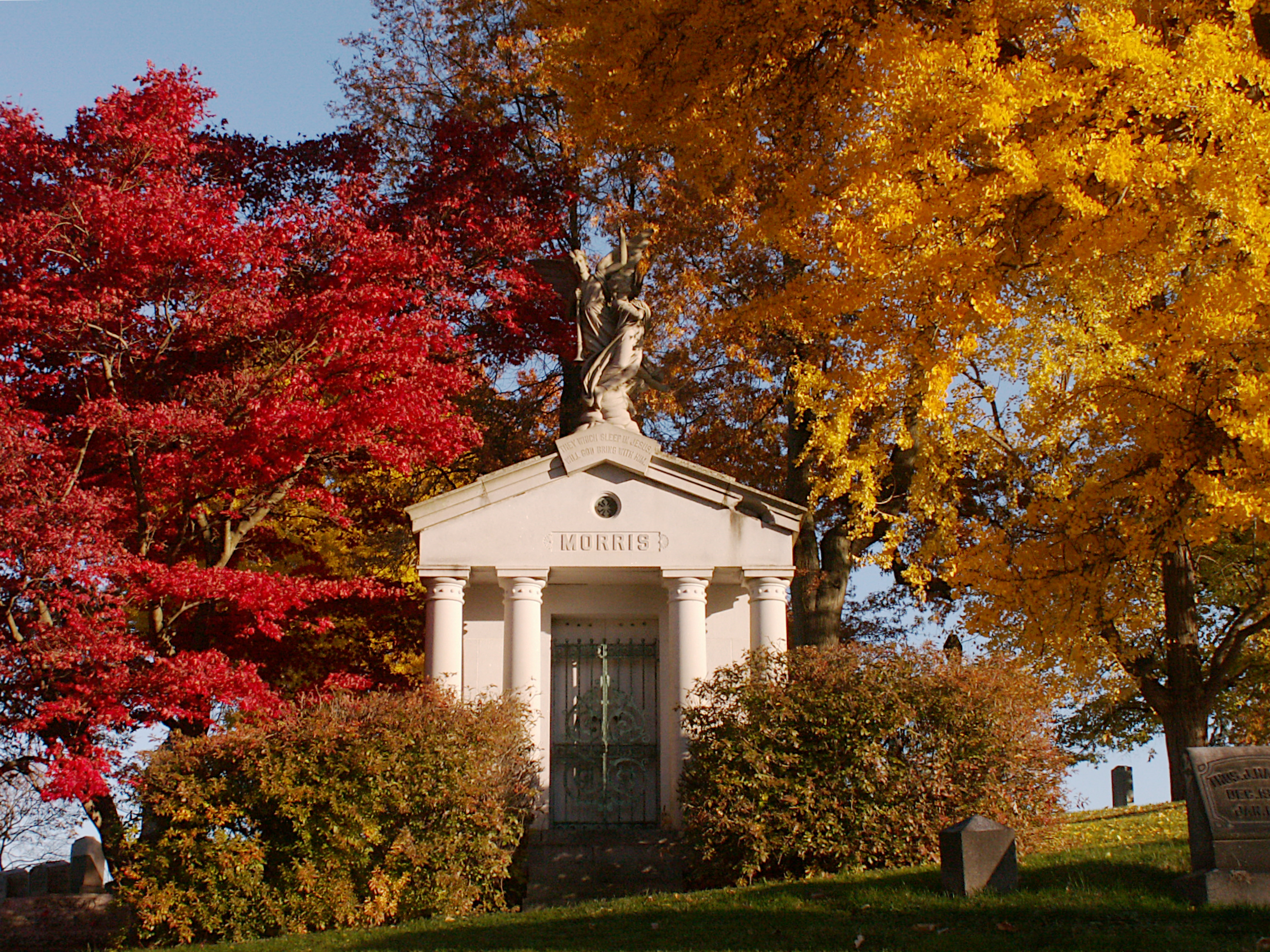
This small Doric mausoleum bears a fine life-size sculpture with an ungrammatical inscription that always irritates old Pa Pitt every time he sees it.



Probably the most photographed monument in the cemetery, this pyramid is festooned with Egyptian symbols—but, like most other pyramids in Pittsburgh cemeteries, it has the Roman proportions of the Pyramid of Cestius in Rome.


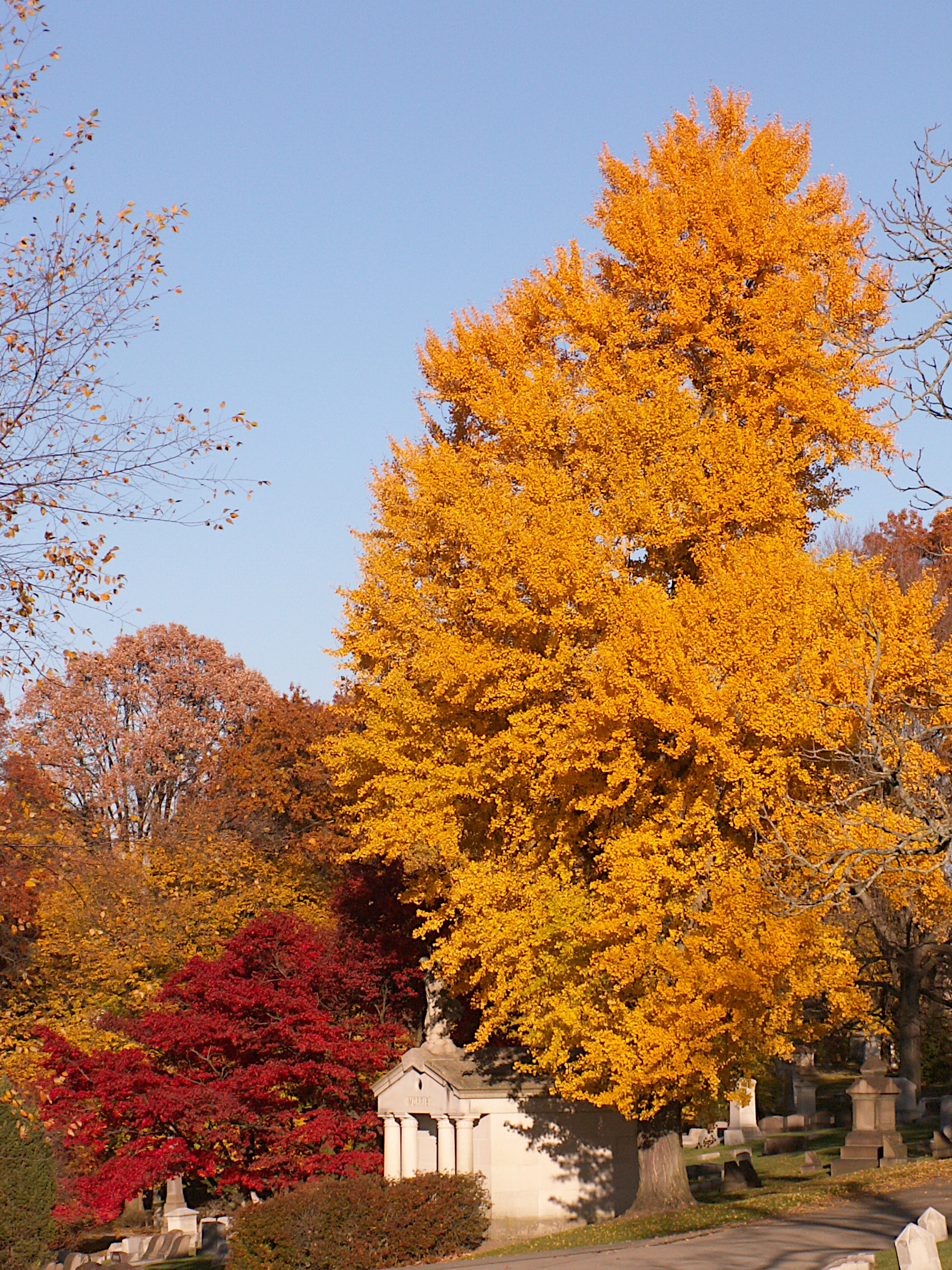
This is the Pitcairn for whom the borough of Pitcairn is named, a bigwig in the Pennsylvania Railroad. He built himself a large and tasteful Corinthian mausoleum to rest in. Next to it is a spectacular Ginkgo biloba in full autumn splendor.


A simple and traditional Doric mausoleum in a beautiful fall landscape. Mr. Succop was the president of the Germania Savings Bank and on the board of a number of other banks and manufacturers.


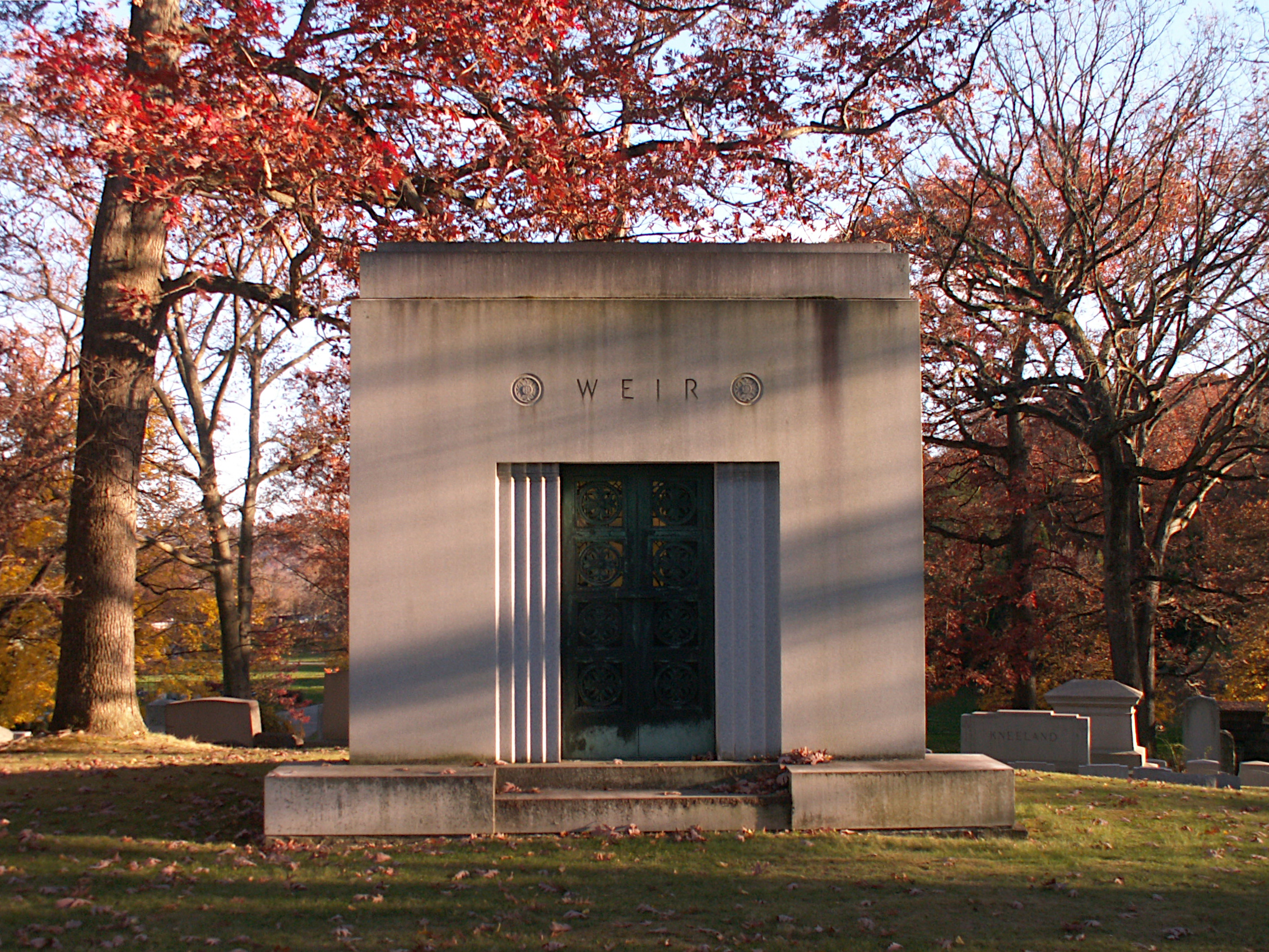
A very tasteful example of mid-twentieth-century modernism in a fine fall landscape.