Pittsburgh Cemeteries

The Art and Architecture of Death

Ridgelawn Cemetery in Reserve Township began in 1888 as St. Peter’s Lutheran Cemetery. The oldest section is in the far back, and here it reveals its distinctive feature, one that definitely makes it worth a visit: it preserves the style of the old rural cemeteries, with stone-fenced family plots carefully maintained. Even the Allegheny Cemetery, our most famous cemetery of the “rural” movement, has got rid of most of the stone walls, and those that remain are often broken down or half missing. Groundskeepers hate them, after all, and it is much easier to keep the cemetery looking neat if the walls go away.

So we generally see these old family plots in small half-overgrown cemeteries where no one has cared enough to remove the walls. But here the walls are not only preserved, but scrupulously maintained. Paradoxically, Ridgelawn Cemetery may give us a better idea of what the Allegheny Cemetery looked like a century ago than the Allegheny Cemetery itself does.

The Volz plot is typical. It is surrounded by a low stone wall; it has an entrance with the family name on the threshold; and it has a large family monument toward the rear surrounded by individual graves.

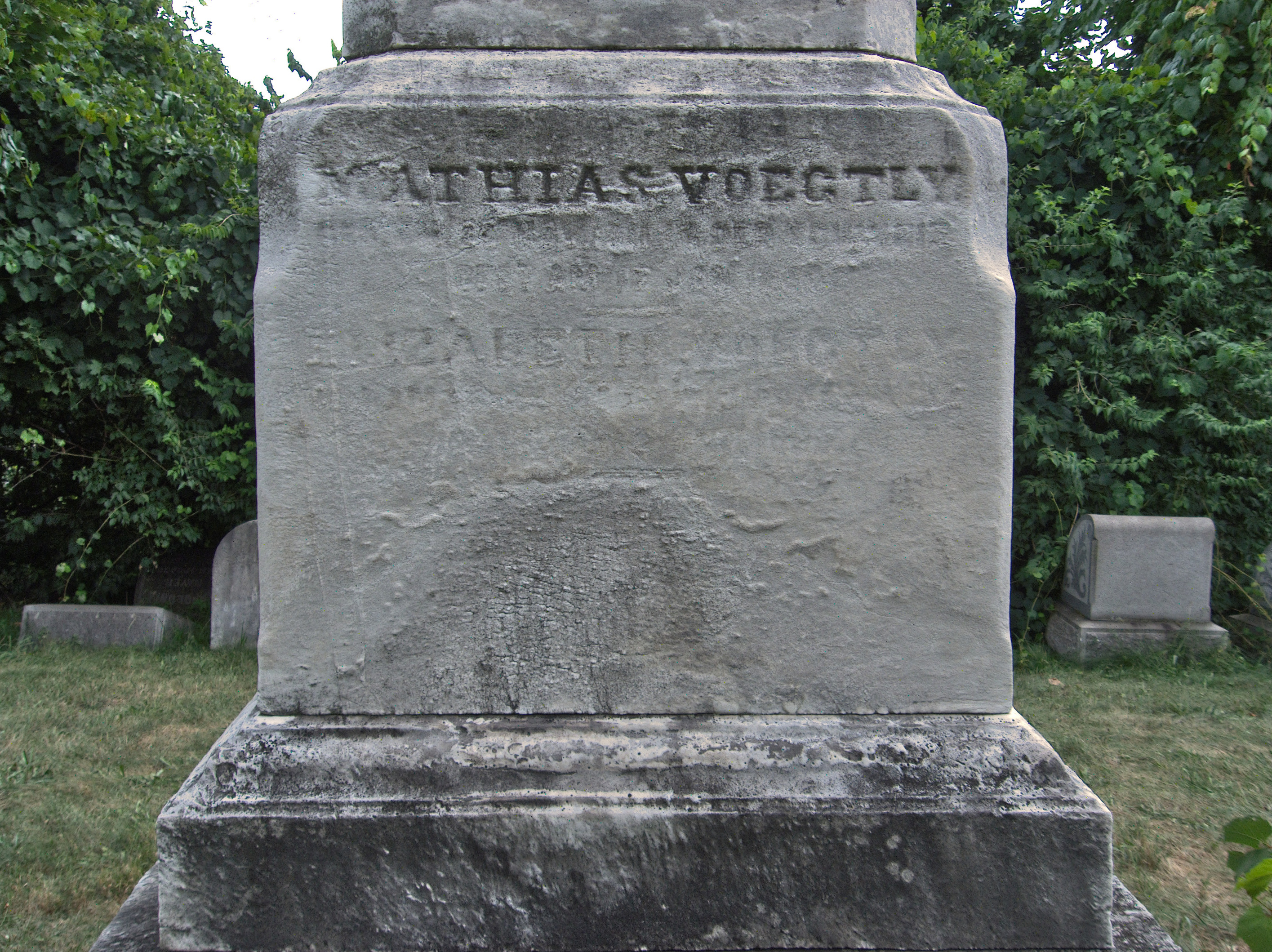
Father Pitt assumes that this is a descendant or other relative of the Voegtly who donated the land for the original Voegtly Church in Dutchtown, whose name this cemetery perpetuates. The name of Mathias Voegtly is still quite visible, but the rest of the inscription is badly eroded. We can just make out the name of Elizabeth Voegtly, but the rest is difficult.

However, the graves of the Voegtlys are also marked with expensive granite memorials, and though they are overgrown with wild grapes (you can see the mound of grape vines to the right of the obelisk), Father Pitt pushed back the grapes enough to collect these data:

Mathias Voegtly: Born November 26, 1811; died January 17, 1884

Elizabeth Voegtly: Born July 28, 1805; died October 2, 1890.

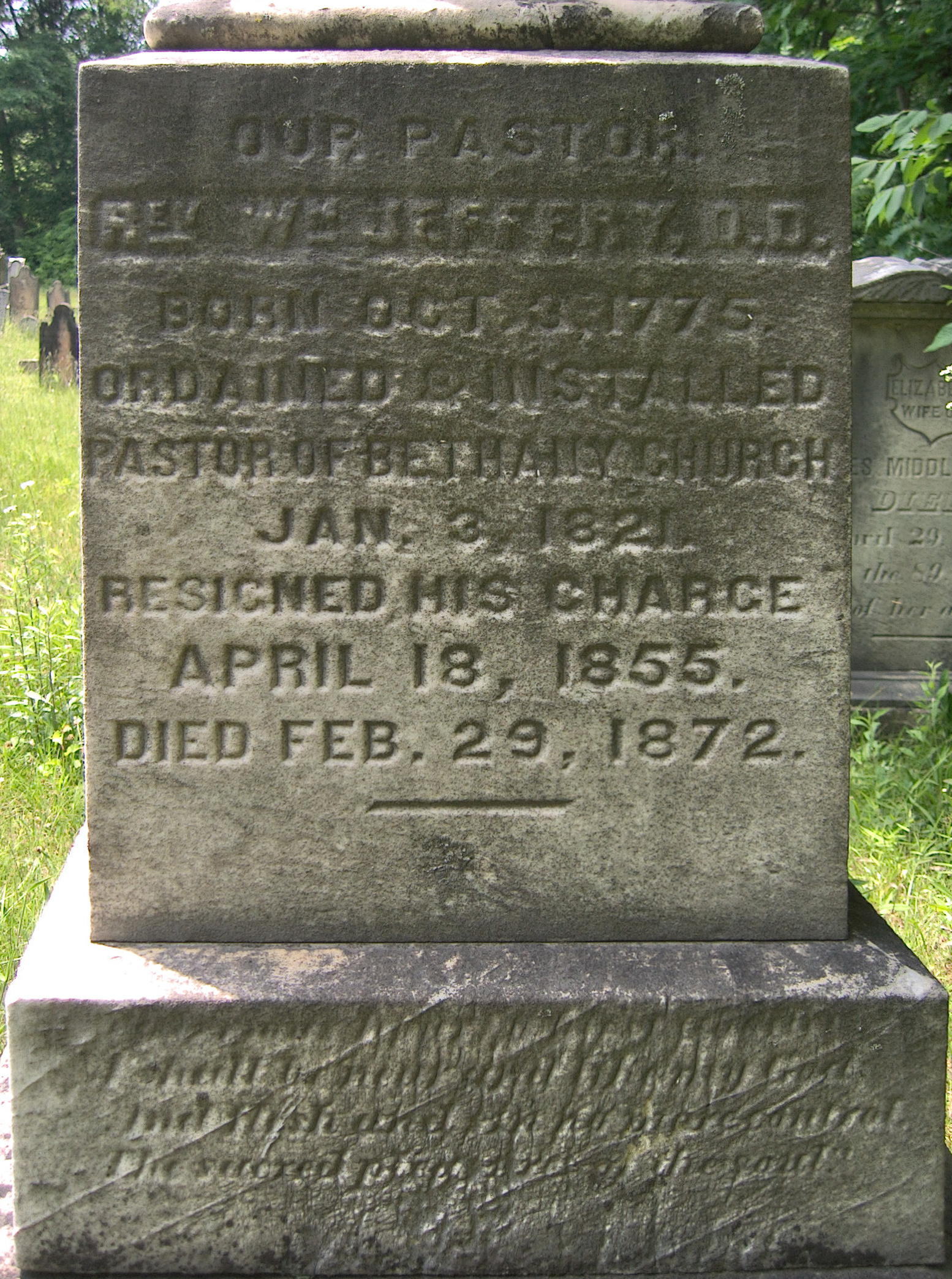
The Rev. William Jeffery, D.D., was pastor of Bethany Presbyterian Church for 34 years. He retired in 1855, as he was approaching the age of eighty; but he lived almost another seventeen years after that, dying at ninety-six in 1872. From the style, we guess that this obelisk was put up when he died.

Pastor Jeffery’s wife is also marked by this obelisk, and so is a daughter Elizabeth, who died at not quite five years old in 1831.

Elizabeth also has her own fine tombstone in the style of forty years earlier, which tells us that she died of that great scourge of nineteenth-century childhood, scarlet fever:

The only proper reaction to such a loss is the one Pastor Jeffery had cut into her tombstone: to quote from the book of Job.