Pittsburgh Cemeteries

The Art and Architecture of Death

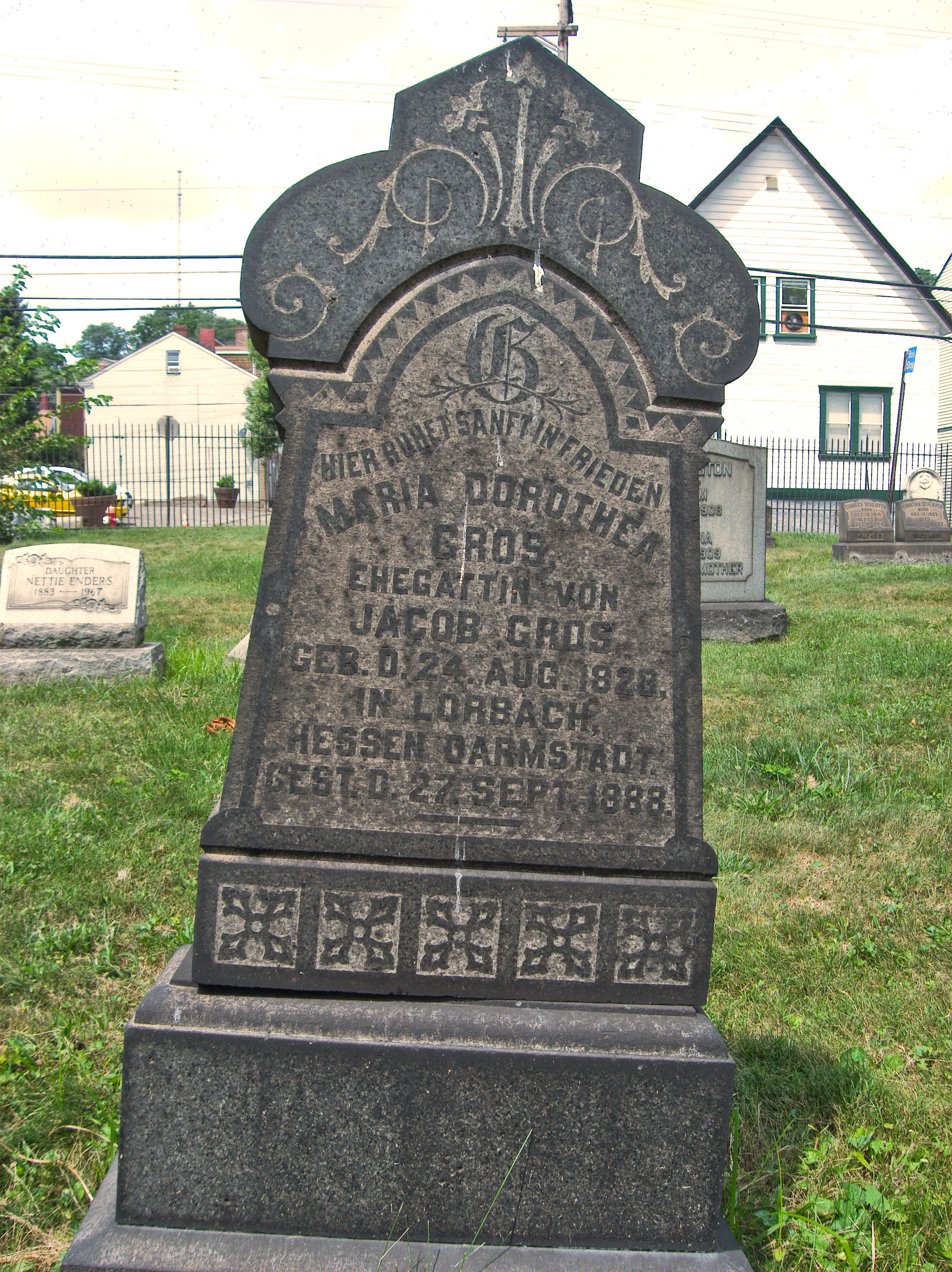
A popular genre of German grave: the single unit with headstone, footstone, and sides, the whole thing looking very much like a nineteenth-century bedstead. Maria Dorothea Gros was born in the little town of Lorbach in Hessen-Darmstadt, now the German state of Hesse. A translation of the inscription:

HERE GENTLY RESTS IN PEACE
MARIA DOROTHEA
GROS,
SPOUSE OF
JACOB GROS.
BORN AUGUST 24, 1828
IN LORBACH,
HESSEN-DARMSTADT.
DIED SEPTEMBER 27, 1888.
A bit of a mystery. This metal shield has fallen from some monument somewhere, and is now sitting on the base of the Kredel monument. Father Pitt has never seen a grave marker with a shield like this, so he does not know what kind of thing it would have been attached to—perhaps an iron post that has disintegrated? The rust has obliterated some of the letters, but Father Pitt is fairly sure of his reconstruction:

FRITZ
GODLEIB R,
NOV. 28 – 1858
JULY 11 – 1892

A plain mausoleum of rusticated stone, this one is exceptional in the South Side Cemetery for retaining its bronze doors; almost all the other mausoleums in the cemetery are now missing their doors, which can be sold as scrap by thieves to dealers who apparently never wonder why someone would happen to be carrying a large ornate door on the back of his truck. There is even a bit of almost-intact stained glass in the back.

A monument to a pastor of the Voegtly Church and his son, both killed in a railroad accident near Altoona in 1864. The polished-granite monument seems to be later than that date, and probably dates from after the time when the Voegtly Church moved its cemetery from the churchyard in Dutchtown to the top of Troy Hill.

A romantic (and diminutive, though the picture does not convey the small scale of it) tombstone for a little girl who died at not quite ten years old. The single rose and foliage are still well preserved. It is in or next to the Voegtly family plot, and the inscription is in German; but the name Adams is not very German at all. Perhaps this was a granddaughter of Mathias Voegtly; he might have had a daughter who married outside the Swiss-German community.

Father Pitt has not sorted out the whole history of the Voegtly Cemetery. The style of the tombstone is right for 1864, and it may have been moved from the original churchyard in Dutchtown when the cemetery on Troy Hill was established. Not every grave was moved; in fact, more than seven hundred were left to be discovered under a city parking lot. If this was moved, it suggests that the little girl came from a family with money (like the Voegtly family).

Father Pitt hopes the Wilder family (who are doubtless kind and indulgent people) will forgive him for saying that this is without a doubt the ugliest mausoleum in the greater Pittsburgh metropolitan area. It looks like a thing built by a contractor who had never built, or perhaps even seen, a mausoleum before, and thought of it as a sort of garage for coffins. But it is distinctive. There is nothing else in the South Side Cemetery that looks remotely like it; and, since it occupies a prominent plot at the intersection of two drives in the cemetery, there is no missing it.

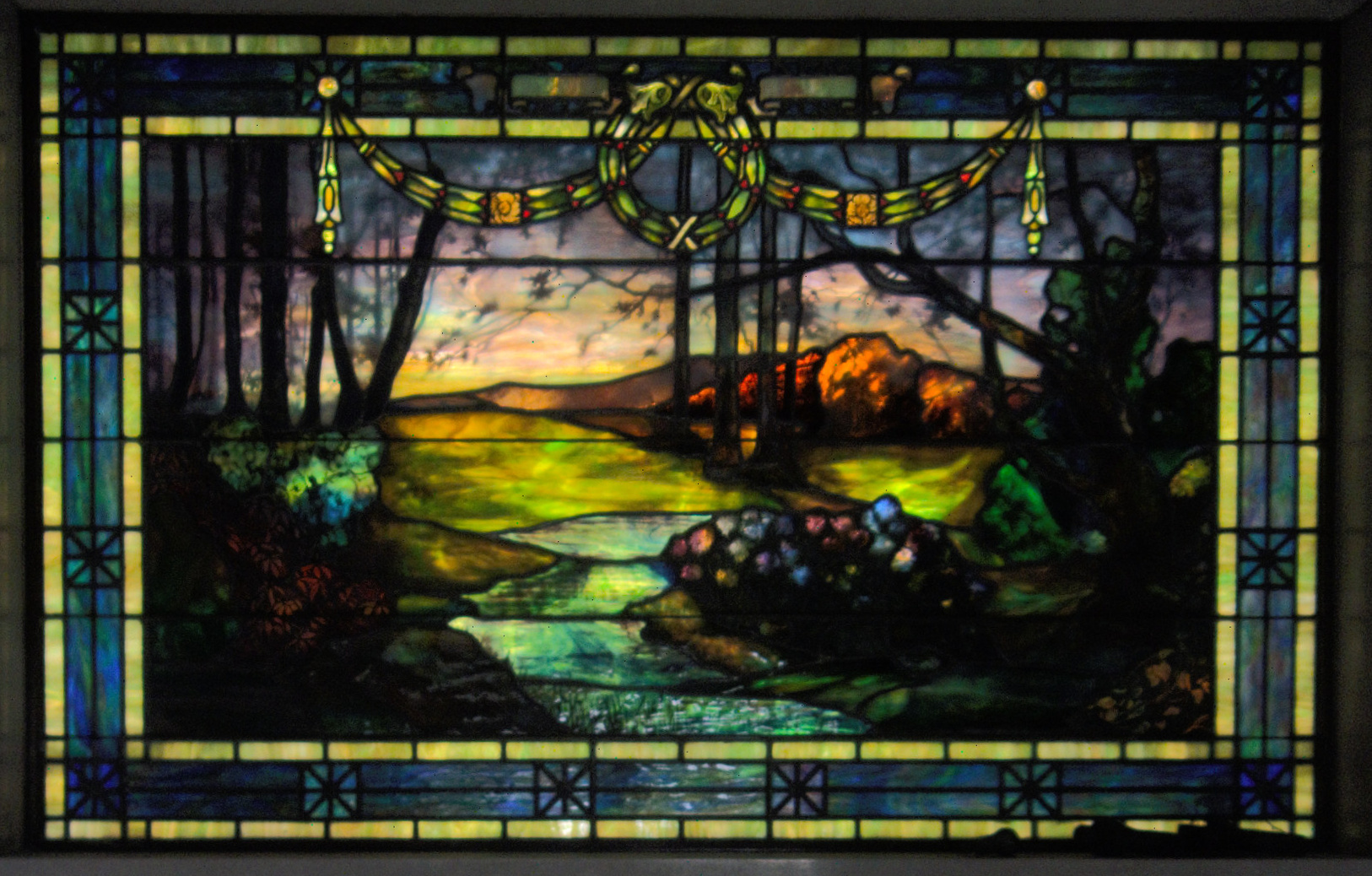
A simple Doric mausoleum with extra space for a large family. The stained glass inside is very good, except that (in Father Pitt’s opinion) the wreath-and-swag decoration rather spoils the effect of the naturalistic forest and stream.

Nothing is particularly outstanding about these tombstones, except that they are nearly two hundred years old and still quite legible.

IN
Memory of
ELIZABETH HERRIOTT
Consort of
GEORGE HERRIOTT
Who departed this life
August the 29th A.D. 1819
aged 46 years.

IN
Memory of
GEORGE HERRIOTT
Who departed this life
December the 2d A.D. 1826
aged 61 years.

John Park Hickman, volunteer soldier, died in Virginia just after Lee’s surrender ended the Civil War. We do not know whether he died of injuries sustained in battle, but the lack of any mention of a particular battle suggests to Father Pitt that he was one of the many victims of disease. His monument is not large but splendidly romantic in a fashionably 1860s way.