Pittsburgh Cemeteries

The Art and Architecture of Death

IN MEMORY OF
ROBERT LONG
Who departed this life
August 1st 1832 aged 60
years.
Go home dear friends
And cease from tears.
Here I must lie
Till Christ appears.


W. Savage, Sculptor, Williamsport.

We have seen another pair of tombstones in a similar style in the Bethany Cemetery near Bridgeville: the tombstones of Billingsley Morgan and his (illegible) wife, which were signed by H. Savage. Was H. Savage a brother or other relative of W. Savage? And if “Williamsport” means the only Williamsport Father Pitt knows of in Pennsylvania, then this stone was hauled across the mountains, which must have been quite expensive. Perhaps there was no one in the immediate area who could carve a stone of this quality in 1832—for it certainly is a splendid piece of folk art, well worth the trouble of hauling in from Williamsport.

—An update: Father Pitt has to confess his ignorance sometimes. Williamsport, he has discovered, was the name of the town that is now called Monongahela. The name is remembered in the Williamsport Road, which leaves Elizabeth and heads straight for Monongahela before changing its name to Rostosky Ridge Road, which is probably not the early settlers’ name for the trail, about two-thirds of the way along.
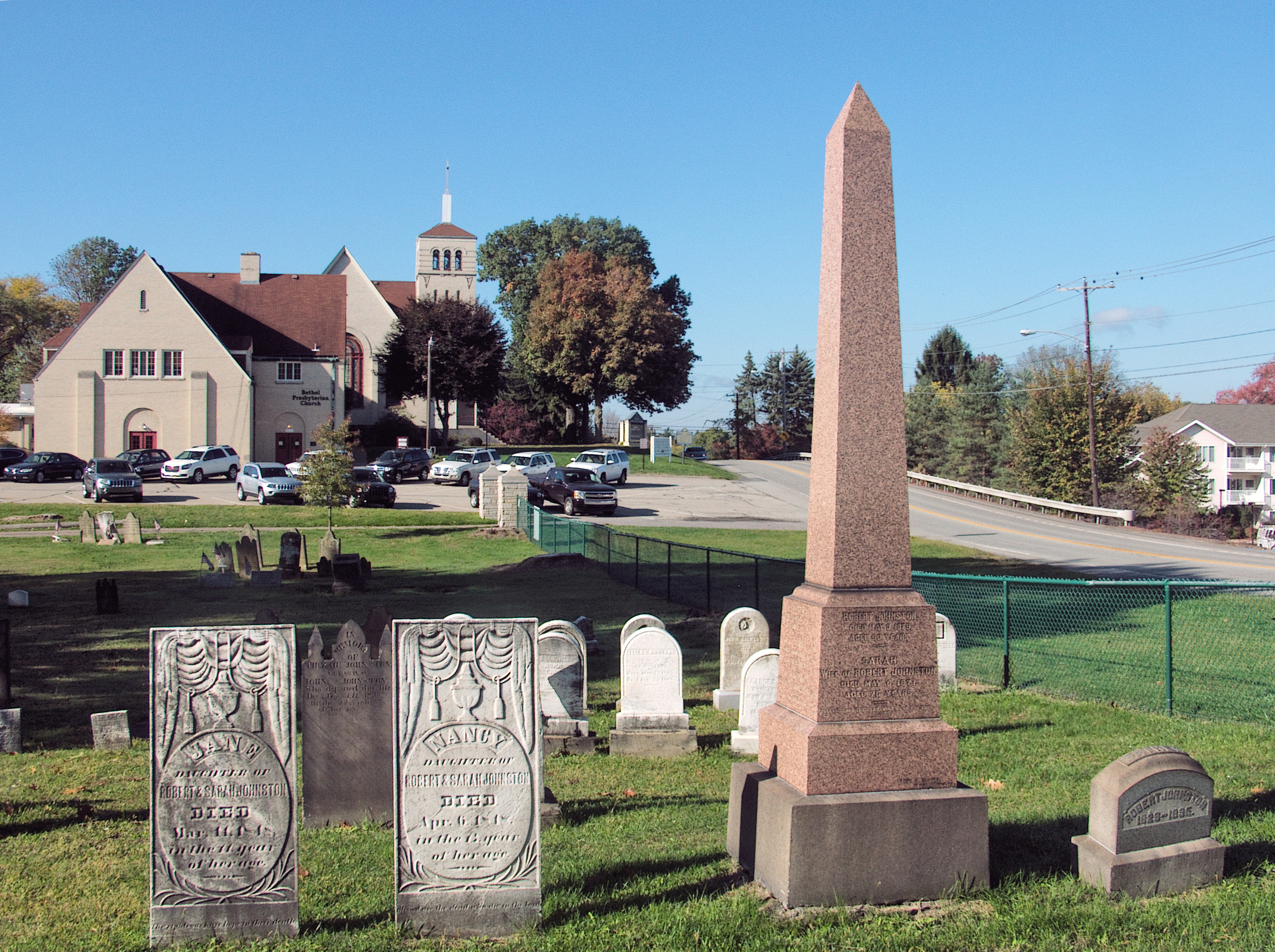
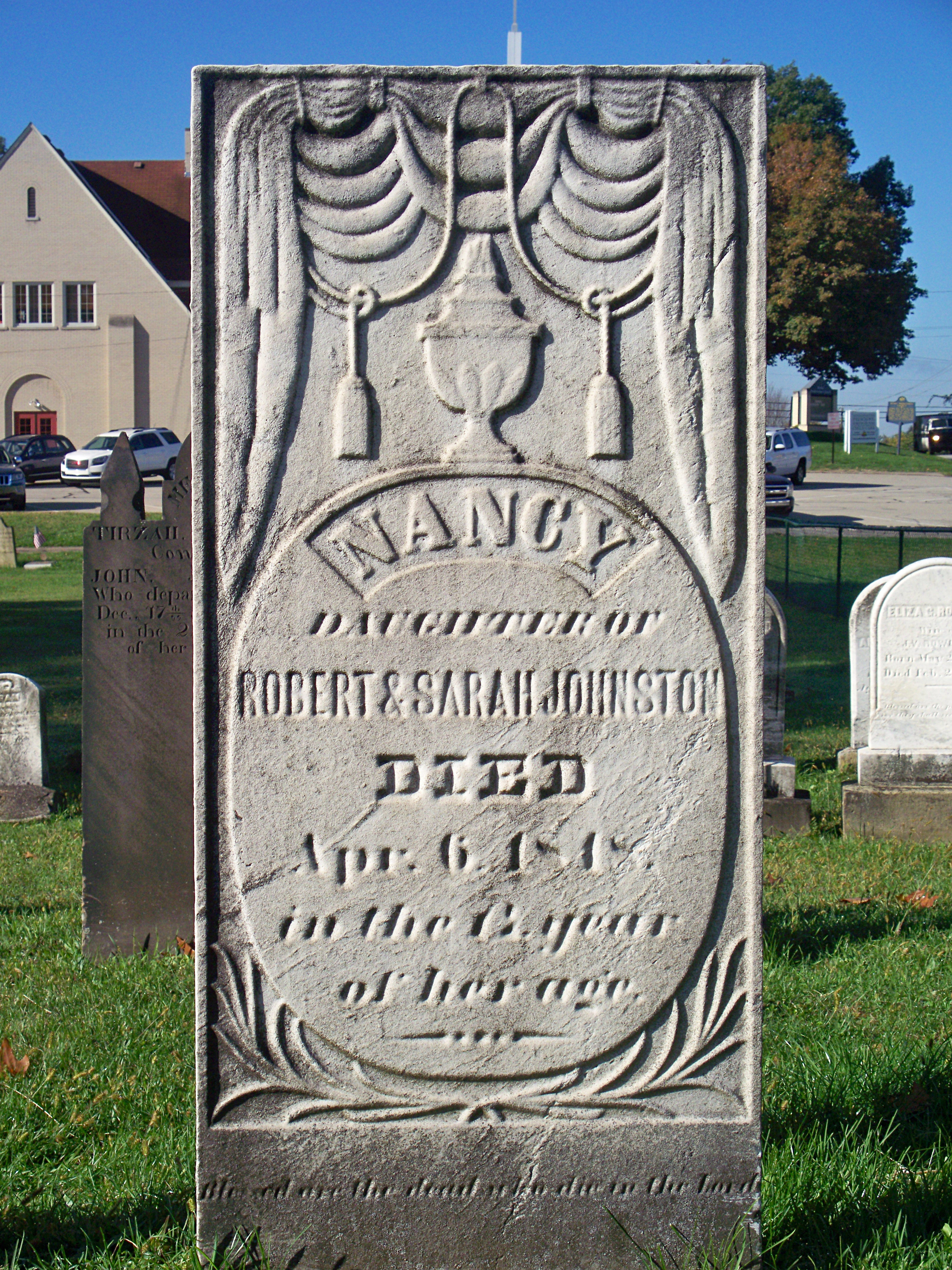
Robert and Sarah Johnston had two daughters who died within weeks of each other in 1848, doubtless of the same disease. Each was given a splendid tombstone in the engraved-title-page style that was popular for expensive tombstones in the 1840s.

Robert and Sarah themselves got this rich pink obelisk. Their son Robert and his wife are buried next to them.

A typical Doric cube of the early twentieth century. The stained glass is rather good. Charles A. Brooks was interred here in 1906, and Anna Cloyde Woodward Brooks in 1931; according to cemetery records, they are the only residents.

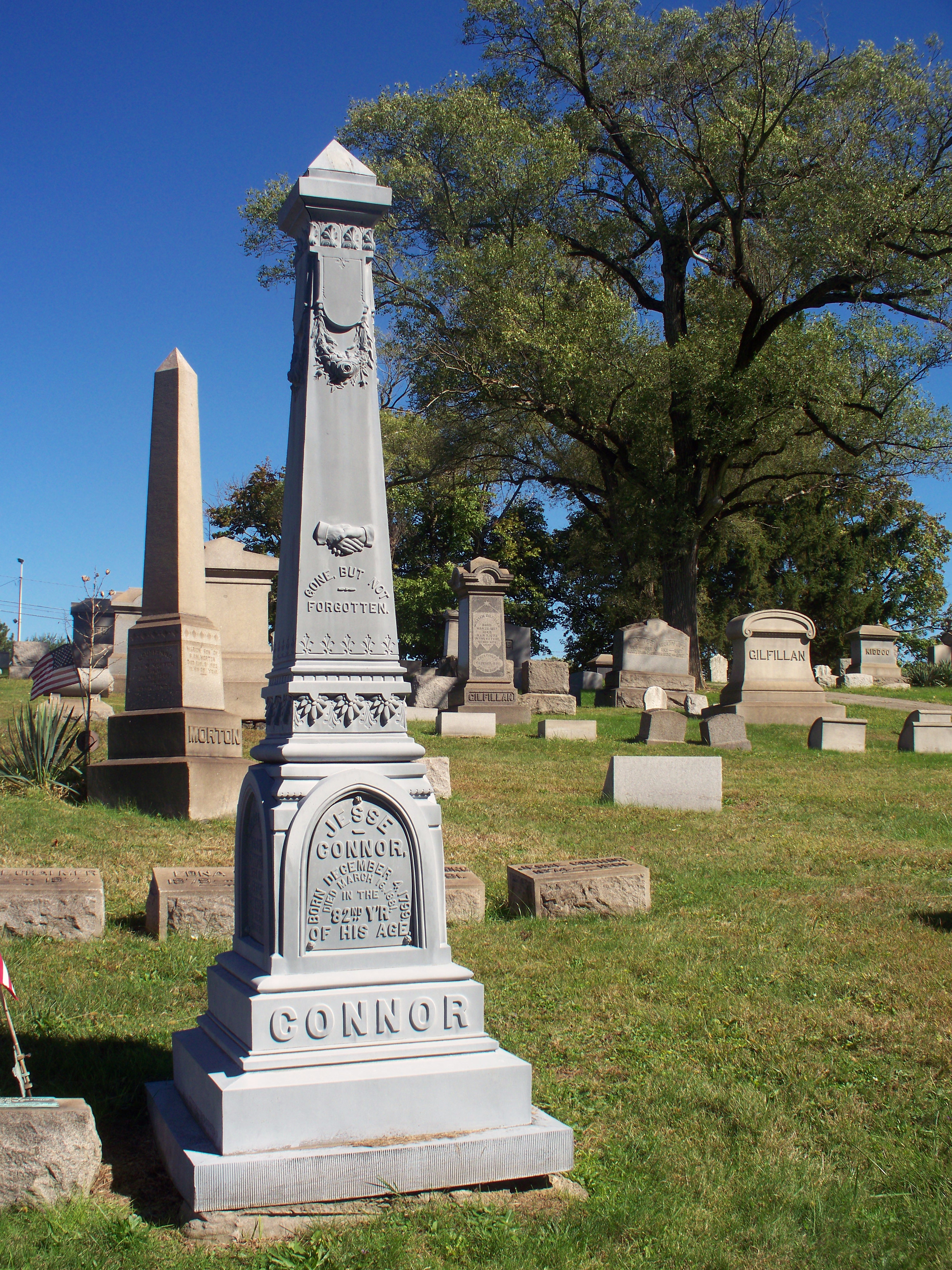
A particularly splendid zinc shaft, well preserved even by zinc standards. This is Style no. 234 from the Monumental Bronze Company.

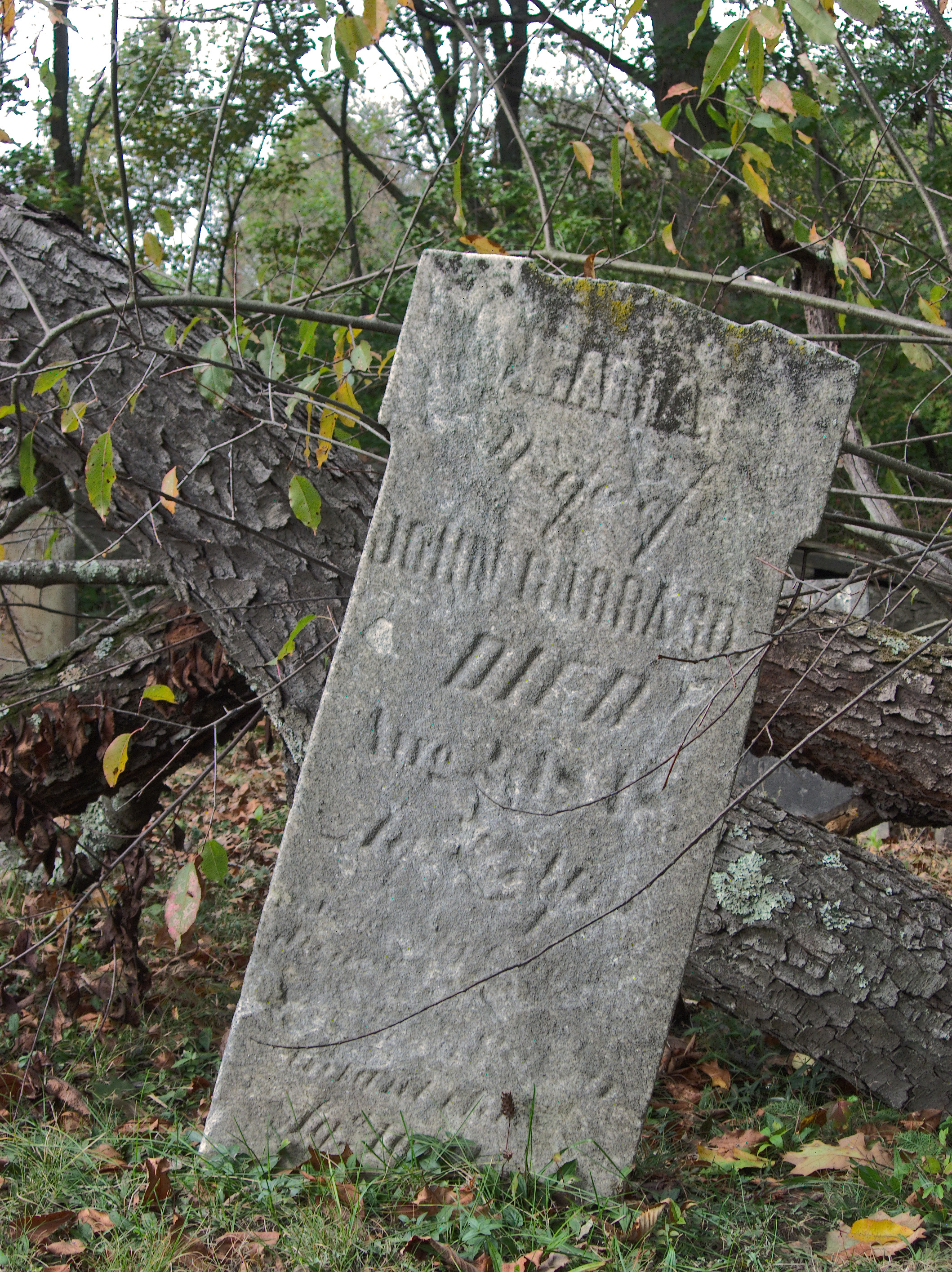
MARIA
Wife
of
JOHN GARRARD
DIED
Aug 2, 1848(?)
Aged ? Yrs.

A good example of what old Pa Pitt calls the “poster style,” with each line in a different style of lettering. The limestone has softened too much for us to read the whole inscription. It looks as though there may have been a second name below the main inscription—perhaps an infant child.

Father Pitt usually makes legibility his priority in photographing old tombstones, but the situation of this one, with the fallen tree behind it, demanded a more artistic treatment.

IN
Memory of
W.H. CRAWFORD,
Who departed this life
July 29, 1846,
Aged 22 Yrs. 6 mos. 5 ds.

A tombstone in the “poster style,” as Father Pitt likes to call it; this is probably one of the ones moved here from older graveyards.

A tasteful Art Deco stele with a flame pattern from the middle twentieth century.

A pair of matched urn-topped ,marble monuments—matched, but not quite. It looks as though Robert’s heirs could not get exactly the same design when he died three and a half years after his wife. The epitaphs were clearly inscribed by different artists. (The tree in the background had just fallen the night before Father Pitt visited, fortunately doing no damage to the monuments.)

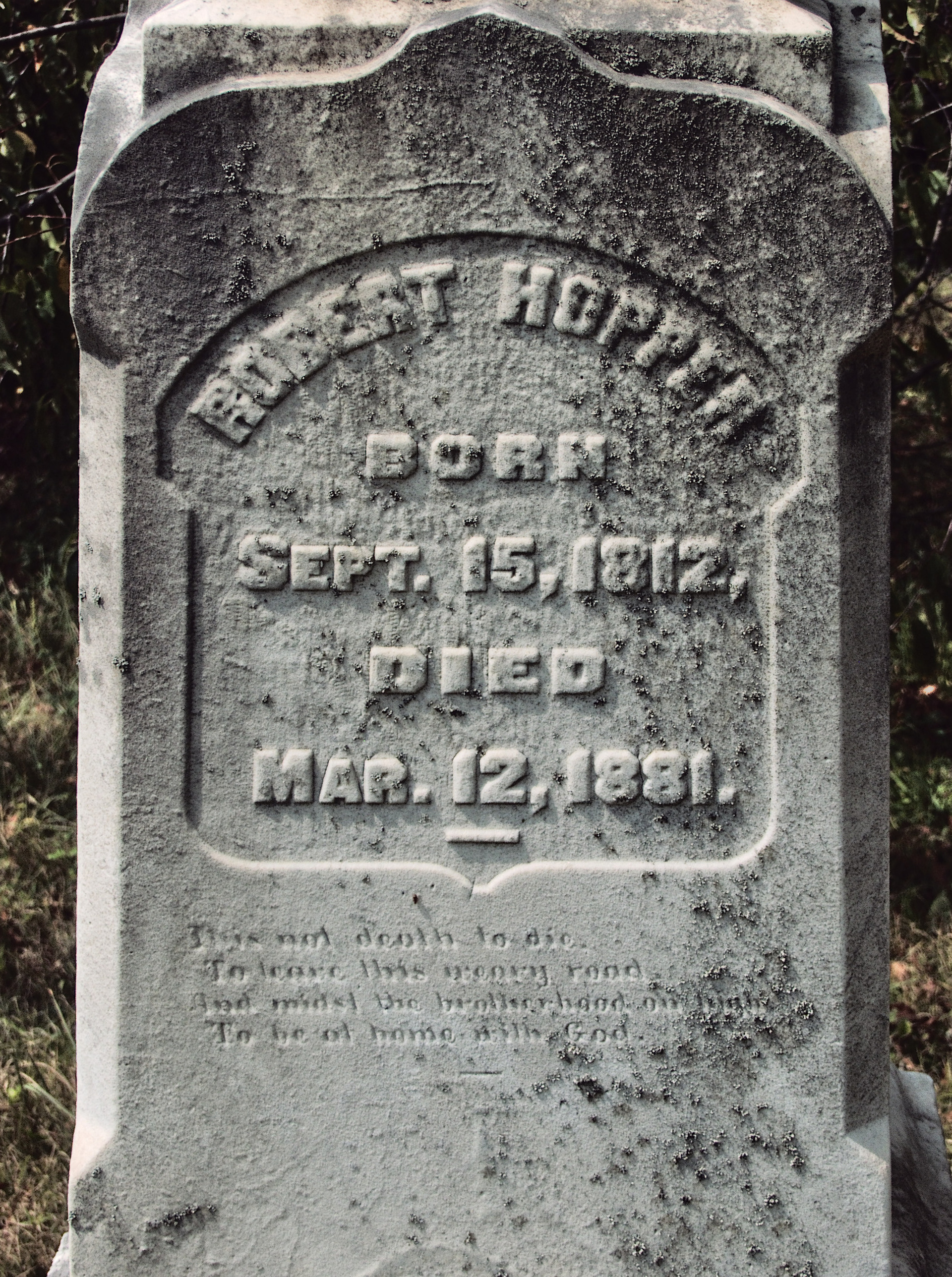
The epitaph:

Dearest Mother, thou hast left us,
And thy loss we deeply feel;
But ’tis God that hast [sic] bereft us.
He can all our sorrows heal.

The epitaph:

It is not death to die,
To leave this weary road,
And midst the brotherhood on high
To be at home with God.

JOSEPH
McMURRAY
D i e d
Sept. 16, 1839
Aged 46 years
10 mo. & 11 day

An early example of the “poster style,” with each line in a different style of lettering.

A particularly well-preserved monument in the romantic style of the 1860s, with two poetic epitaphs.

She was a mother good and kind
While she with us did stay
Life is short to all mankind
God’s call we must obey

Come, children, to my tomb and see
My name engraved here.
Remember, you must come to me.
Be like your mother dear.