Pittsburgh Cemeteries

The Art and Architecture of Death

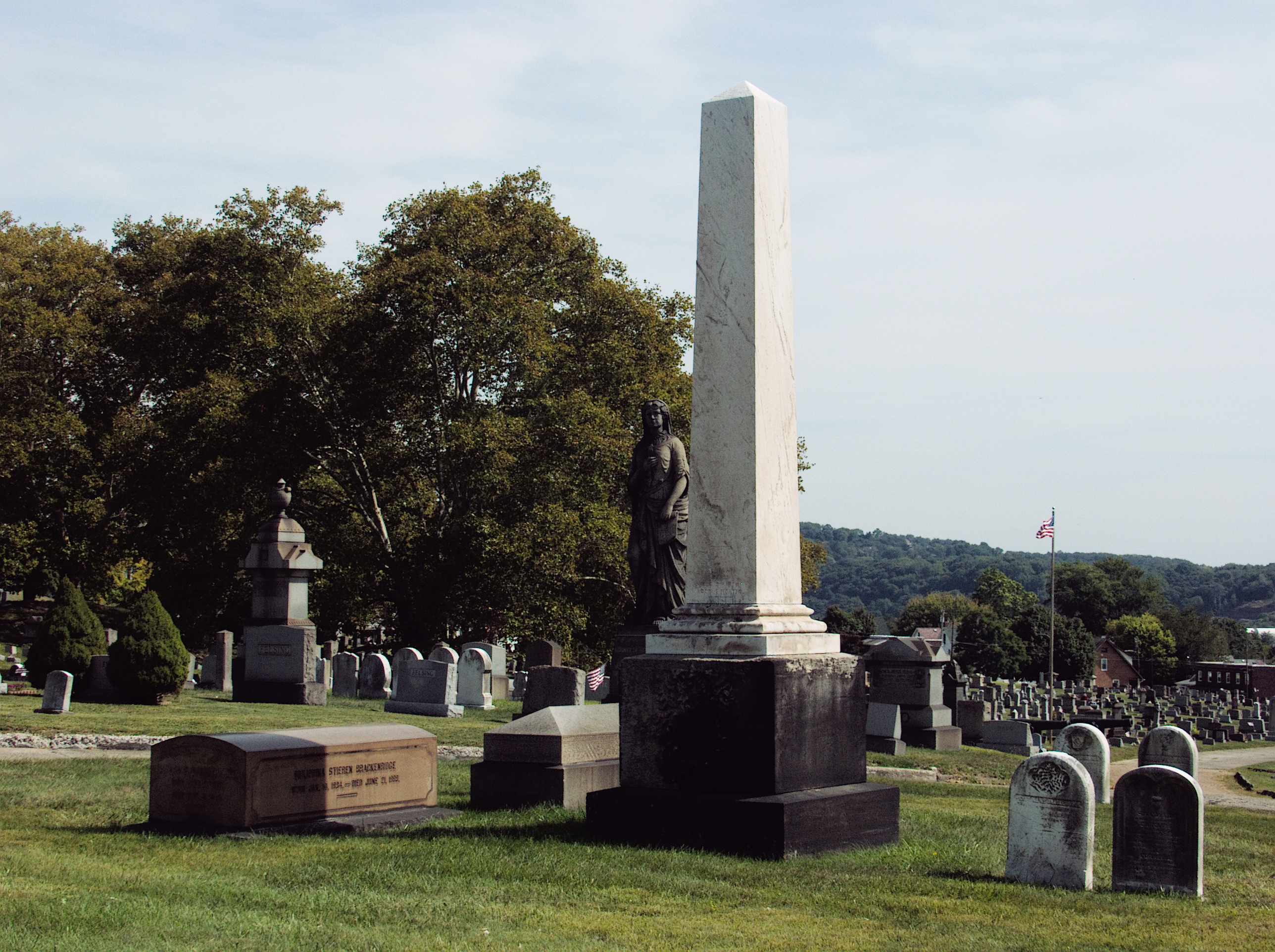
Henry Marie Brackenridge, son of the famous Hugh Henry Brackenridge, founded the borough of Brackenridge, and his family has an honored place in the middle of the circle at the entrance to Prospect Cemetery.
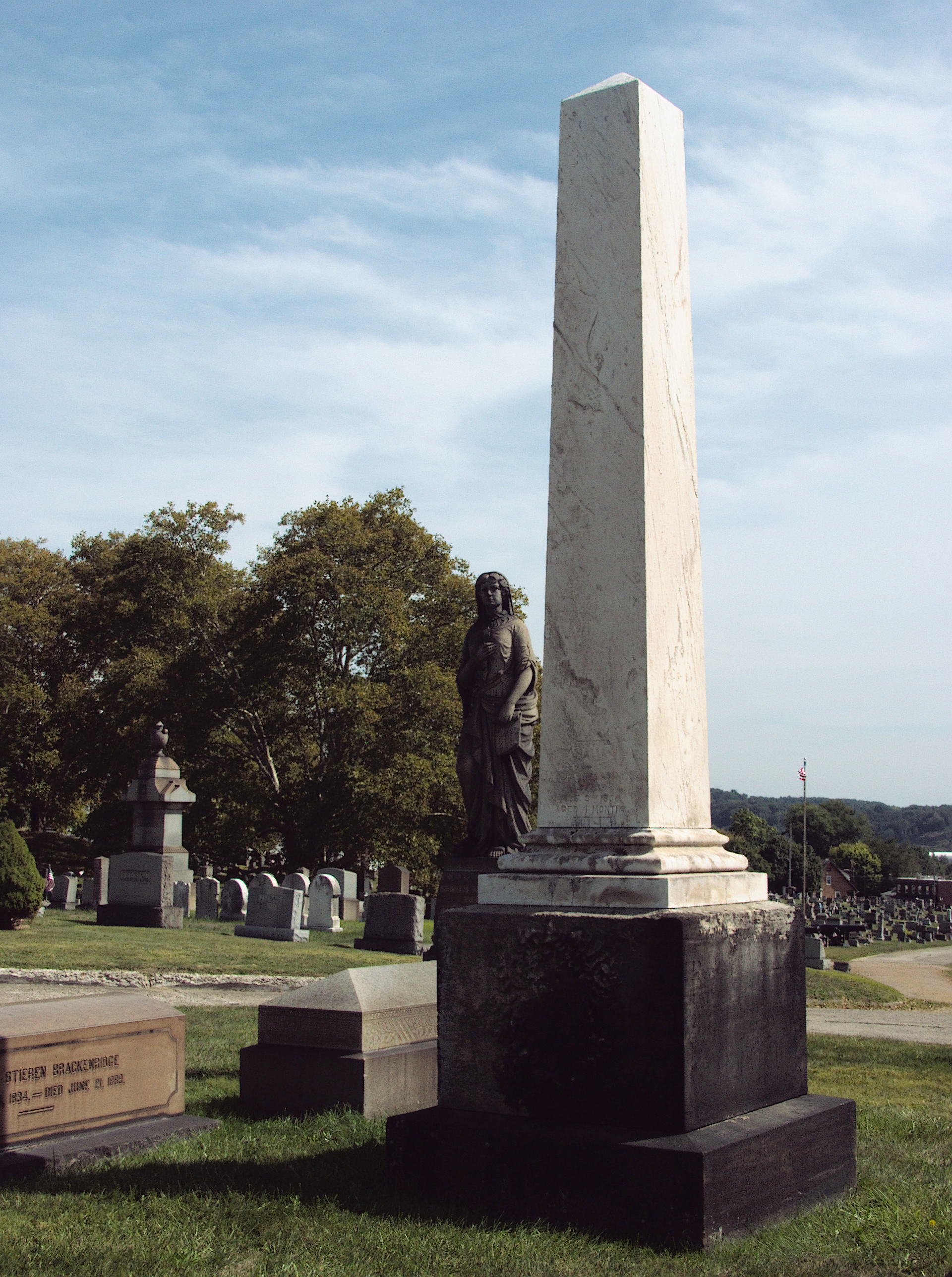
The obelisk once bore a number of inscriptions, but they are almost obliterated by time.

Henry Marie’s own grave is marked by a very modest headstone. Father Pitt was not able to read the epitaph, although it might be clearer in morning light.
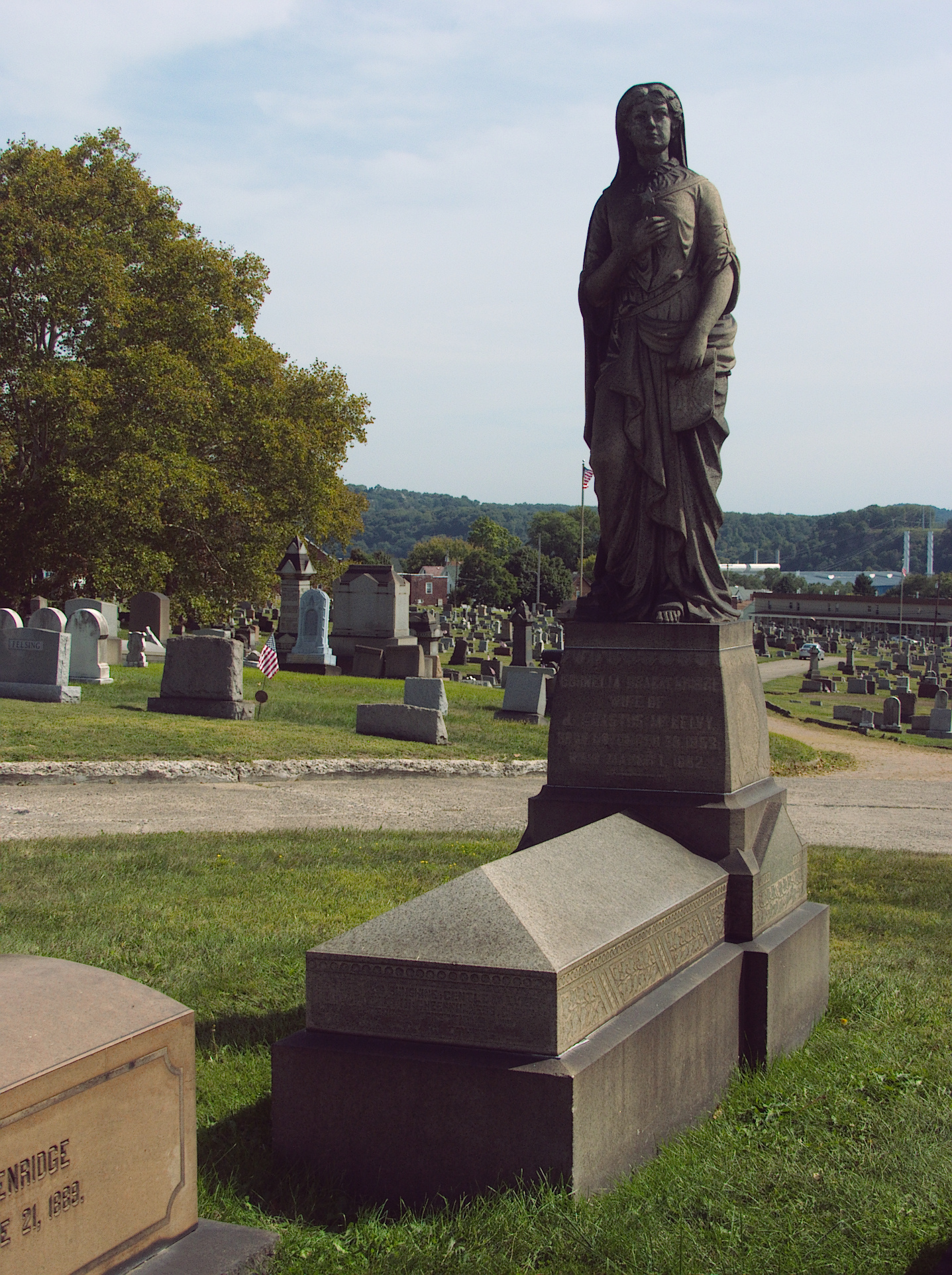
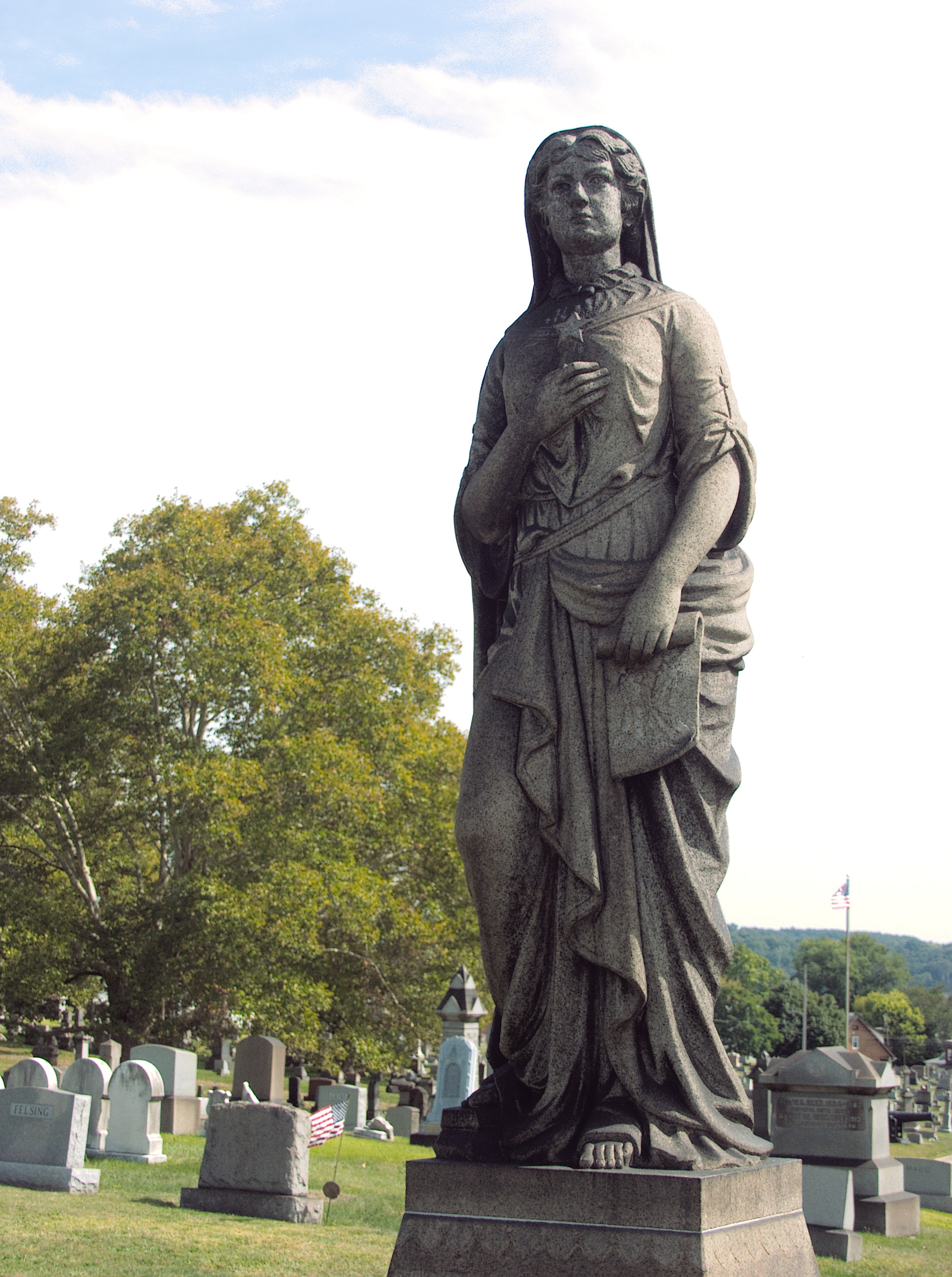
Cornelia Brackenridge McKelvy, on the other hand, who died in 1882 at the age of 29, has a very expensive grave with a life-size statue. Is it meant to be a portrait of the deceased?

This window commemorates the famous Bay Psalm Book, the first book printed in British America. Everyone learned to sing these rhymed versions of the Psalms, because it was not legal under the rule of the Puritans to sing anything else.

This is a fine piece of work in the engraved-title-page style of the 1850s, but cut in the native stone (sandstone, Father Pitt believes, but he is happy to be corrected by someone better informed on the subject of rocks) that by this time had almost been abandoned in favor of limestone and marble. If it remains intact, the native stone preserves an inscription indefinitely, so that we can appreciate every flourish wrought by this talented artist.

A young and slightly bored-looking angel holds a banner with the words “In Memoriam.” It is an unusually good piece of sculpture. The monument may have been put up in 1911, when Ida May Haudenshield died.

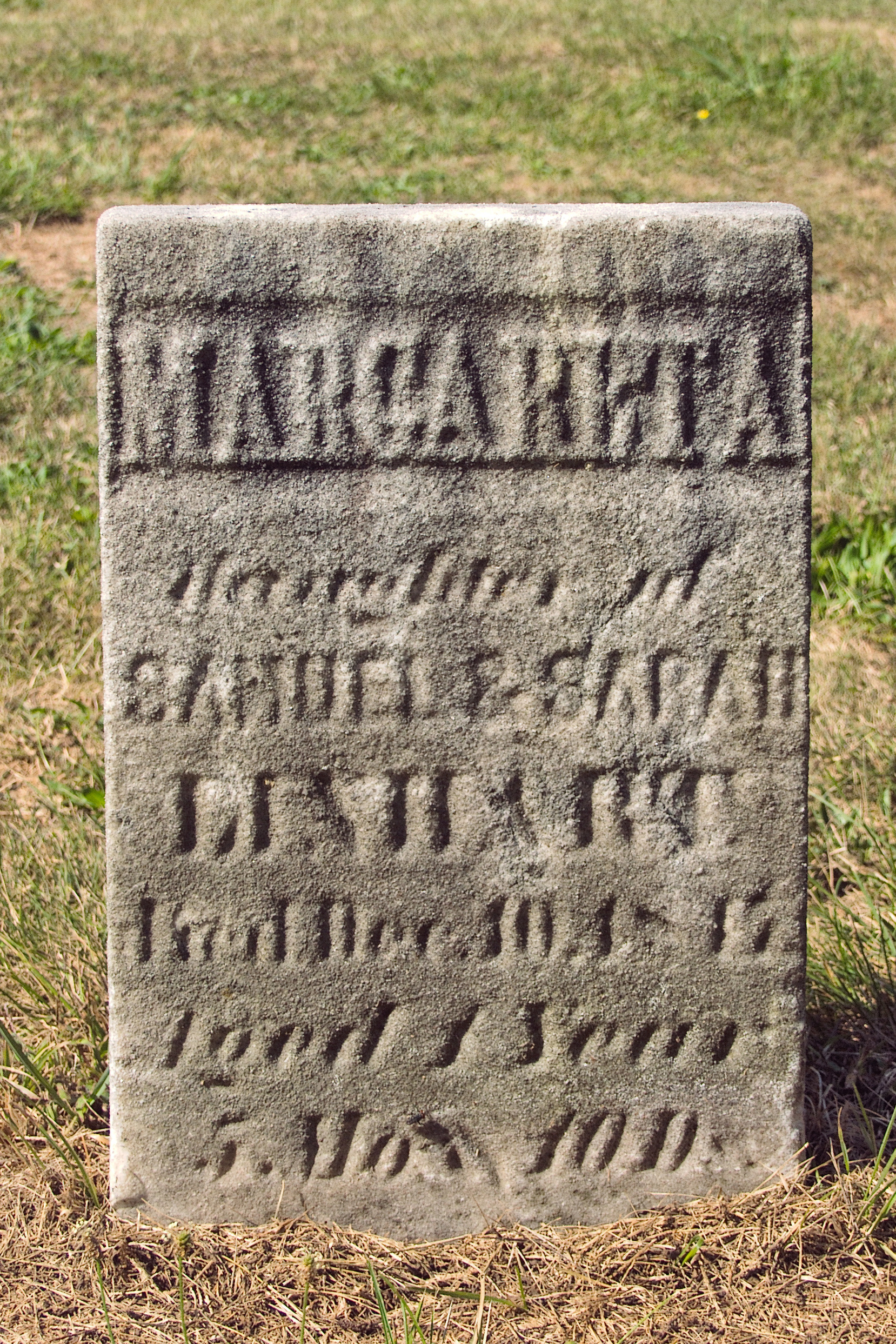
MARGARETA
daughter of
SAMUEL & SARAH
LINHART
died Dec. 10, 1845
Aged 1 Year
5. Mos. 10 Ds.

A good example of what Father Pitt calls the “poster style” that became popular in the 1840s and 1850s: a plain rectangle on which the inscription is engraved in a wide variety of lettering styles, like an advertising poster of the same era.

These particularly fine monuments are very unusual: conscious imitations of the tombstones of a century or more before, but in a very 1930s style. The craftsman is too skillful to imitate the natural irregularity of our early stonecutters’ work; he has to resort to deliberate irregularities, such as occasional capital letters stuck in among the minuscules.

Edward Rynearson was principal of Fifth Avenue High School, Uptown. In 1921, he founded the National Honor Society, which he obviously regarded as his crowning achievement as an educator.

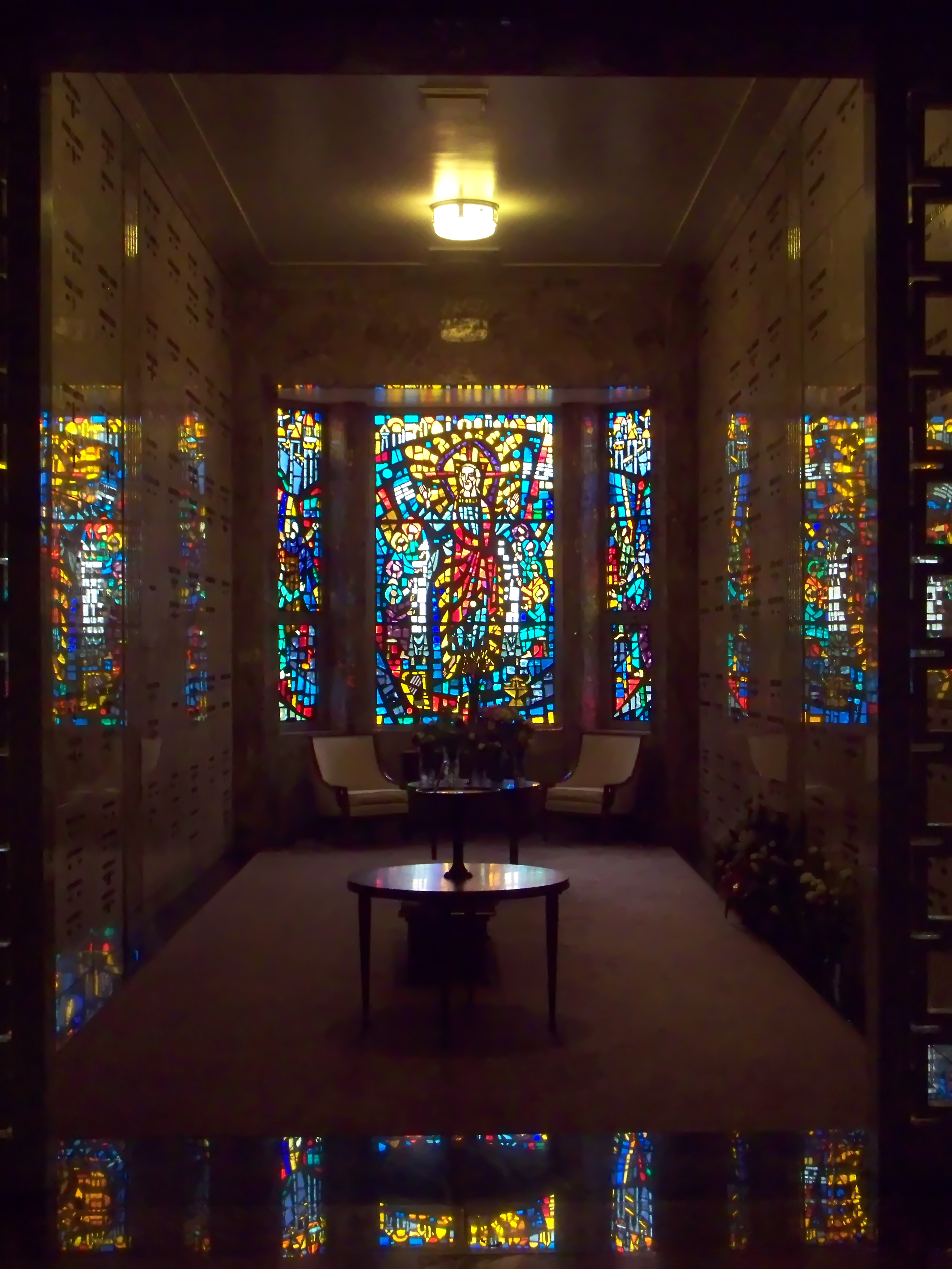
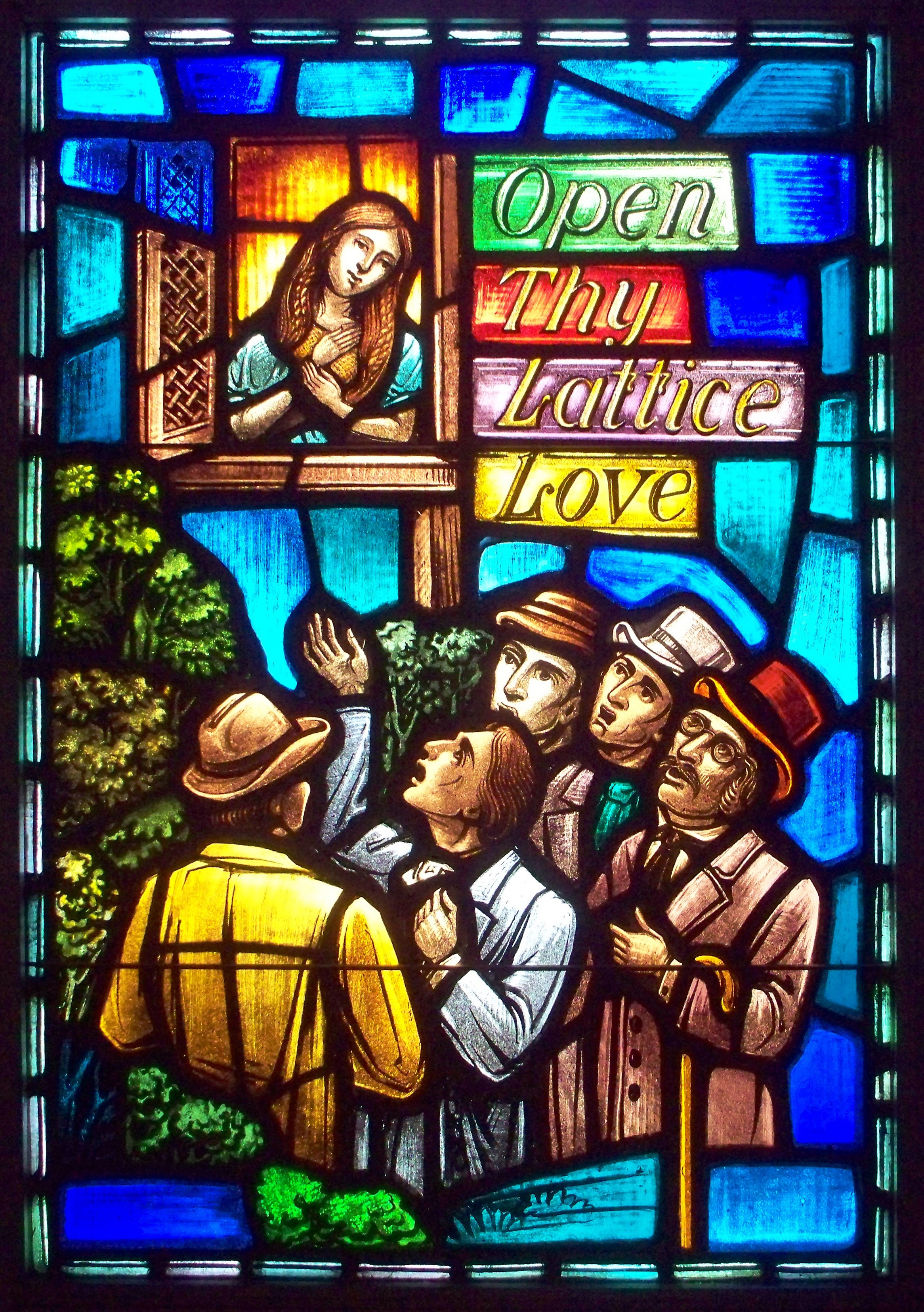
The indoor mausoleum in Allegheny Cemetery was built in 1960 (or 1961, according to the Web site). The architects were Harley and Ellington. It’s now called the “Temple of Memories,” and it’s worth a visit even if you don’t like cemeteries all that much. It’s filled with striking stained glass from the Hunt and Willet studios, and it has a considerable collection of paintings by academic painters of the late nineteenth century that were probably nearly worthless when they were donated, but are coming back into fashion again. But what charms Father Pitt most is that the place is a time machine through which one can enter the early 1960s. Even though it has been expanded since then, the whole mausoleum has an early-1960s atmosphere, complete with appropriate piped-in music. One wanders among the dead feeling more like one of them than like one of the living.

Among the windows in the Allegheny Cemetery Mausoleum or “Temple of Memories” are several devoted to famous works of literature and music. This one illustrates Bunyan’s Pilgrim’s Progress. The stained glass in the mausoleum was done by the Willet studio of Philadelphia and the Hunt studio of Pittsburgh; Father Pitt does not know which one did this window.

Among the windows in the Allegheny Cemetery Mausoleum or “Temple of Memories” are several devoted to famous works of literature and music. This one illustrates Wagner’s Parsifal. The stained glass in the mausoleum was done by the Willet studio of Philadelphia and the Hunt studio of Pittsburgh; Father Pitt does not know which one did this window.

The Allegheny Cemetery Mausoleum, or “Temple of Memories” (as the cemetery calls it now), was built in 1960. It is filled with stained glass by the Willet studio of Philadelphia and the Hunt studio of Pittsburgh. The two distinct styles are very different, but Father Pitt does not know which is which.

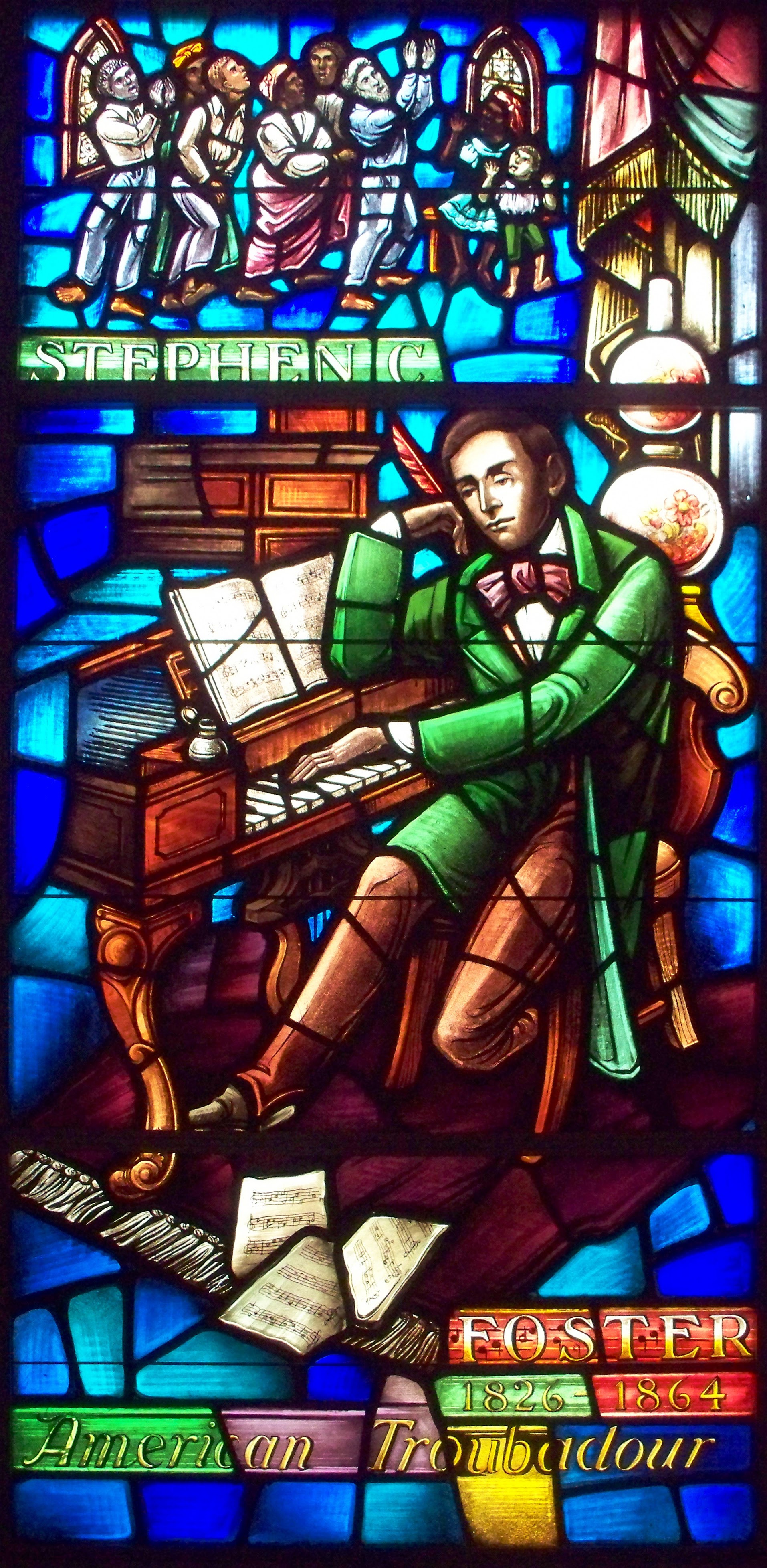
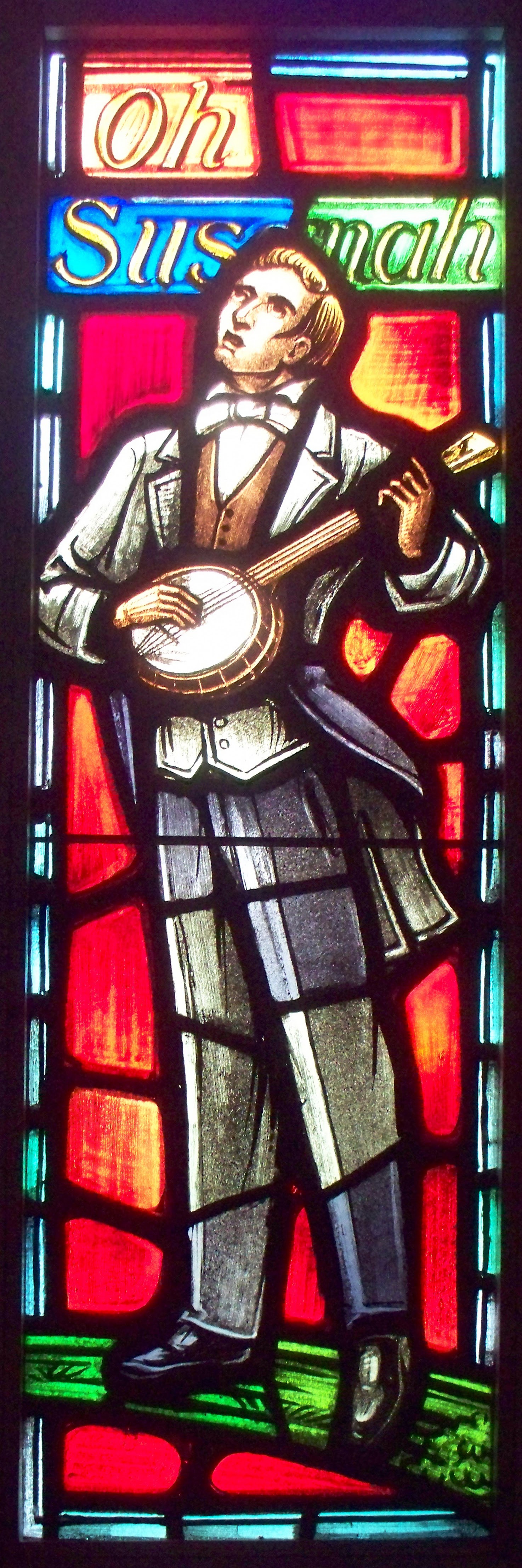
This Stephen Foster window is the centerpiece of the whole first floor of the mausoleum, which is appropriate. Thousands of rich and important people—politicians, robber barons, and even a few honest philanthropists—are buried in Allegheny Cemetery. But the only resident anyone really cares about is Stephen Foster, who made us dance and sing and weep, and died in poverty. (There is also a small cult of Lillian Russell, and Father Pitt would be delighted to see a Lillian Russell window in some future expansion of the mausoleum.)

This window includes something that delighted old Pa Pitt beyond all reason: the only stained-glass representation he has ever seen of a parlor organ.