
In Memory of
HENRY POMERENE SR.
Born
Jan.(?) 22, 1789
Died
March 17(?), 1855
A restrained example of the middle-1800s poster style, with fewer than the usual riot of lettering styles. Father Pitt was not able to read the epitaph.

The Art and Architecture of Death
In Memory of
HENRY POMERENE SR.
Born
Jan.(?) 22, 1789
Died
March 17(?), 1855
A restrained example of the middle-1800s poster style, with fewer than the usual riot of lettering styles. Father Pitt was not able to read the epitaph.

An elevated slab for a Revolutionary War veteran and his wife. The two inscriptions were certainly done by the same craftsman, but from subtle differences in the thicknesses and forms of the letters it looks as though they may have been done at different times, suggesting that Jennet’s was added to Thomas’ already existing stone.

IN
Memory of
THOMAS Mc NARY Esqr.
Who departed this life on the
9th of July A.D. 1820 in the 76th
year of his age.
—
IN
Memory of
JENNET Mc NARY
Consort of
THOMAS Mc NARY
Who departed this life on the
15th of April A.D. 1828 in the 84th
year of her age.

Since Roman times, the inverted torch has been a symbol of death. Here are two examples from the Smithfield East End Cemetery, in both of which we note that the torch keeps burning upside-down in a most unlikely manner. Both couples have German names, both were probably members of the same Reformed congregation, and the stones are nearly contemporary and side by side; but we note that one of them is English and one is German—an indication of how thoroughly bilingual the more prosperous parts of the German community in Pittsburgh were at the beginning of the twentieth century.


A standard Egyptian-style mausoleum with lotus-flower bronze doors and a matching stained-glass window.


A well-preserved tombstone in the “poster style,” as Father Pitt calls it, that was popular in the 1840s and 1850s. This one adds a very woodcutty weeping willow.

In memory of
JAMES McKNIGHT
Who departed this life
August 22, 1844
In the 51 Year
of his age
This eroded tombstone in the mid-nineteenth-century poster style is almost illegible most of the day; but if you catch it just as the sun is hitting at its most oblique angle, you can just about read the inscription.

A splendid bilingual zinc monument—German on one side, English on the other. As usual with zinc monuments, it is as legible now as it was when it was put up. This is style no. 156 from the Monumental Bronze Company, with an interesting choice of panel inserts.


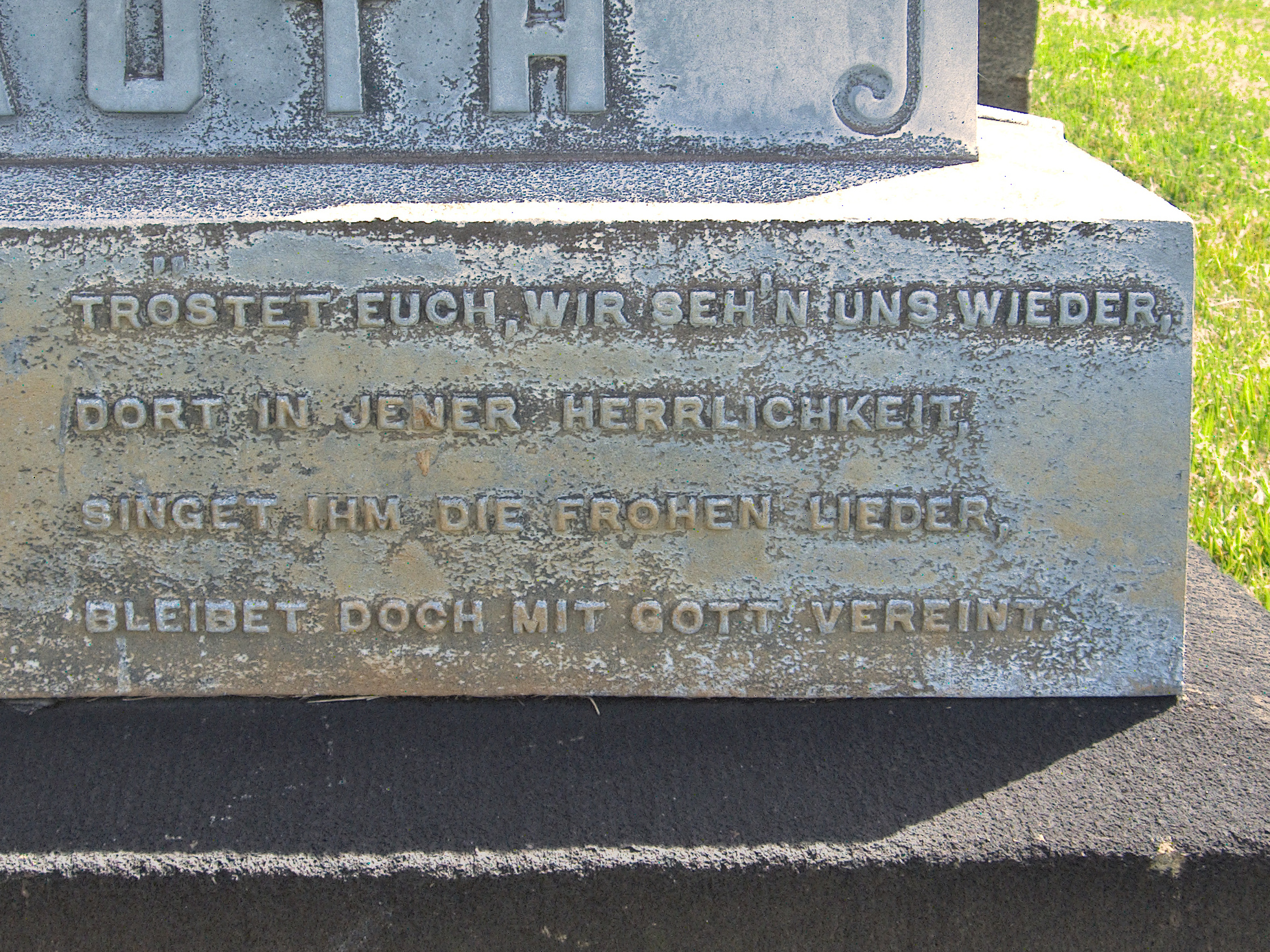
Father Pitt was not able to find this poem anywhere on line. His attempt at a translation follows the transcription, but anyone who knows German better is invited to correct it:
Liebe Eltern ich muss scheiden,
Denn mein Jesus ruft mir zu;
Nun erlost von allem Leiden,
Gönnet mir die susse Ruh.
Tröstet euch, wir seh’n uns wieder,
Dort in jener Herrlichkeit,
Singet ihm die frohen Lieder,
Bleibet doch mit Gott vereint.
Dear parents, I must depart,
For my Jesus calls to me;
Spared by good fortune from all suffering,
He allows me sweet repose.
Be comforted; we shall meet again,
There in that glory,
Sing joyful songs to him,
Linger still united with God.

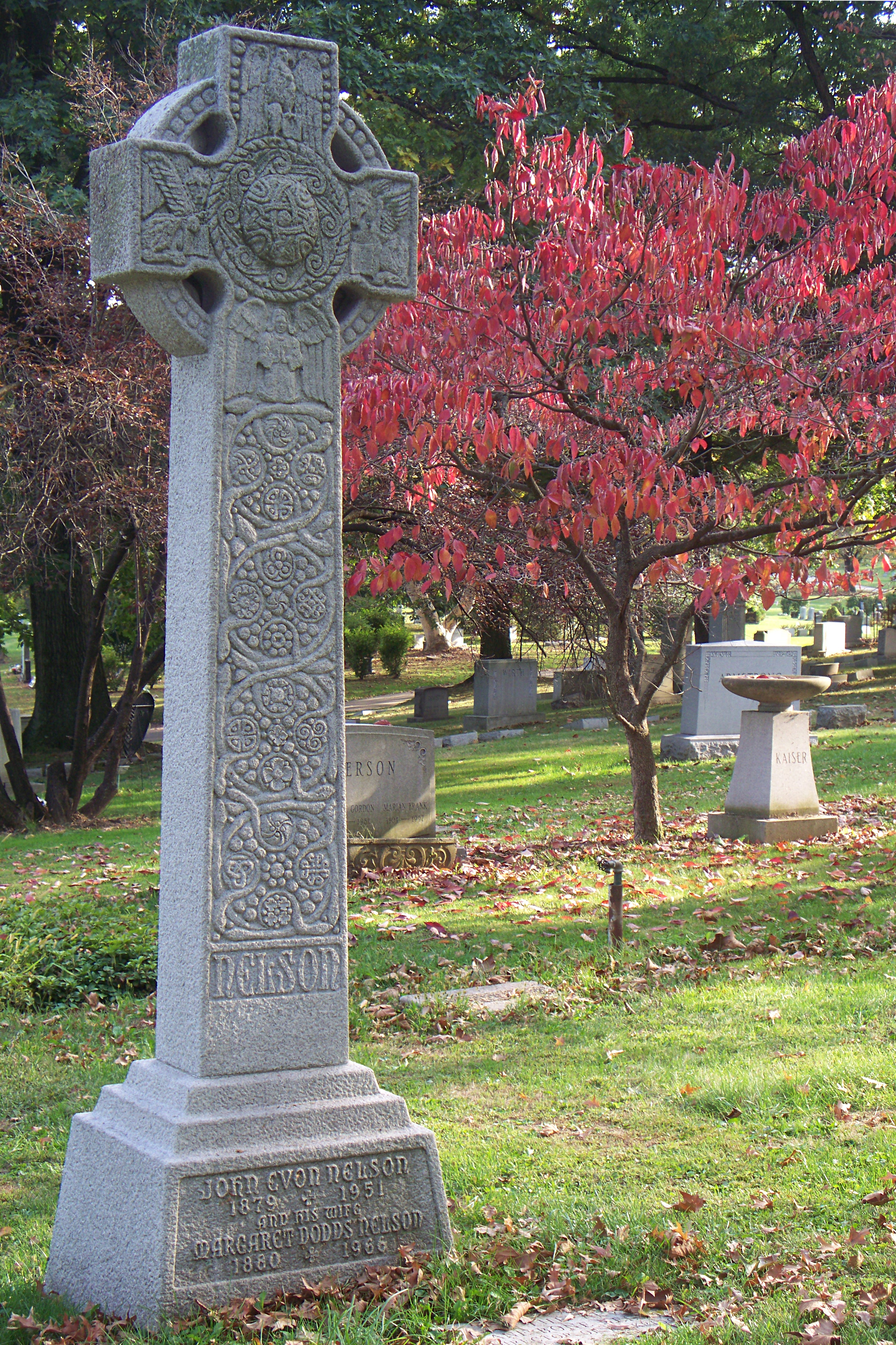
An ornate Celtic cross, probably put up in 1951 when John Evon Nelson died. Celtic crosses became popular in the late 1800s, promoted especially by the Tiffany Glass & Decorating Co., and they have remained a popular niche item ever since.

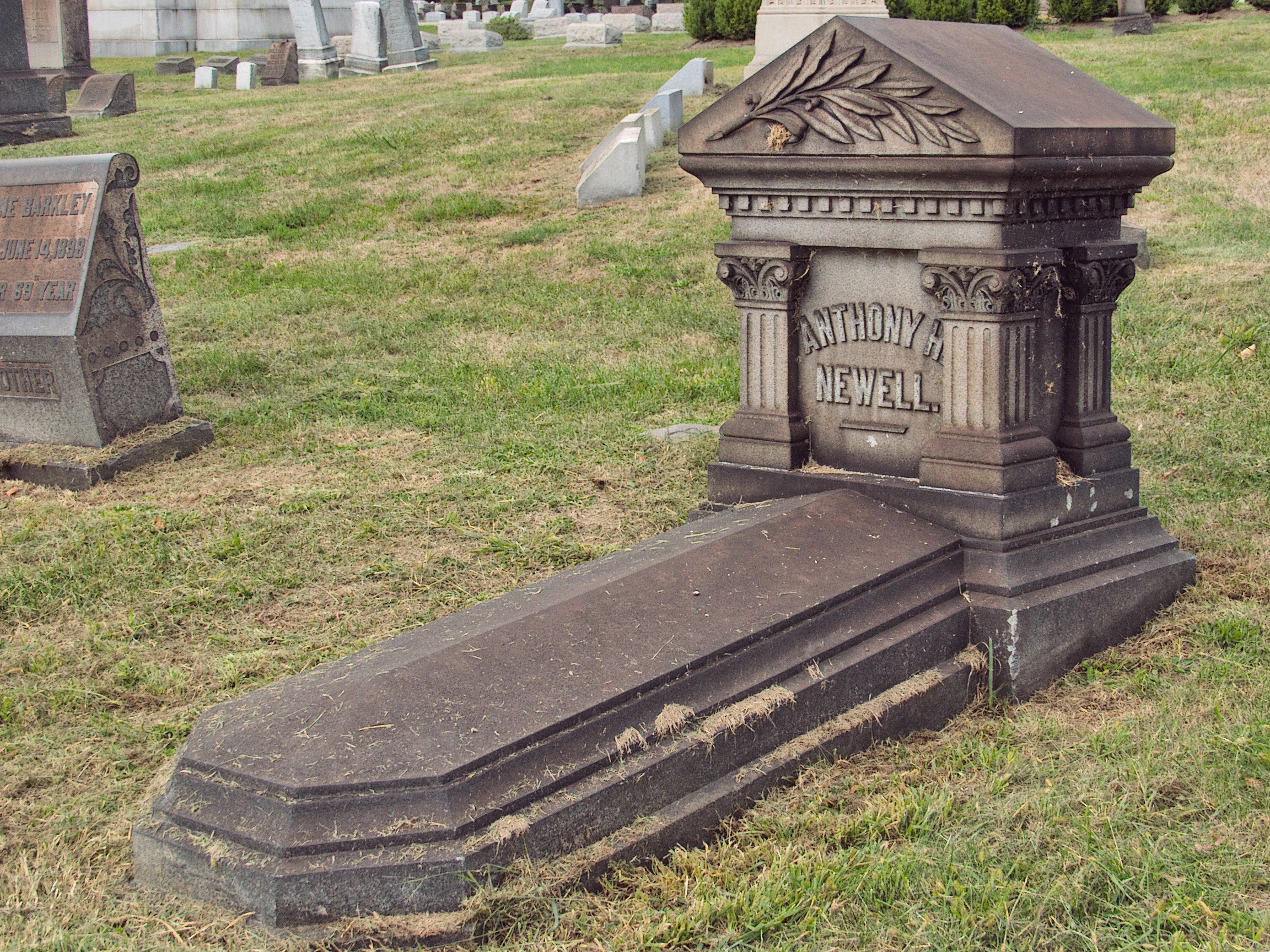
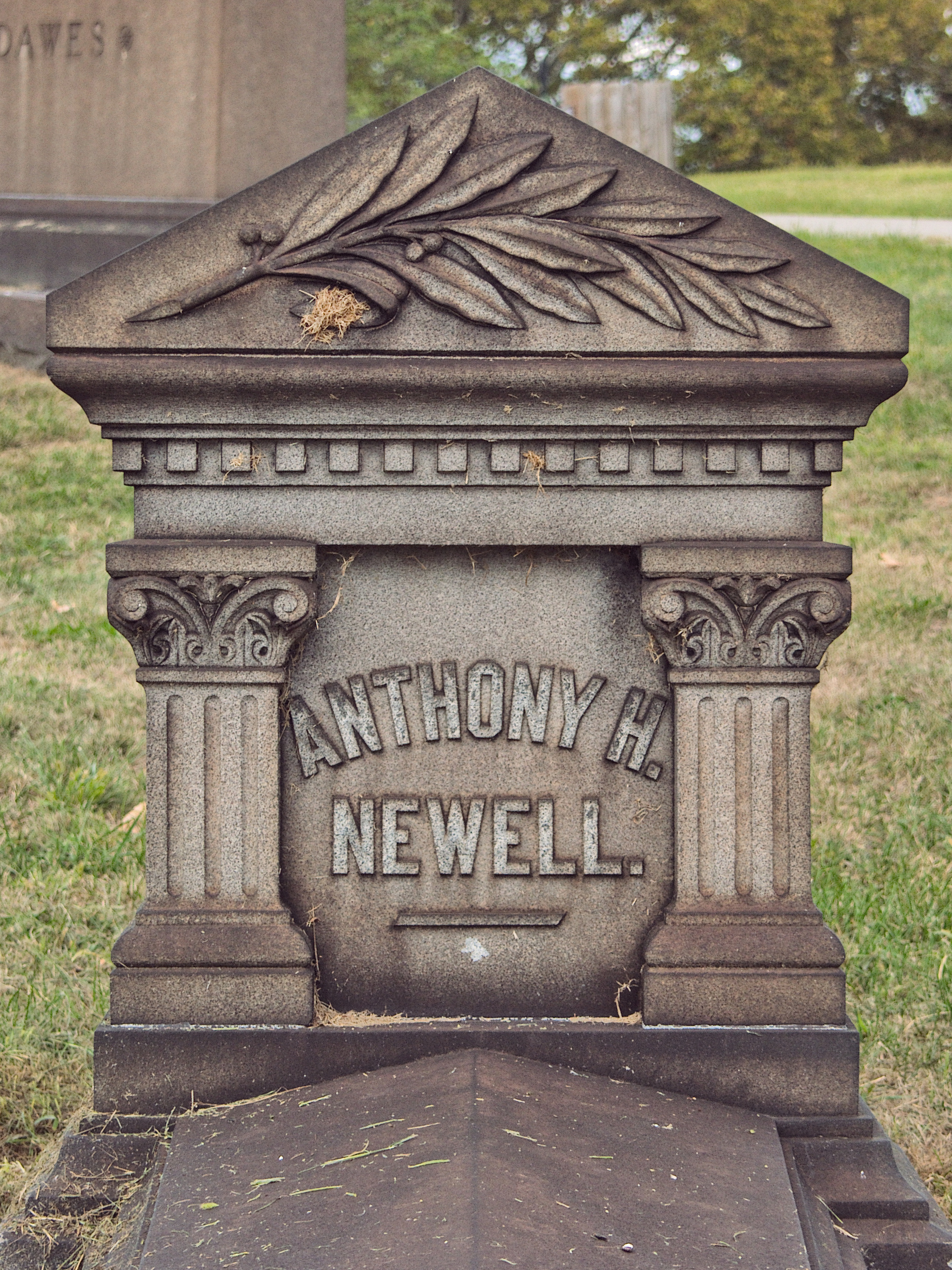
An unusual design: a full-length grave with a kind of miniature Corinthian temple as the headstone.


Oak Spring Cemetery in Canonsburg has a number of slab stones elevated into table-like structures—an arrangement common in some old cemeteries. Obviously the props under these stones are newer than the stones, but they may have replaced older ones that were original. Old Pa Pitt simply doesn’t know whether these slab stones were always elevated or whether graveyard caretakers elevated them later, when they began to vanish under the ground.


SACRED
to the
MEMORY OF
SAMUEL WHITE
Who departed this life
May 12th 1837, In the
82nd year of his
age.
Samuel White, Sr. was a veteran of the Revolutionary War. He married a considerably younger woman named Mary:

SACRED
to the
MEMORY
of
MARY WHITE
wife of
SAMUEL WHITE
DIED
JUNE 12th, 1841 in the
76th year of her age.
In the short time between the death of Samuel in 1837 and the death of Mary in 1841, a new fashion in tombstones had swept over Western Pennsylvania. Samuel’s is a simple slab stone of the sort that had been made here since the late 1700s, but Mary’s is in what Father Pitt calls the “poster style,” with each line in a different style of lettering, like an advertising poster of the same era.