
A typical zinc monument, as usual still almost as fresh as when it was installed—except that one panel is missing on one side, leaving the hollow interior open.

The Art and Architecture of Death
A typical zinc monument, as usual still almost as fresh as when it was installed—except that one panel is missing on one side, leaving the hollow interior open.
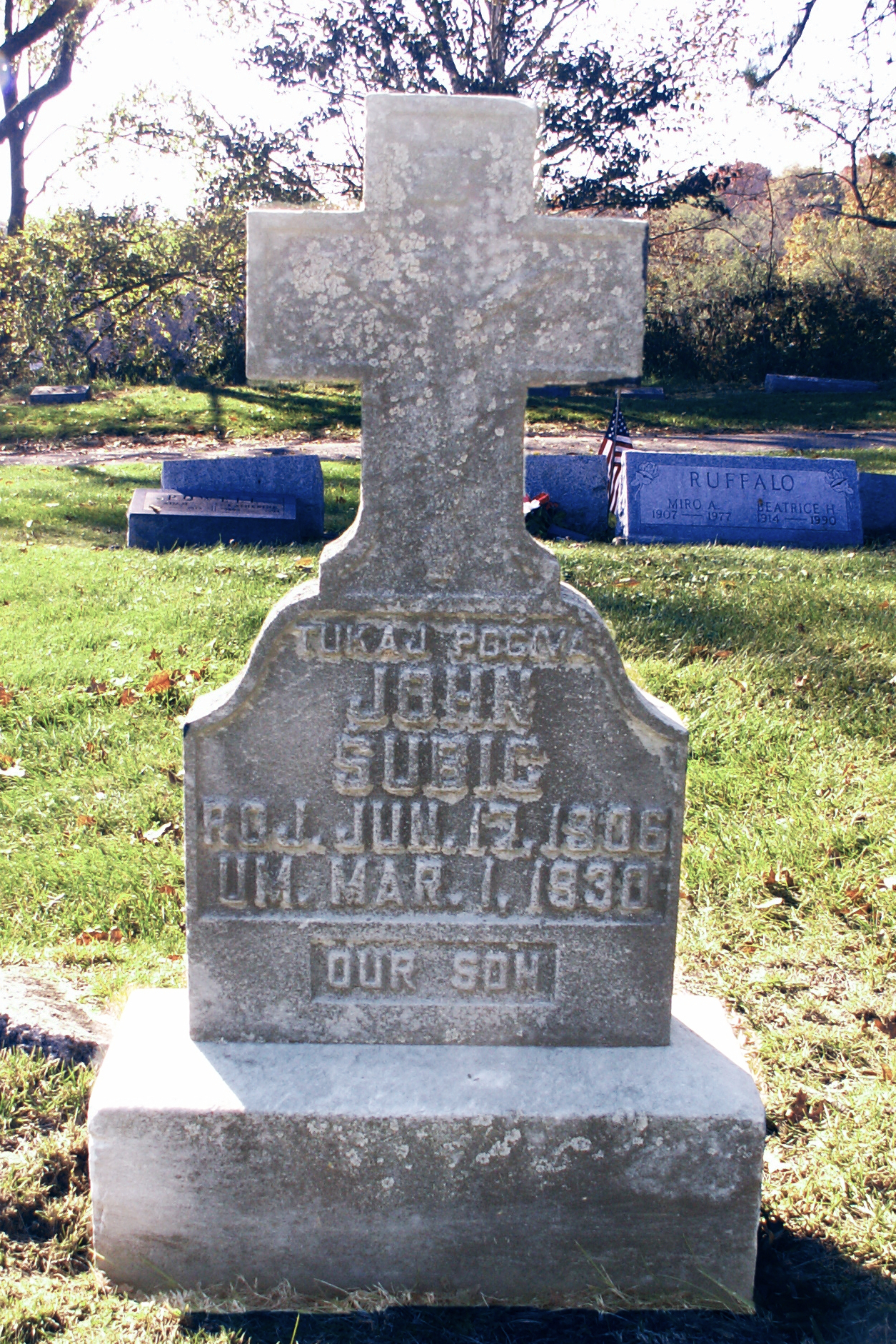
Another example of a typical Slavic tombstone with inscriptions in two languages—again, we suspect that “OUR SON” came with the stone, and the inscription in Slovenian was supplied to order. The cross was not originally blank: if we look very carefully, we can trace the faint outlines of a crucifix in shallow relief that has eroded almost completely away.
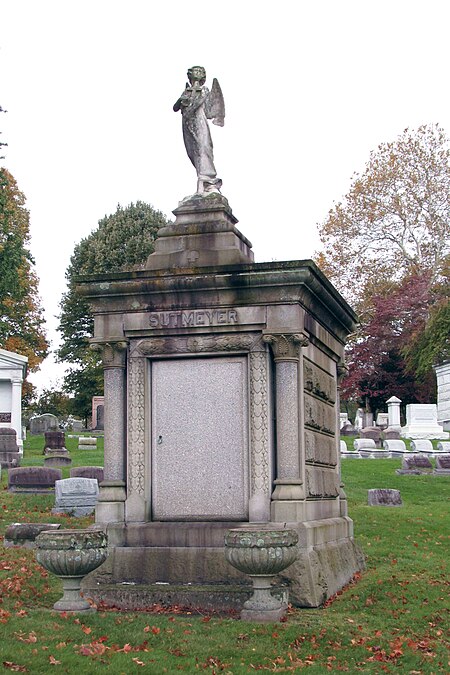
A small stock mausoleum with indeterminate medievalish details. The cross-bearing angel on top has weathered into picturesque abstraction, looking far more otherworldly now than it did when it was new.


Flower-dropping mourners are very common in our cemeteries, but this one is made of bronze and unusually fine.


Here is a family plot that seems laid out for ancestor-worshiping rituals. The massive classical monument dominates the plot from the rear; in front of it is a classical altar where the descendants could kneel and offer their sacrifices. The older members of the family are named Schwartz; at about the time of the First World War, the younger ones adopted the easy Americanization of Black.


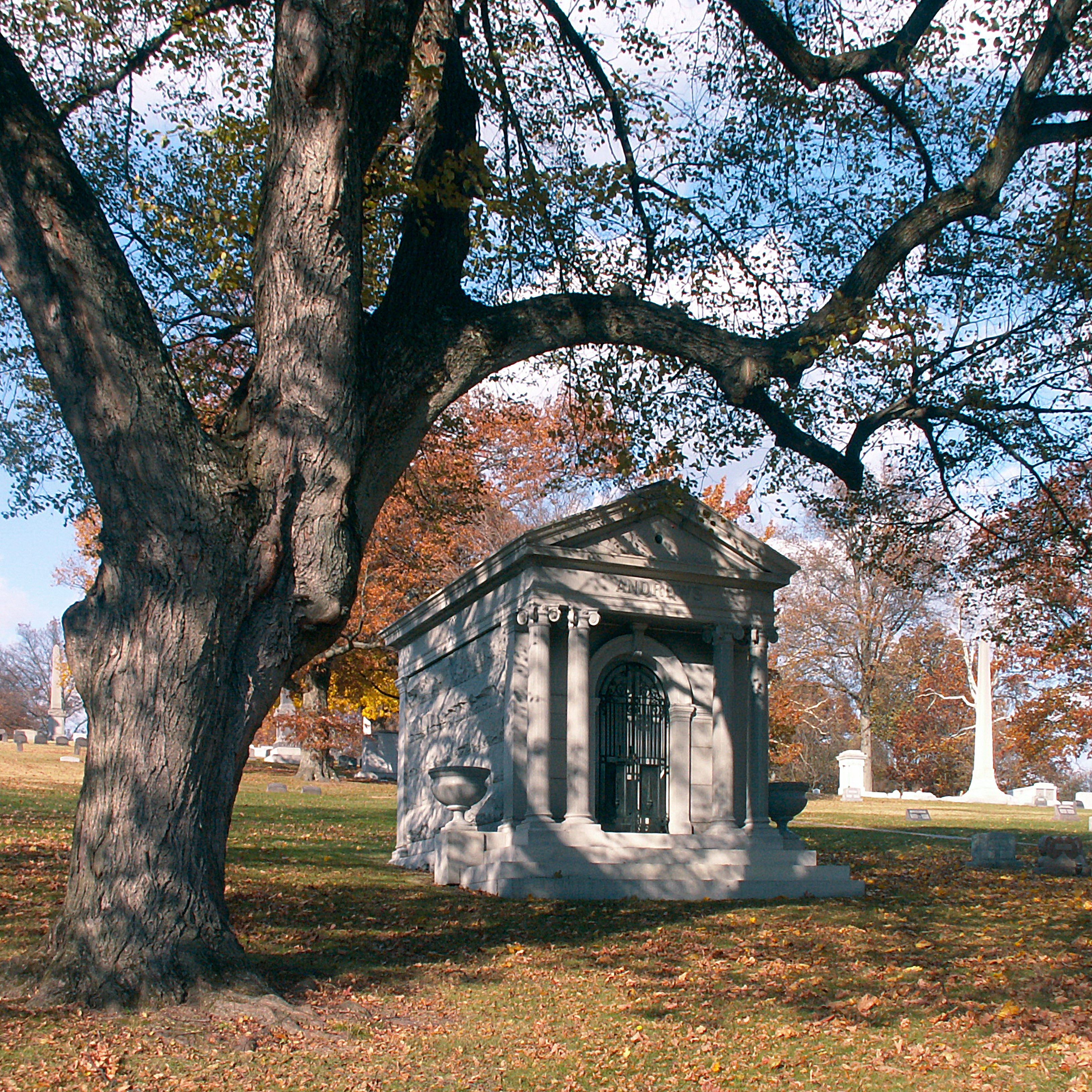
A richly detailed example of Renaissance classicism, with rusticated blocks, arched entrance, “modern Ionic” columns (that is, Ionic columns with volutes at the four corners of the capitals), and flanking urns.


A tall shaft topped by an urn. The very Victorian design includes elaborate monograms and ample space for inscriptions, but no inscriptions were ever engraved. Instead, the McKees have individual headstones around the monument. Eleanor McKee died in 1877, and that may be the date of the monument as well; but from the style old Pa Pitt might guess that it is later, perhaps from 1892, when Eleanor’s husband John, the family patriarch, was buried. They had two children who died before either of them. All the McKees were buried with sentimentally illiterate rhymed epitaphs. The worst is for Samuel Sterrett McKee, who was born in 1861 and died in 1868:
CEASE DEAR PARENTS CEASE THY WEEPING
O’RE THE GRAVE WHERE I AM SLEEPING
FOR E’RE I LEFT MY HOME BELOW,
THE ANGELS WERE BECKONING ME TO GO.
Father Pitt counts two bad spellings and one grammatical error; he has given up the punctuation for lost.


If an illustrator wanted to draw a typical cemetery monument of the middle 1800s, it would look like this. Rich but not extravagantly ornate, these shafts were popular because they easily direct the family to the plot, and they have abundant surface for inscriptions, meaning that one expensive monument can take the place of any number of tombstones, an expense that adds up over the years as scarlet fever and cholera take their toll.
Unfortunately, the material—limestone or marble—erodes over the decades, so that the inscriptions become illegible after a while. Our readers are welcome to try their hands at reading the inscription for James M. Henry below, but poor old Pa Pitt gave up. The inscription may remember a child who was born in 1831 and died in 1837, but Father Pitt is not willing to stand by that reading.

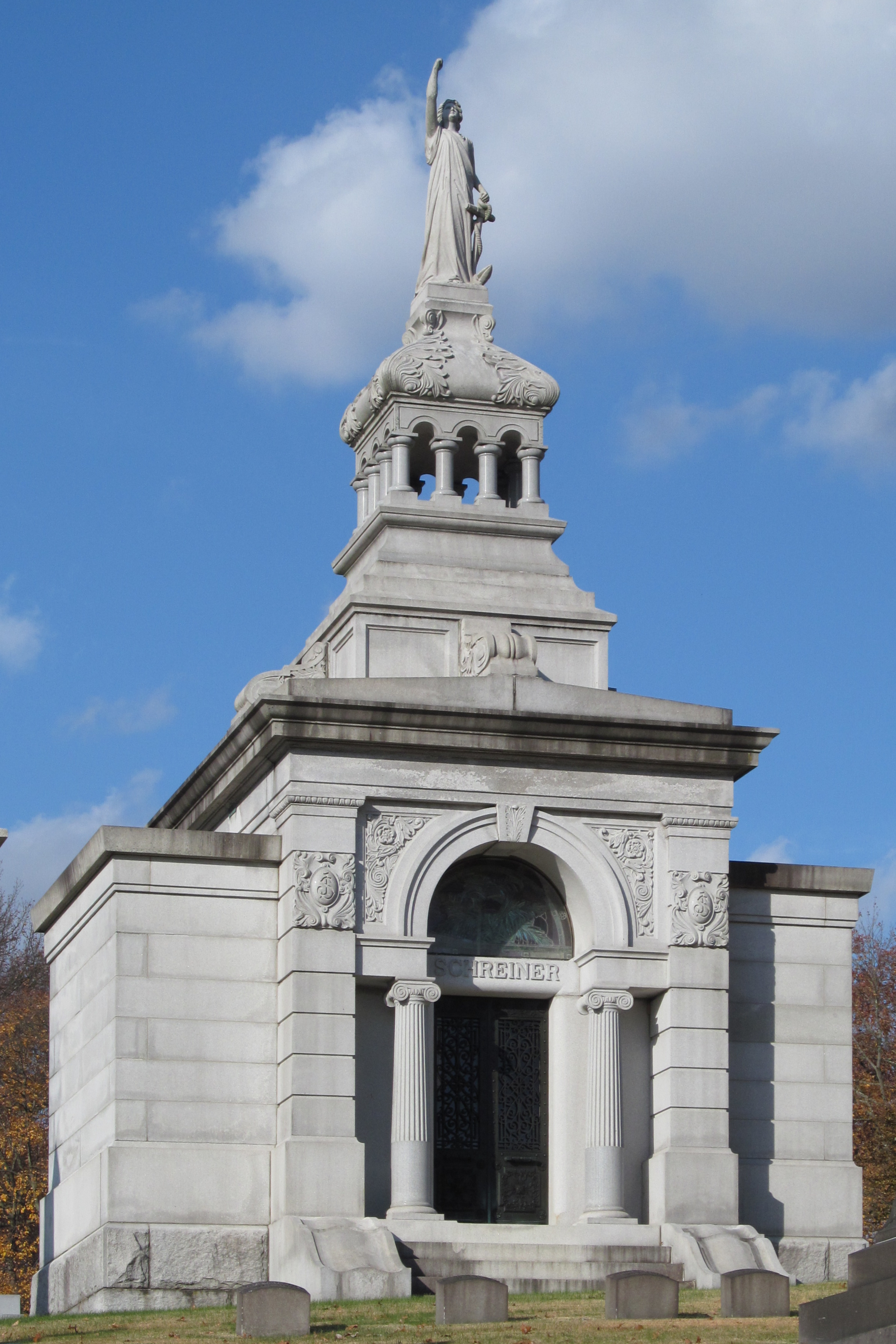
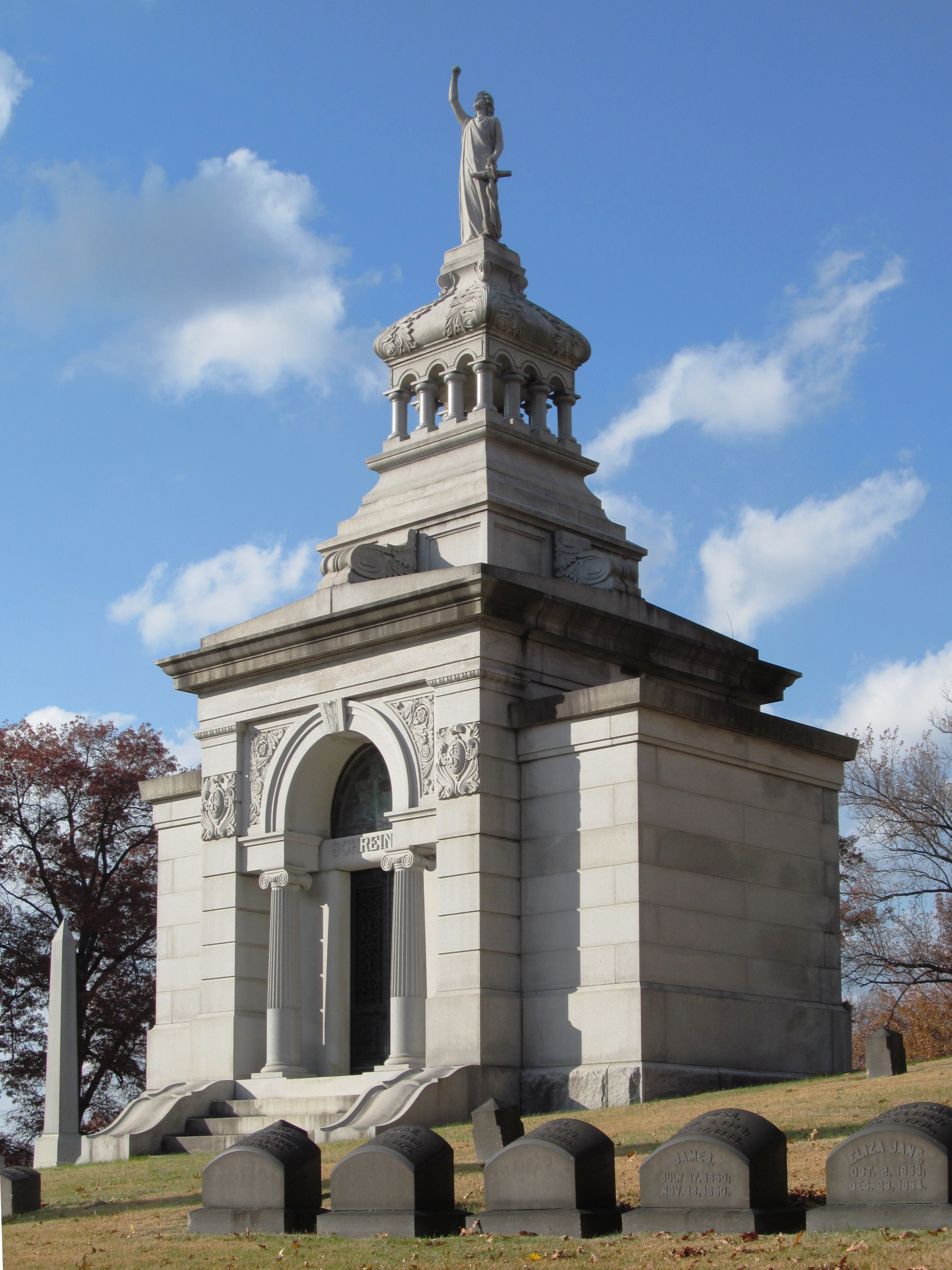
A large and luxurious classical structure with a prominent cupola topped by a statue of Hope shaking her fist at heaven. At least that is how old Pa Pitt always reads the statue: it is certainly Hope (the anchor is her ID card), and Father Pitt doesn’t know what else to make of the raised-fist salute.


Ornate monograms flank the entrance arch.
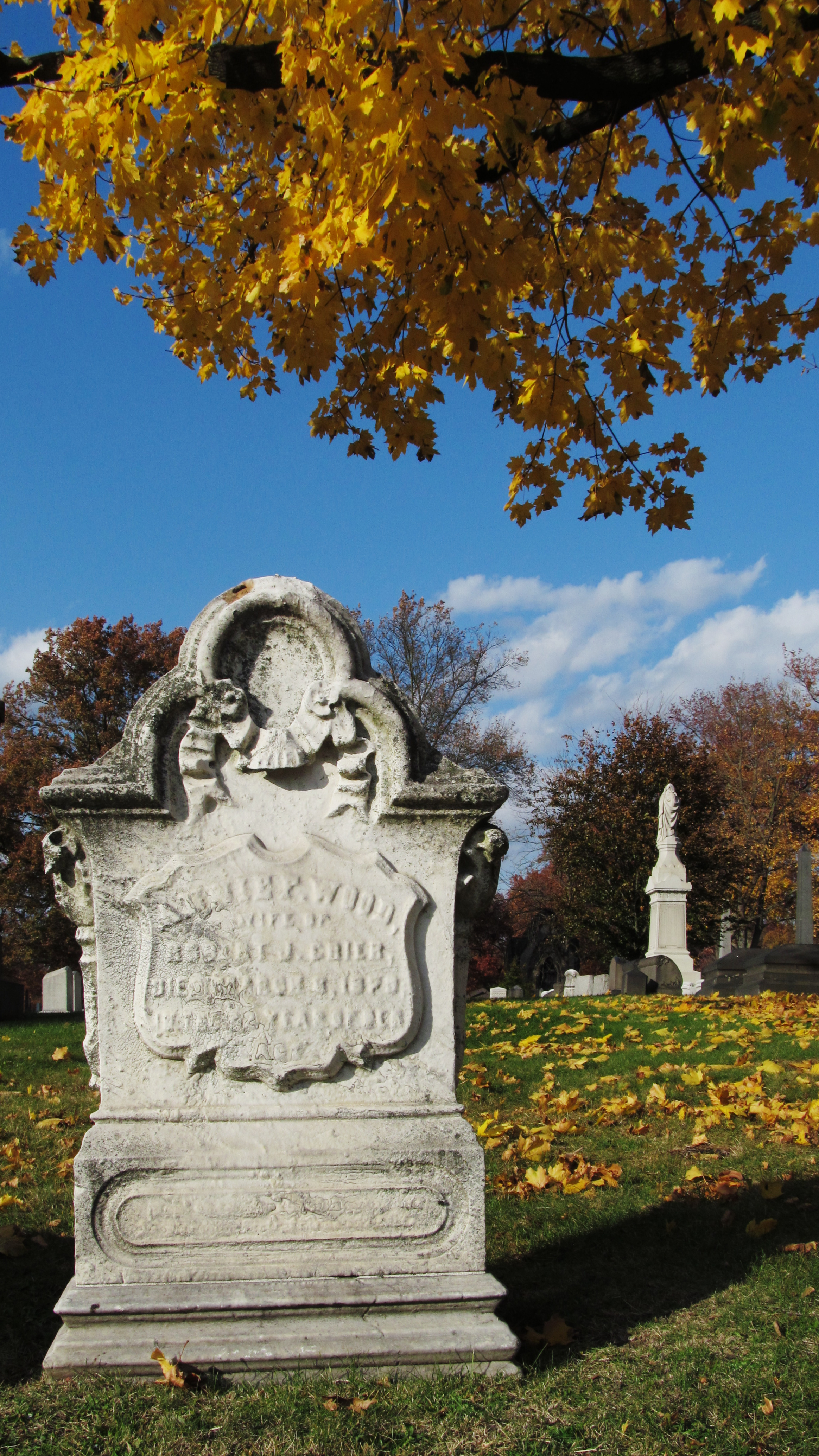
A good example of the romantic style of the middle 1800s, which—as we can see here—lasted into the 1870s. These monuments were usually in marble or limestone, which erodes far too quickly in our climate—although it is often beautifully picturesque in its eroded state. This is Father Pitt’s best attempt at reading the inscription:
We are fairly certain of the name “Annie F. Wood,” but almost all the other readings are subject to amendment.
There was also an epitaph in a kind of cartouche below the inscription, but it seems hopeless to try to interpret it now.
