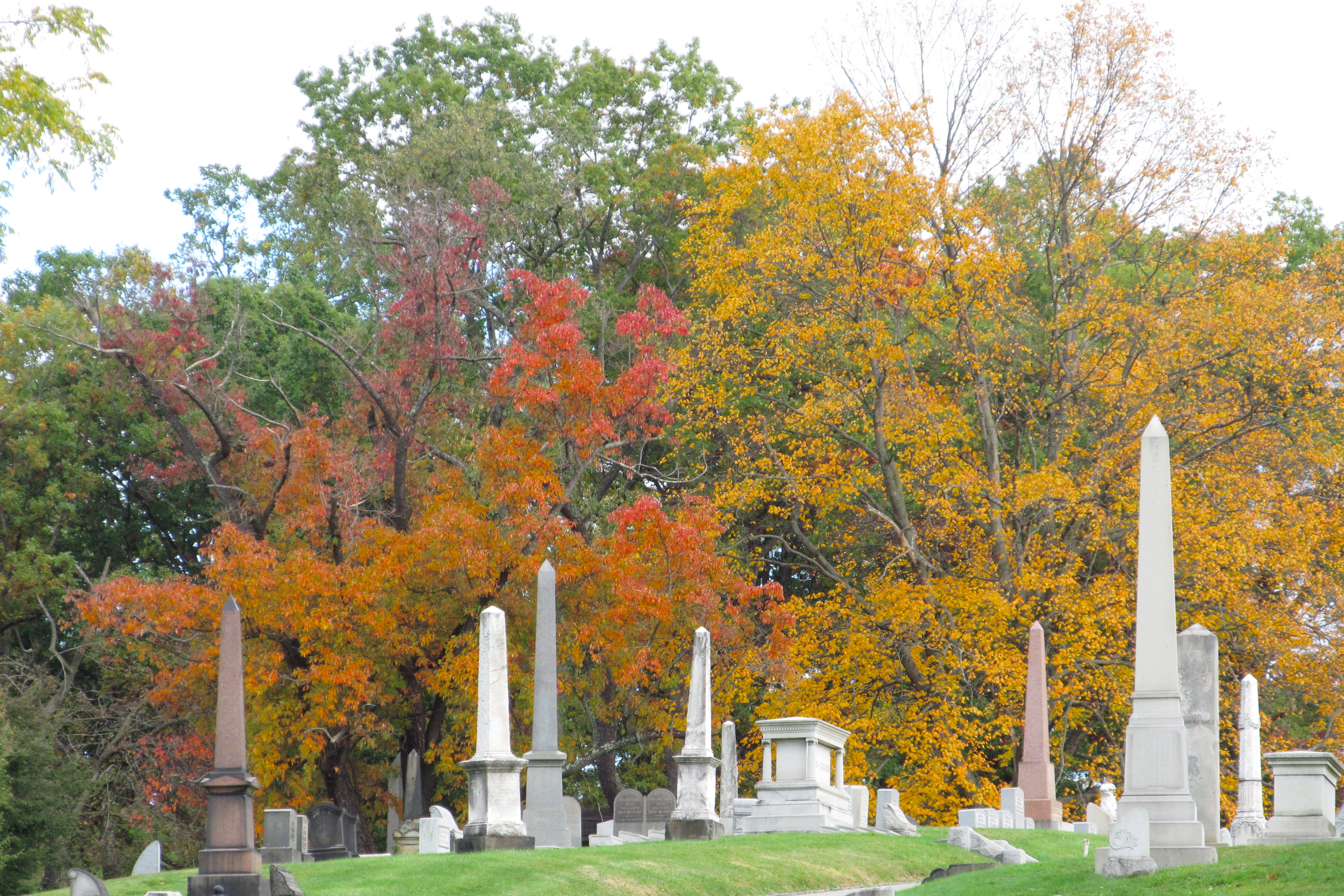
Above, a forest of obelisks before a forest of forest; below, a pleasant stroll among the mausoleums and monuments.


The Art and Architecture of Death
Above, a forest of obelisks before a forest of forest; below, a pleasant stroll among the mausoleums and monuments.

Stanley Zaksesks died in 1920 when he was eleven or twelve years old. Perhaps his father worked in the construction business; this monument appears to have been cast in concrete. The name and date are painted.

The stone has eroded so much already that only the outline of the crucifix is visible in the Byzantine cross. The inscription is still very legible, however; the monument was probably put up when Mike P. Sapsara died in 1932, but old Pa Pitt suspects the inscription has been recut, replacing an illegible original. Note that the inscription is a hybrid of Croatian and English. The photograph of Mike P. Sapsara is in poor shape, but you might still recognize him if you met him on the street.

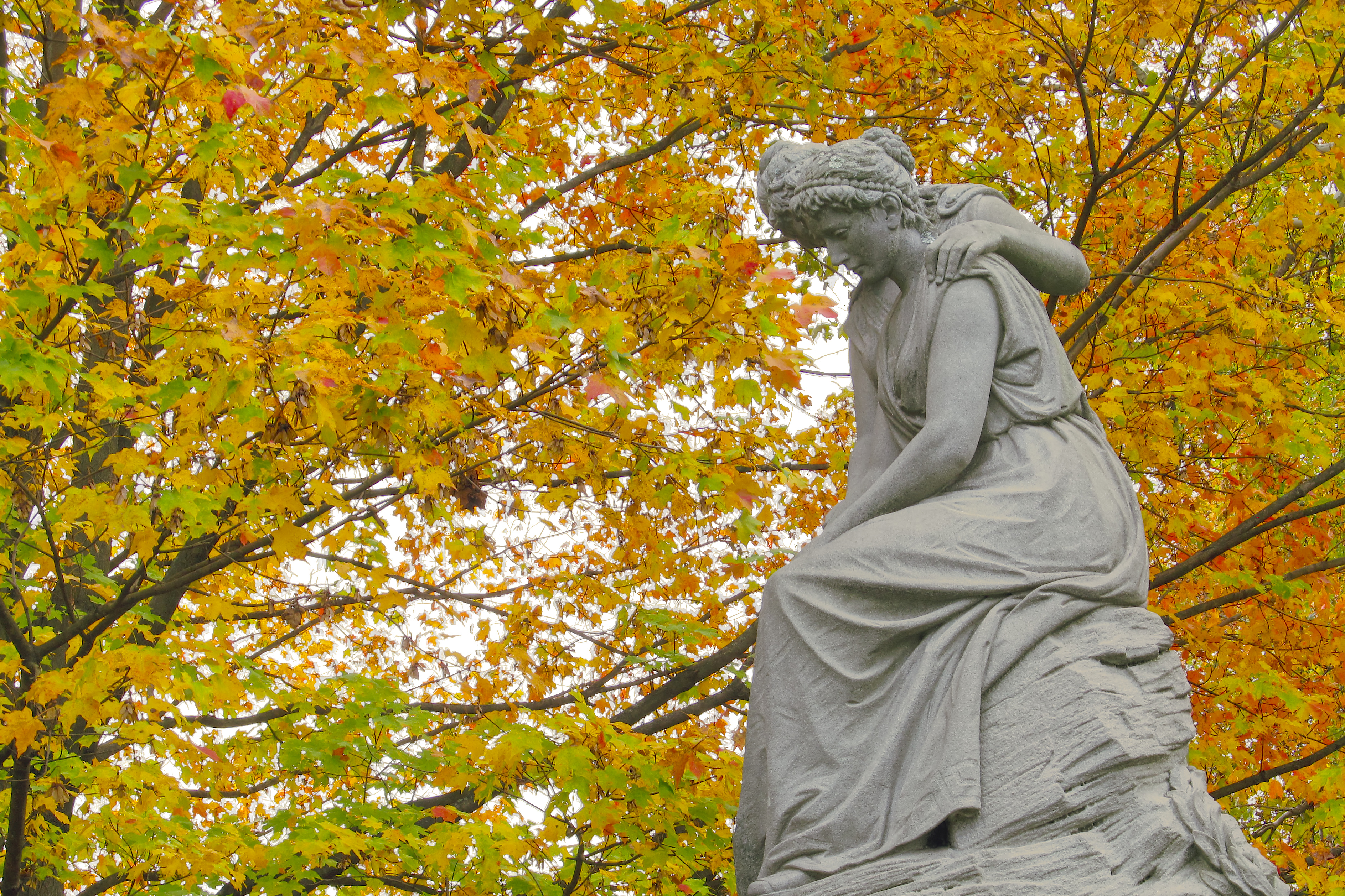
Father Pitt thinks this picture of mourning and consolation (no one seems to know who the sculptor was) is one of the finest things in the cemetery, and fall colors add much to the effect.


A miniature Doric temple with “Christ is risen” in blackletter (with quotation marks) to Christianize it. There are inscriptions for death dates back to 1865, but from the style Father Pitt would date this monument much later—perhaps 1914, which is the earliest date after the 1860s.


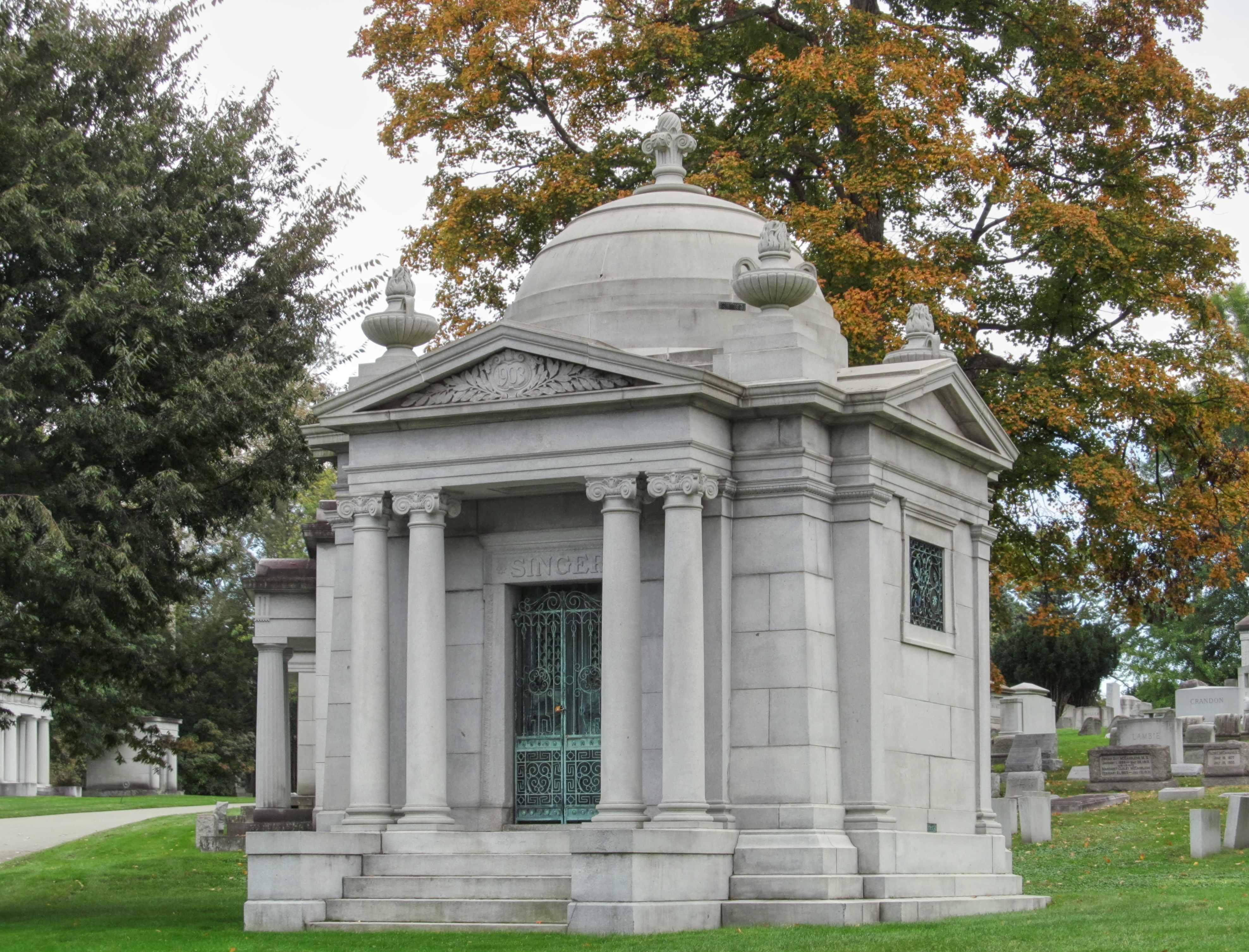
A Victorian interpretation of Jeffersonian classicism. Domes are fairly unusual on Pittsburgh mausoleums, but this one works well with the “modern Ionic” design. The four large lamps on the corners are a bit much, in old Pa Pitt’s opinion; but the Singers didn’t ask him.
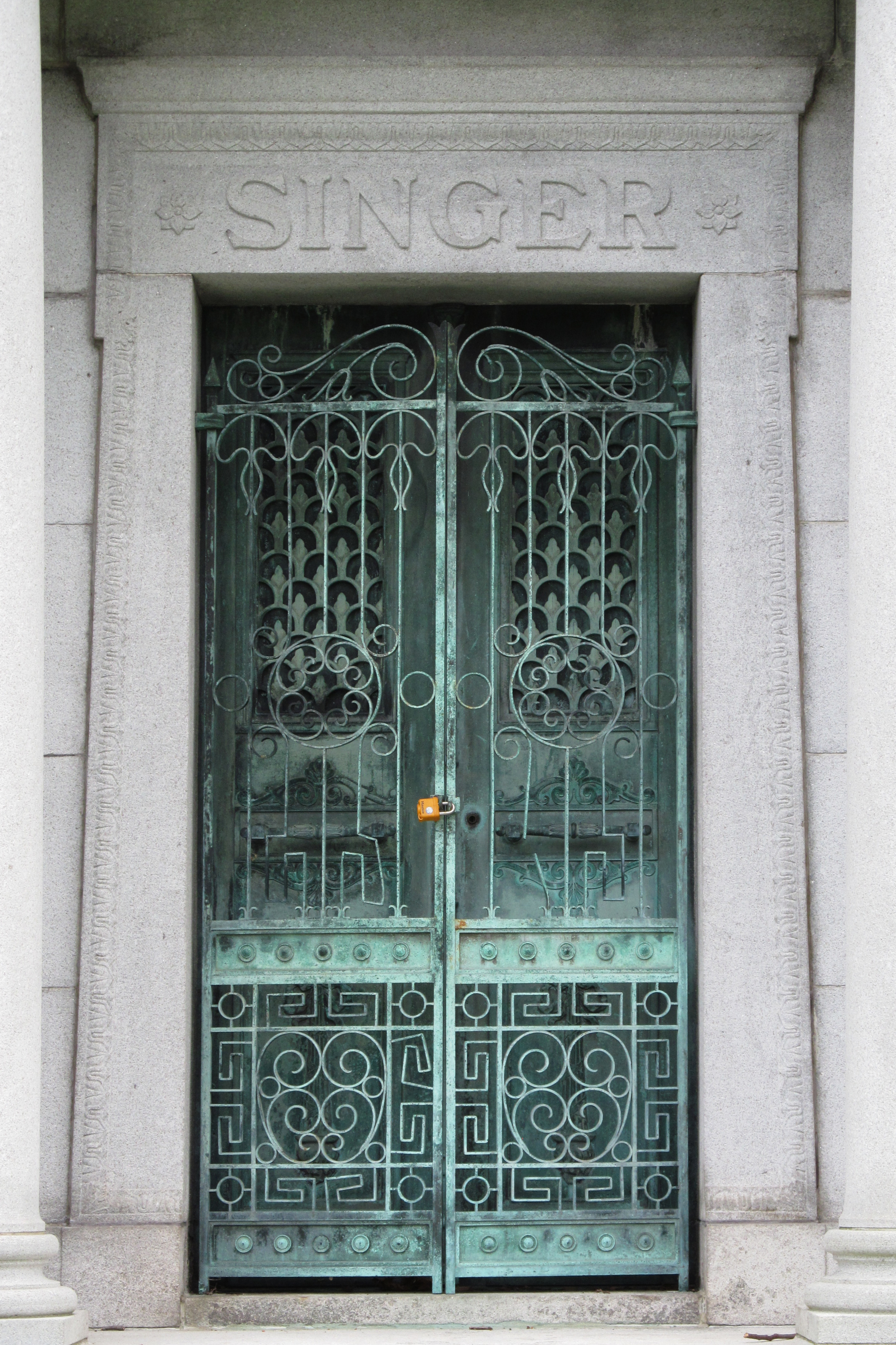
Two layers of bronze and one cheap padlock keep vandals out, or perhaps the Singers in.

The gorgeous and absurd Winter mausoleum was designed by John Russell Pope, architect of (among other things) the National Gallery of Art and the Jefferson Memorial. Almost exactly the same mausoleum was built earlier for F. W. Woolworth, the dime-store king; Emil Winter, the Pittsburgh banker, must have told Pope he wanted what Woolworth had.


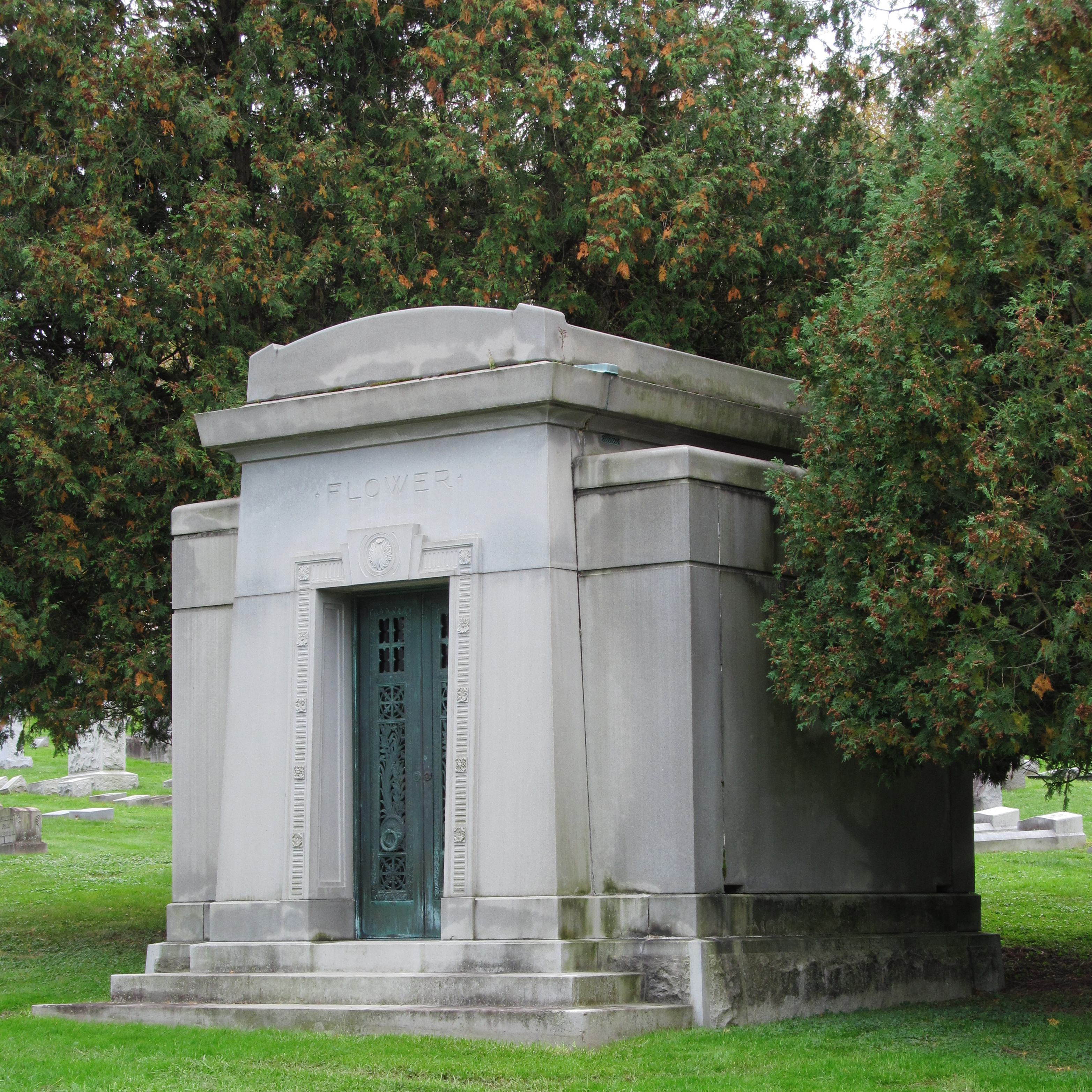
An early-twentieth-century Doric mausoleum of the simpler style, without pediment or frieze, that was becoming popular then. The stained glass inside is a simple vine decoration.


A fairly large cross for a seventeen-year-old whose family perhaps could not afford a professional monument. Note the one attempt at decoration: a small sun pattern (or something) at the top.

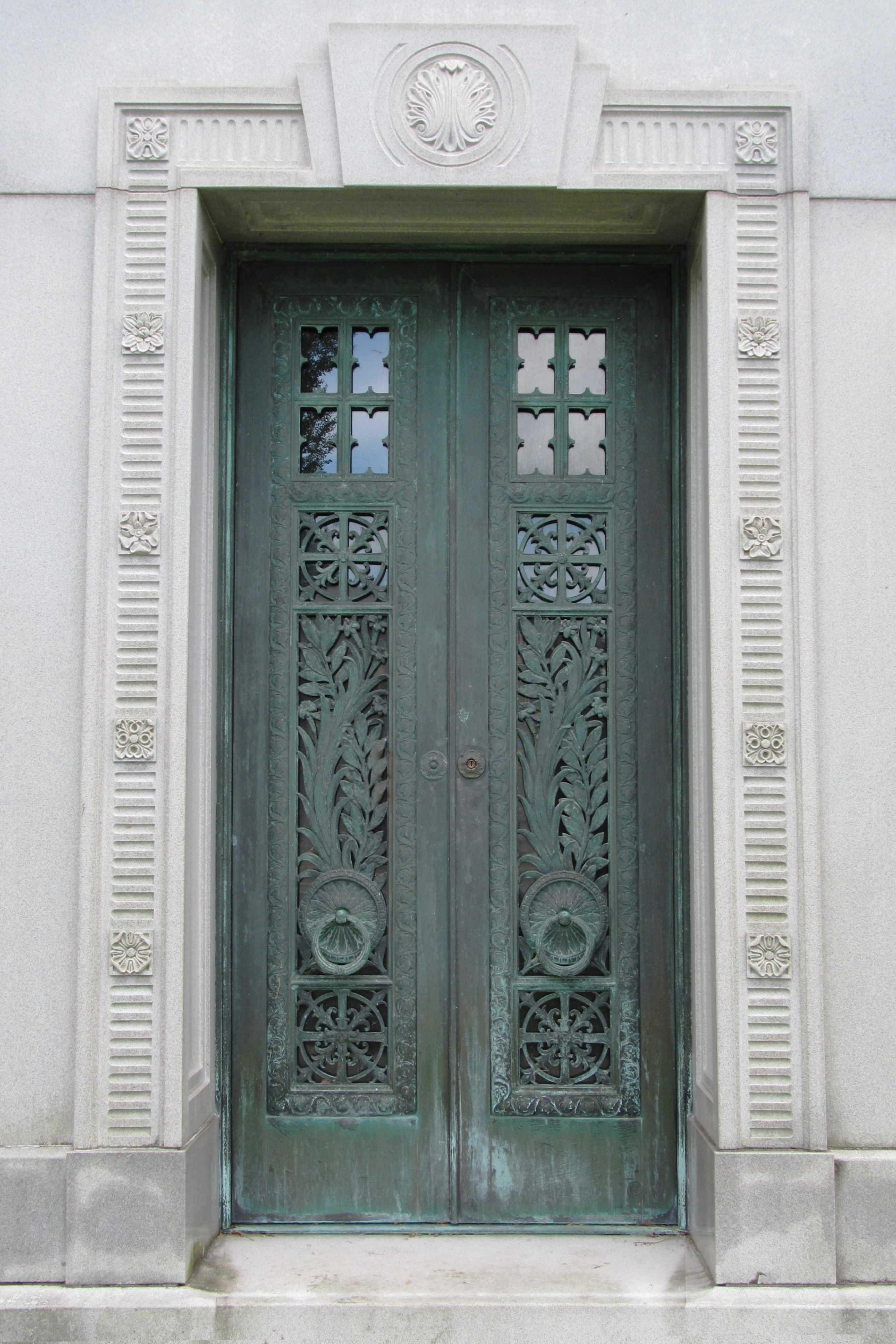
A tasteful mausoleum shaped like the stereotypical Egyptian temple, but without Egyptian decorative details. The nautical-themed stained glass inside is extraordinarily good, and the bronze doors are also very artistic.