Pittsburgh Cemeteries

The Art and Architecture of Death

W. R. Fischer mausoleum

Two days ago Father Pitt wrote that the Vandergrift mausoleum was probably a stock model. Here is the confirmation: the identical mausoleum, but with different bronze doors. After so many years of wandering in cemeteries, old Pa Pitt has developed an instinct for these things.

W. R. Fischer mausoleum

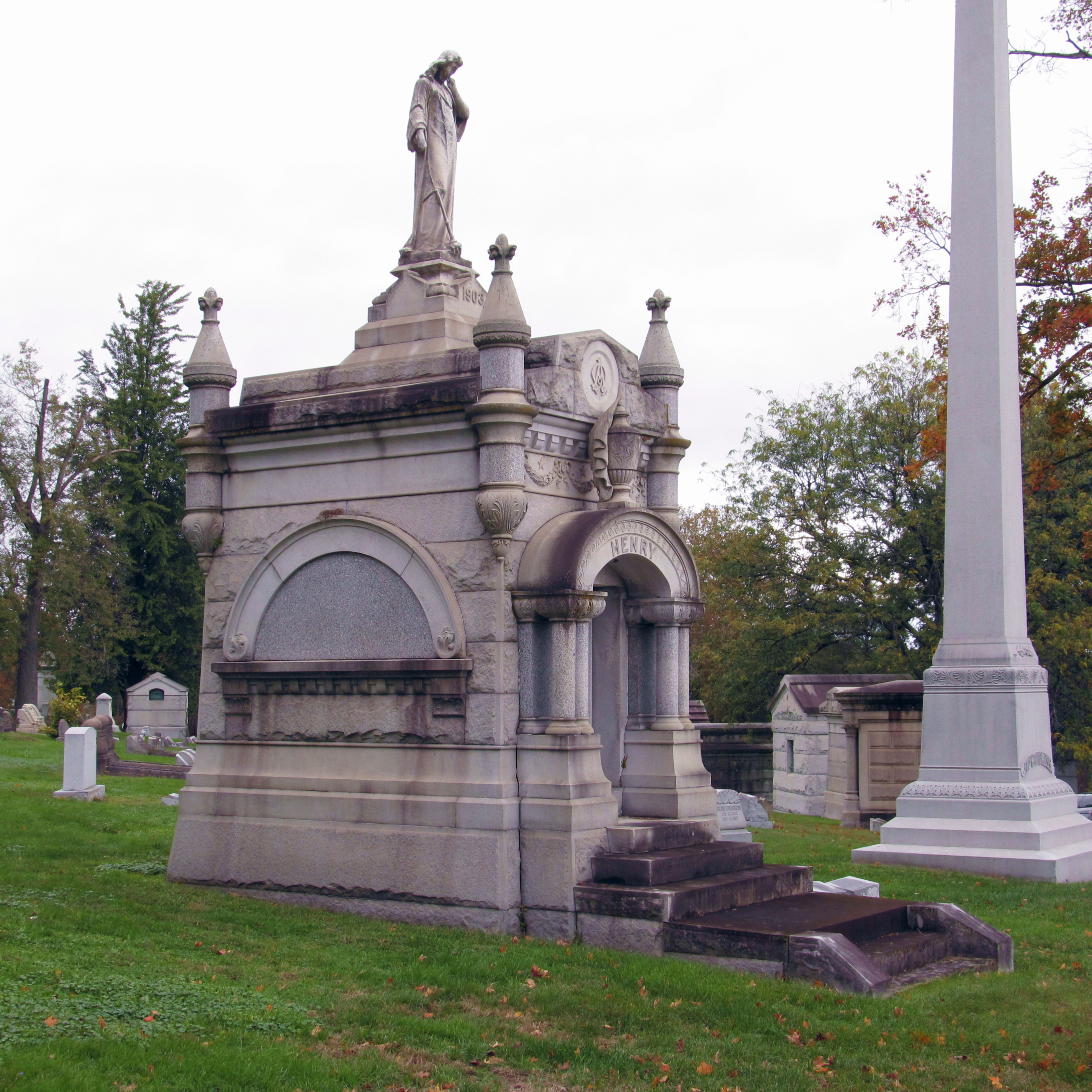
Henry mausoleum

Doubtless a memorial company’s stock model, this small mausoleum is encrusted with floridly Victorian Romanesque details in a rather weighty German style. A good architect would have displayed more taste, but would a real architect have been able to provide so many details for the money?

Henry mausoleum

Fleming mausoleum

Almost certainly modeled after the Temple of Hephaestus in Athens, this is about as archaeologically correct as Doric architecture gets in Pittsburgh. It is one of the few peripteral mausoleum designs you will find in Pittsburgh cemeteries, peripteral meaning that it has columns on all sides.

Fleming mausoleum

Fleming mausoleum

Vandergrift mausoleum

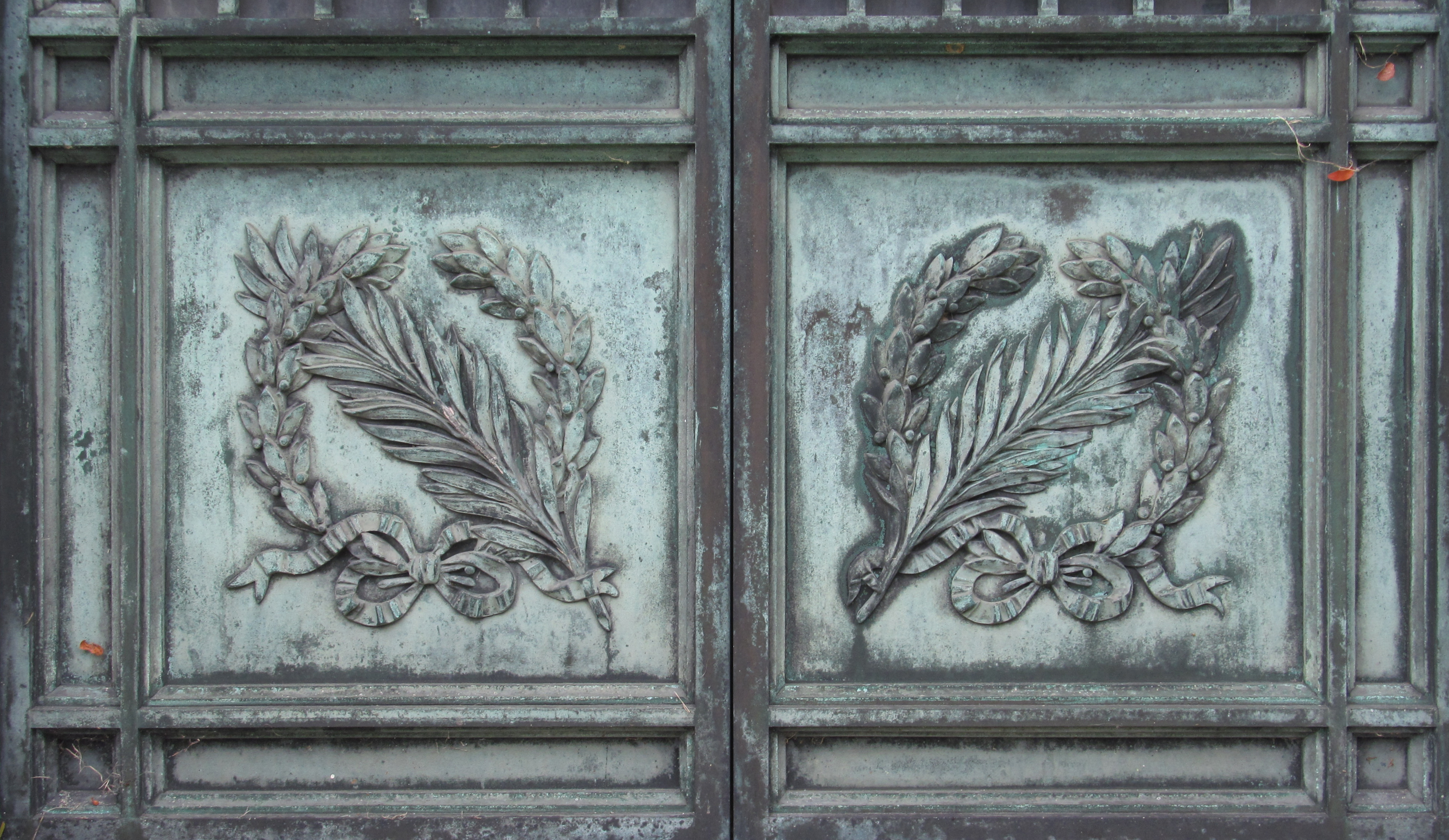
Probably a stock model. It is curiously hard to pin down the style of this structure; old Pa Pitt will call it Romanesque, on account of the medievalish columns and the arched bronze doors. The stained glass inside is another standard catalogue item. The bronze doors bear reliefs of laurels and palms—symbols of victory in death.

Stained glass

Bronze reliefs

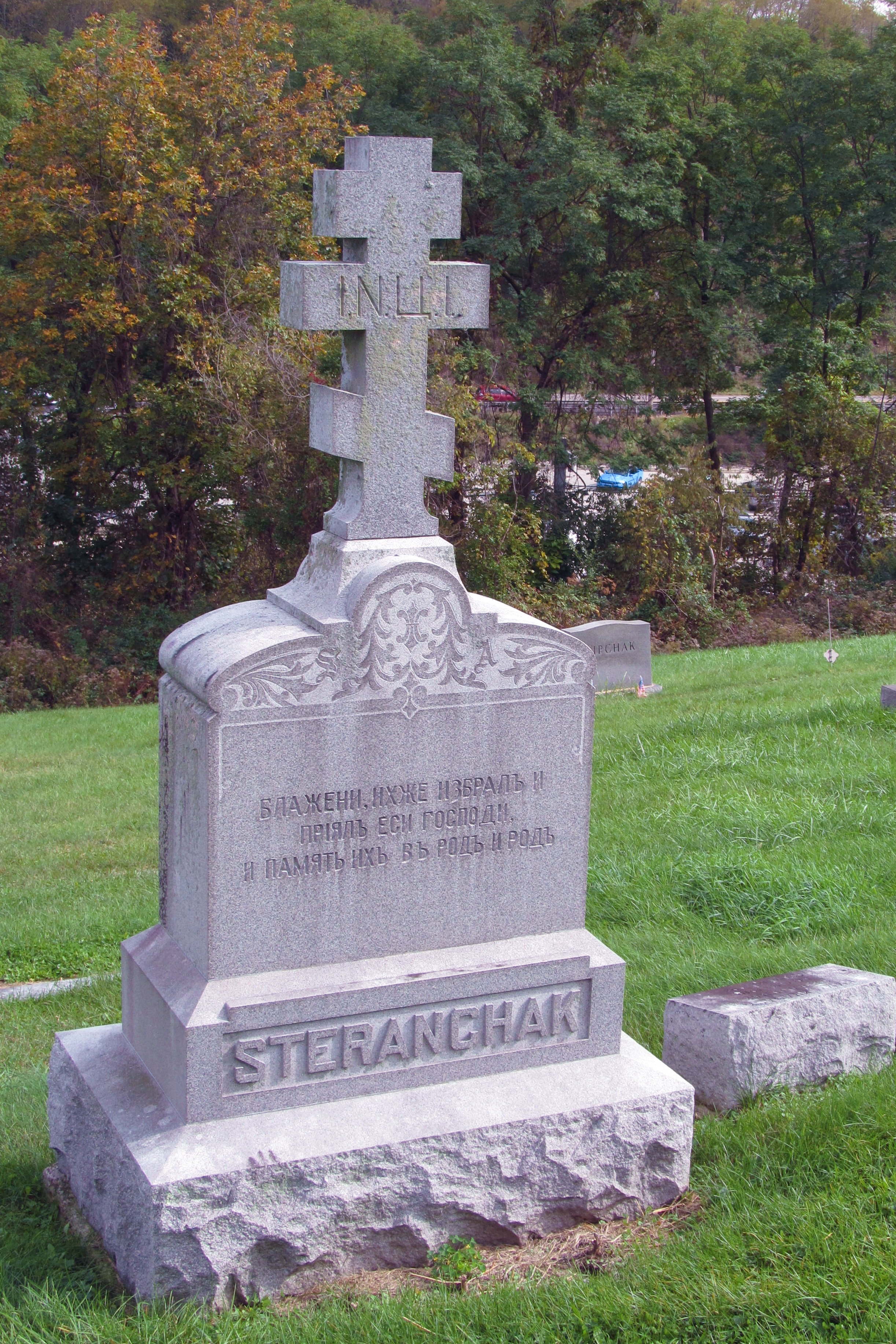
Steranchak monument

This fine Byzantine monument has inscriptions in what looks to old Pa Pitt like Ukrainian. He would be delighted to have a translation in the comments. There are inscriptions on both sides, and here they are in high resolution:

Inscription 1

Inscription 2

Steranchak monument

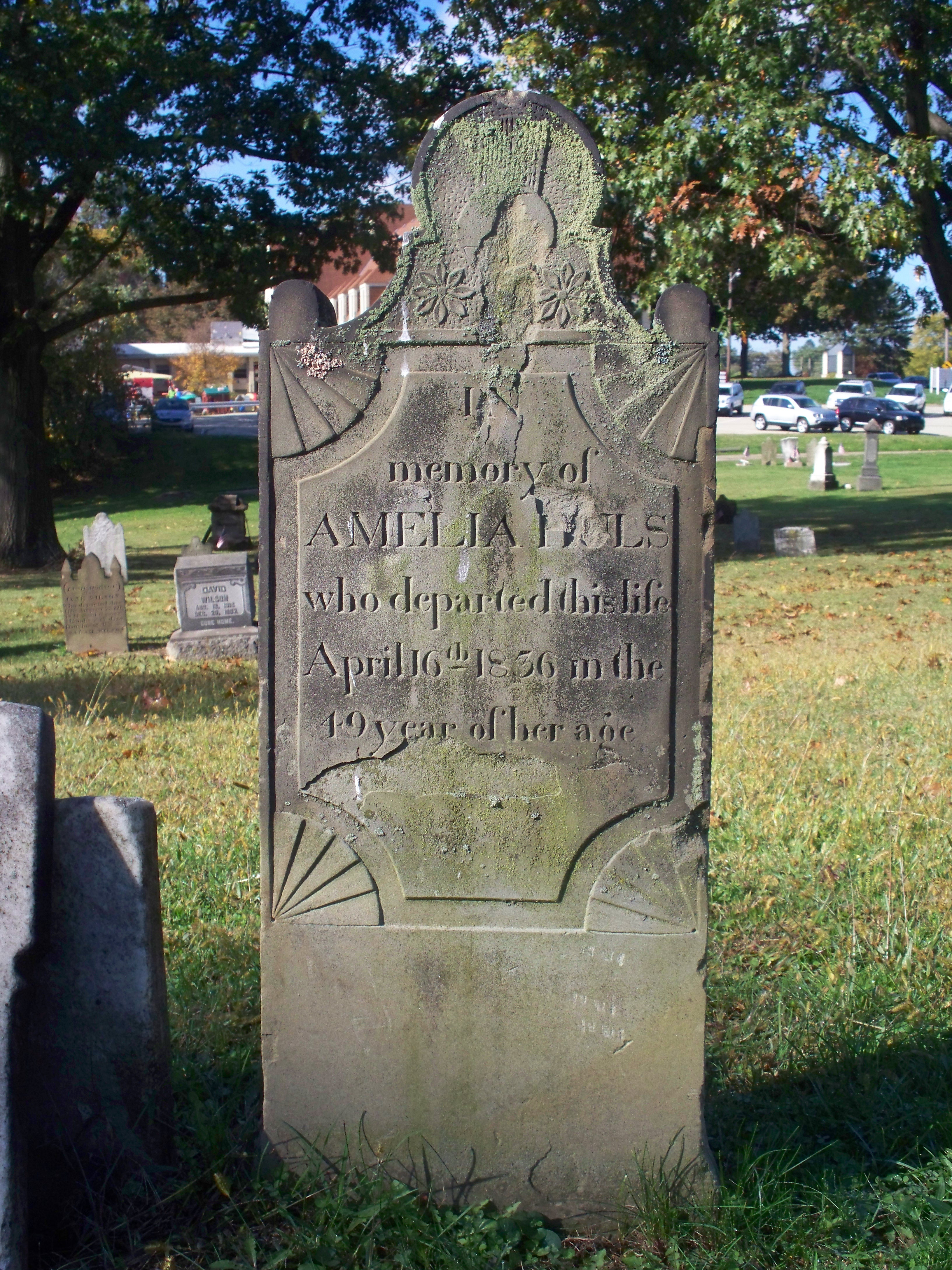
Amelia Huls

An easily identified work of the Master of the Robinson Run Reliefs, whose trademarks are all present:

  • thistle decoration flanked by flowers

  • fan patterns in the corners

  • curled tail on the top of the lower-case g in age

  • “IN” in all capitals, “memory of” in all lower case, name in all upper case.

Interestingly, there is a Henry Huls buried in the Peters Creek Baptist Church Cemetery, whose tombstone is also by the Master of the Robinson Run Reliefs. We therefore know of at least three cemeteries in which this fine craftsman worked.

The inscription:

IN
memory of
AMELIA HULS
who departed this life
April 16th 1836 in the
49 year of her age

This picture was taken in 2015.

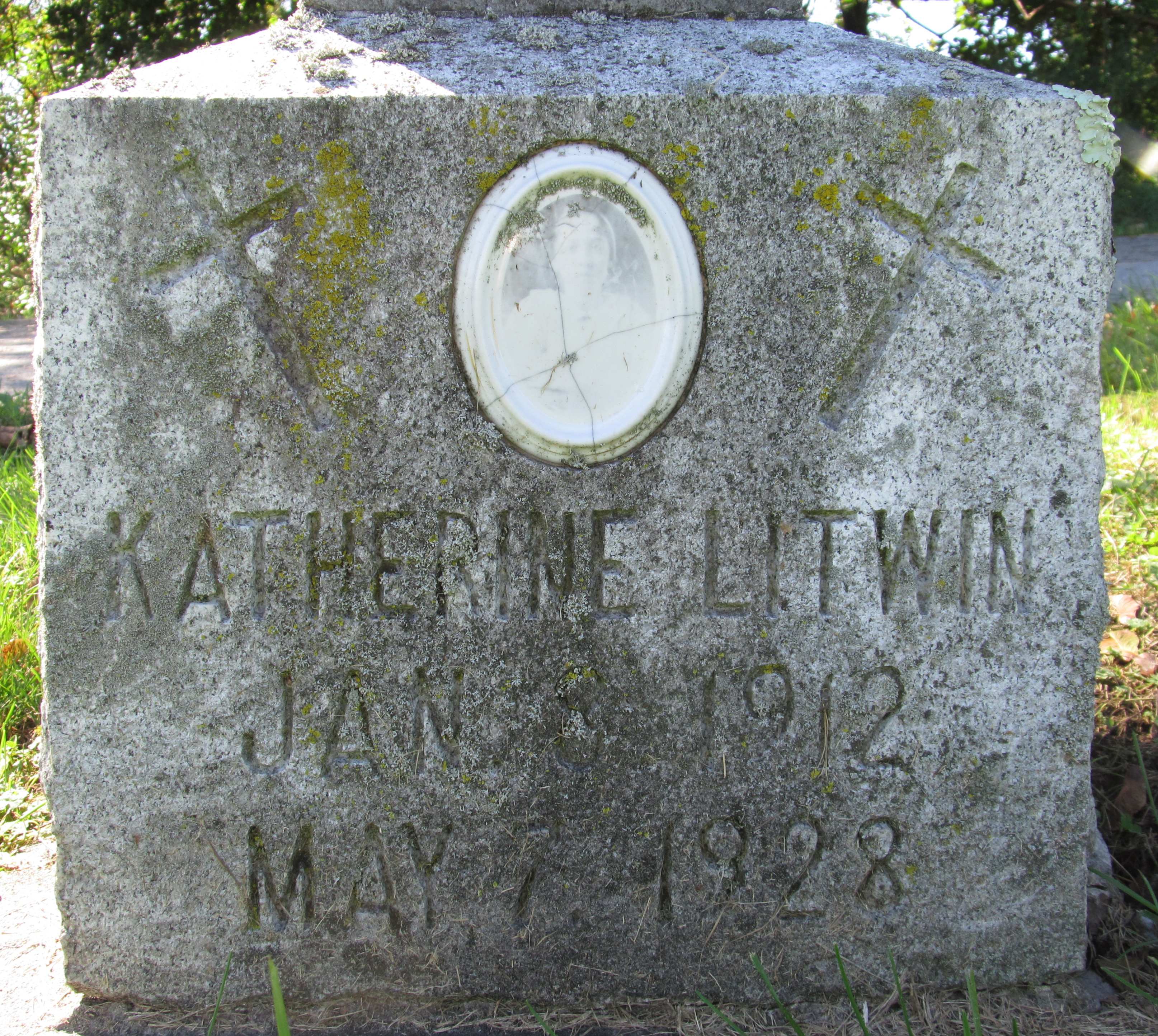
Katherine Litwin

A monument for a girl who died at the age of fourteen. The weathered and damaged angel is probably much more picturesque in this condition than it was when it was new.

Katherine Litwin

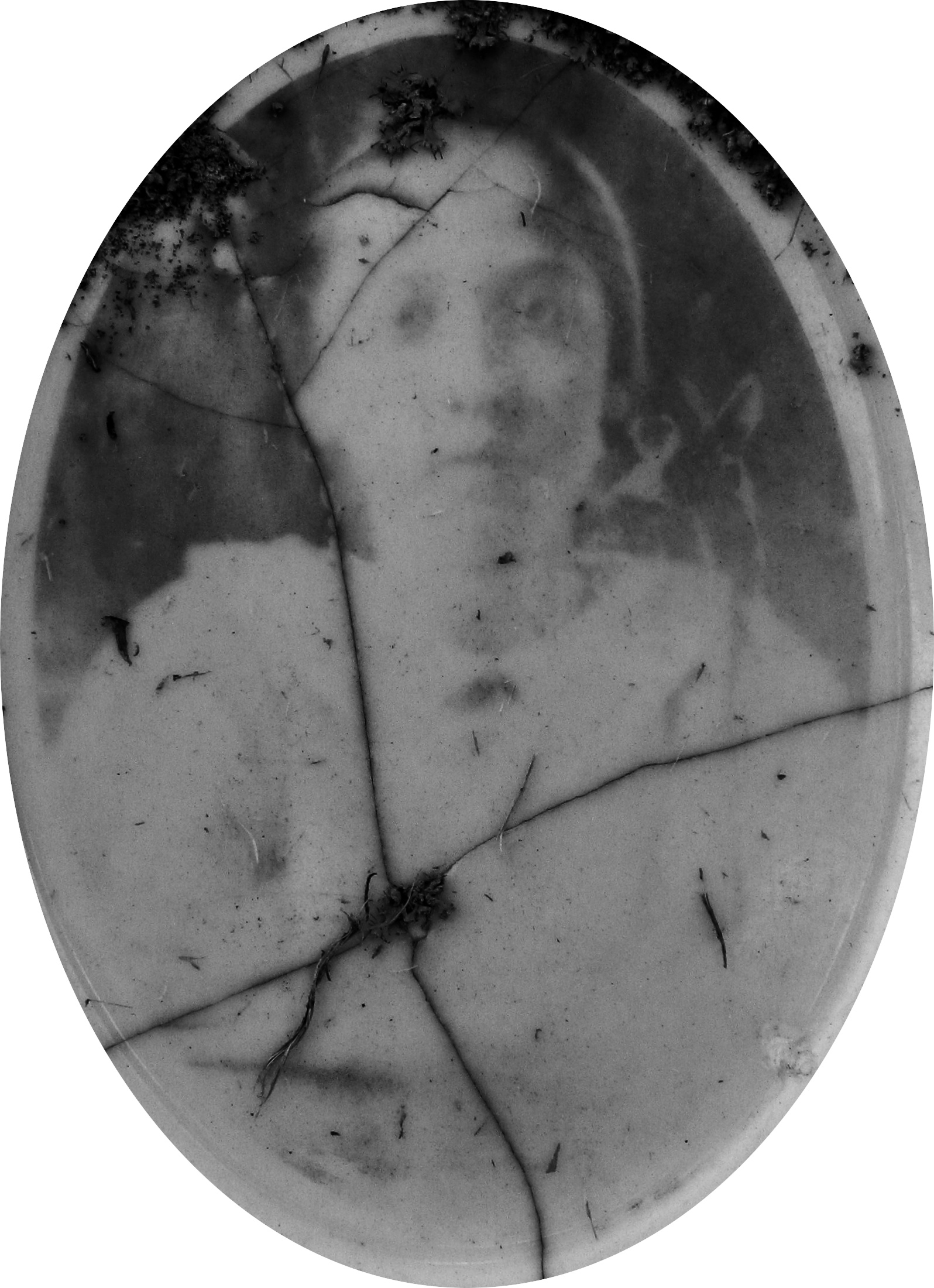
The base includes a photograph that is badly faded, but with the help of modern image-editing software we can restore a recognizable image.

Photograph of Katherine Litwin

Marian Fabiszwski

This is almost the archetype of the Slavic tombstone, with a fine folk-art crucifix to decorate it. With the help of Google, Wiktionary, and other Internet resources, we translate the Polish inscription thus:

HERE LIES
MARIAN
FABISZEWSKI
DIED MARCH 14, 1924.

Say a Hail Mary for Me

Michael Paczak

Google Translate identifies the inscription as Croatian. The translation would be something like this: “Here lies my husband Michael Paczak Dubos. Born 29 Apr 1874. Died 15 Mar 1927.” The Byzantine cross is used by both Russian Orthodox and Byzantine Catholic Christians, but in Pittsburgh the Byzantine Catholics make an especially big deal of it.

Andy Warhol’s Grave

- Posted in Smaller Graveyards by with comments

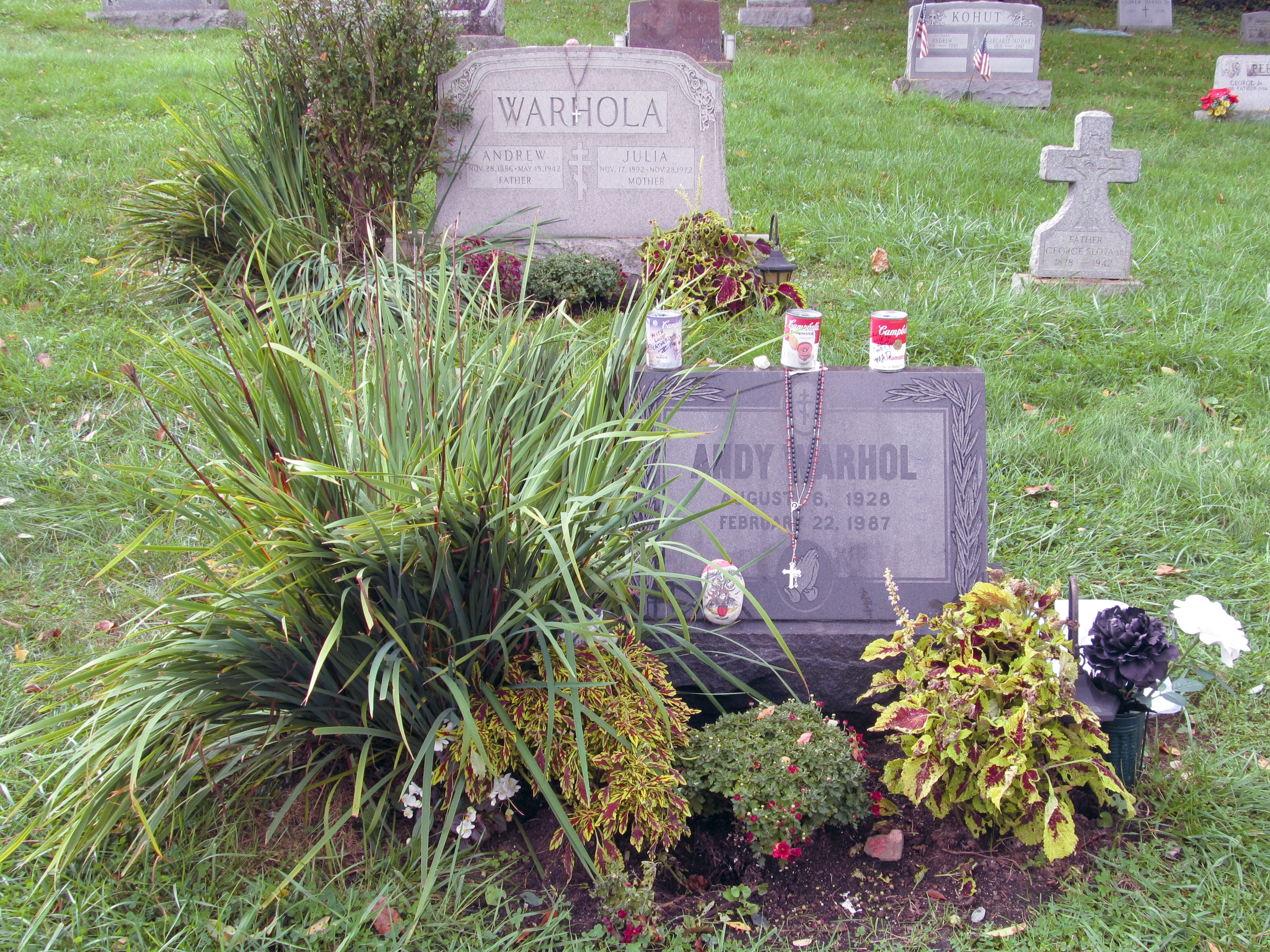
Andy Warhol grave

Visitors from all over the world come to St. John the Baptist Byzantine Catholic Cemetery to pay homage to one resident: Andy Warhol, son of Andrew and Julia Warhola (whose monument we see in the background). They come bearing gifts, and it is rare to find the otherwise unassuming monument undecorated. Campbell’s Soup cans are de rigeur, of course, but people who know something about Andy also bring rosaries. Andy Warhol was, in his own strange way, a devout Byzantine Catholic to the end of his life.

This Byzantine cemetery in Castle Shannon is near the Washington Junction station, where the Blue and Silver Lines meet. It is not at all hard to find Warhol’s grave in the cemetery. Just look for the cameras, and they will point the way.

Cameras trained on Warhol’s grave

It would have delighted Warhol to know that, as he rests in peace, his eternal slumber is livestreamed to the whole world.