Pittsburgh Cemeteries

The Art and Architecture of Death

Smaller Graveyards

Churchyards and family burying-grounds often hold hidden treasures, especially gravestones of early settlers, placed in the days when stonecutting was a local craft.

Anton Planinsek

Google Translate identifies the epitaph “Rahla mu zemljica” as Slovenian, and translates it as “Loose earth.” Perhaps it is equivalent to “Dust thou art.” The cross-topped monuments favored by Slavs and Italians in Pittsburgh have an unfortunate habit of losing their crosses—a pity here especially, because the tombstone bears a fine folk-art relief of heavenly hands clasped.

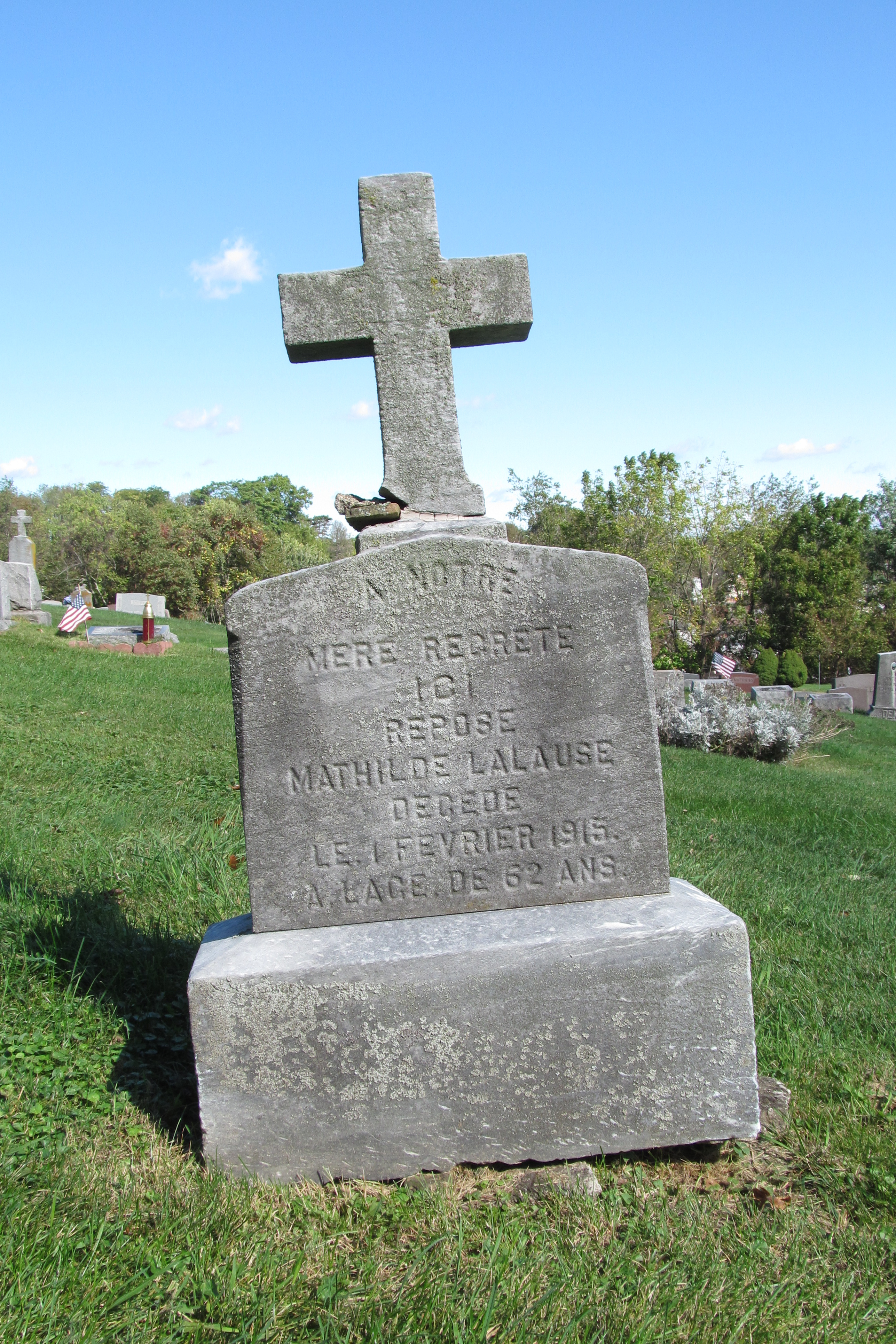
Mathild Lalause monument

What a cosmopolitan place the little mining town of Castle Shannon must have been! We very seldom run across an inscription in French around here, but here we have one mixed in with the Italian and Polish and Slovenian tombstones. A translation:

TO OUR
LAMENTED MOTHER
HERE
RESTS
MATHILDE LALAUSE
DEPARTED
FEBRUARY 1, 1915
AT THE AGE OF 62 YEARS

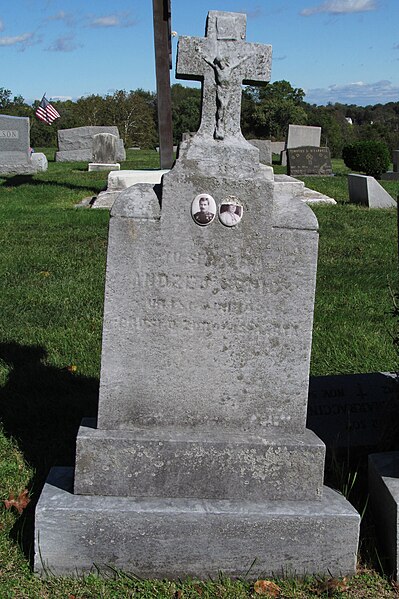
Illegible monument with photographs

This husband and wife spent more money than average on this monument; it is a large variation of the cross-topped round-shouldered monument popular with Slavic and Italian immigrants, with the addition of a crucifix in relief on the cross. But the inscription has eroded so badly that Father Pitt has not been able to read it. They are buried next to a woman named Anna Scmicz, whose stone is inscribed in Polish, and sometimes old Pa Pitt thinks he can make out the same name on this stone, but he is not sure.

Anna Szmicz

The photographs, however, are still instantly recognizable, though one is damaged. It is possible that Anna Scmicz is the woman in the photograph, since this monument appears to have only one name on it, in which case this is the monument for her husband, whom she outlived and was buried next to some time later.

Mr. Szmicz

Mrs. Szmicz

Giuseppe Galie monument

An unusual Gothic monument with an Italian inscription for a “brave American soldier” in the First World War. Unfortunately the photograph that was originally set in the stone has been lost. Note that the United States government misspelled his name (“Guiseppe” for “Giuseppe”) in his government-issue bronze plaque, below.

Guiseppe Gale plaque

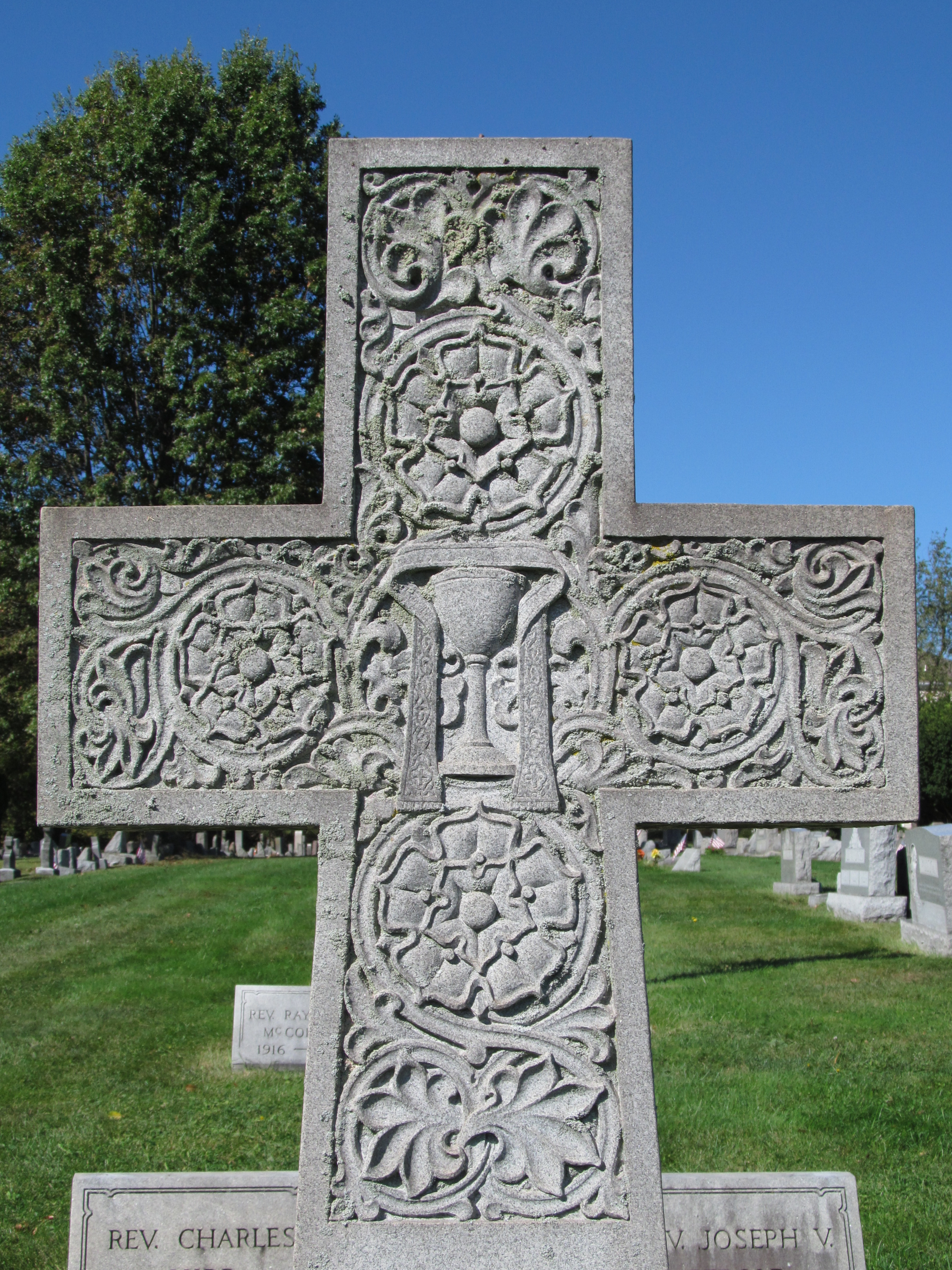
Hipp and Gerold Cross

A tall cross with fine carving and a bit of Art Deco flair for two rectors of St. Ann’s (note the spelling; the parish is now called St. Anne).

Carving

Inscription

HIPP

REV.
CHARLES HIPP
RECTOR OF ST. ANN’S
CHURCH 1907–1918
BORN OCT. 9, 1887
ORDAINED
MAY S6, 1899
DIED NOV. 7, 1918

GEROLD

REV.
JOSEPH V. GEROLD
RECTOR OF ST. ANN’S
CHURCH 1918–1929
BORN AUG. 19, 1876
ORDAINED
JULY 4, 1901
DIED SEPT. 21, 1929

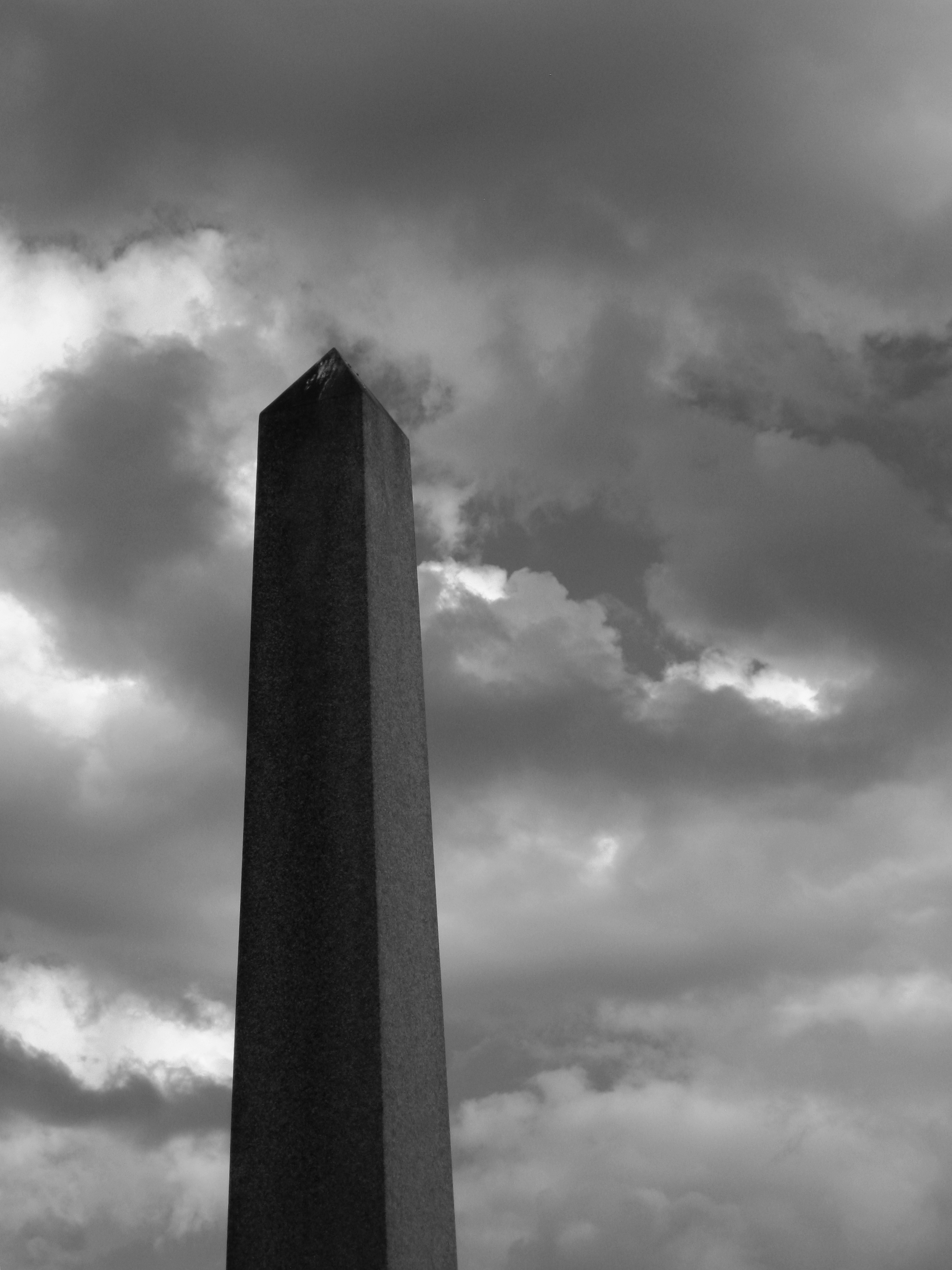
Since this is a Catholic cemetery, the obelisk has a cross on it; we seldom find an obelisk in a Catholic cemetery without this explicit depaganization.

A particularly well-preserved monument in the romantic style of the 1860s, with two poetic epitaphs.

She was a mother good and kind
While she with us did stay
Life is short to all mankind
God’s call we must obey

Come, children, to my tomb and see
My name engraved here.
Remember, you must come to me.
Be like your mother dear.

In Memory of
HENRY POMERENE SR.
Born
Jan.(?) 22, 1789
Died
March 17(?), 1855

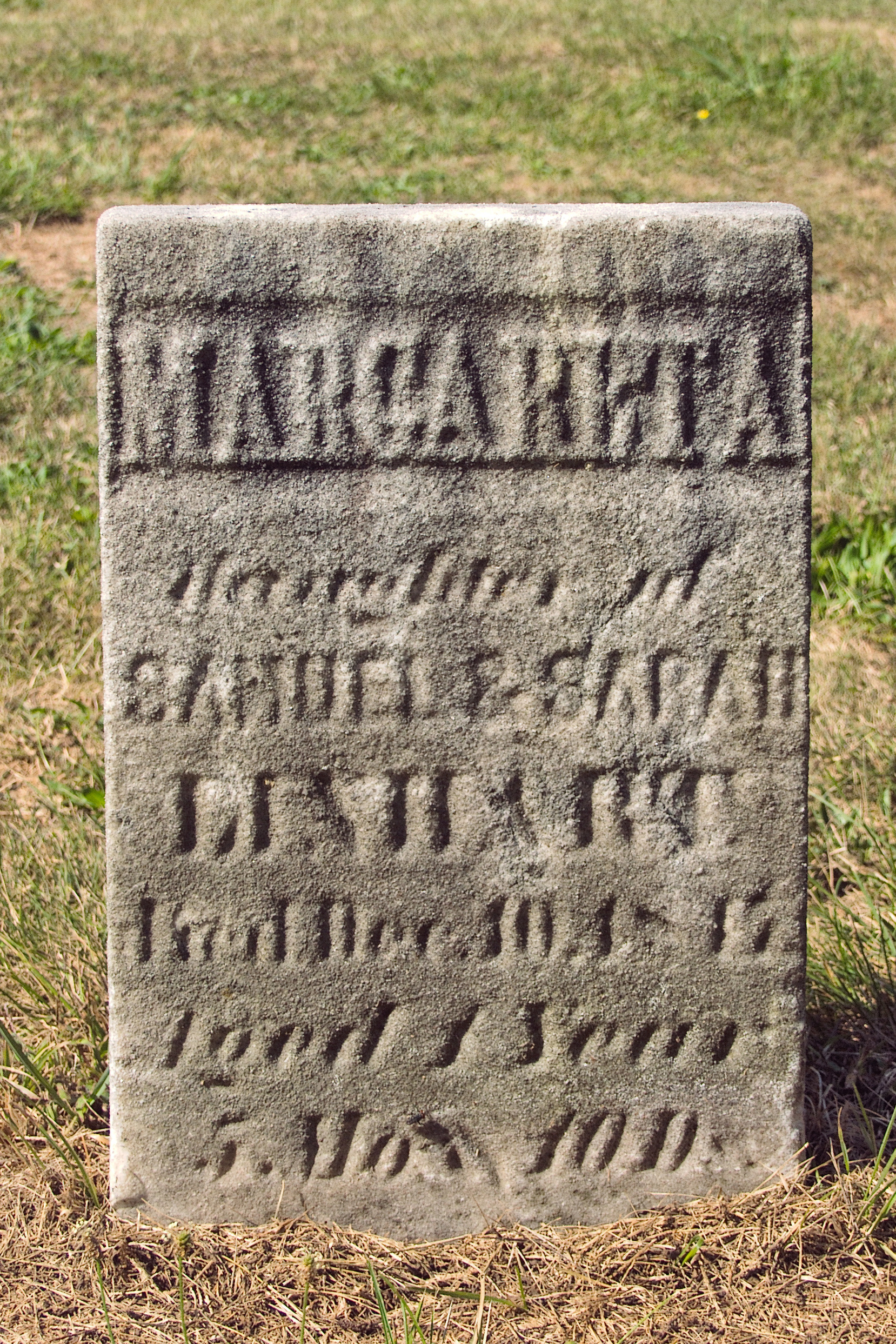
A restrained example of the middle-1800s poster style, with fewer than the usual riot of lettering styles. Father Pitt was not able to read the epitaph.

MARGARETA
daughter of
SAMUEL & SARAH
LINHART
died Dec. 10, 1845
Aged 1 Year
5. Mos. 10 Ds.

A good example of what Father Pitt calls the “poster style” that became popular in the 1840s and 1850s: a plain rectangle on which the inscription is engraved in a wide variety of lettering styles, like an advertising poster of the same era.

A broken column, representing a life cut off before its time: Mr. Neeb died at not quite 42. “He died yet lives,” says the inscription around the monogram on the column.