Pittsburgh Cemeteries

The Art and Architecture of Death

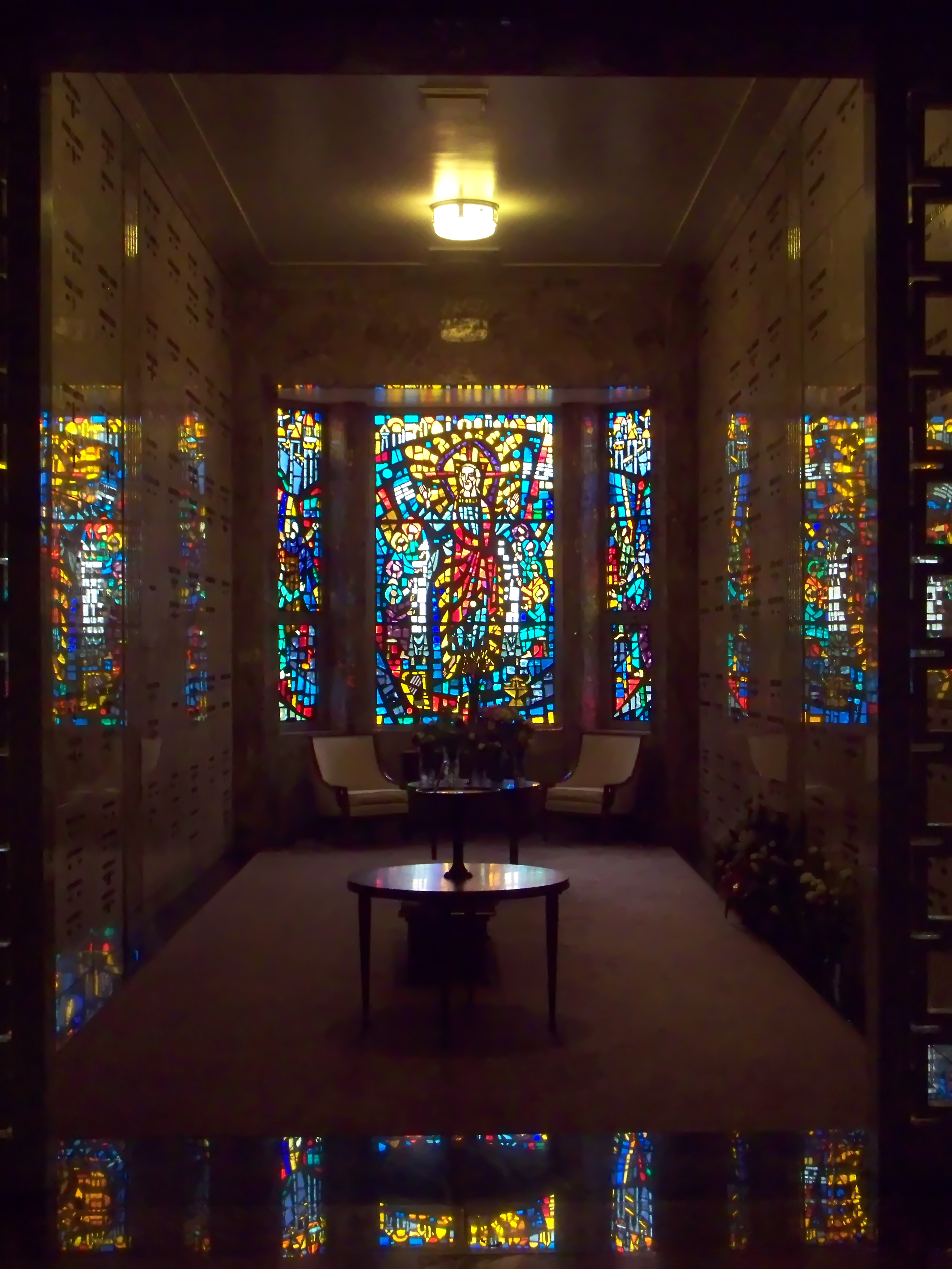
The indoor mausoleum in Allegheny Cemetery was built in 1960 (or 1961, according to the Web site). The architects were Harley and Ellington. It’s now called the “Temple of Memories,” and it’s worth a visit even if you don’t like cemeteries all that much. It’s filled with striking stained glass from the Hunt and Willet studios, and it has a considerable collection of paintings by academic painters of the late nineteenth century that were probably nearly worthless when they were donated, but are coming back into fashion again. But what charms Father Pitt most is that the place is a time machine through which one can enter the early 1960s. Even though it has been expanded since then, the whole mausoleum has an early-1960s atmosphere, complete with appropriate piped-in music. One wanders among the dead feeling more like one of them than like one of the living.

A simple Doric design whose severity is moderated by a Greek-key decoration.

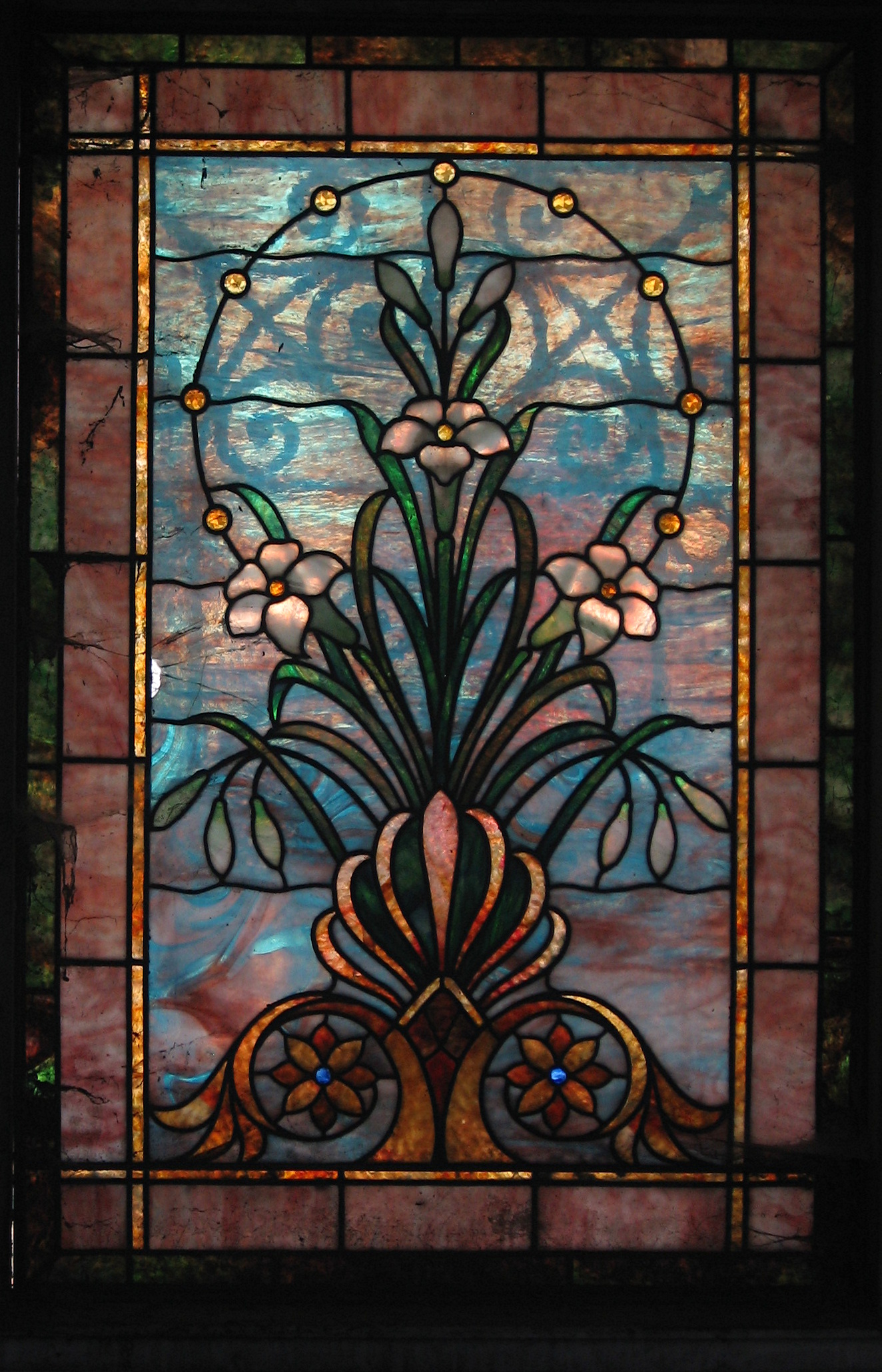
A finely proportioned Modern Ionic mausoleum with an attractive stained-glass window and artistic bronze doors.

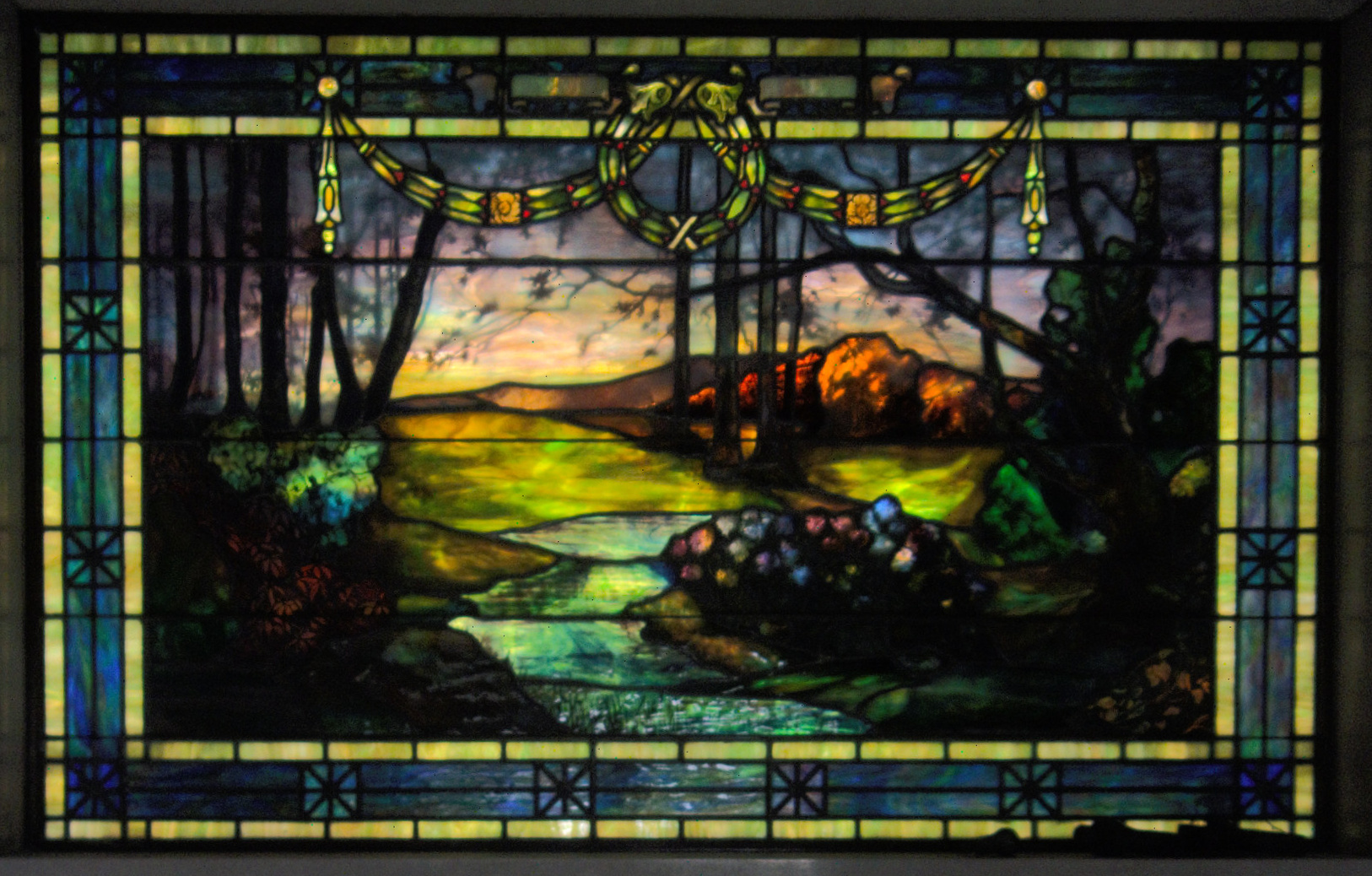
A simple Doric mausoleum with extra space for a large family. The stained glass inside is very good, except that (in Father Pitt’s opinion) the wreath-and-swag decoration rather spoils the effect of the naturalistic forest and stream.

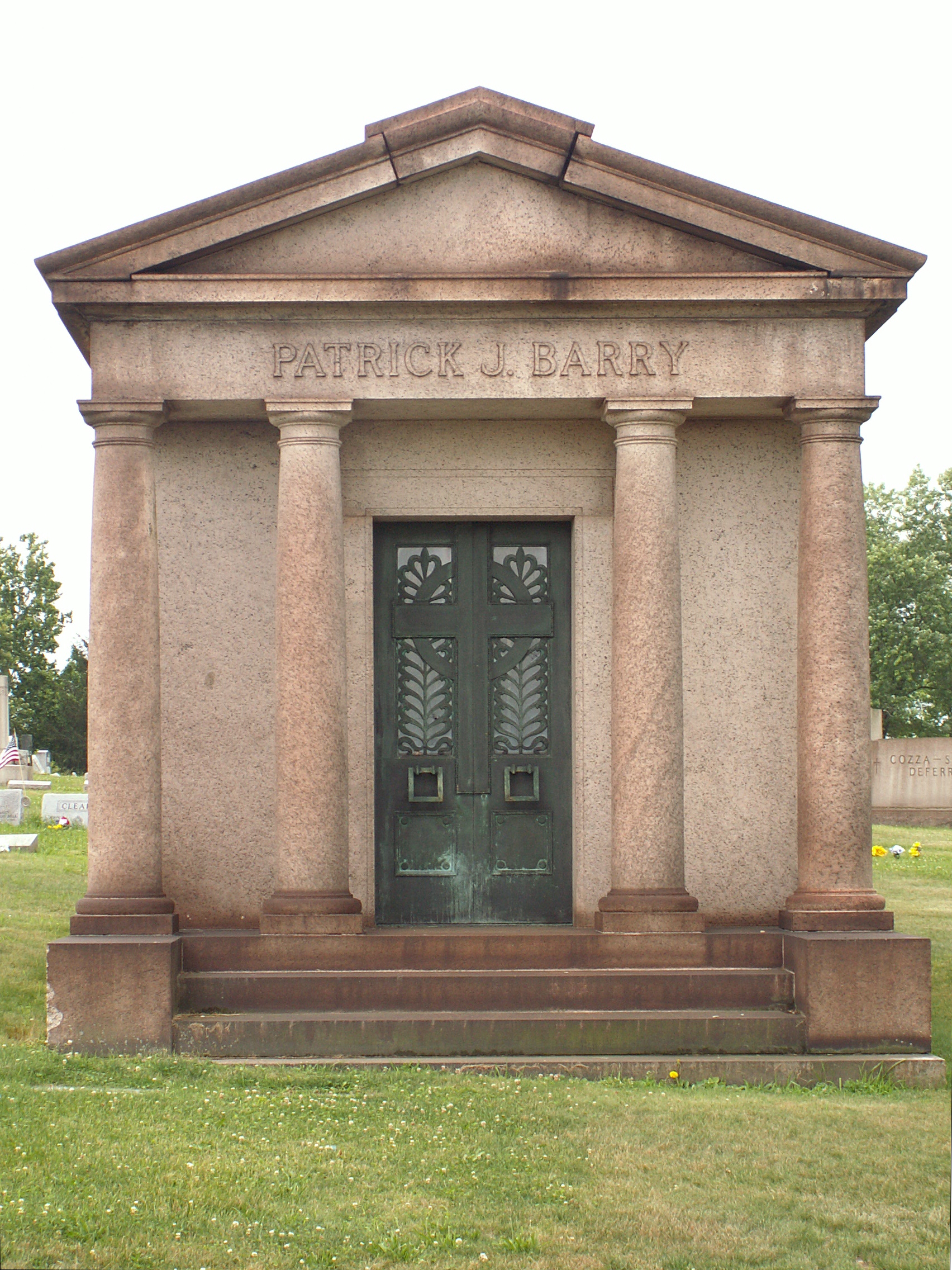
A simple and austere Doric mausoleum whose austerity is mitigated by a fine cross-and-palms bronze door and the fairly unusual warm honey color of the stone

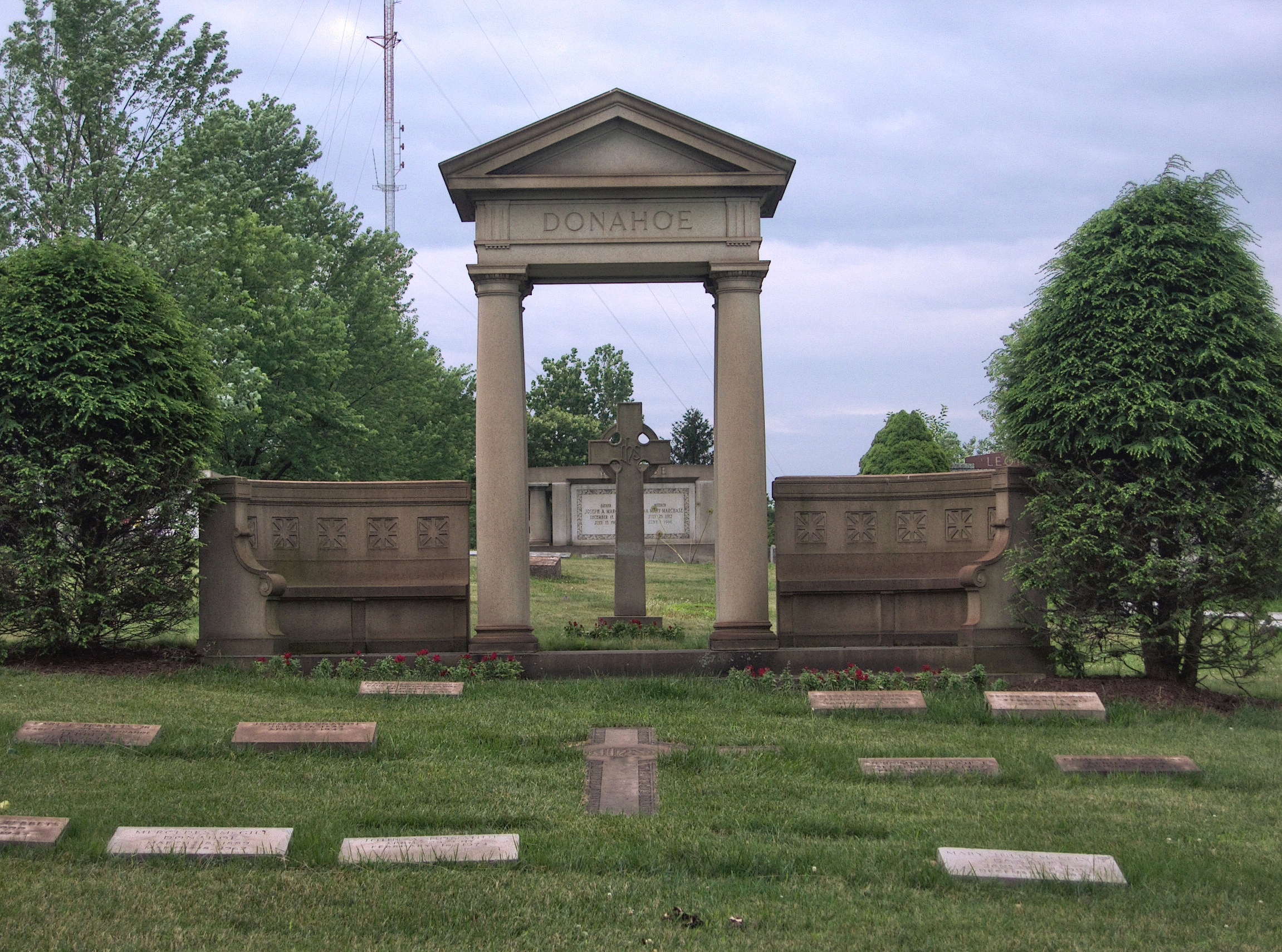
An unusual classical monument: a pediment with two columns flanked by curved benches. The effect is something like a gateway, with the repaired cross behind representing the destination.

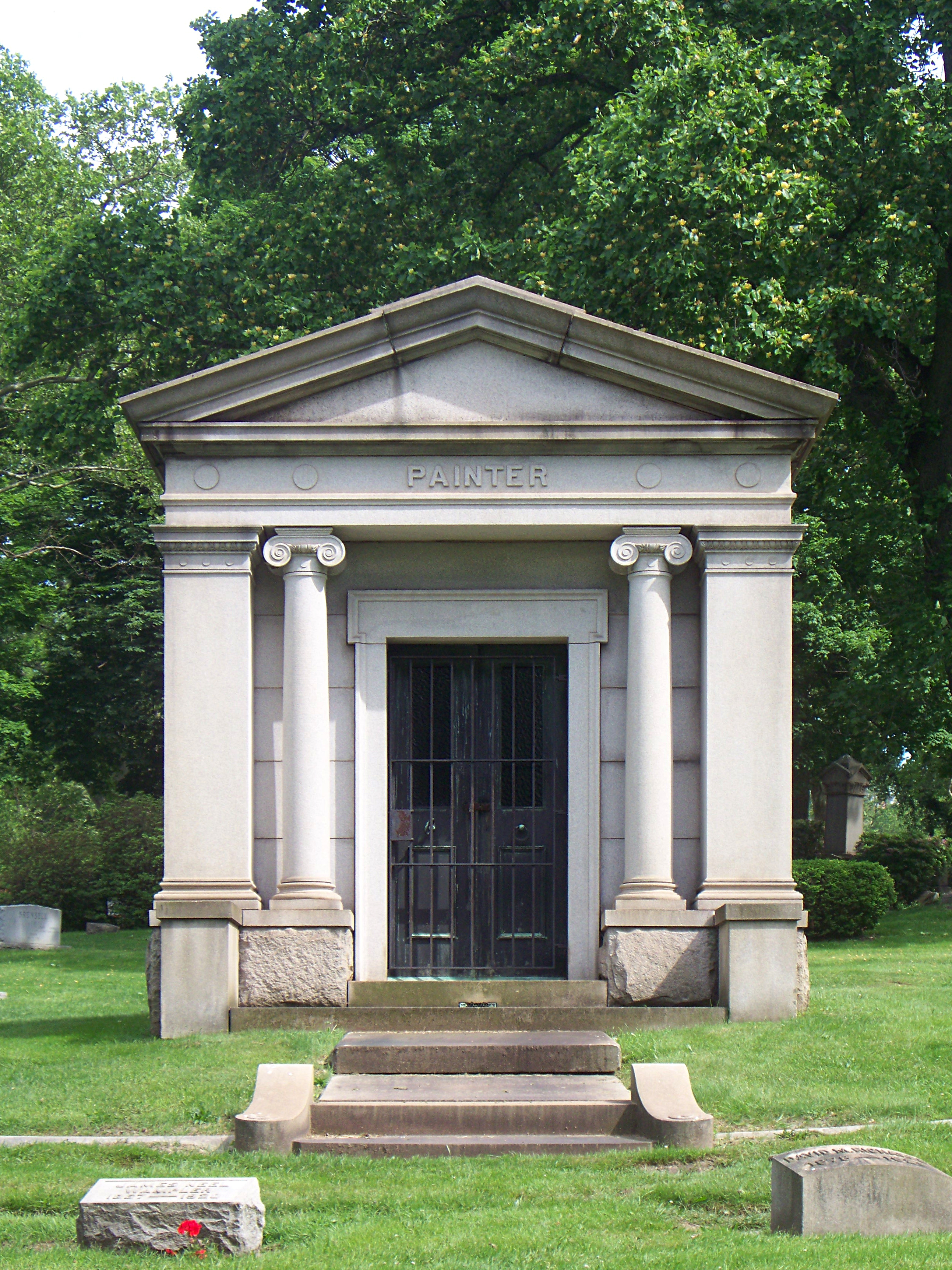
This imposing Ionic mausoleum stands in its own circular plot with a commanding view of the valley below. It is a common sort of classical mausoleum, and yet it seems different enough from the classical constructions in the Pittsburgh cemeteries to remind us that we are in McKeesport, which is a different world. The first Painter took up residence here in 1902, so the mausoleum dates from that year or before.

This is a particularly splendid Ionic mausoleum. Its richness of texture makes most other classical mausoleums seem half-finished by comparison. It appears to be an exact duplicate of the Fownes mausoleum in the Homewood Cemetery, but with the addition of an extra set of steps in the front to take into account the hillside site.

The bronze doors are cast in an interesting pattern.

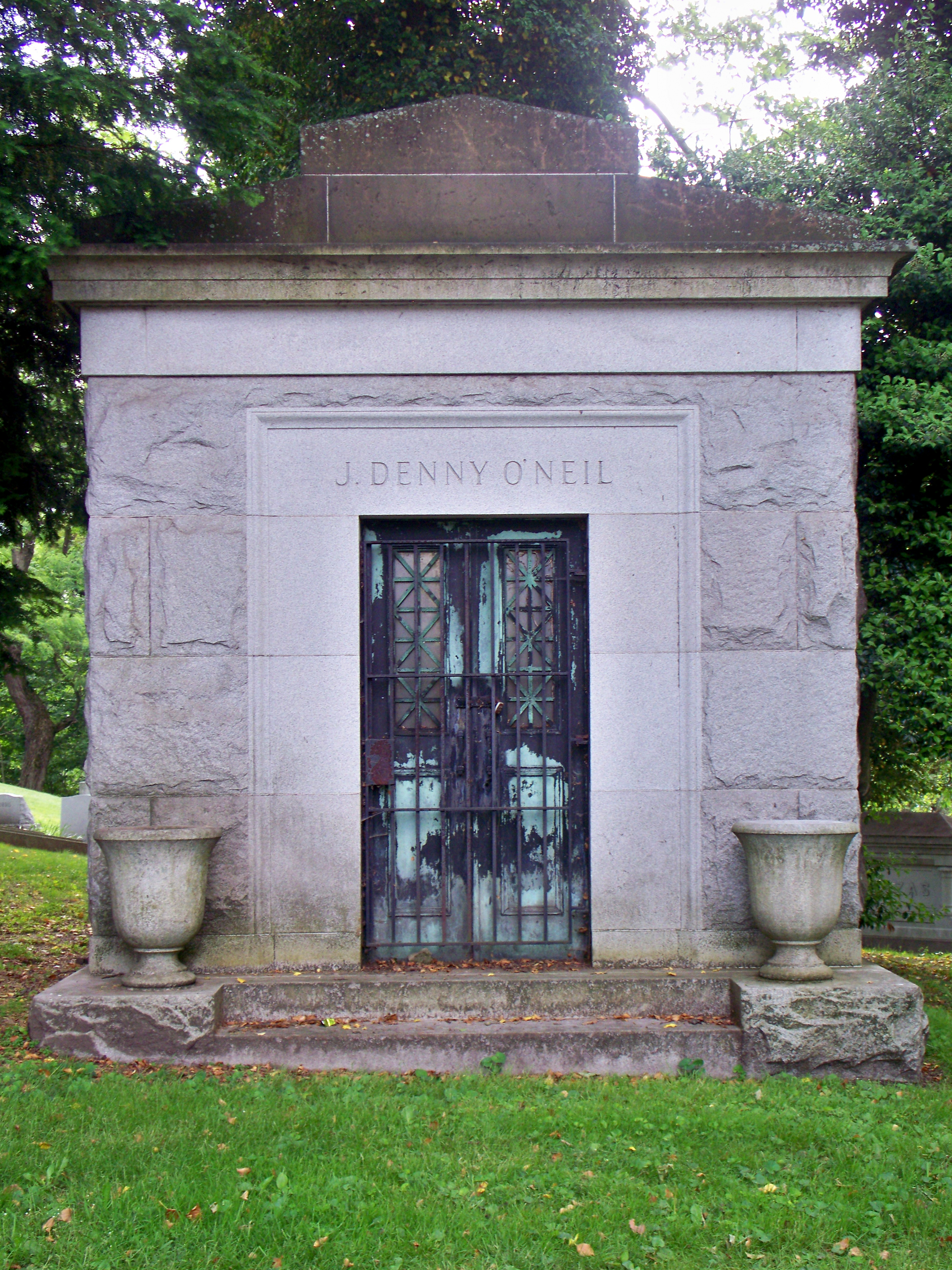
An unusual mausoleum in this unusual cemetery—unusual because its restrained modern-classical style would look at home in other Pittsburgh-area cemeteries, whereas most of the mausoleums here are noticeably different from any standard Pittsburgh style. Cemetery records list a James D. O’Neil (who must be the “J. Denny” of the inscription) as the first interment here; he died in 1915, so that is probably about the date of this mausoleum.