Pittsburgh Cemeteries

The Art and Architecture of Death

Among the windows in the Allegheny Cemetery Mausoleum or “Temple of Memories” are several devoted to famous works of literature and music. This one illustrates Bunyan’s Pilgrim’s Progress. The stained glass in the mausoleum was done by the Willet studio of Philadelphia and the Hunt studio of Pittsburgh; Father Pitt does not know which one did this window.

Among the windows in the Allegheny Cemetery Mausoleum or “Temple of Memories” are several devoted to famous works of literature and music. This one illustrates Wagner’s Parsifal. The stained glass in the mausoleum was done by the Willet studio of Philadelphia and the Hunt studio of Pittsburgh; Father Pitt does not know which one did this window.

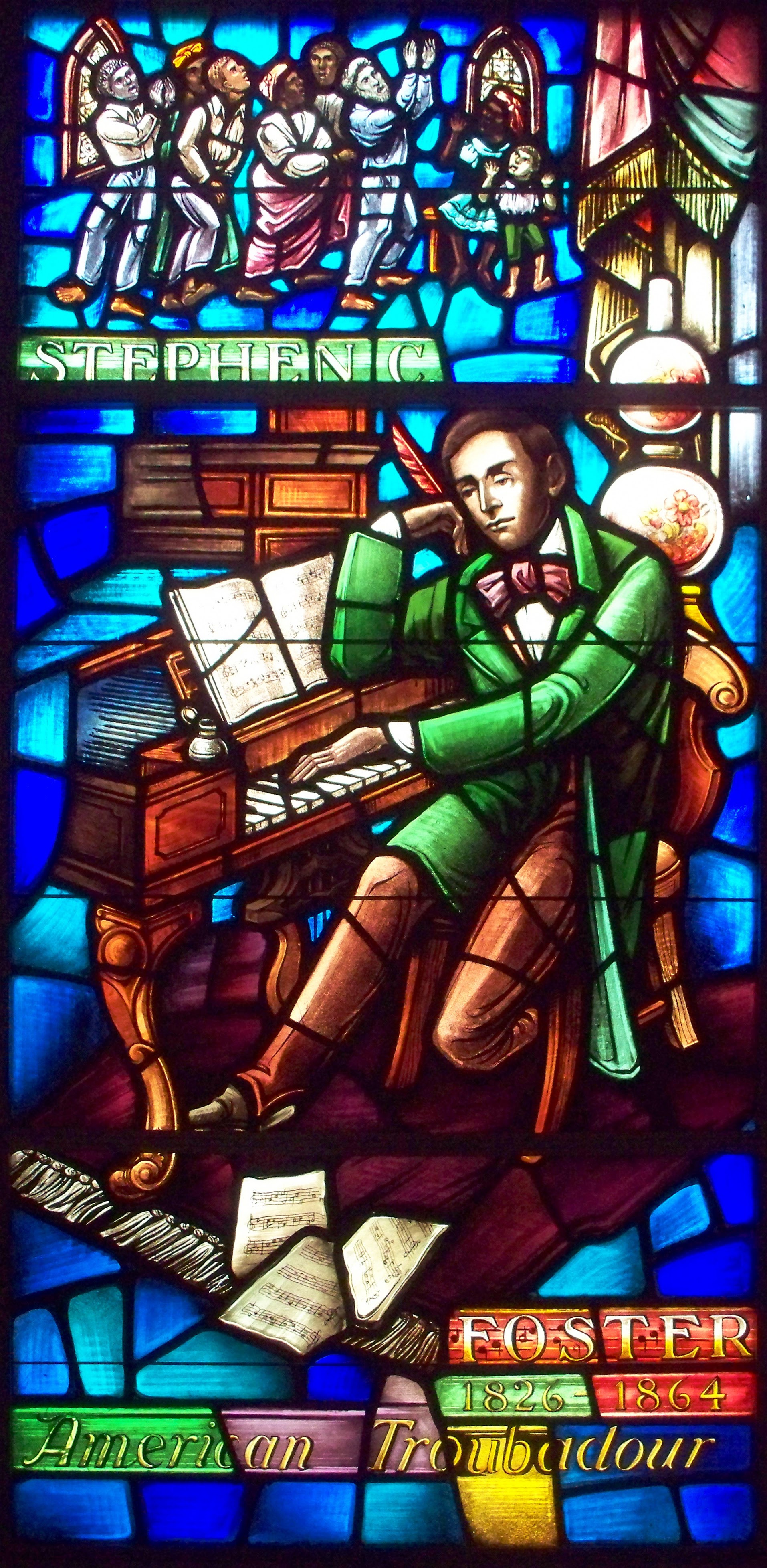
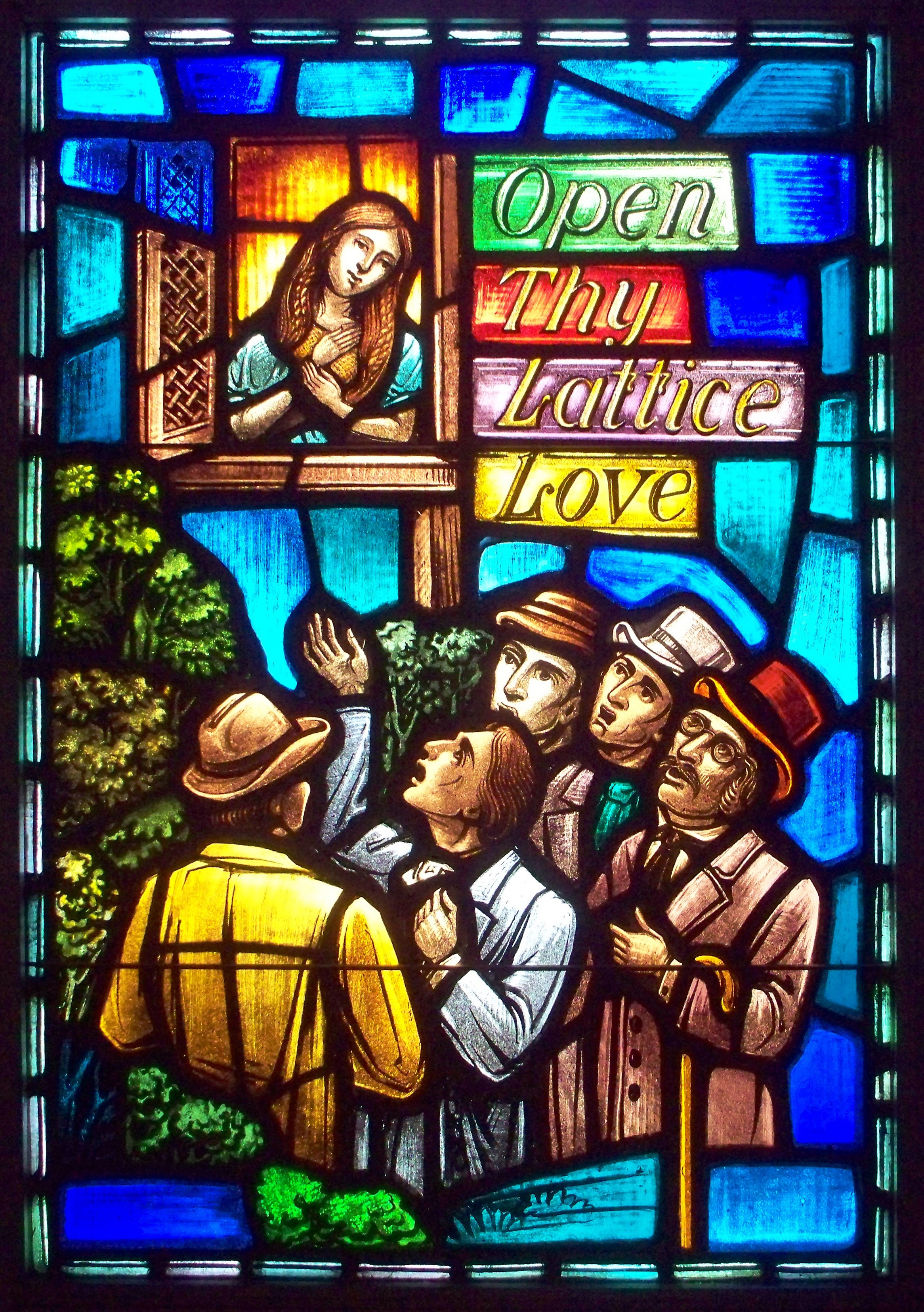
The Allegheny Cemetery Mausoleum, or “Temple of Memories” (as the cemetery calls it now), was built in 1960. It is filled with stained glass by the Willet studio of Philadelphia and the Hunt studio of Pittsburgh. The two distinct styles are very different, but Father Pitt does not know which is which.

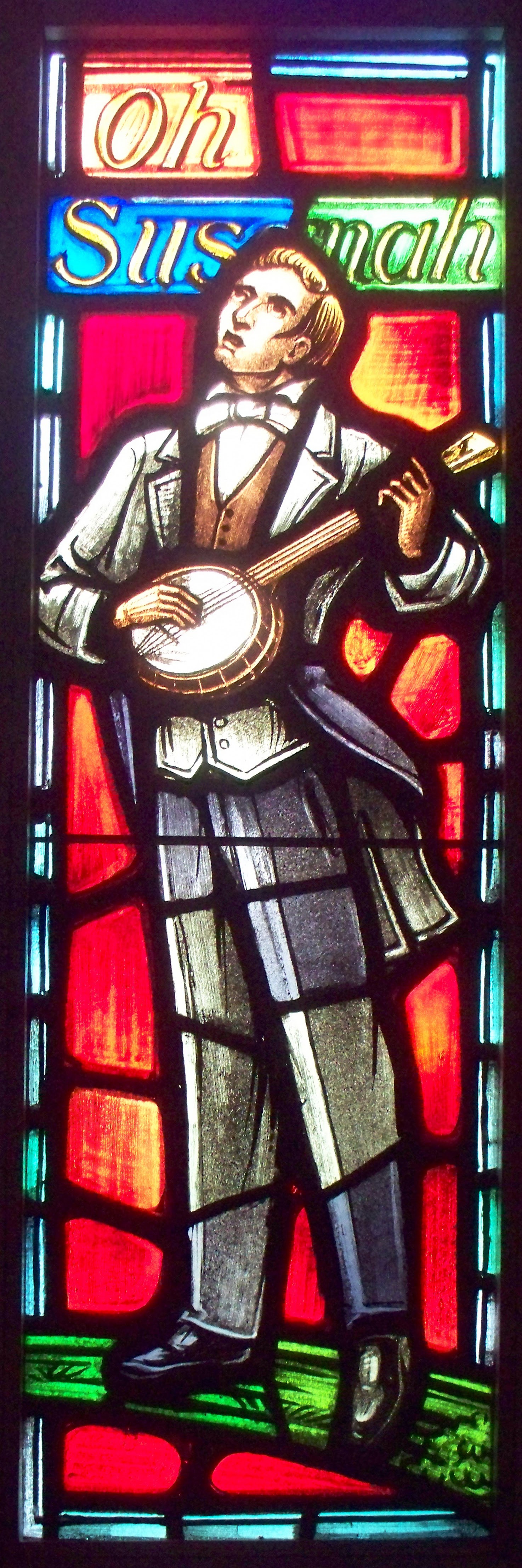
This Stephen Foster window is the centerpiece of the whole first floor of the mausoleum, which is appropriate. Thousands of rich and important people—politicians, robber barons, and even a few honest philanthropists—are buried in Allegheny Cemetery. But the only resident anyone really cares about is Stephen Foster, who made us dance and sing and weep, and died in poverty. (There is also a small cult of Lillian Russell, and Father Pitt would be delighted to see a Lillian Russell window in some future expansion of the mausoleum.)

This window includes something that delighted old Pa Pitt beyond all reason: the only stained-glass representation he has ever seen of a parlor organ.
An exceptional Gothic monument with beautiful foliage-and-flower reliefs. The inscription is also exceptional, with a wide variety of different lettering styles.

There may be others, but this is the only zinc monument old Pa Pitt can remember finding in the Homewood Cemetery. Zinc monuments were prohibited in many high-class cemeteries, but sometimes people sneaked them in anyway.

“Youth and Age at the Tree of Life” is the title of this relief. It is rare to find a work of art with a title in a cemetery; we wish the artist had signed it as well.

A simple marble obelisk remembering William Rankin, who died in 1874. From the style, we would guess that the obelisk was erected about then.

A broken column, representing a life cut off before its time: Mr. Neeb died at not quite 42. “He died yet lives,” says the inscription around the monogram on the column.

A very simple rustic design with a snatch of classical detailing. It is attractive and dignified, so Father Pitt hopes it will not be taken as insulting when he says that it looks a bit like a garden shed.

A building can be functional and still be attractive; that is the lesson of this Tudor-style maintenance building in the Homewood Cemetery.