Pittsburgh Cemeteries

The Art and Architecture of Death

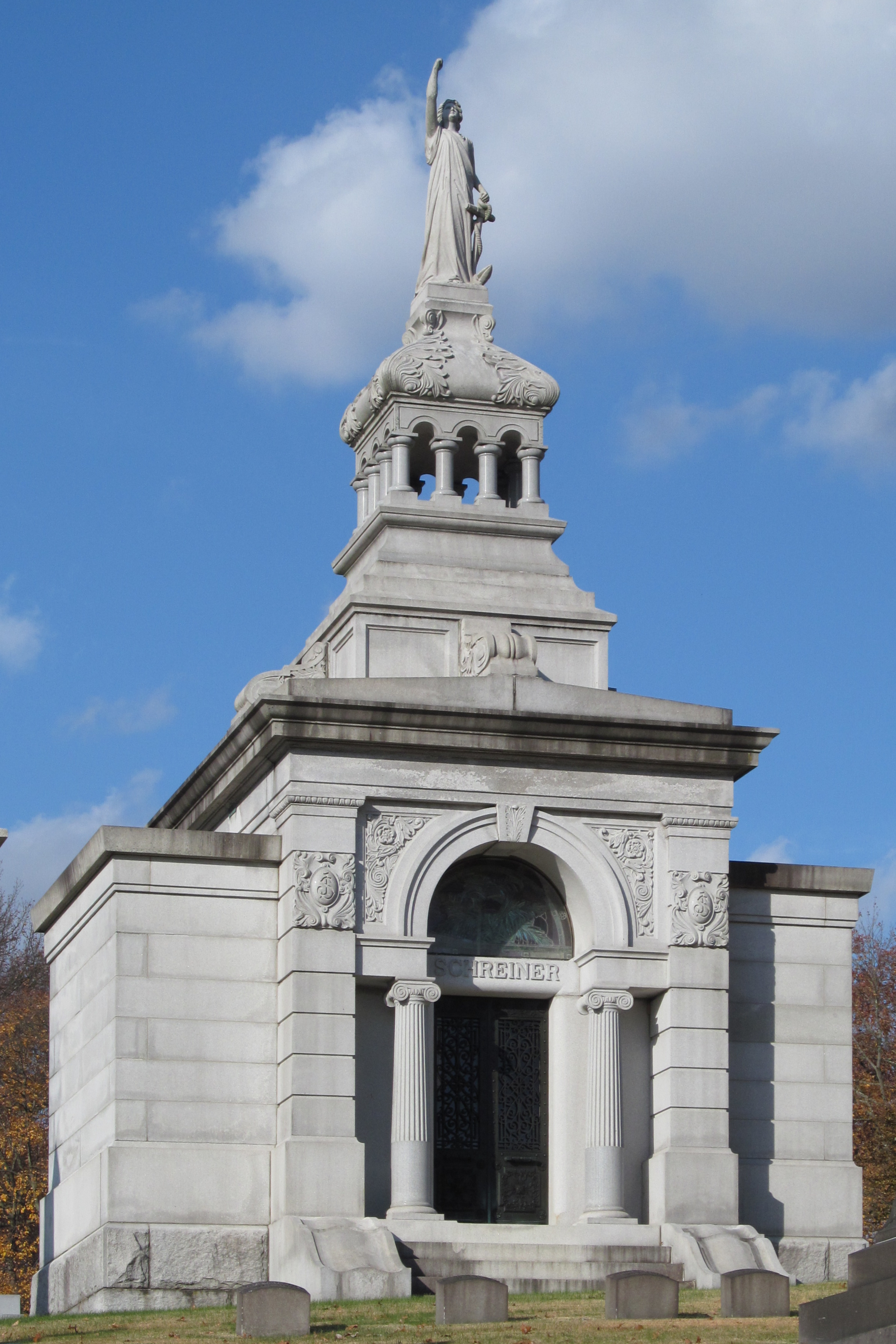
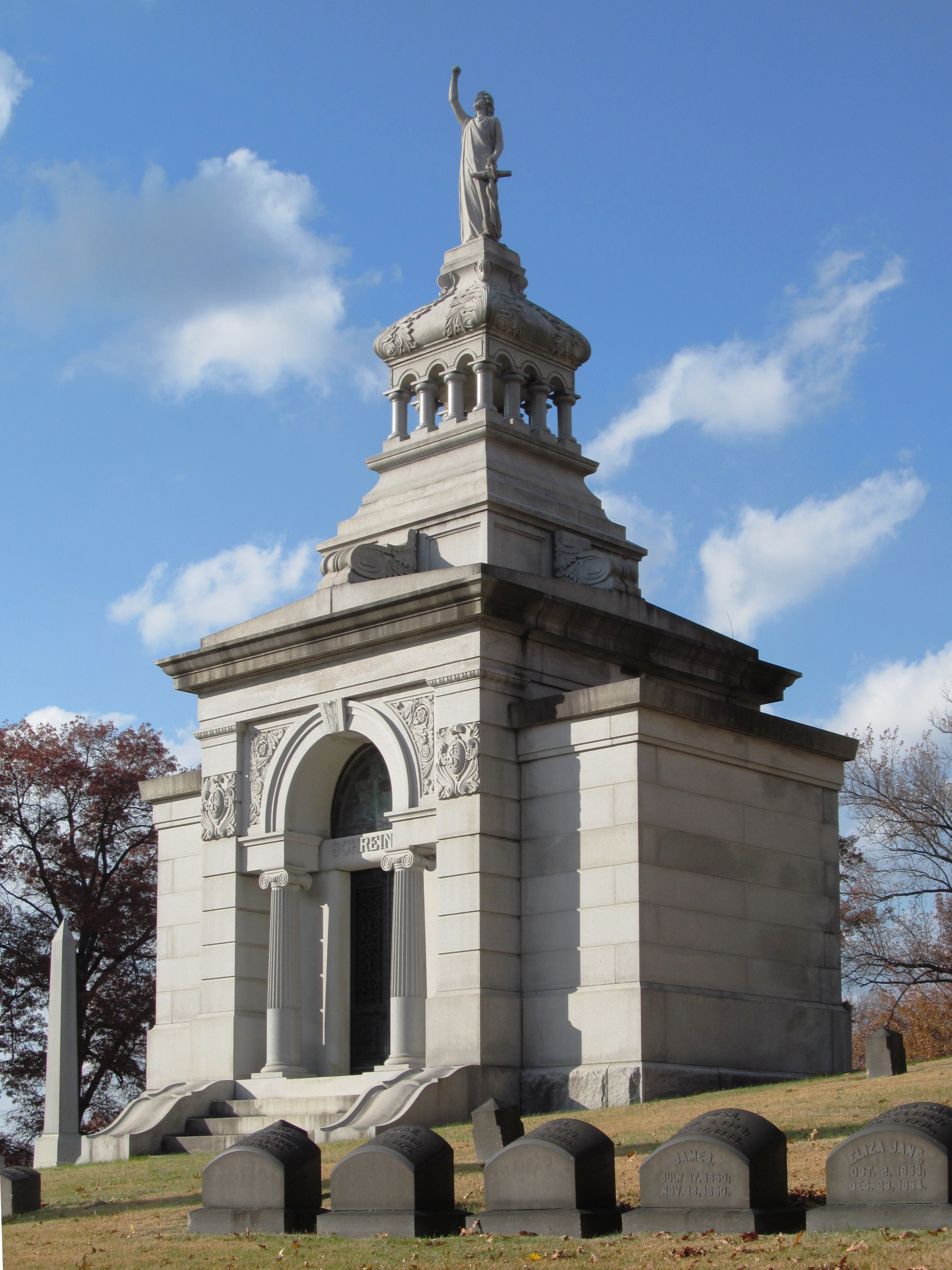
Schreiner mausoleum

A large and luxurious classical structure with a prominent cupola topped by a statue of Hope shaking her fist at heaven. At least that is how old Pa Pitt always reads the statue: it is certainly Hope (the anchor is her ID card), and Father Pitt doesn’t know what else to make of the raised-fist salute.

Statue of Hope

Monogram

Ornate monograms flank the entrance arch.

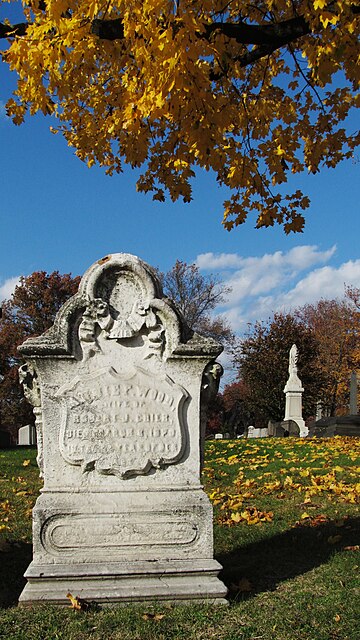
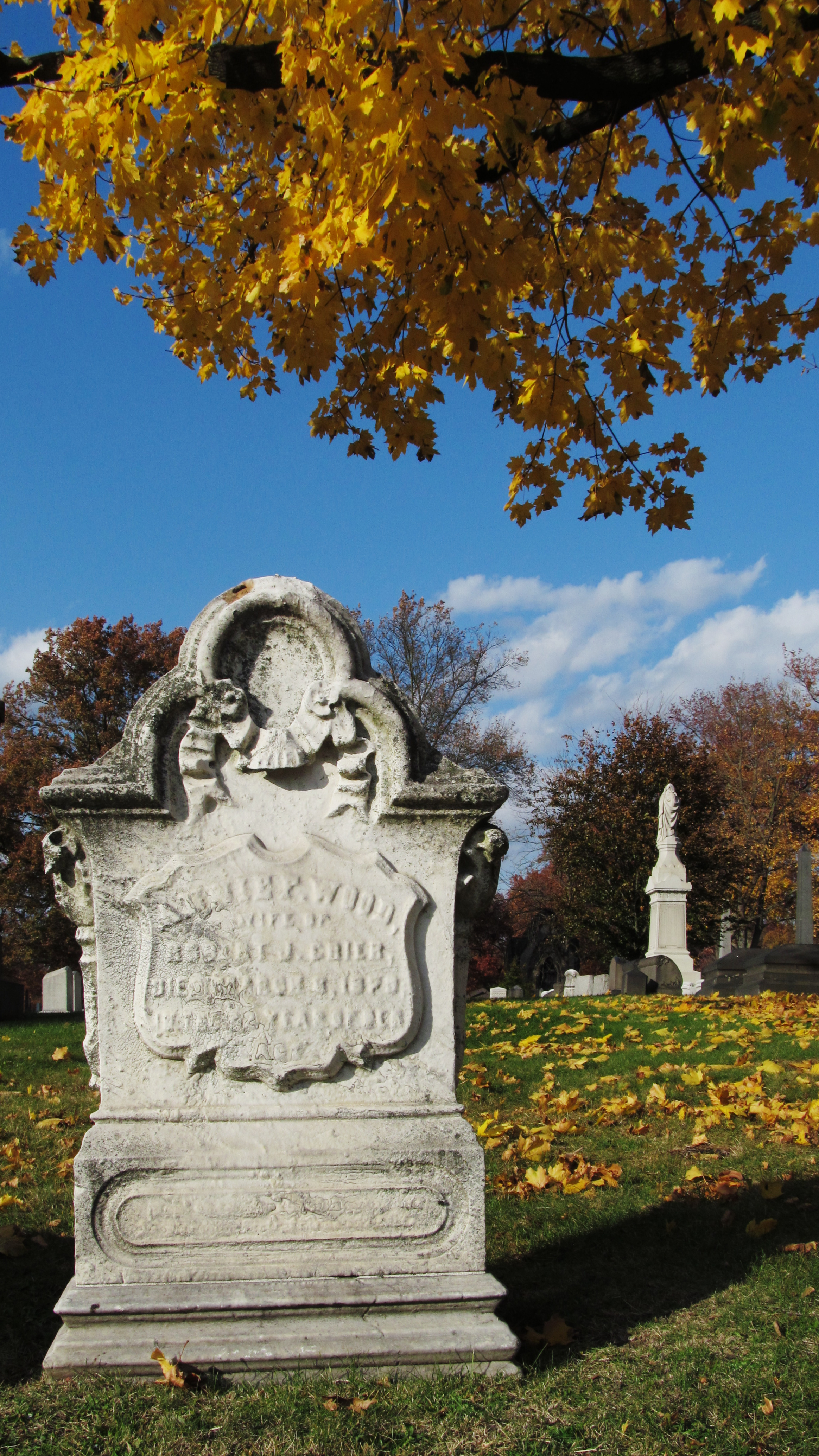
Annie F. Wood monument

A good example of the romantic style of the middle 1800s, which—as we can see here—lasted into the 1870s. These monuments were usually in marble or limestone, which erodes far too quickly in our climate—although it is often beautifully picturesque in its eroded state. This is Father Pitt’s best attempt at reading the inscription:

ANNIE F. WOOD,
WIFE OF
ROBERT J. GRIER
DIED MARCH 8, 1873
IN THE 32 YEAR OF HER
AGE.

We are fairly certain of the name “Annie F. Wood,” but almost all the other readings are subject to amendment.

There was also an epitaph in a kind of cartouche below the inscription, but it seems hopeless to try to interpret it now.

Inscription

Frauenheim family plot

Though old Pa Pitt tends to focus on individual monuments, there is an art to arranging a family plot. This one is arranged very artistically. Everything is made from the same stone, which is dark now, although that may be the result of a century and a half of heavy industry. A large Gothic monument dominates it in the rear, so that the family has no trouble finding the plot. Stone steps—superfluous from a practical point of view now, but there was probably a stone fence around the plot before the groundskeepers had their way—lead us up into the sacred precinct. There the Frauenheims lie in a row in their own matched beds. The earliest burial here seems to be Edward Frauenheim, who died in 1891, and that may be a good guess for the date of the main monument.

Adamson monument

It is hard to pick a name for this style: it is almost machine-age modern, and it is both romantic and modernist in its deliberate break from any recognizable style of the past. The etched floral decorations soften what might otherwise be a forbiddingly severe composition.

Hemphill mausoleum

A simple but elegant Ionic mausoleum, seen here with the much more extravagant Brown pyramid in the background.

Robert Carson mausoleum

A simplified Doric mausoleum without entablature or any of the usual fiddly bits. It dates from 1885, but one could be forgiven for supposing it a twentieth-century modernist’s interpretation of classical style.

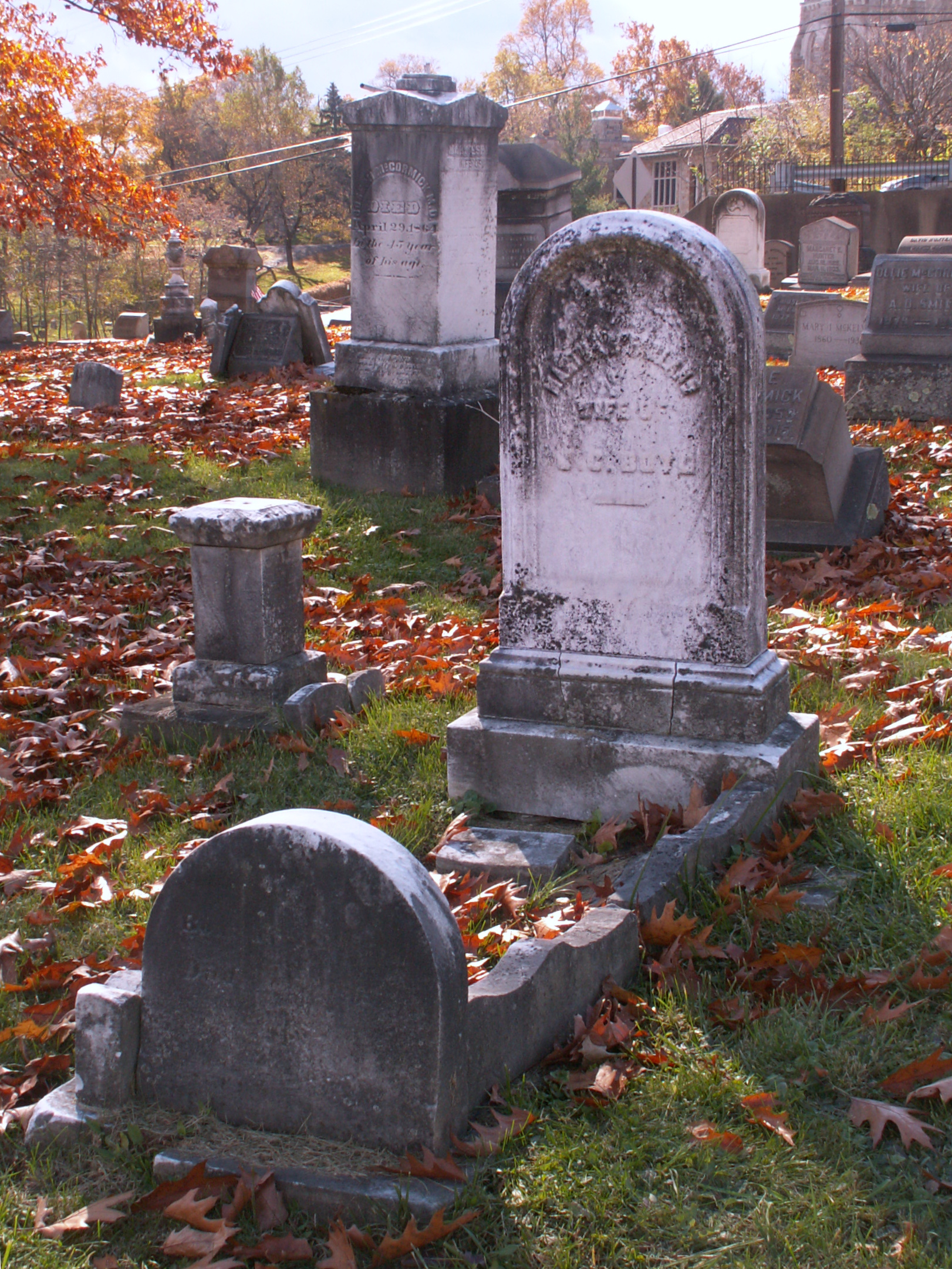
Martha Boyd grave

Two women in the Boyd family were given these bed-like romantic graves; the one for Irene Boyd is grander and more ornate, but this one is perhaps in better taste.

Headstone

Rear of the headstone

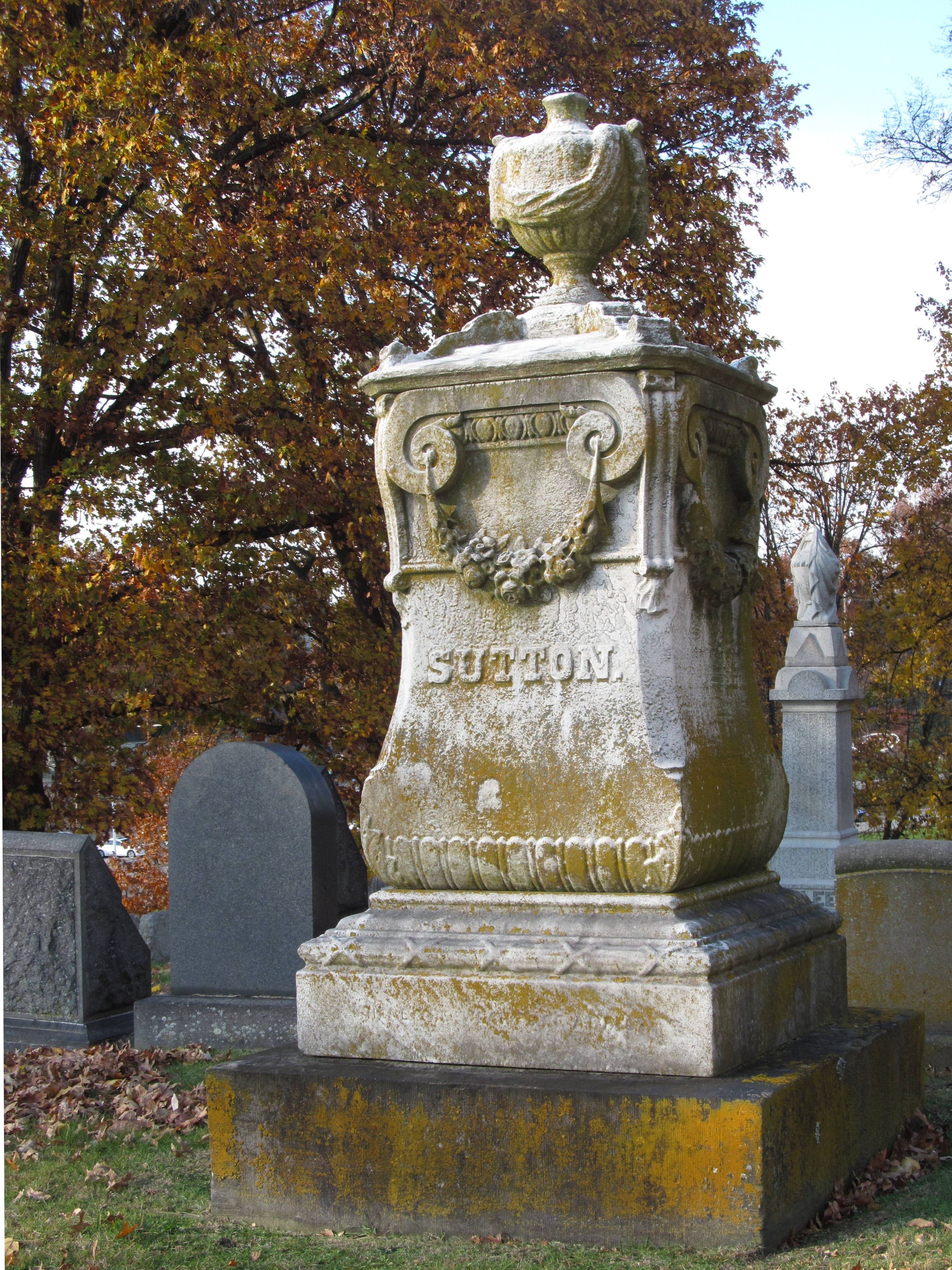
Sutton monument

This glorious creation is what happens when monument makers design monuments the way illustrators imagine them: a very romantic interpretation of classical forms, including stylized Ionic capitals, swags, a shrouded urn, and classical foliage. Unfortunately the inscriptions have eroded into illegibility, but in certain lights some of the burial dates seem to be from the 1860s.

The variation in colors is mostly the result of using two different cameras.

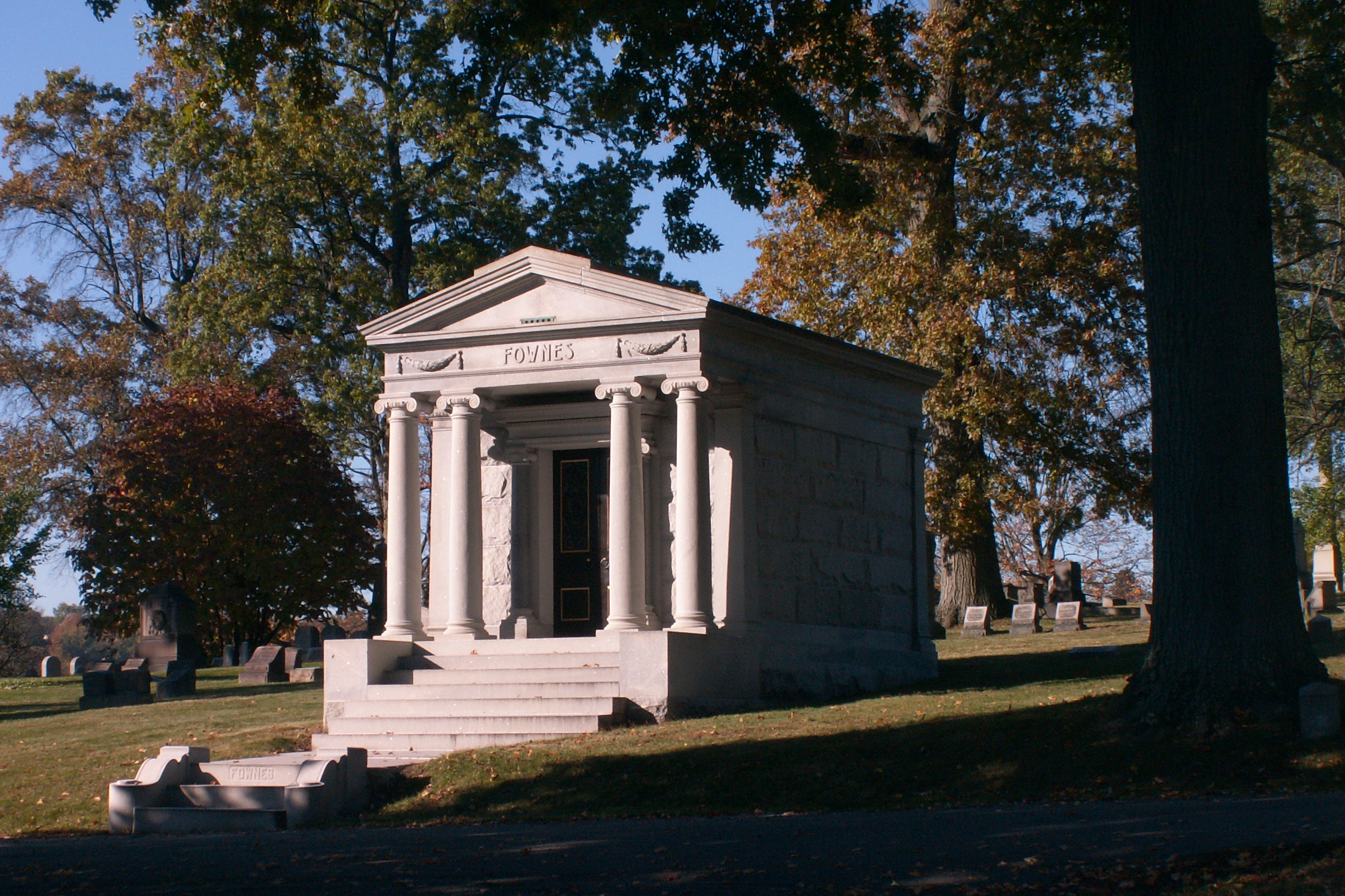
Fownes mausoleum

A rich-looking Ionic façade with a Victorian profusion of details, including rusticated stone blocks. It seems to have been a stock model; an exact duplicate was built for the Wilson family in the Union Dale Cemetery.