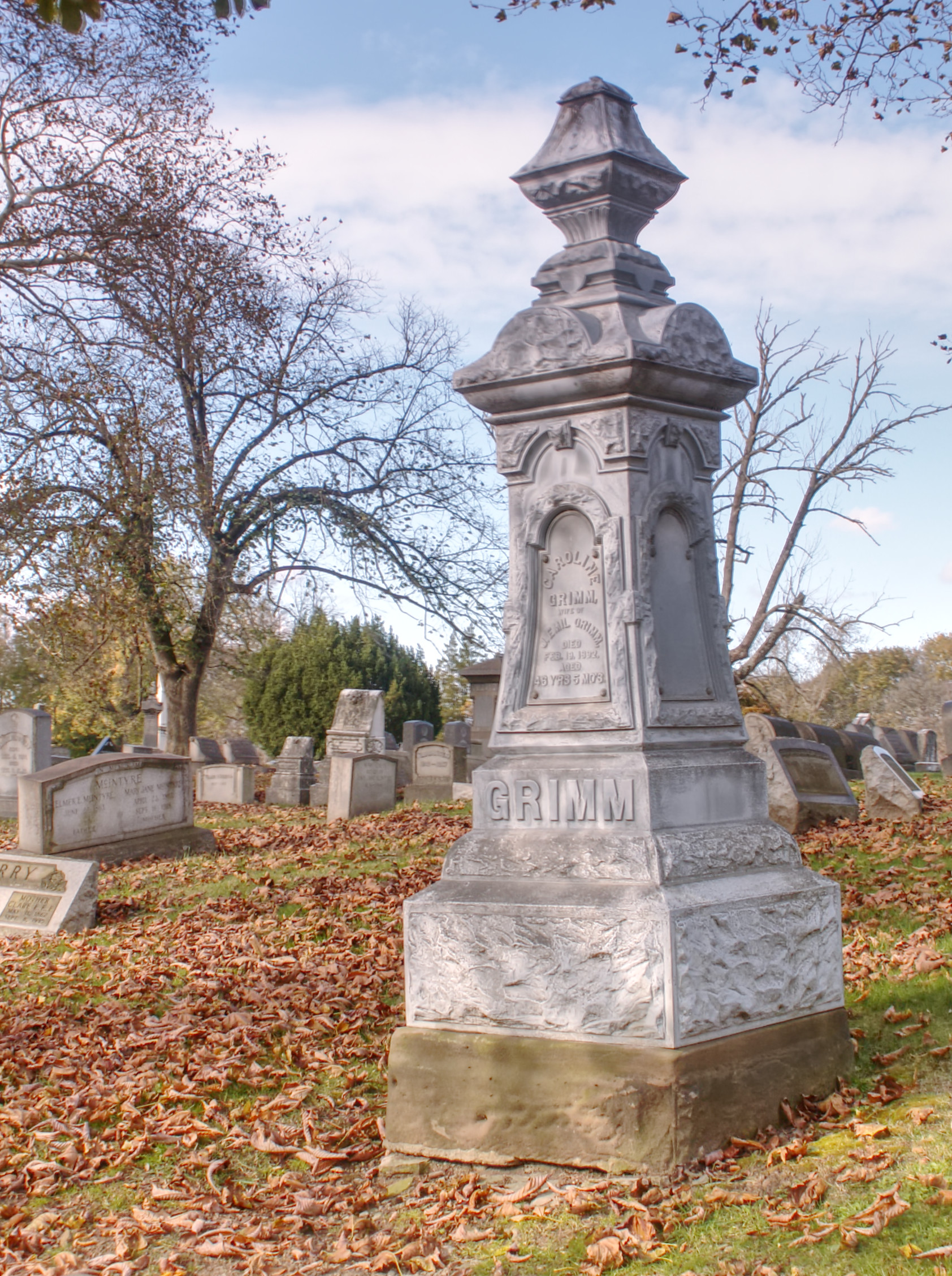
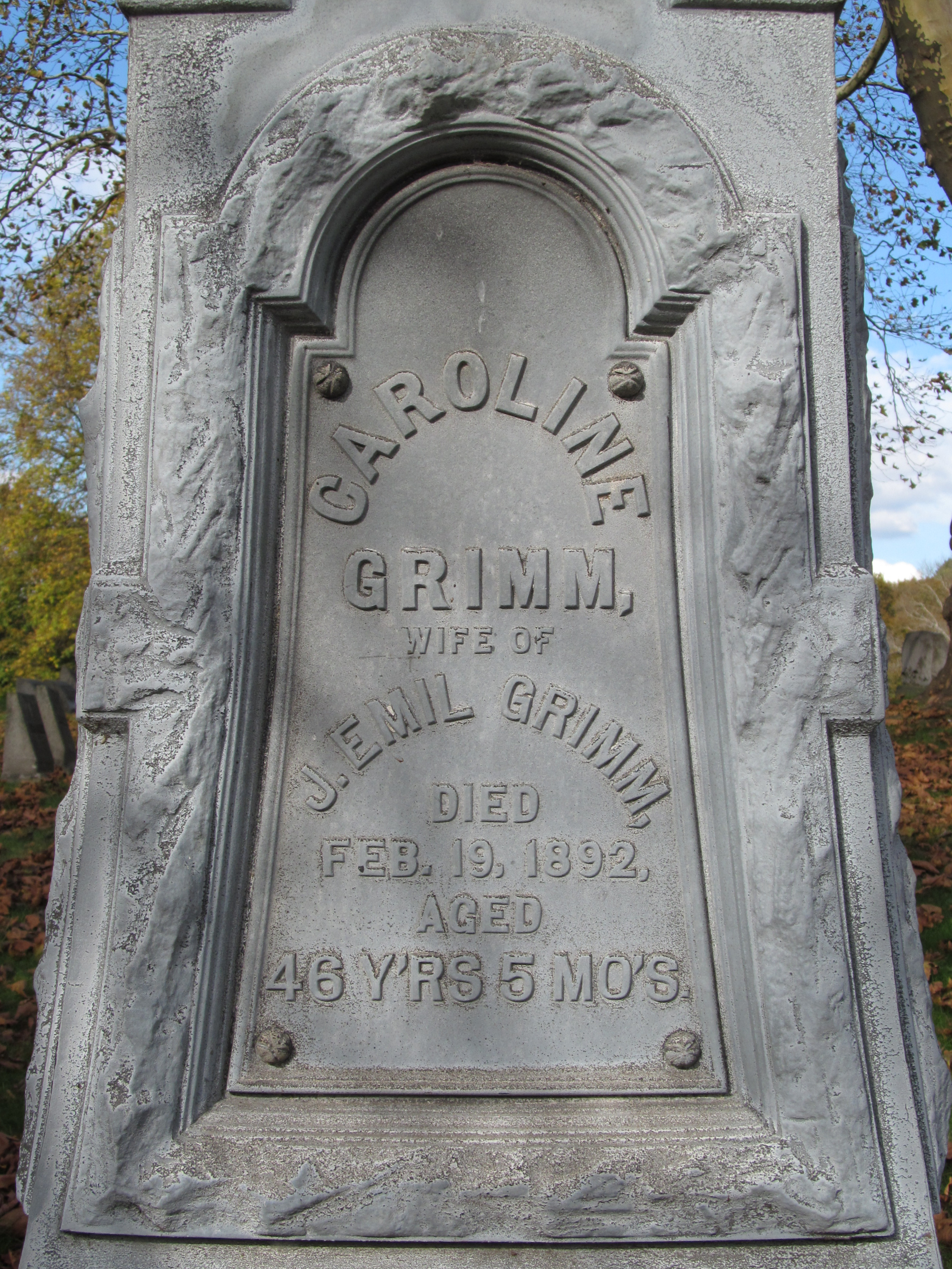
A fine zinc monument with only one panel inscribed, for Caroline Grimm. She died in middle age; perhaps her husband remarried and is buried elsewhere. As is usually the case with zinc monuments, it looks almost as fresh as the day it was erected.

The Art and Architecture of Death
A fine zinc monument with only one panel inscribed, for Caroline Grimm. She died in middle age; perhaps her husband remarried and is buried elsewhere. As is usually the case with zinc monuments, it looks almost as fresh as the day it was erected.

This is the Lillian Russell who was widely considered the most beautiful woman in the world in the late 1800s and into the 1900s. Her fourth and last husband was Alexander Pollock Moore, who owned the Leader in Pittsburgh. When she died unexpectedly in 1922, he gave her this tiny but tasteful mausoleum; he was buried with her later, but her name is the one above the columns, and the epitaph is hers: “The world is better for her having lived.”

Mrs. Moore’s opinion as “Immigration Inspector” was that Europe was sending us its worthless dregs; she is sometimes blamed for the restrictive immigration policies that followed, but it is very likely that the Harding administration appointed her to reinforce and not to create anti-immigrant prejudice. She injured herself in a very minor way on the trip back, but died unexpectedly from complications.
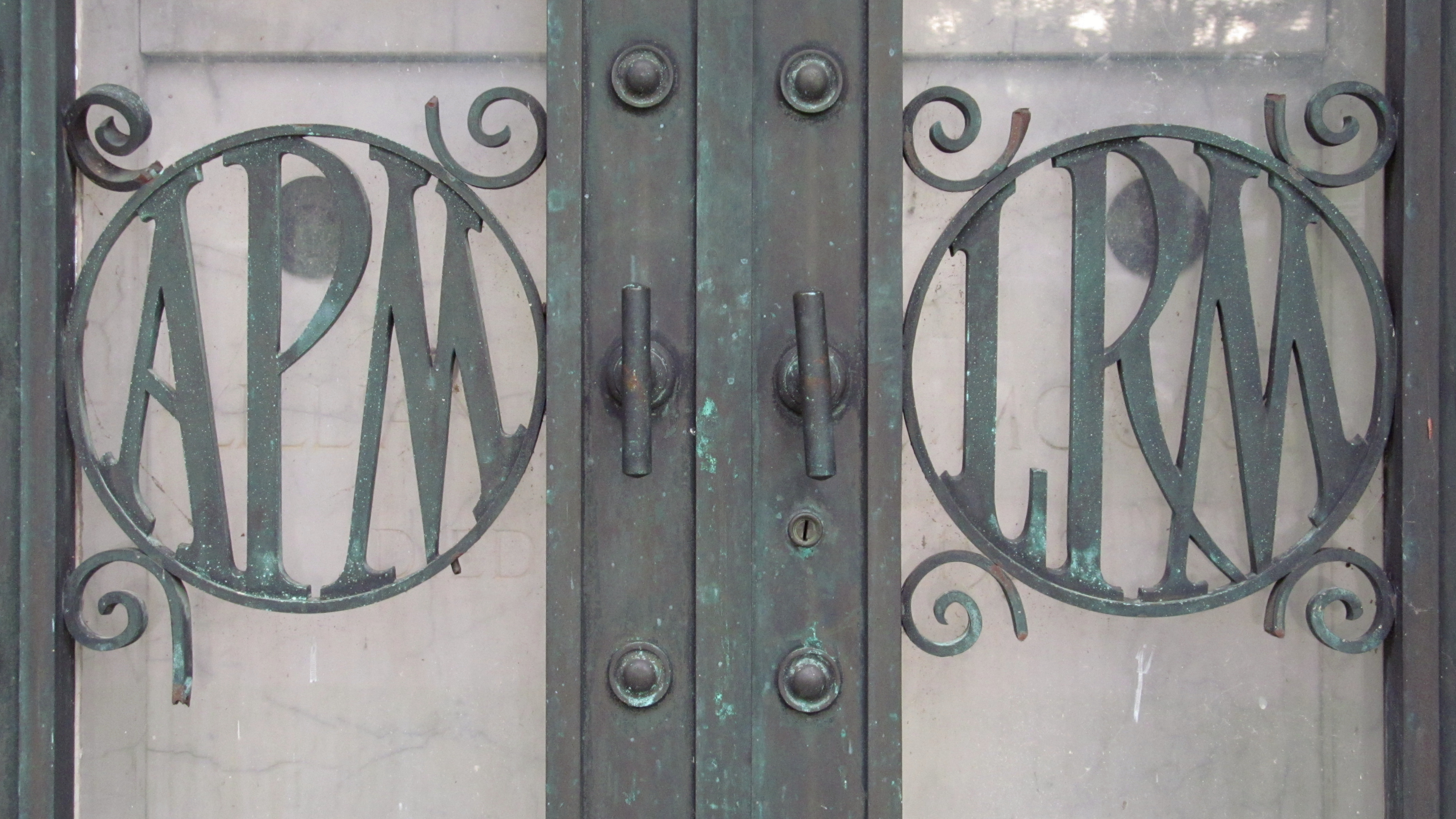
The initials of both residents are rendered in bronze on the doors.
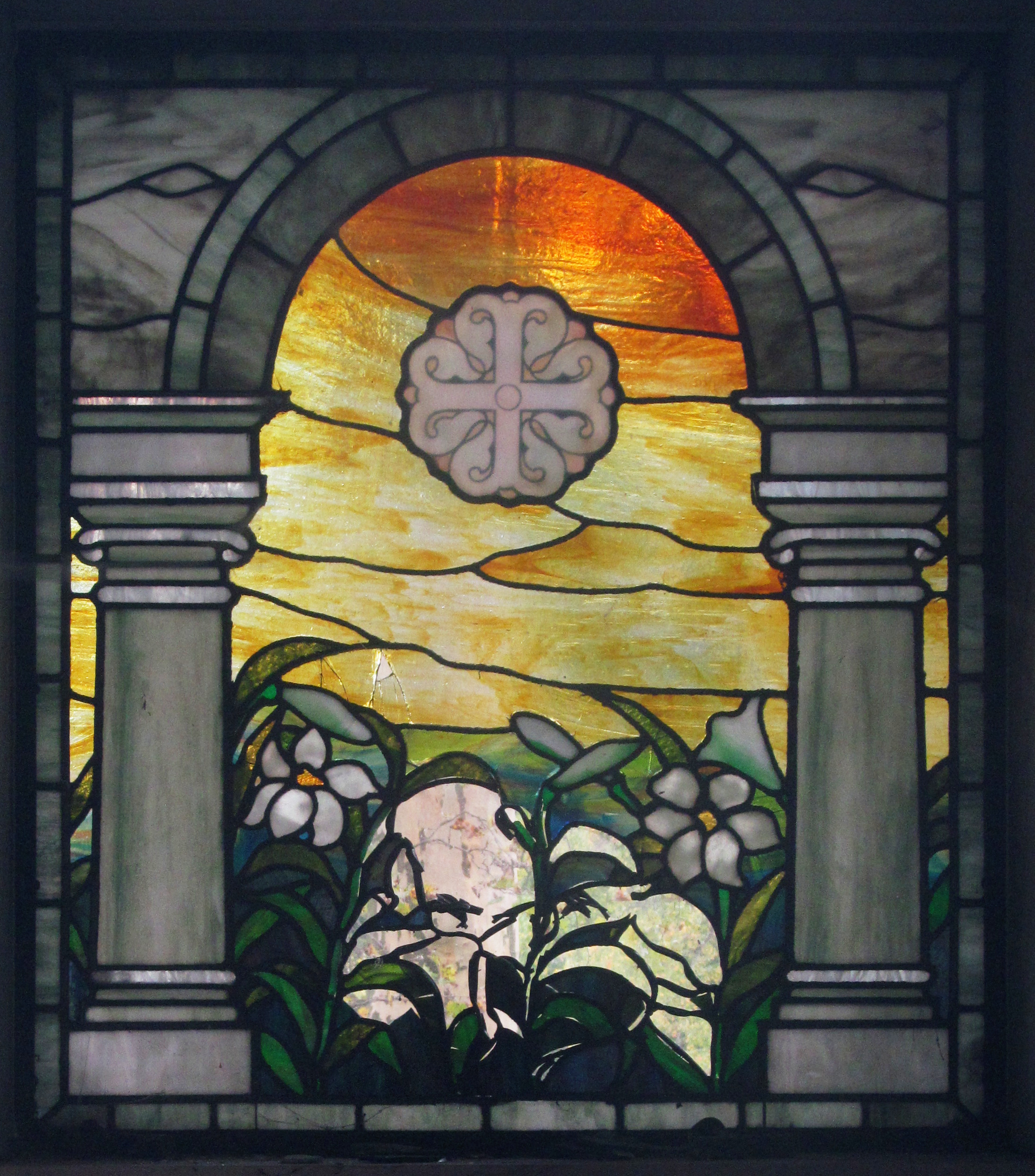
The simple stained glass has suffered some damage, which should be fairly easy to repair.
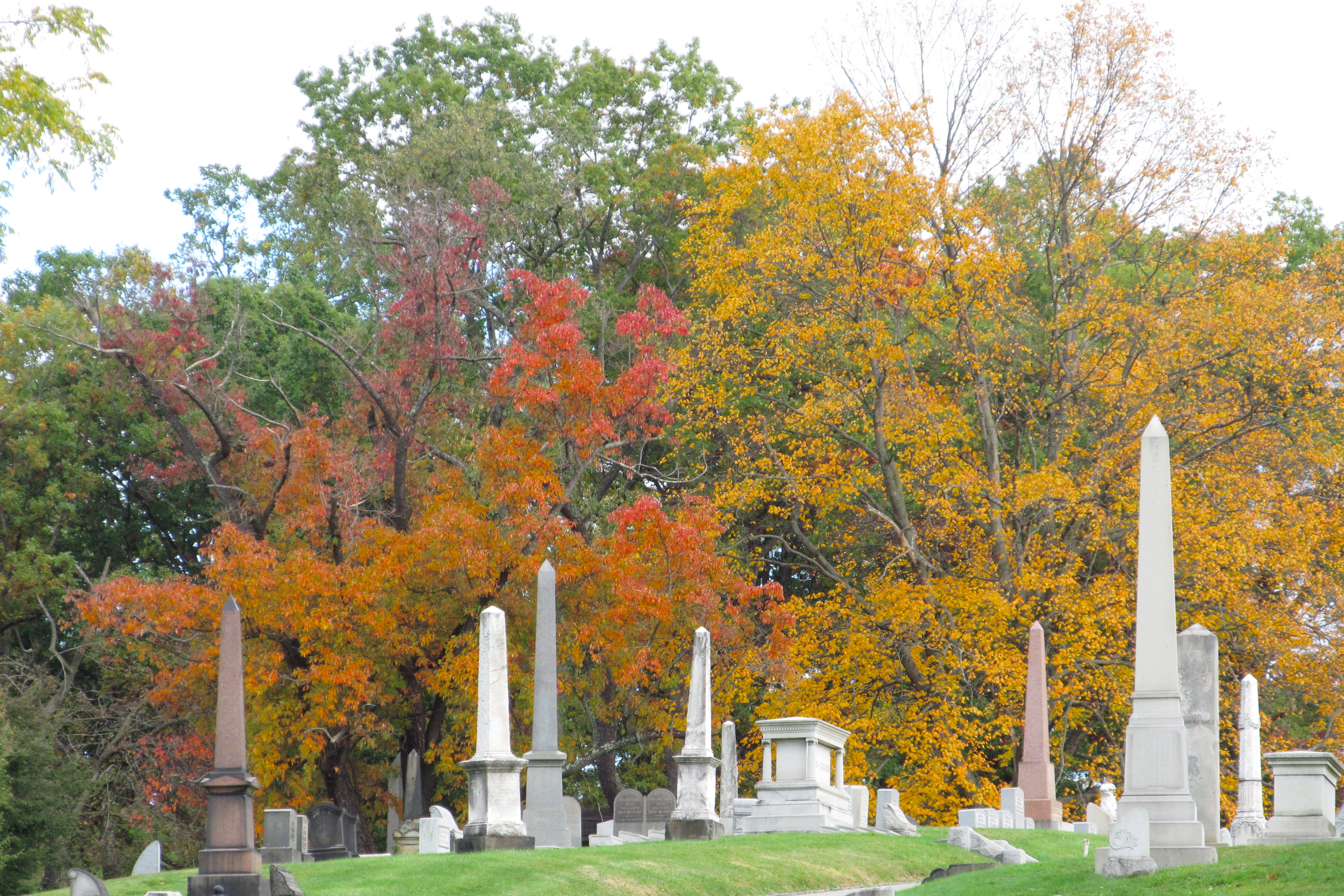
Above, a forest of obelisks before a forest of forest; below, a pleasant stroll among the mausoleums and monuments.


Stanley Zaksesks died in 1920 when he was eleven or twelve years old. Perhaps his father worked in the construction business; this monument appears to have been cast in concrete. The name and date are painted.

The stone has eroded so much already that only the outline of the crucifix is visible in the Byzantine cross. The inscription is still very legible, however; the monument was probably put up when Mike P. Sapsara died in 1932, but old Pa Pitt suspects the inscription has been recut, replacing an illegible original. Note that the inscription is a hybrid of Croatian and English. The photograph of Mike P. Sapsara is in poor shape, but you might still recognize him if you met him on the street.

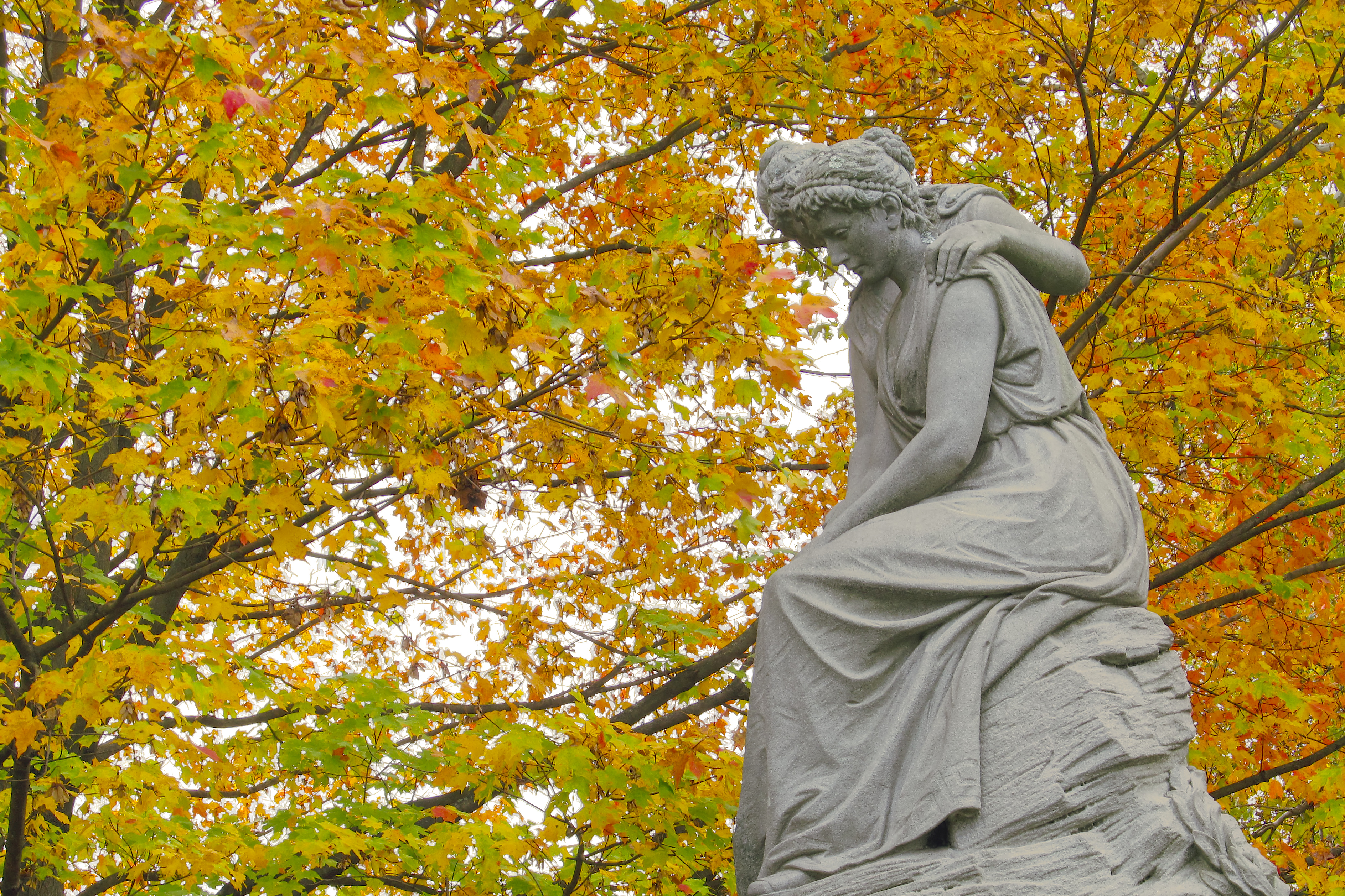
Father Pitt thinks this picture of mourning and consolation (no one seems to know who the sculptor was) is one of the finest things in the cemetery, and fall colors add much to the effect.

