Pittsburgh Cemeteries

The Art and Architecture of Death

Illegible monument

Old Pa Pitt hates to throw up his hands and declare a monument “illegible.” It is especially frustrating with this monument, where on one side he can read almost everything but the last name—John something, who died August 16, 1847. That date seems about right for this style of monument, which was quite fashionably artistic for its time. On another face is an even more eroded inscription for someone whose given name was Lizzie, and another name that Father Pitt has not been able to decipher. Perhaps in different light the inscriptions will become clear, and Father Pitt promises to update this article if he succeeds in reading them.

Illegible momnument

Gutbub monument

A typical Victorian shaft topped with equally typical shrouded urn. The name Gutbub is unusual, but we have run across it elsewhere: in Zion Cemetery, on a very similar (but not quite identical) monument. That family later changed its name to Goodboy, which is even more unusual.

Sloan shaft

A very Victorian towering shaft topped with an urn. It probably dates from 1891, when A. R. Sloan died.

Sloan shaft inscription

Baum monument

This unusual round Doric temple, unlike a closed mausoleum, invites cemetery visitors to step up and under the roof. There the names of the Baum family members interred here are inscribed in an open stone book on a lectern.

Names in a book

Baum monuemtn

Heinz mausoleum

Generations of Heinzes rest in this Jeffersonian domed mausoleum, including H. J. the ketchup king and the late Senator John Heinz.

Heinz mausoleum

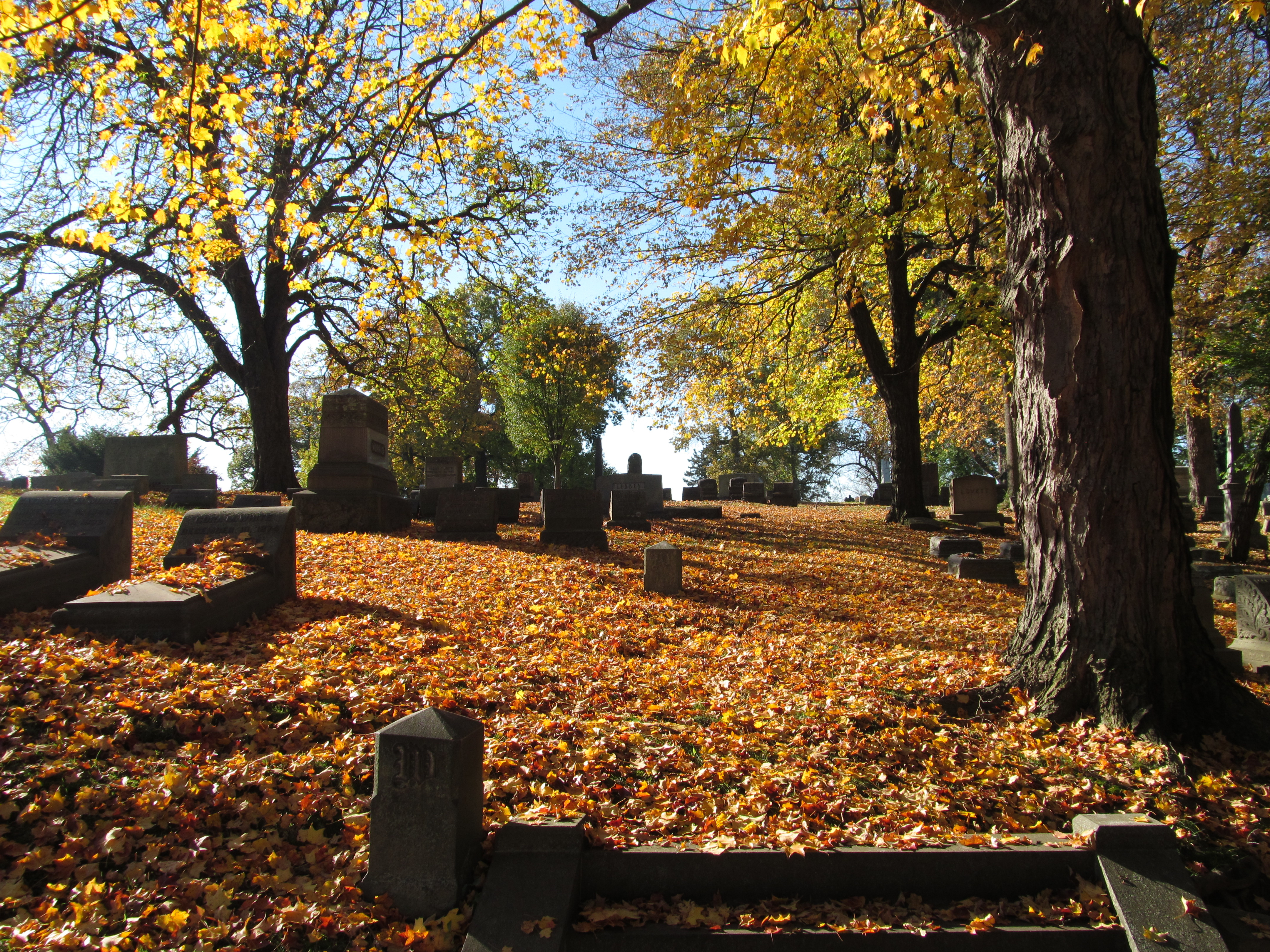
Autumn landscape, Homewood Cemetery

Leaves are falling, and the low angle of the late-year sun illuminates them in an irresistibly picturesque way.

Autumn landscape, Homewood Cemetery

Landscape with Heinz mausoleum, Homewood Cemetery

Brown pyramid

This pyramid, almost certainly the most-photographed mausoleum in the cemetery, was designed for William Harry Brown, banker and heir to a shipping empire, by Alden & Harlow, Andrew Carnegie’s favorite architects. It was built in 1898.

Doorway to the Brown pyramid

Brown pyramid

Landscape with fall colors, Chartiers Cemetery

With ancient trees and artistic landscapes, cemeteries are very good places to enjoy the delights of fall.

Landscape with fallen leaves

Hamilton monument

A strange Egyptian gateway to nowhere, made of rich polished stone and bronze. It probably dates from about 1927, when Alfred Reed Hamilton was buried in this plot.

Hamilton monument

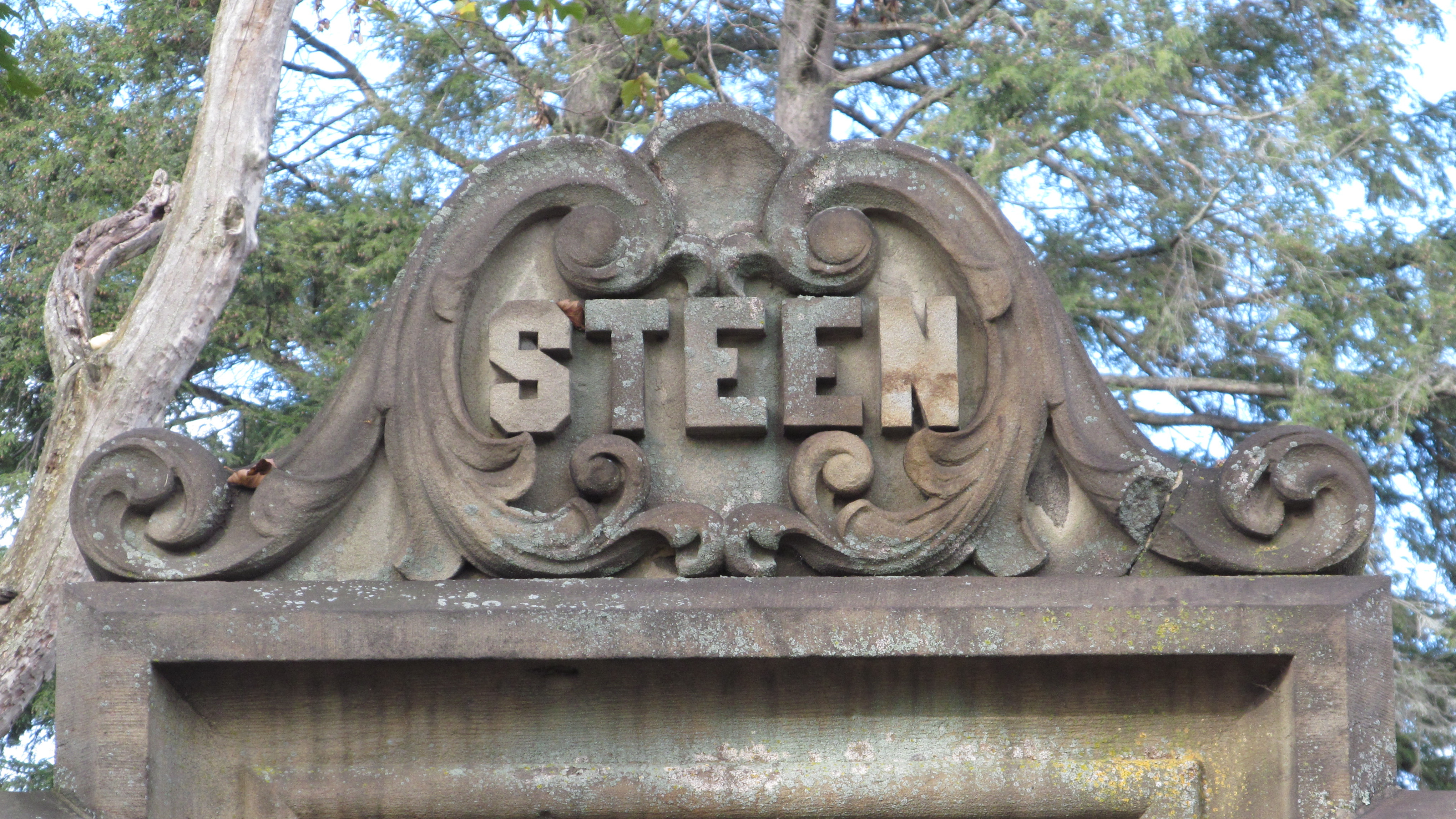
Steen name over the vault

A unique Victorian interpretation of the Baroque style—unique in Pittsburgh, at any rate, as far as old Pa Pitt knows. The date of the mausoleum is 1874, which is the year of the first interment there.

Steen vault

Steen vault

Plaque on the vault

The front probably had bronze doors, now stolen. This plaque, however, should last a good long time. It records that the first interment was David C. Steen, who died the year the mausoleum was built (according to the date over the door). He was probably the son of David and Mary Dickson Steen, who may have built this extravagant vault in mourning for their 21-year-old son.

It would be interesting to know how the Reeds and the rest came to be in this vault.

These were families who were no strangers to tragedy. Of eleven names recorded here, six—a majority—died before the age of thirty.

Steen vault

Rear of the Steen vault