Pittsburgh Cemeteries

The Art and Architecture of Death

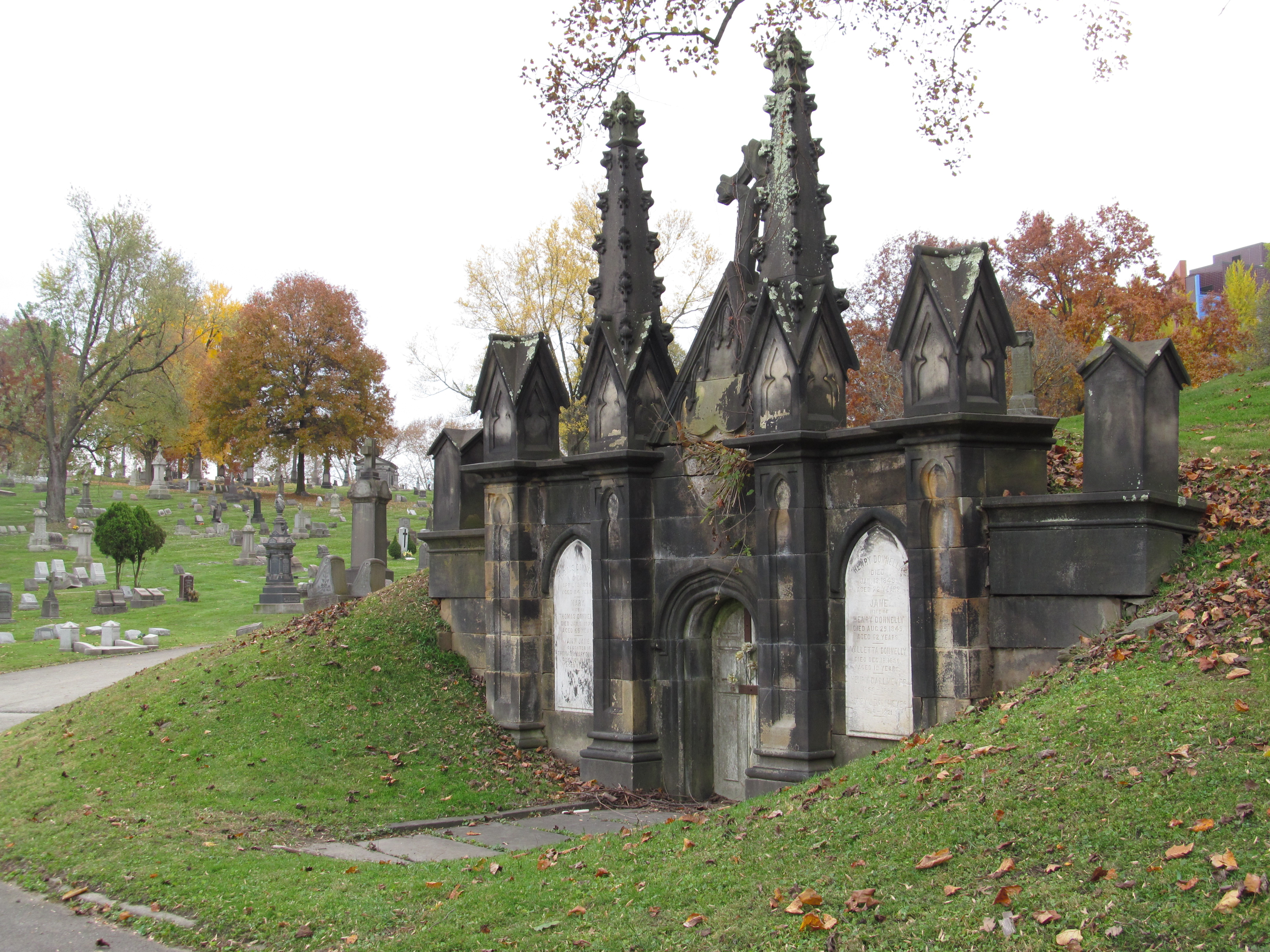
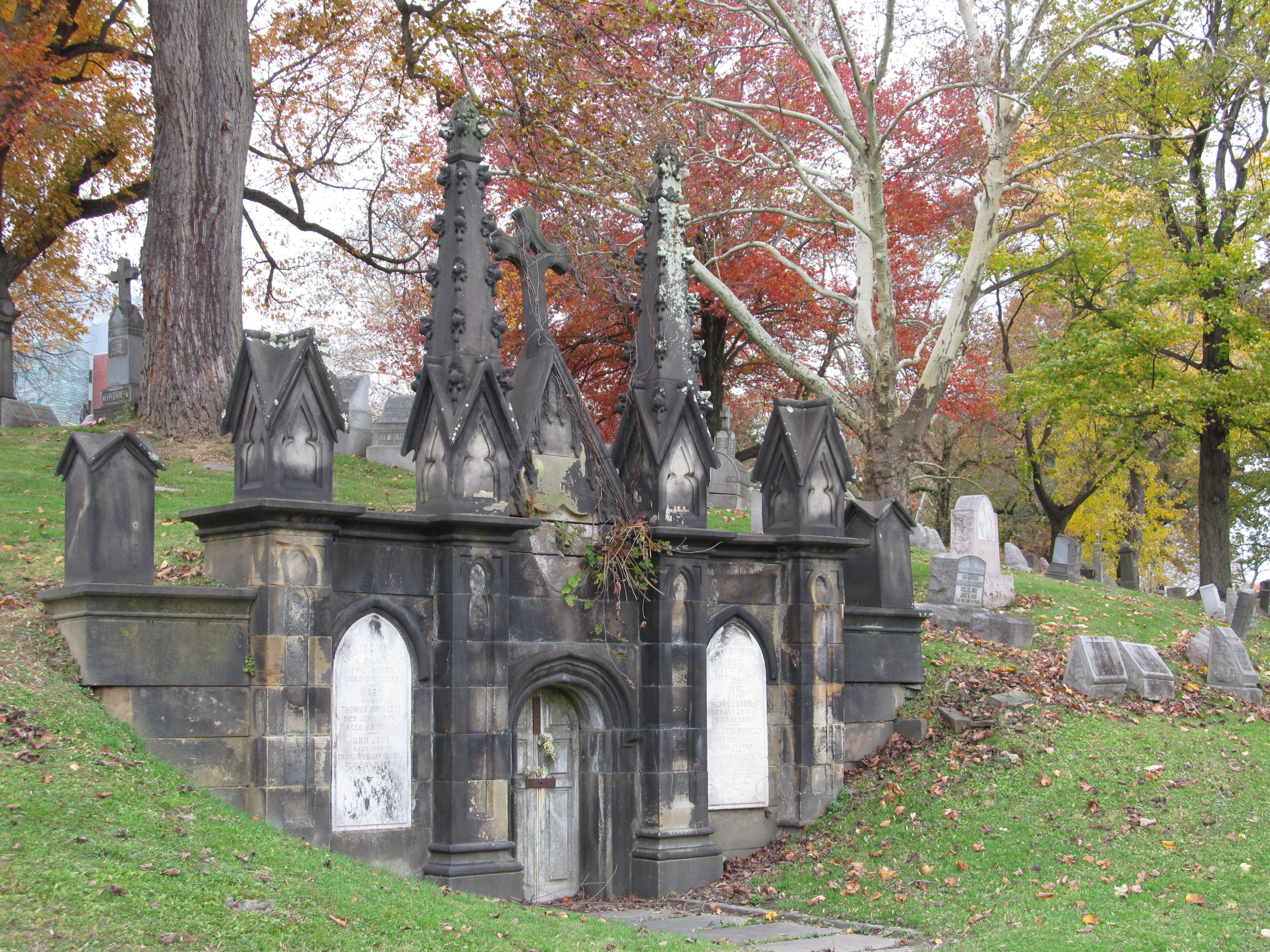
Donnelly vault

One of the most picturesquely mysterious-looking structures in the city of Pittsburgh: we can imagine it as the setting for an atmospheric scene in an old-fashioned Universal horror movie.

This must have been one of the earliest interments in the cemetery, which opened in 1849, the year Henry Donnelly died. It is perhaps the most striking in-ground mausoleum in Pittsburgh. In the early and middle nineteenth century, these mausoleums cut into a hillside were the usual resting places of the rich; they are most often referred to as “mausoleums,” but sometimes as “vaults,” and perhaps it would be best to use that term, reserving “mausoleum” for a free-standing building. They fell out of favor by the 1870s or so, and proper mausoleums came into fashion.

Left inscription

Right inscription

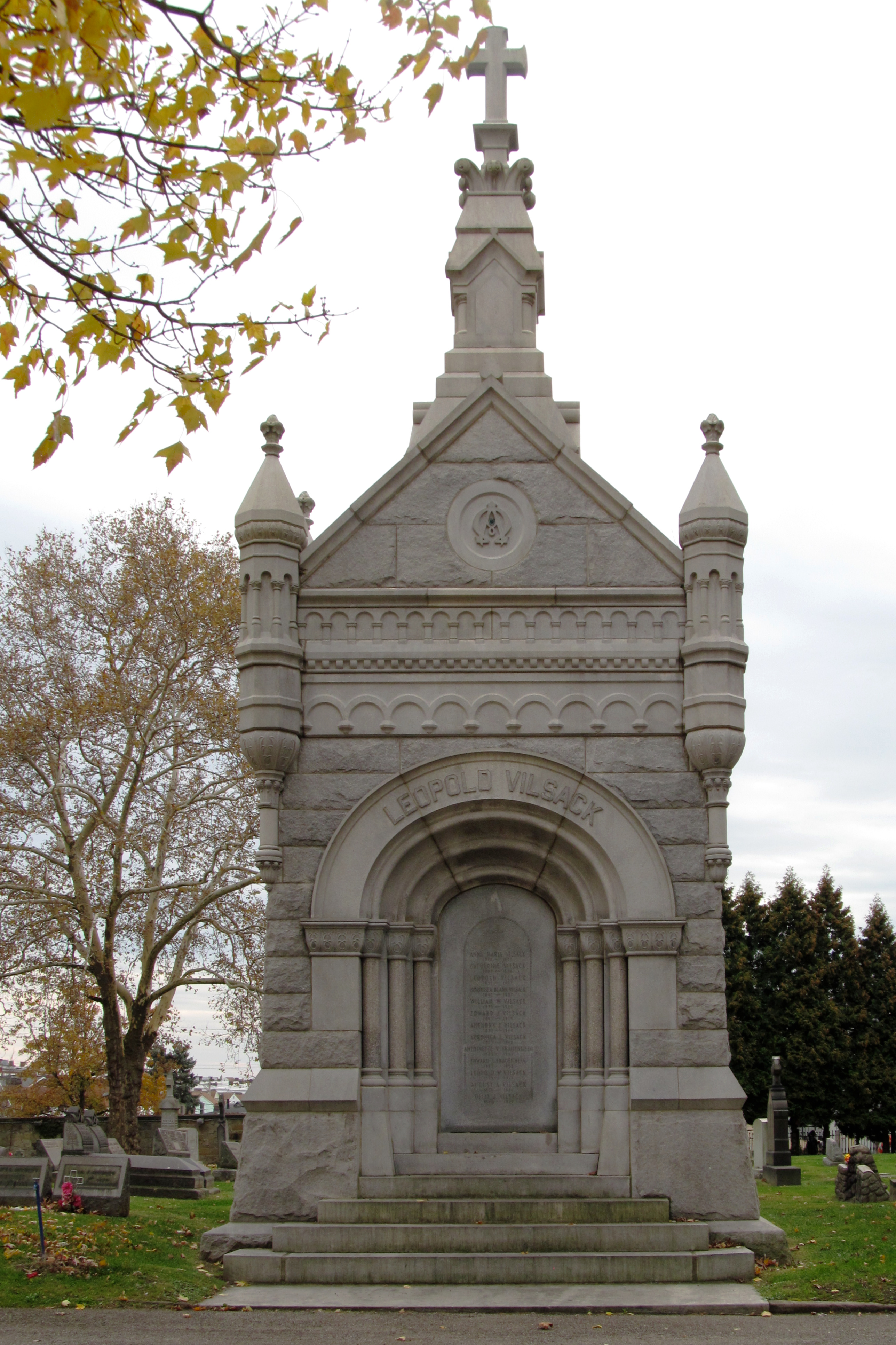
Leopold Vilsack mausoleum

Leopold Vilsack was an early partner in Iron City Brewing, a wise investment that earned him this extravagant Romanesque mausoleum.

Leopold Vilsack mausoleum

Heinz mausoleum

Generations of Heinzes rest in this Jeffersonian domed mausoleum, including H. J. the ketchup king and the late Senator John Heinz.

Heinz mausoleum

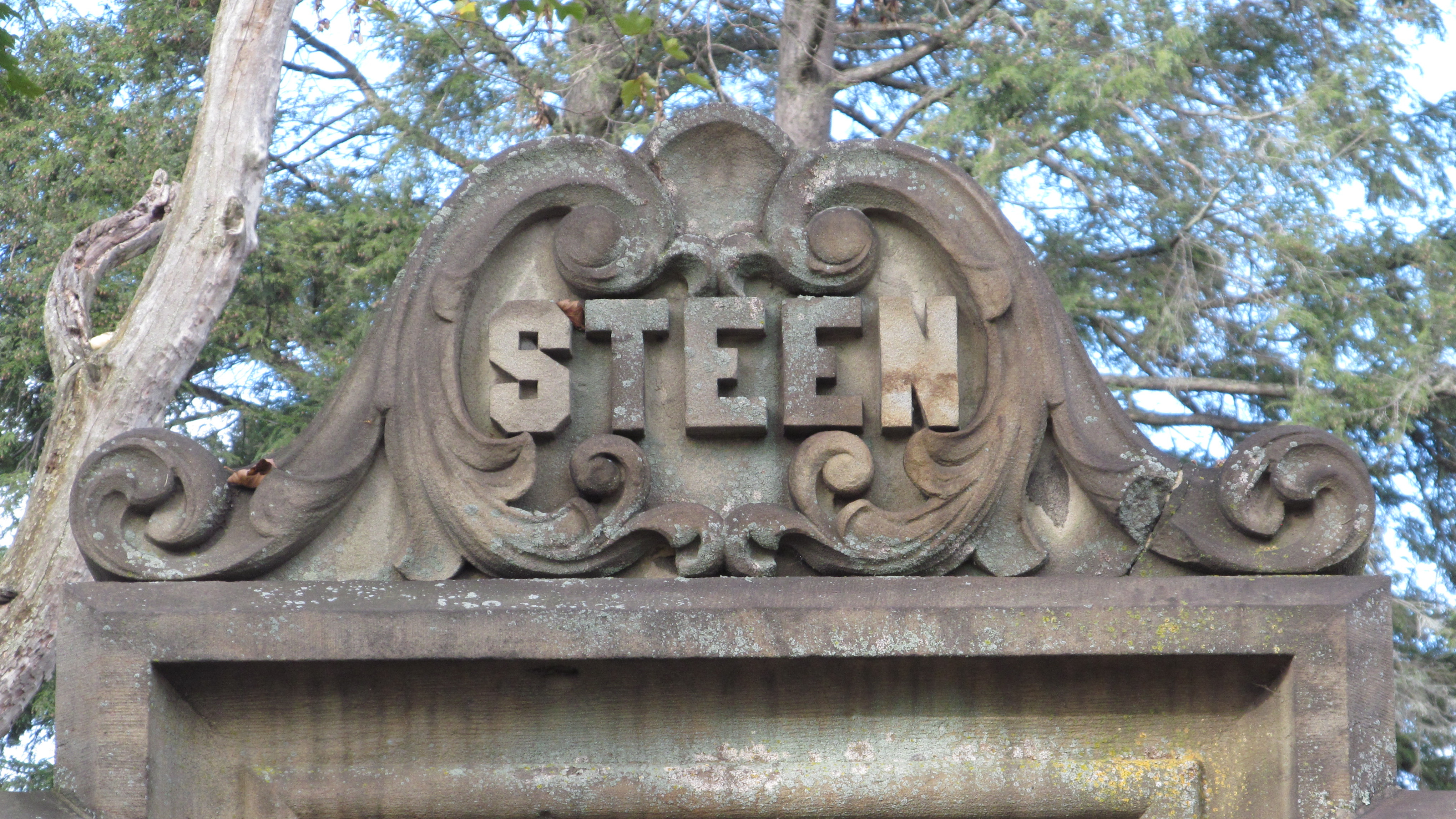
Steen name over the vault

A unique Victorian interpretation of the Baroque style—unique in Pittsburgh, at any rate, as far as old Pa Pitt knows. The date of the mausoleum is 1874, which is the year of the first interment there.

Steen vault

Steen vault

Plaque on the vault

The front probably had bronze doors, now stolen. This plaque, however, should last a good long time. It records that the first interment was David C. Steen, who died the year the mausoleum was built (according to the date over the door). He was probably the son of David and Mary Dickson Steen, who may have built this extravagant vault in mourning for their 21-year-old son.

It would be interesting to know how the Reeds and the rest came to be in this vault.

These were families who were no strangers to tragedy. Of eleven names recorded here, six—a majority—died before the age of thirty.

Steen vault

Rear of the Steen vault

Lillian Russell Moore mausoleum

This is the Lillian Russell who was widely considered the most beautiful woman in the world in the late 1800s and into the 1900s. Her fourth and last husband was Alexander Pollock Moore, who owned the Leader in Pittsburgh. When she died unexpectedly in 1922, he gave her this tiny but tasteful mausoleum; he was buried with her later, but her name is the one above the columns, and the epitaph is hers: “The world is better for her having lived.”

Lillian Russell and Alexander Pollock Moore

Mrs. Moore’s opinion as “Immigration Inspector” was that Europe was sending us its worthless dregs; she is sometimes blamed for the restrictive immigration policies that followed, but it is very likely that the Harding administration appointed her to reinforce and not to create anti-immigrant prejudice. She injured herself in a very minor way on the trip back, but died unexpectedly from complications.

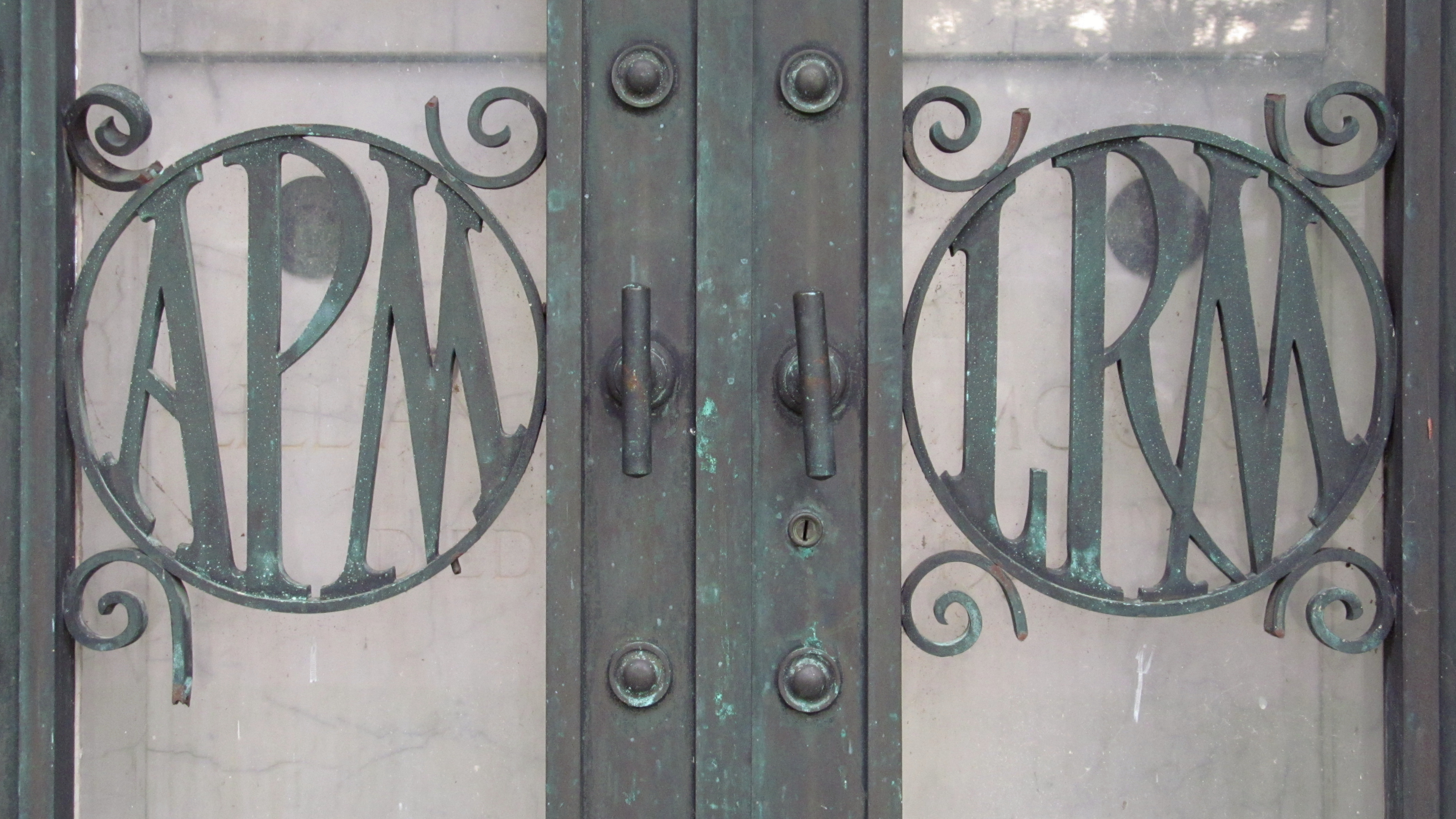
Initials in bronze

The initials of both residents are rendered in bronze on the doors.

Stained glass in the mausoleum

The simple stained glass has suffered some damage, which should be fairly easy to repair.

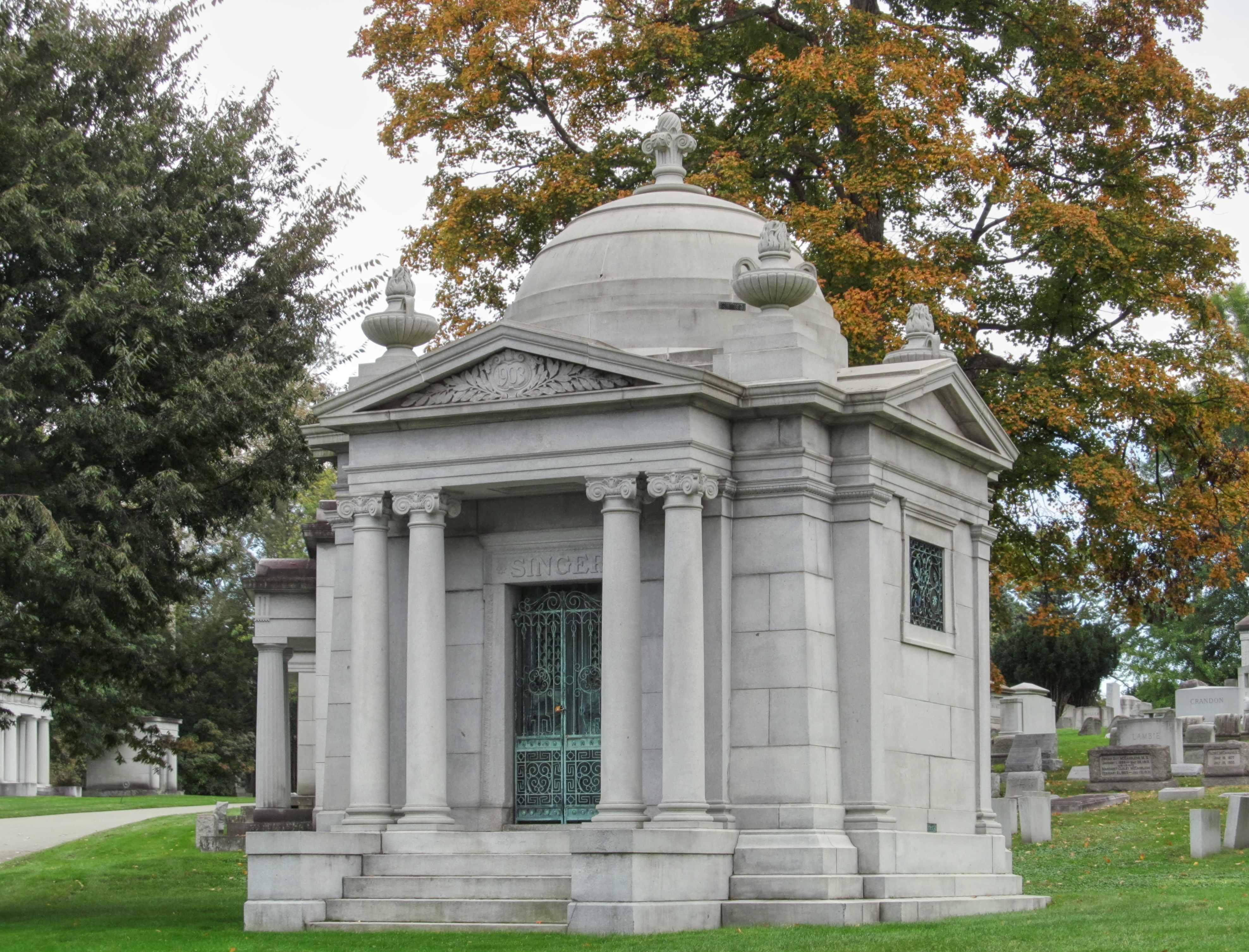
Singer mausoleum

A Victorian interpretation of Jeffersonian classicism. Domes are fairly unusual on Pittsburgh mausoleums, but this one works well with the “modern Ionic” design. The four large lamps on the corners are a bit much, in old Pa Pitt’s opinion; but the Singers didn’t ask him.

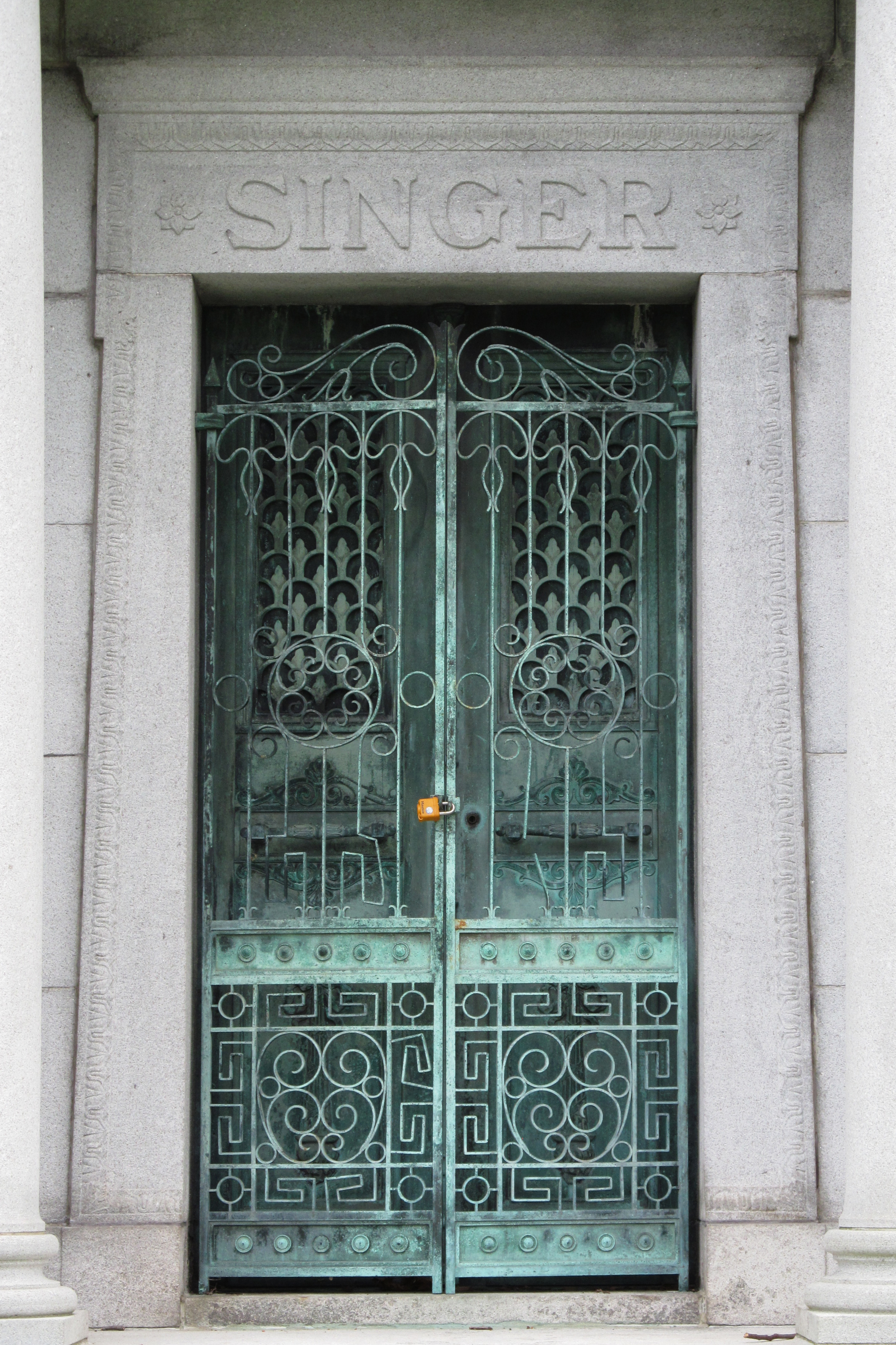
Bronze doors on the Singer mausoleum

Two layers of bronze and one cheap padlock keep vandals out, or perhaps the Singers in.

Winter mausoleum

The gorgeous and absurd Winter mausoleum was designed by John Russell Pope, architect of (among other things) the National Gallery of Art and the Jefferson Memorial. Almost exactly the same mausoleum was built earlier for F. W. Woolworth, the dime-store king; Emil Winter, the Pittsburgh banker, must have told Pope he wanted what Woolworth had.

Winter mausoleum

Walter mausoleum

An early-twentieth-century Doric mausoleum of the simpler style, without pediment or frieze, that was becoming popular then. The stained glass inside is a simple vine decoration.

Stained glass in the Walter mausoleum

Walter mausoleum

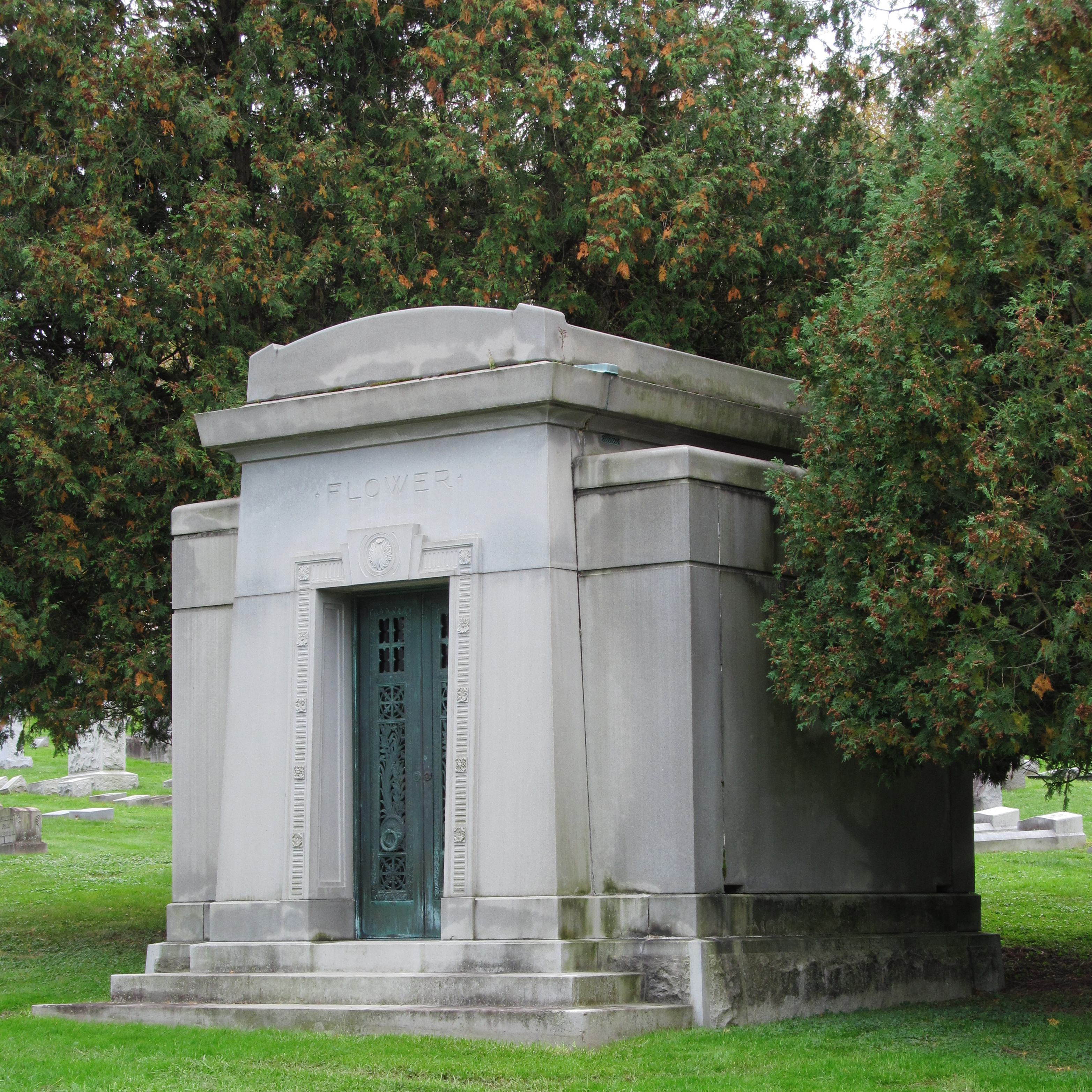
Flower mausoleum

A tasteful mausoleum shaped like the stereotypical Egyptian temple, but without Egyptian decorative details. The nautical-themed stained glass inside is extraordinarily good, and the bronze doors are also very artistic.

Stained glass in the Flower mausoleum

Bronze doors on the Flower mausoleum

Ornament on the Flower mausoleum

Flower mausoleum

W. R. Fischer mausoleum

Two days ago Father Pitt wrote that the Vandergrift mausoleum was probably a stock model. Here is the confirmation: the identical mausoleum, but with different bronze doors. After so many years of wandering in cemeteries, old Pa Pitt has developed an instinct for these things.

W. R. Fischer mausoleum