
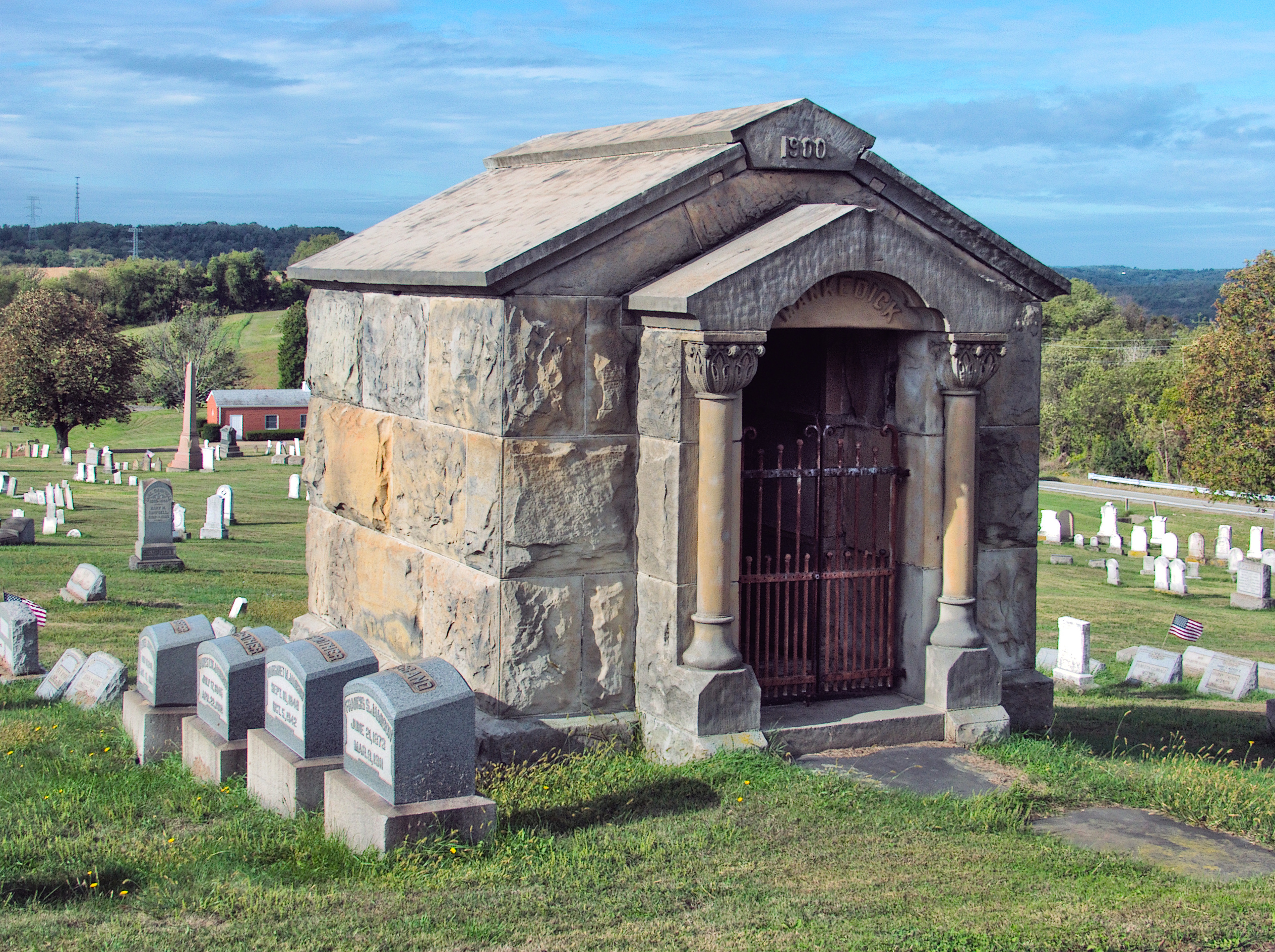
A simple rustic mausoleum from 1900, enlivened by medieval columns with finely carved capitals.

The Art and Architecture of Death
A simple rustic mausoleum from 1900, enlivened by medieval columns with finely carved capitals.
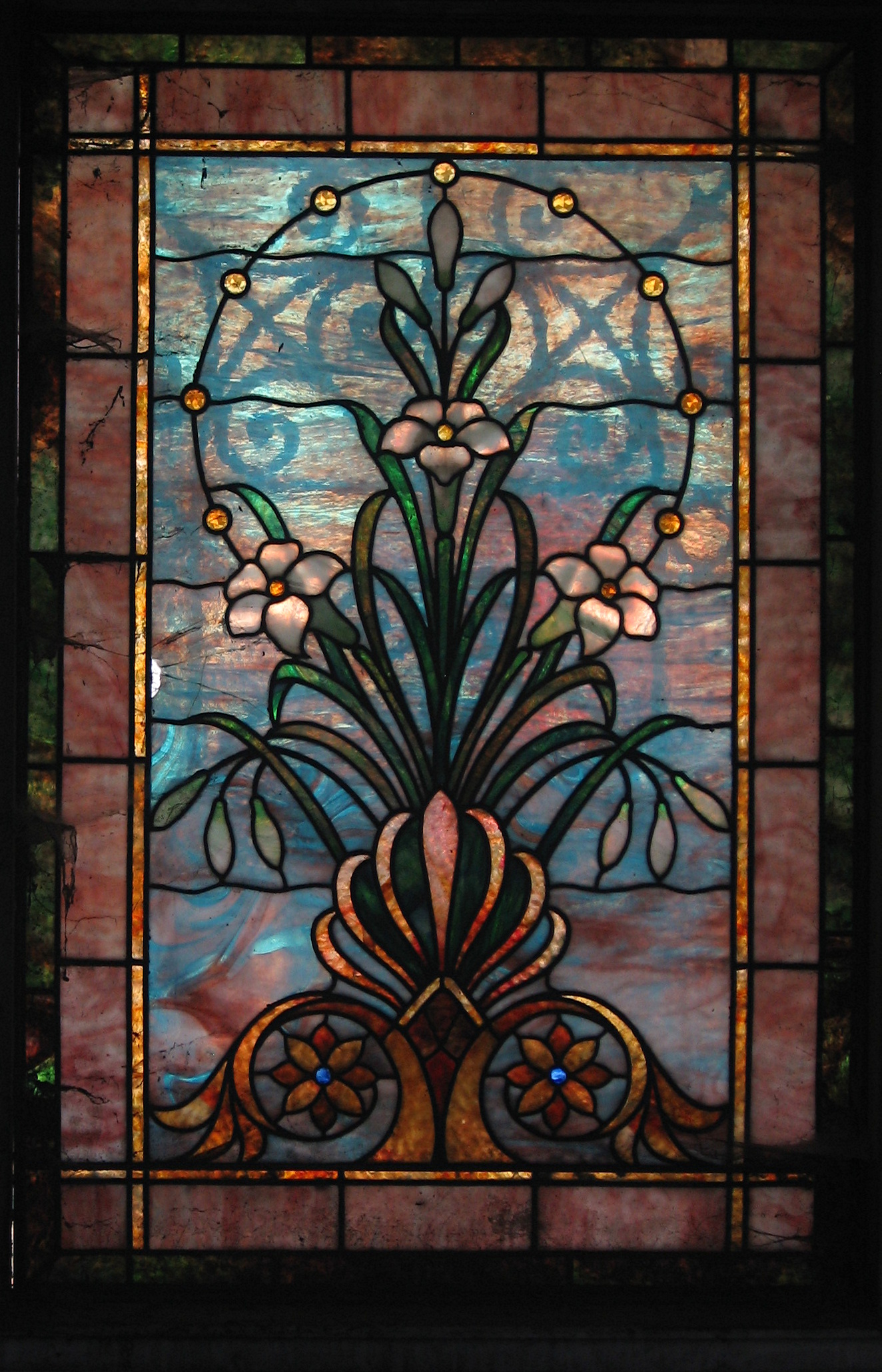
A finely proportioned Modern Ionic mausoleum with an attractive stained-glass window and artistic bronze doors.


A small but rich-looking mausoleum in a kind of classicized Gothic style, topped by Hope clutching her anchor. The bronze doors are particularly worth looking at. The mausoleum and statue are nearly identical to the J. P. Ober mausoleum in Allegheny Cemetery, with only very slight alterations in the details.


Presumably “Theo” is an abbreviation for Theodore, though it could also be Theobald or Theophilus. This is a standard rusticated Doric mausoleum with a good Sacred Heart window.
A smallish but still thoroughly Egyptian mausoleum; Father Pitt guesses it is fairly late in the era of the second Egyptian Revival. Inside is a simple but effective stained-glass view of a pyramid.


A plain mausoleum of rusticated stone, this one is exceptional in the South Side Cemetery for retaining its bronze doors; almost all the other mausoleums in the cemetery are now missing their doors, which can be sold as scrap by thieves to dealers who apparently never wonder why someone would happen to be carrying a large ornate door on the back of his truck. There is even a bit of almost-intact stained glass in the back.

Father Pitt hopes the Wilder family (who are doubtless kind and indulgent people) will forgive him for saying that this is without a doubt the ugliest mausoleum in the greater Pittsburgh metropolitan area. It looks like a thing built by a contractor who had never built, or perhaps even seen, a mausoleum before, and thought of it as a sort of garage for coffins. But it is distinctive. There is nothing else in the South Side Cemetery that looks remotely like it; and, since it occupies a prominent plot at the intersection of two drives in the cemetery, there is no missing it.

 A simple Doric mausoleum with extra space for a large family. The stained glass inside is very good, except that (in Father Pitt’s opinion) the wreath-and-swag decoration rather spoils the effect of the naturalistic forest and stream.
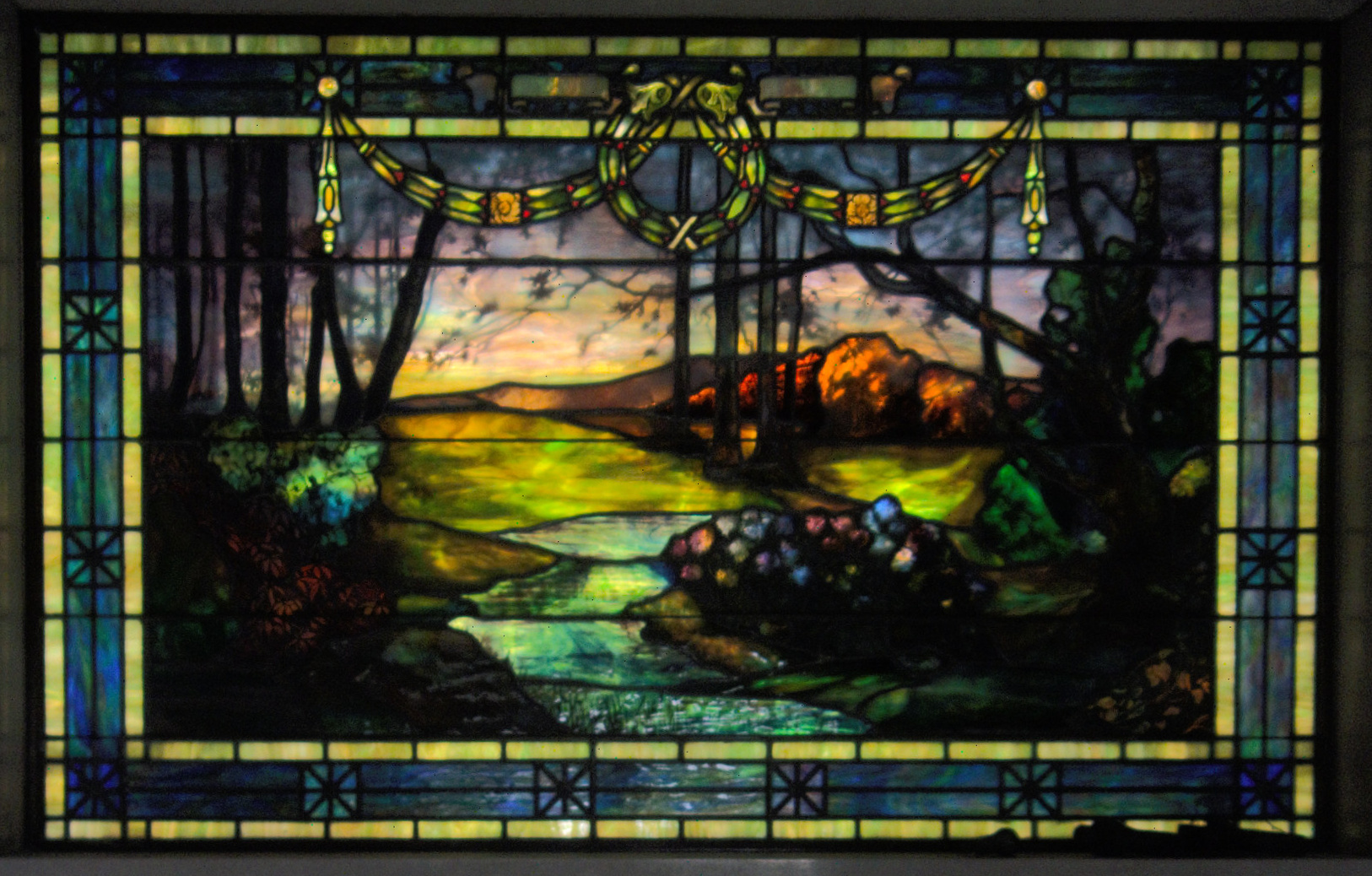

 _The composite picture above is more than 75 megapixels. Expect about 22 megabytes of data if you click on it._
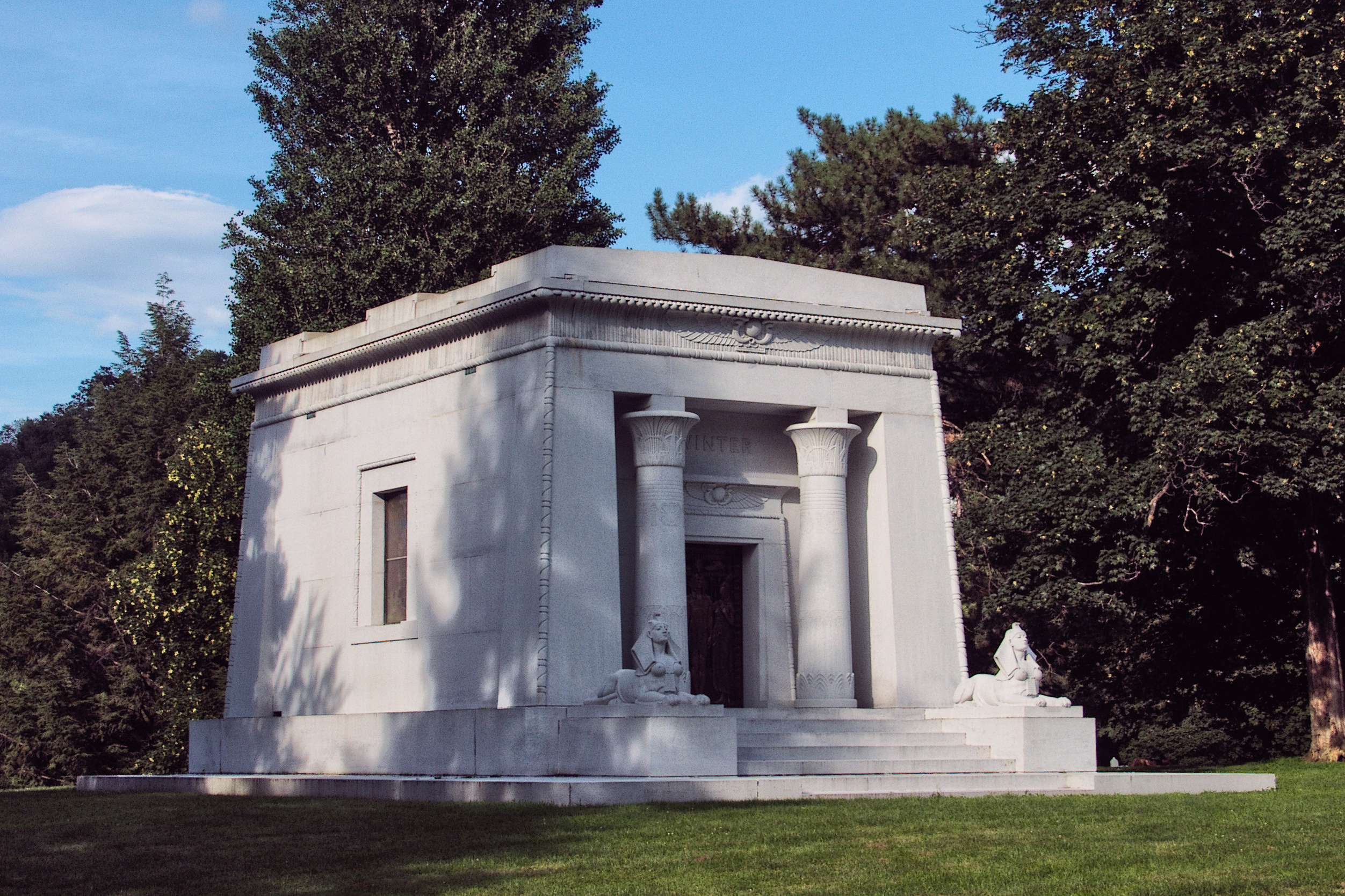
This is without a doubt the most spectacular Egyptian mausoleum in Pittsburgh. All the usual Egyptian elements are here, but the Winter mausoleum (1930)—whose colossal scale is hard to convey in a photograph—adds its own unique accessories. John Russell Pope, the famous beaux-arts architect, designed this mausoleum for banker Emil Winter—but “designed” is not really the right word here. The Woolworth mausoleum in Woodlawn, the Bronx, is nearly identical; Winter apparently saw it and told Pope “I want that,” and Pope gave it to him.

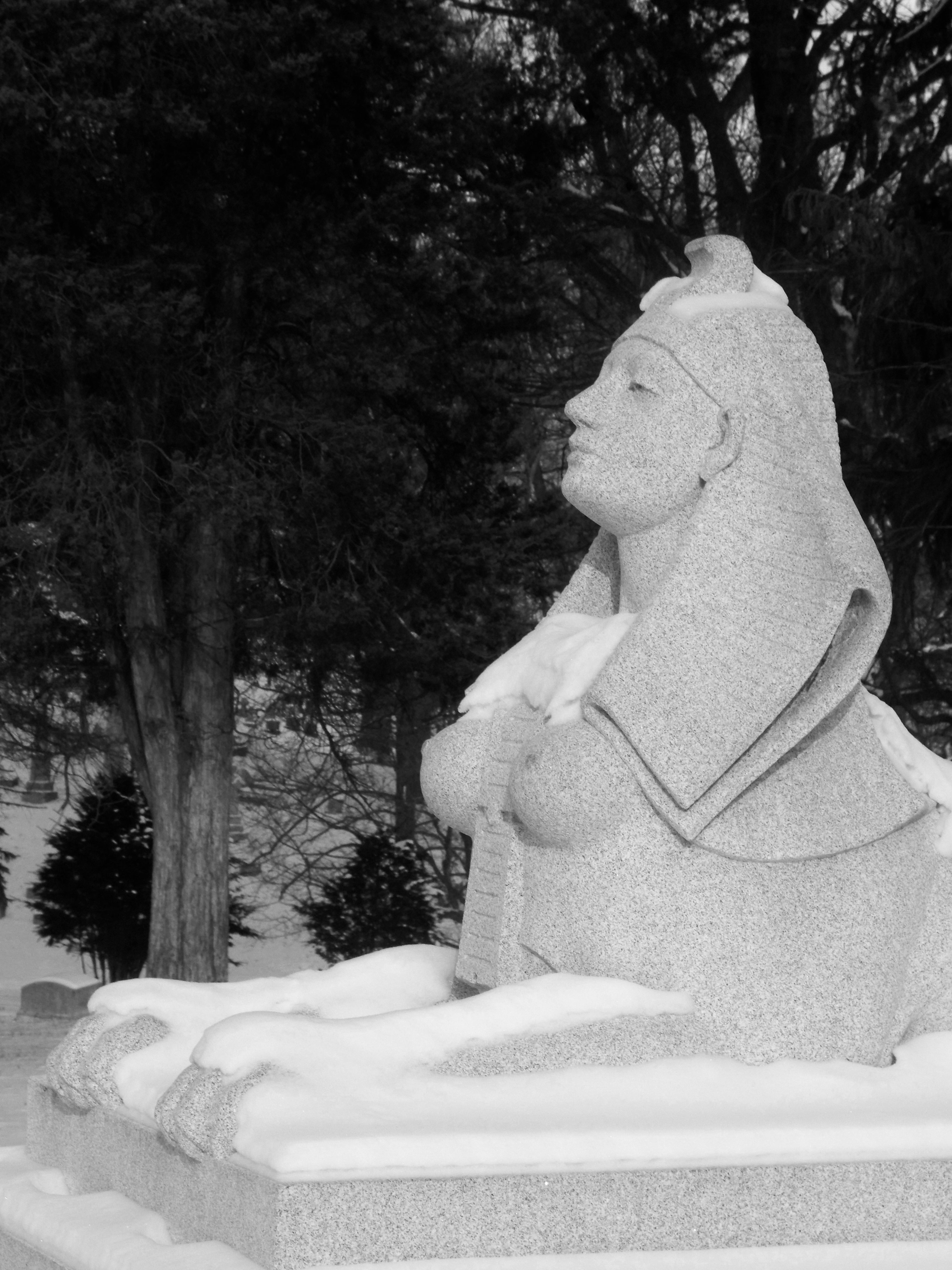
Mr. Winter’s amazing sphinxes bear an expression that old Pa Pitt can only describe as “snooty.”
 The bronze door depicts Mr. Winter himself, large as life and in full Pharaonic regalia, about to set off for his journey into the afterlife. Even this is identical to the bronze door of the Woolworth mausoleum, except for the substitution of Mr. Winter’s face.
 Inside is a stained-glass window that reminds Father Pitt of cheap illustrated Sunday-school handouts, showing Mr. Winter properly enthroned. (It was devilishly hard to get a picture of this window, because the front doors are actually backed by a mesh screen. This was the best old Pa Pitt could do.)




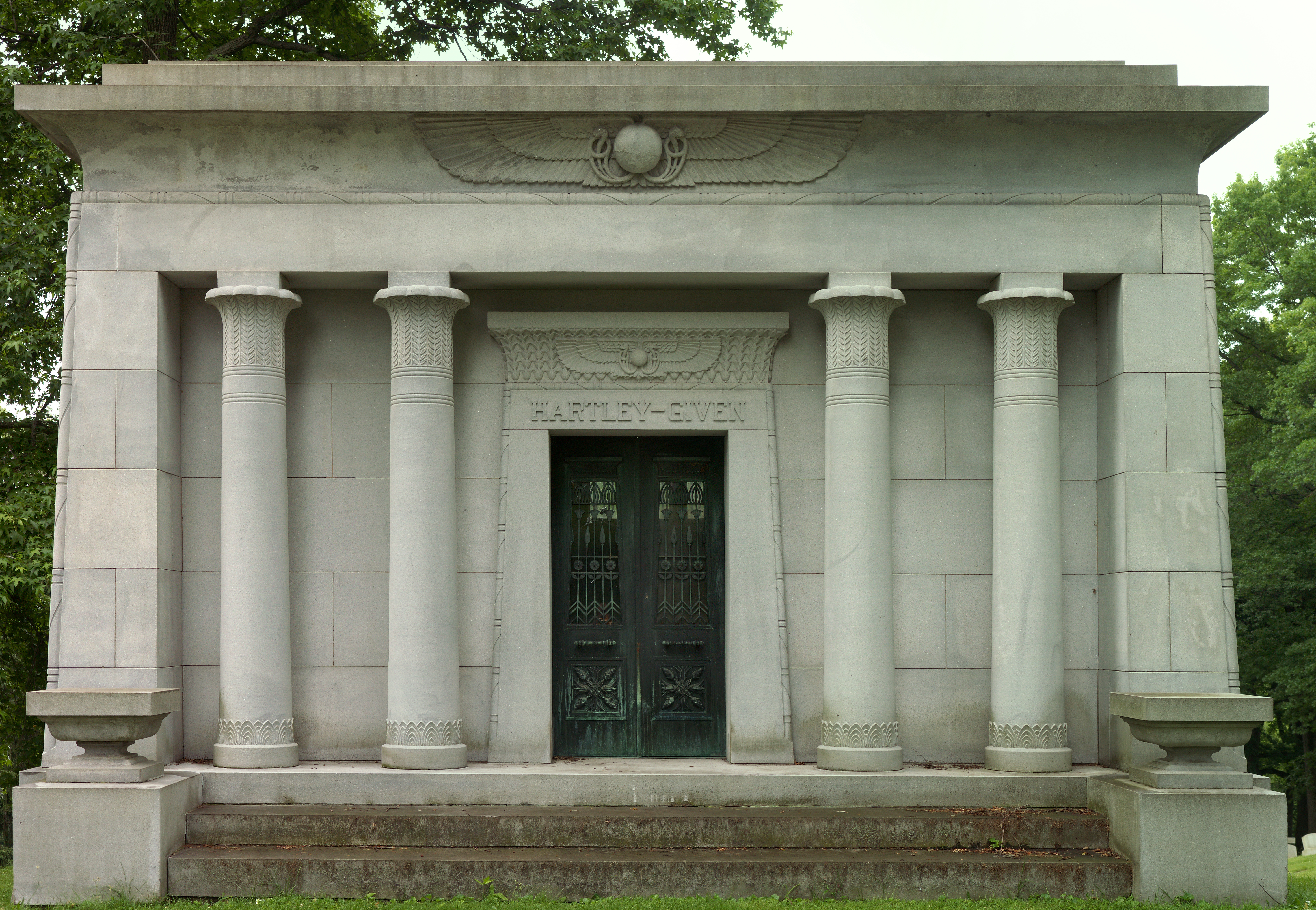
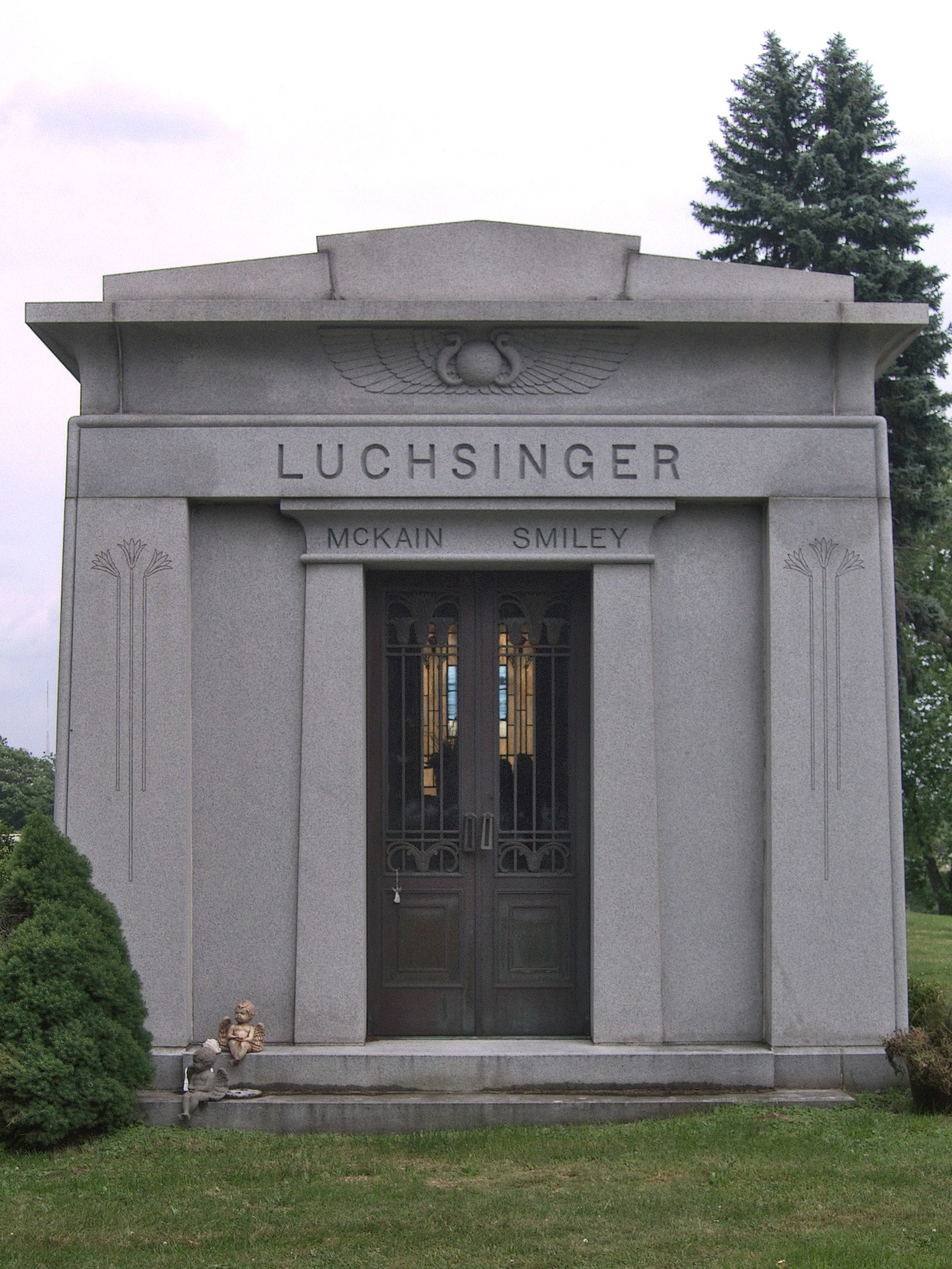
A typical Egyptian temple, except perhaps that it is rather grander than usual. It was built in 1913, and we can see the elements that almost invariably mark the Egyptianness of the style: the sloping sides and the lotus columns. Over the entrance we almost always find a winged sun disk or scarab entwined by serpents.
The picture above is huge if you click on it: there’s plenty of detail to appreciate, but be aware that clicking on it will cost you about twelve and a half megabytes.


