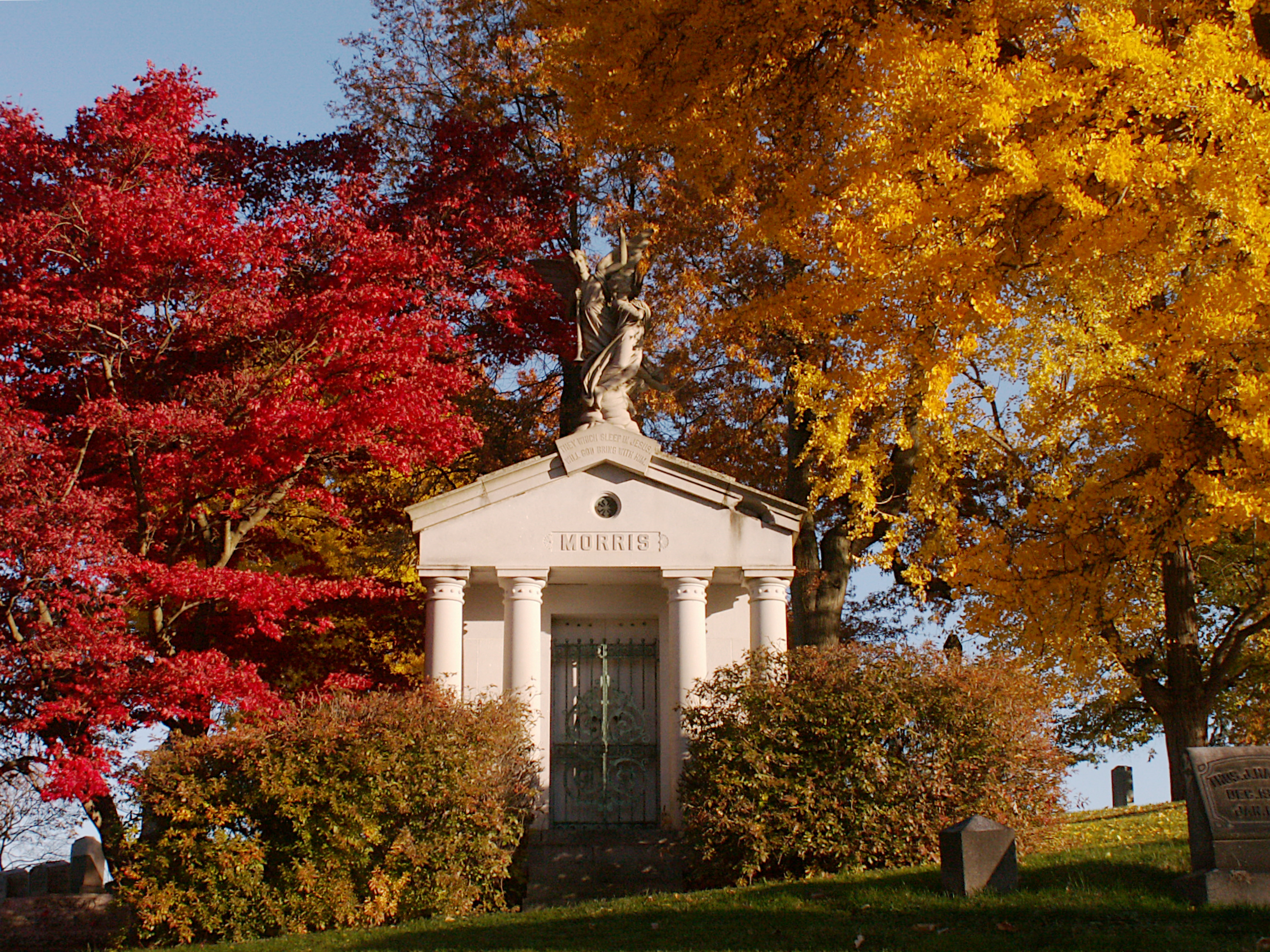
This small Doric mausoleum bears a fine life-size sculpture with an ungrammatical inscription that always irritates old Pa Pitt every time he sees it.




The Art and Architecture of Death
This small Doric mausoleum bears a fine life-size sculpture with an ungrammatical inscription that always irritates old Pa Pitt every time he sees it.

Probably the most photographed monument in the cemetery, this pyramid is festooned with Egyptian symbols—but, like most other pyramids in Pittsburgh cemeteries, it has the Roman proportions of the Pyramid of Cestius in Rome.


This is the Pitcairn for whom the borough of Pitcairn is named, a bigwig in the Pennsylvania Railroad. He built himself a large and tasteful Corinthian mausoleum to rest in. Next to it is a spectacular Ginkgo biloba in full autumn splendor.


A simple and traditional Doric mausoleum in a beautiful fall landscape. Mr. Succop was the president of the Germania Savings Bank and on the board of a number of other banks and manufacturers.


A very tasteful example of mid-twentieth-century modernism in a fine fall landscape.


For their mausoleum, the McCutcheons chose a remarkably tasteful miniature Gothic church, dated 1881 over the stone doors on both sides.


A small classical mausoleum in very good taste; the Boston ivy is always a picturesque touch, but especially in the fall. The name “Taylor” was added to the pediment later.

A sturdy-looking Doric mausoleum built in 1895. It looks even sturdier because the entrance, where there were probably once bronze doors, has been filled in with concrete.

There is nothing else remotely like this in Pittsburgh. This huge mausoleum supports a towering shaft with a recording angel at the top taking notes. It was designed by Theophilus P. Chandler Jr. (which always sounds to old Pa Pitt like the name of the villain in a Marx Brothers farce), the tastemaker of Philadelphia, and the architect of First Presbyterian Church downtown.


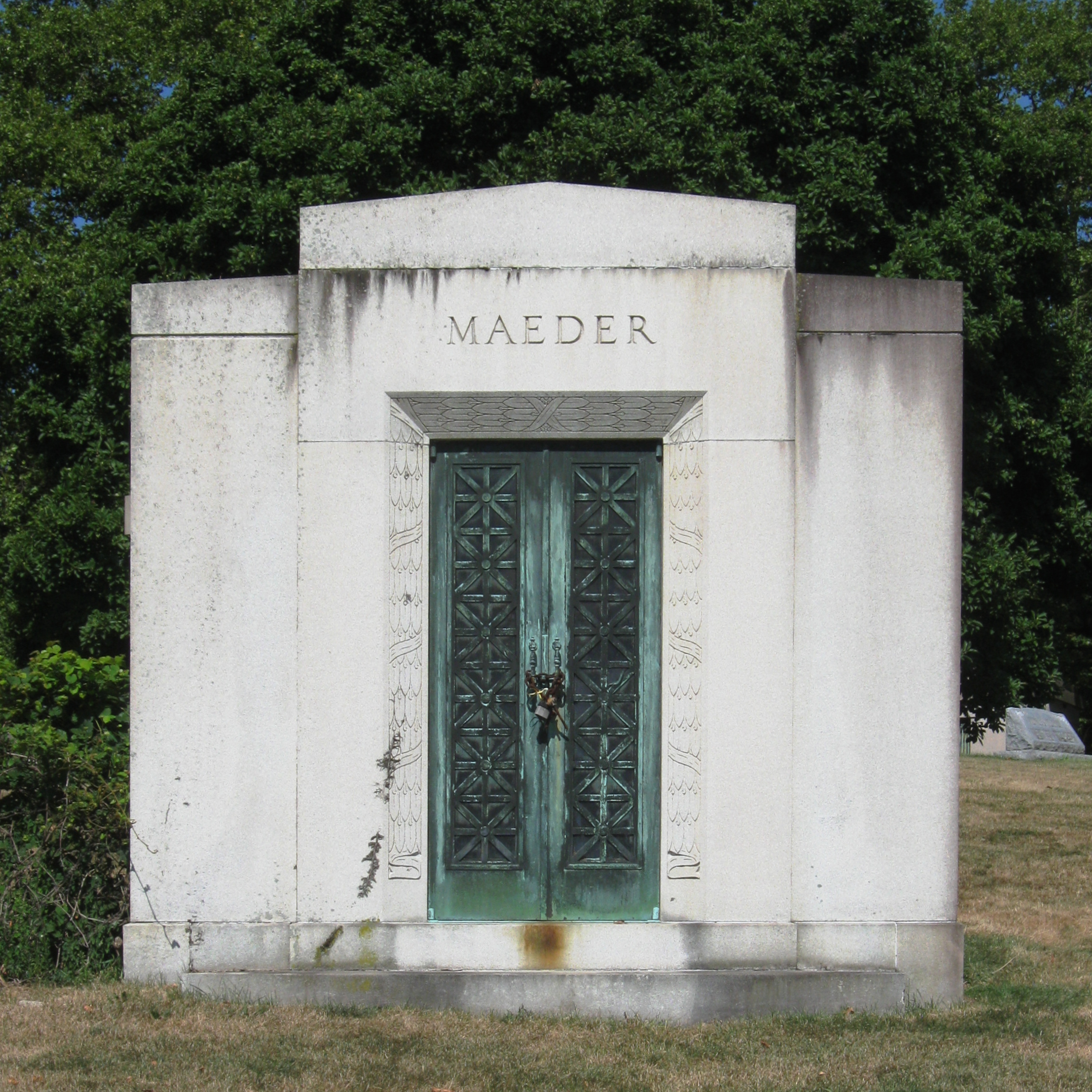
Simple modernist elegance enlivened by bronze doors and decorative etching around the doorframe.