Pittsburgh Cemeteries

The Art and Architecture of Death

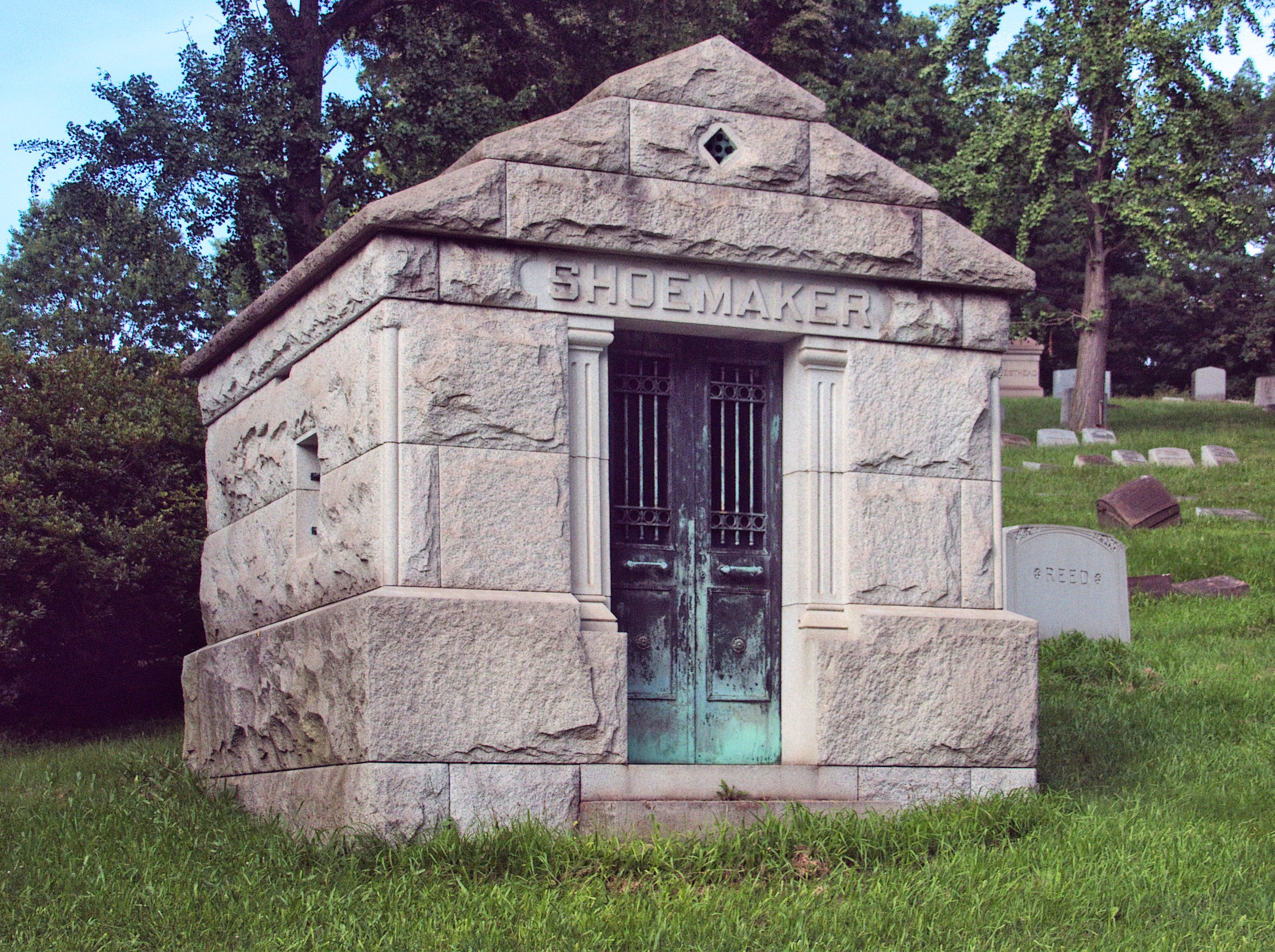
This is the only mausoleum in the cemetery, a typical small rusticated-stone mausoleum. Originally it would have had bronze doors, but those are usually stolen from an unguarded cemetery and sold to scrap dealers who obviously have no idea where two men with a pickup truck might have got a large door-shaped chunk of bronze.

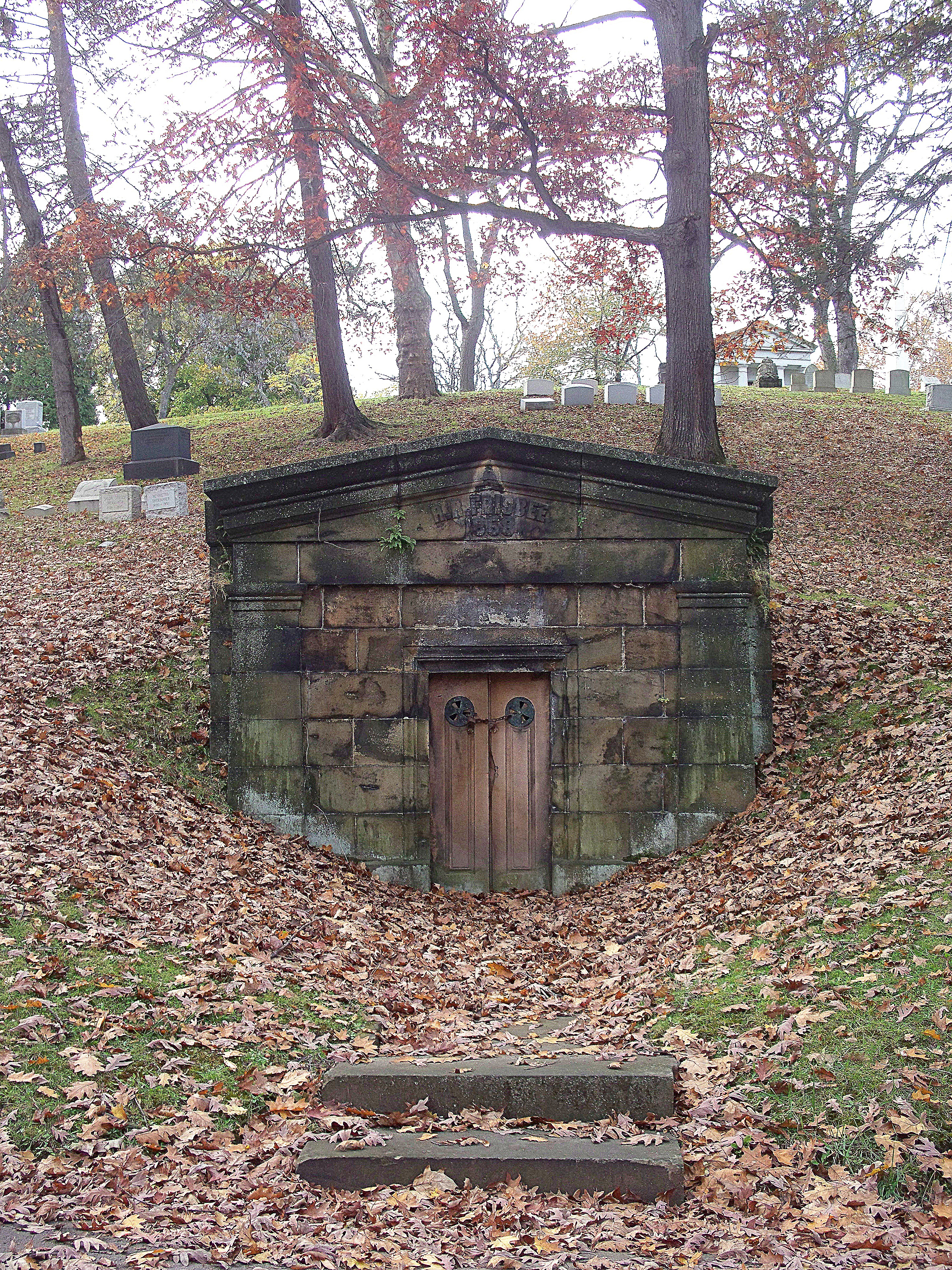
An antebellum burial vault, built in 1858 in a restrained classical style. It looks wonderfully ancient and mysterious when you happen on it back in this woodsy section of the cemetery.

A Doric mausoleum with rusticated stone: a very common sort of design, but very dignified, and much more picturesque when we add autumn leaves. The stained glass inside is a standard design from the catalogue.

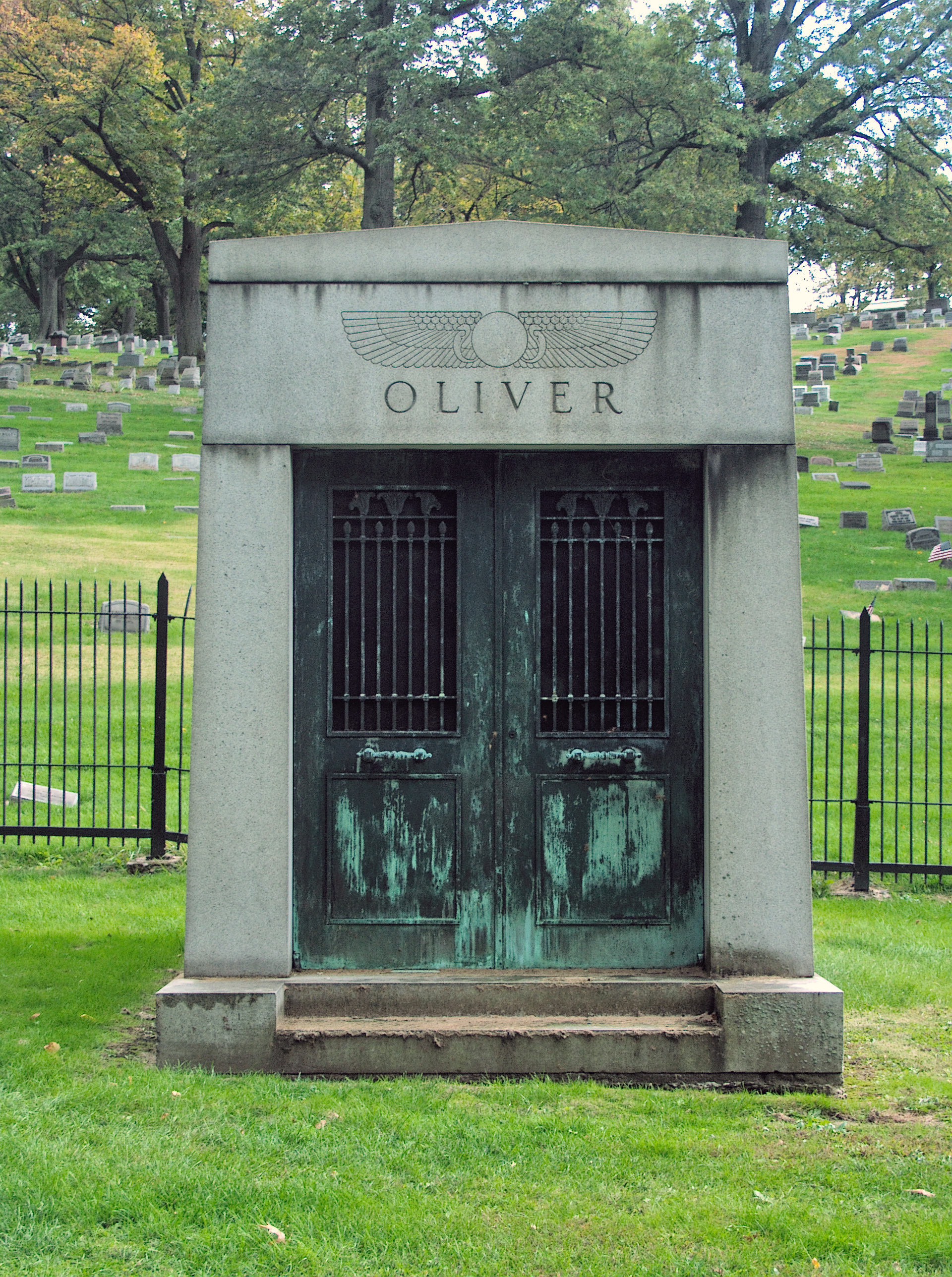
Here is the very last gasp of the Egyptian style. The mausoleum is thoroughly modern and simple, but still has the shape and winged sun disk to show that it is meant to be Egyptian.

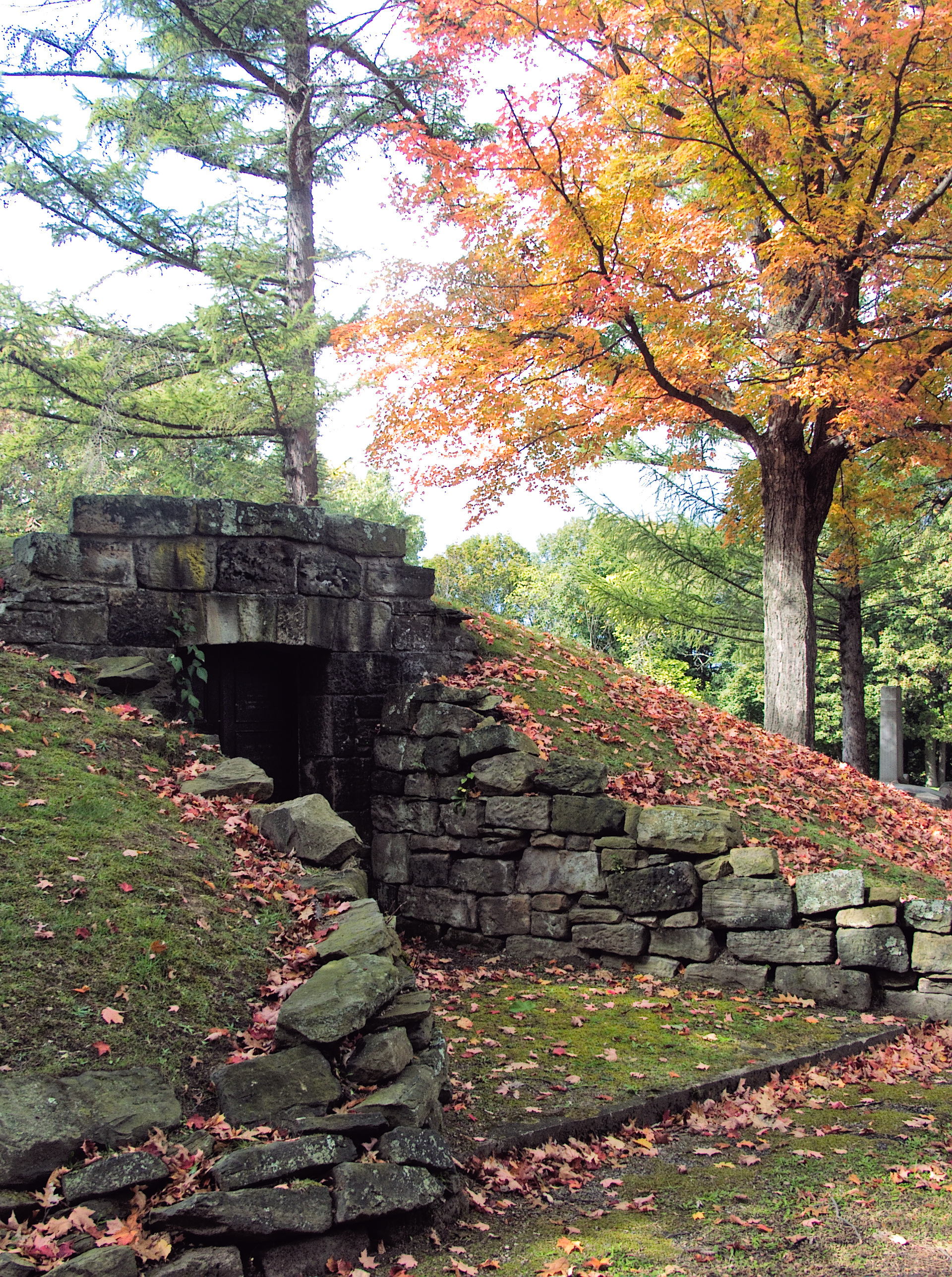
In-ground burial vaults like this had gone out of fashion in most of our cemeteries by the late nineteenth century, but there are two later ones in the Highwood Cemetery. This one, with its rustic stone, is indescribably picturesque and looks like a relic of some vanished ancient culture, but it probably dates from about 1880.

A typical Doric cube of the early twentieth century. The stained glass is rather good. Charles A. Brooks was interred here in 1906, and Anna Cloyde Woodward Brooks in 1931; according to cemetery records, they are the only residents.

A standard Egyptian-style mausoleum with lotus-flower bronze doors and a matching stained-glass window.

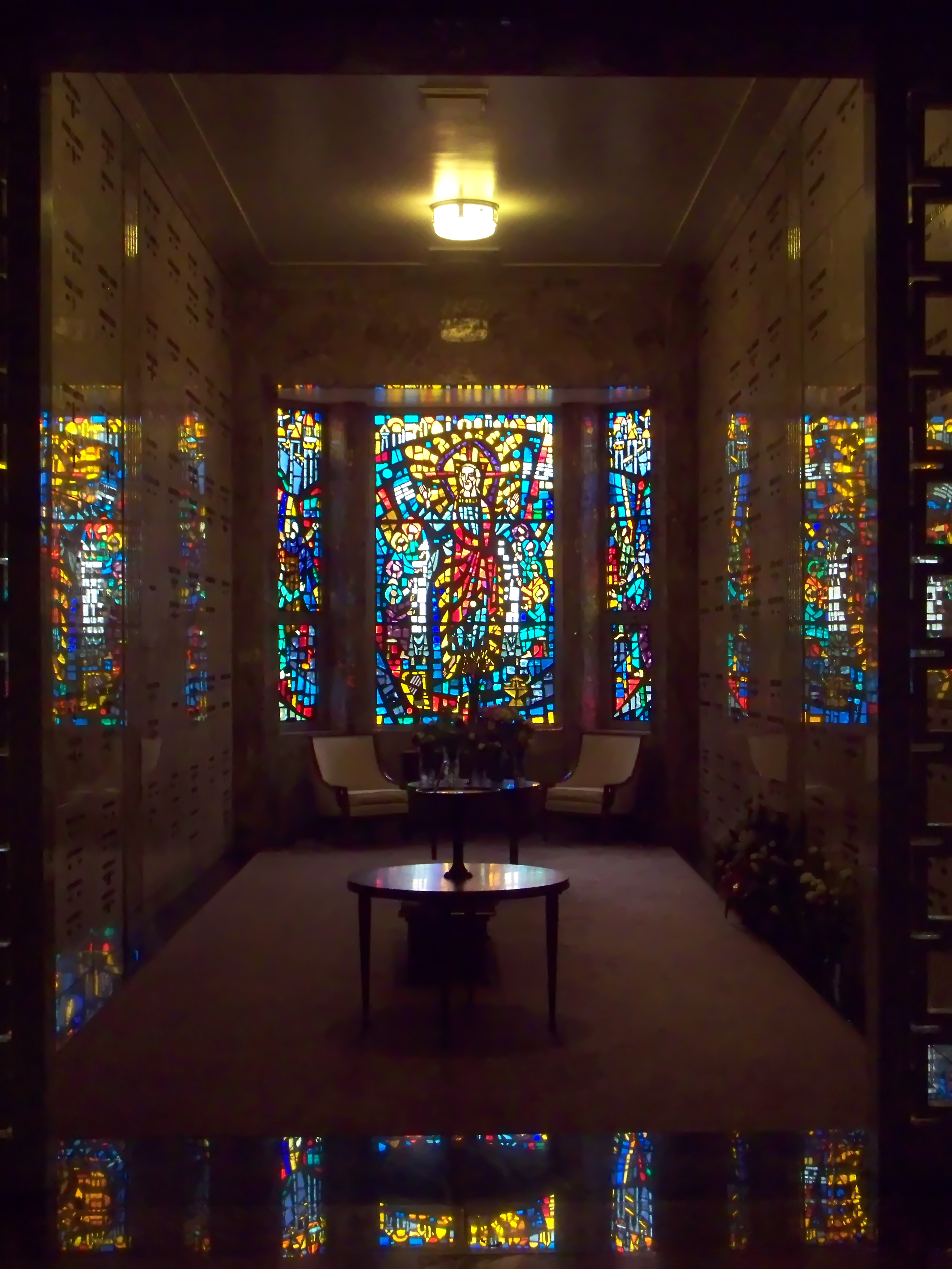
The indoor mausoleum in Allegheny Cemetery was built in 1960 (or 1961, according to the Web site). The architects were Harley and Ellington. It’s now called the “Temple of Memories,” and it’s worth a visit even if you don’t like cemeteries all that much. It’s filled with striking stained glass from the Hunt and Willet studios, and it has a considerable collection of paintings by academic painters of the late nineteenth century that were probably nearly worthless when they were donated, but are coming back into fashion again. But what charms Father Pitt most is that the place is a time machine through which one can enter the early 1960s. Even though it has been expanded since then, the whole mausoleum has an early-1960s atmosphere, complete with appropriate piped-in music. One wanders among the dead feeling more like one of them than like one of the living.

A very simple rustic design with a snatch of classical detailing. It is attractive and dignified, so Father Pitt hopes it will not be taken as insulting when he says that it looks a bit like a garden shed.

A simple Doric design whose severity is moderated by a Greek-key decoration.