Pittsburgh Cemeteries

The Art and Architecture of Death

A monument to a pastor of the Voegtly Church and his son, both killed in a railroad accident near Altoona in 1864. The polished-granite monument seems to be later than that date, and probably dates from after the time when the Voegtly Church moved its cemetery from the churchyard in Dutchtown to the top of Troy Hill.

A romantic (and diminutive, though the picture does not convey the small scale of it) tombstone for a little girl who died at not quite ten years old. The single rose and foliage are still well preserved. It is in or next to the Voegtly family plot, and the inscription is in German; but the name Adams is not very German at all. Perhaps this was a granddaughter of Mathias Voegtly; he might have had a daughter who married outside the Swiss-German community.

Father Pitt has not sorted out the whole history of the Voegtly Cemetery. The style of the tombstone is right for 1864, and it may have been moved from the original churchyard in Dutchtown when the cemetery on Troy Hill was established. Not every grave was moved; in fact, more than seven hundred were left to be discovered under a city parking lot. If this was moved, it suggests that the little girl came from a family with money (like the Voegtly family).

Father Pitt hopes the Wilder family (who are doubtless kind and indulgent people) will forgive him for saying that this is without a doubt the ugliest mausoleum in the greater Pittsburgh metropolitan area. It looks like a thing built by a contractor who had never built, or perhaps even seen, a mausoleum before, and thought of it as a sort of garage for coffins. But it is distinctive. There is nothing else in the South Side Cemetery that looks remotely like it; and, since it occupies a prominent plot at the intersection of two drives in the cemetery, there is no missing it.

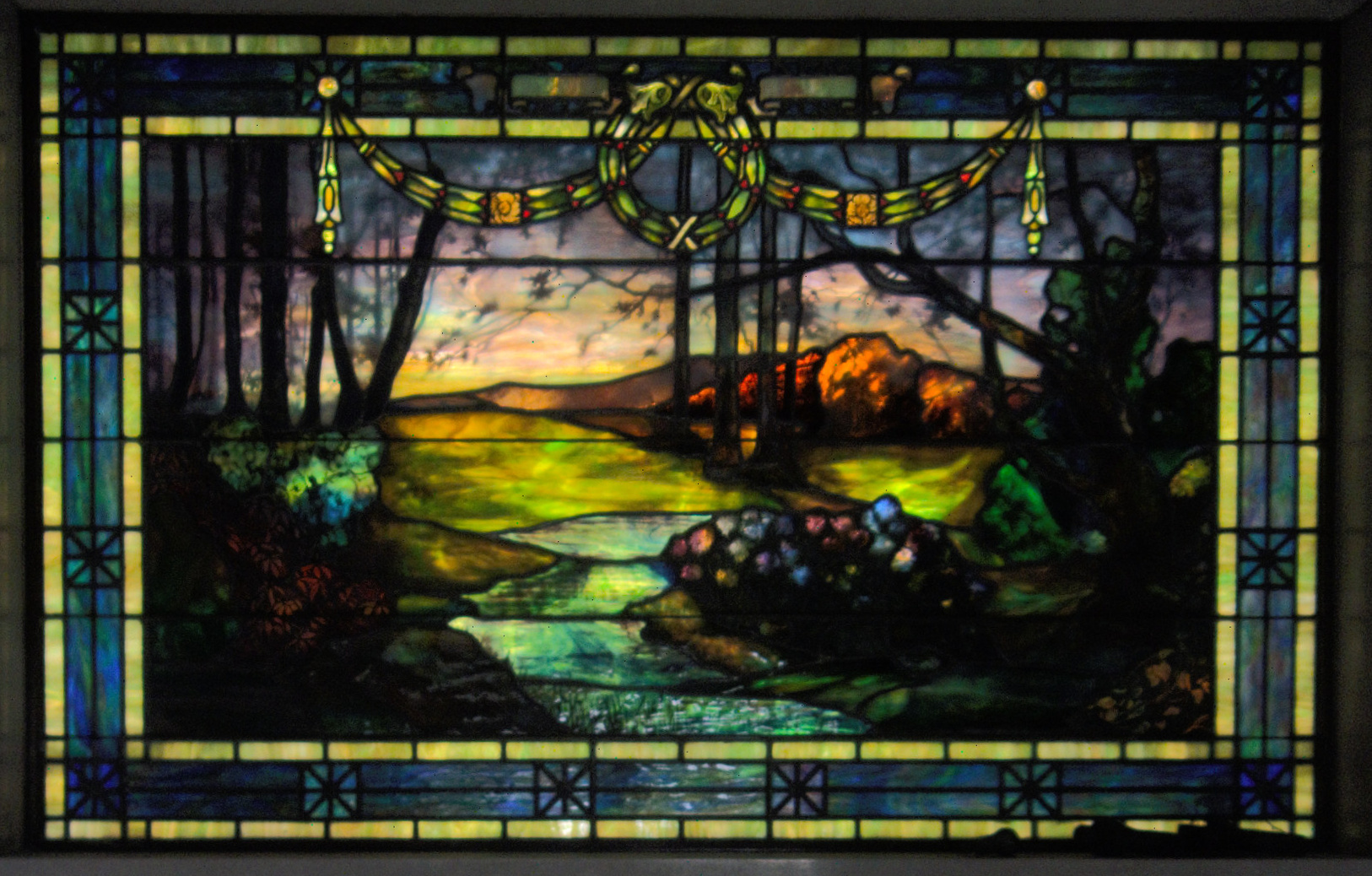
A simple Doric mausoleum with extra space for a large family. The stained glass inside is very good, except that (in Father Pitt’s opinion) the wreath-and-swag decoration rather spoils the effect of the naturalistic forest and stream.

Nothing is particularly outstanding about these tombstones, except that they are nearly two hundred years old and still quite legible.

IN
Memory of
ELIZABETH HERRIOTT
Consort of
GEORGE HERRIOTT
Who departed this life
August the 29th A.D. 1819
aged 46 years.

IN
Memory of
GEORGE HERRIOTT
Who departed this life
December the 2d A.D. 1826
aged 61 years.

John Park Hickman, volunteer soldier, died in Virginia just after Lee’s surrender ended the Civil War. We do not know whether he died of injuries sustained in battle, but the lack of any mention of a particular battle suggests to Father Pitt that he was one of the many victims of disease. His monument is not large but splendidly romantic in a fashionably 1860s way.

This mausoleum from the early 1920s is an interesting and unusual design: a little bit Egyptian in shape, but without Egyptian details. The gorgeous stained glass inside is full of nautical references, which must refer in some way to the William S. Flower who is recorded as the first burial here in 1924. Does anyone know their significance? A Dr. William S. Flower was a dentist here in the early twentieth century, but Father Pitt cannot guess what sailing ships, hourglasses, and classical dolphins have to do with dentistry.

A tombstone for a young mother and her child. Elizabeth died at two months in 1839. Two months later her mother died as well. Did she die of the same disease? Cholera was very popular in Pittsburgh in the 1830s, but there seems to have been a lull in the epidemics in 1839. Perhaps Nancy died of grief, as mothers often did in those days. (Today we would look for another diagnosis, but modern medical science agrees that psychological factors play a large role in the body’s ability to overcome serious ailments.) Grief also reached epidemic proportions in the nineteenth century, when childhood mortality was, by our standards, appalling.

_The composite picture above is more than 75 megapixels. Expect about 22 megabytes of data if you click on it._

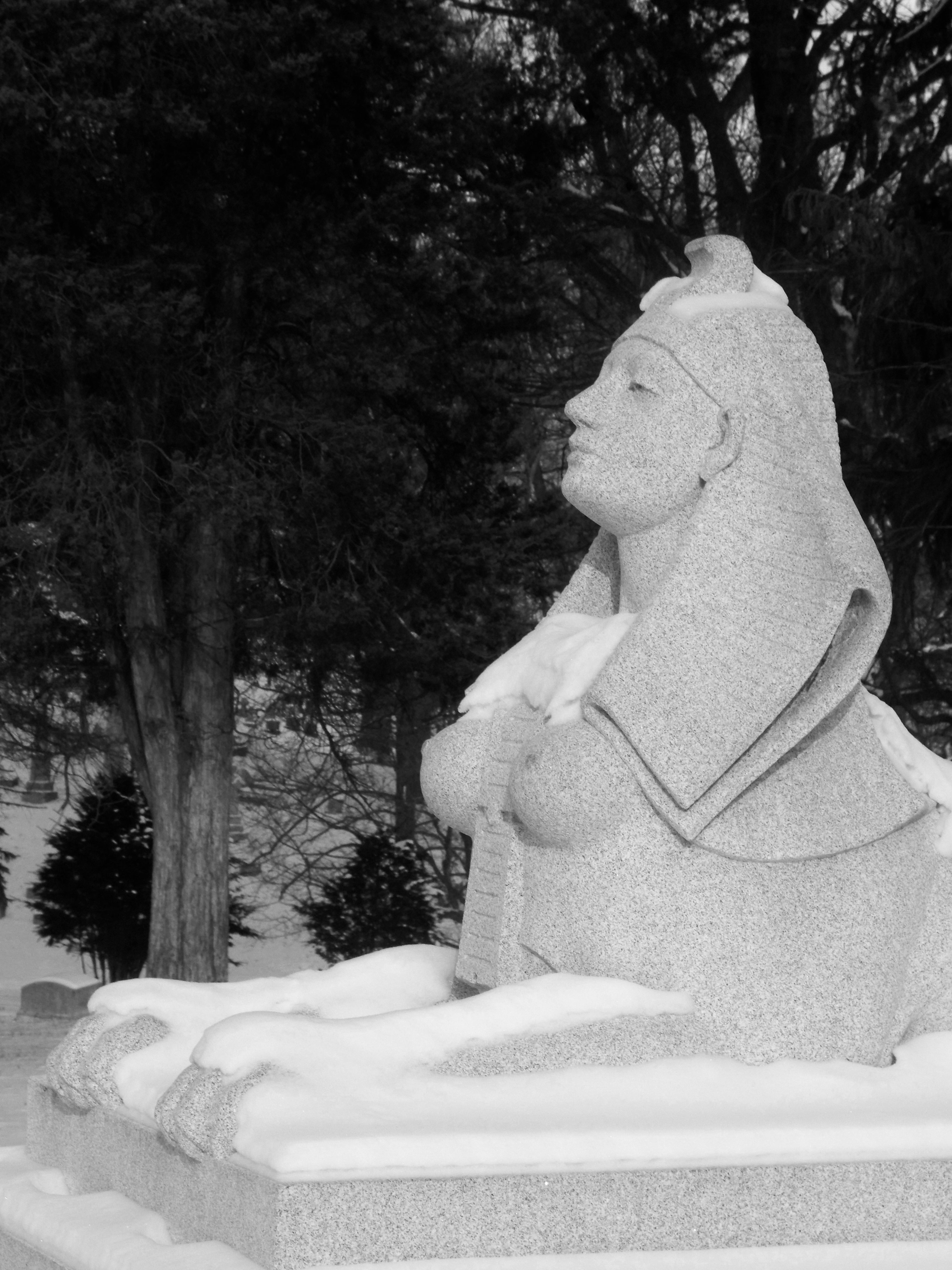
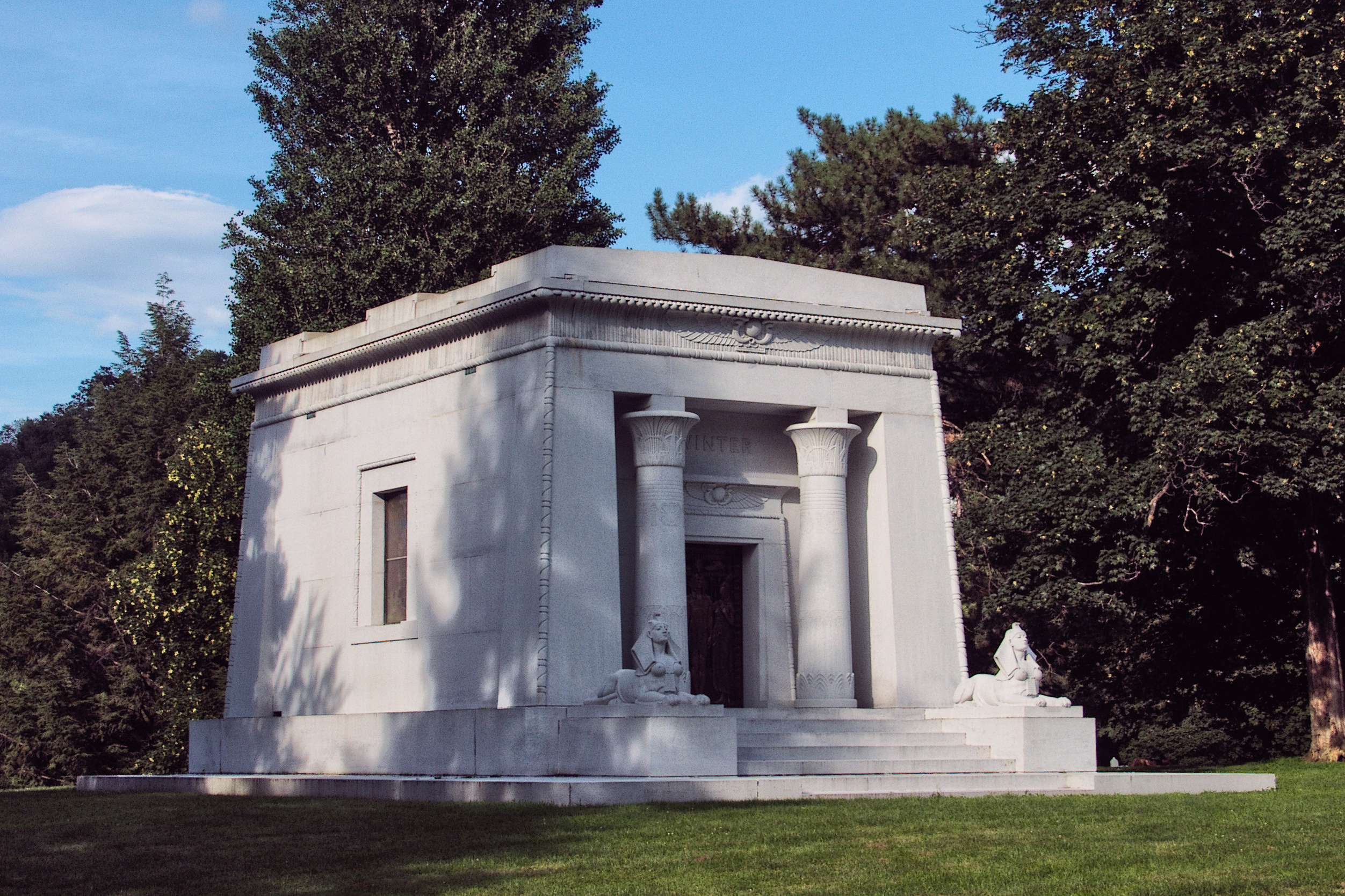
This is without a doubt the most spectacular Egyptian mausoleum in Pittsburgh. All the usual Egyptian elements are here, but the Winter mausoleum (1930)—whose colossal scale is hard to convey in a photograph—adds its own unique accessories. John Russell Pope, the famous beaux-arts architect, designed this mausoleum for banker Emil Winter—but “designed” is not really the right word here. The Woolworth mausoleum in Woodlawn, the Bronx, is nearly identical; Winter apparently saw it and told Pope “I want that,” and Pope gave it to him.

Mr. Winter’s amazing sphinxes bear an expression that old Pa Pitt can only describe as “snooty.”

2013-08-18-Allegheny-Cemetery-Winter-04The bronze door depicts Mr. Winter himself, large as life and in full Pharaonic regalia, about to set off for his journey into the afterlife. Even this is identical to the bronze door of the Woolworth mausoleum, except for the substitution of Mr. Winter’s face.

2013-08-18-Allegheny-Cemetery-Winter-01Inside is a stained-glass window that reminds Father Pitt of cheap illustrated Sunday-school handouts, showing Mr. Winter properly enthroned. (It was devilishly hard to get a picture of this window, because the front doors are actually backed by a mesh screen. This was the best old Pa Pitt could do.)

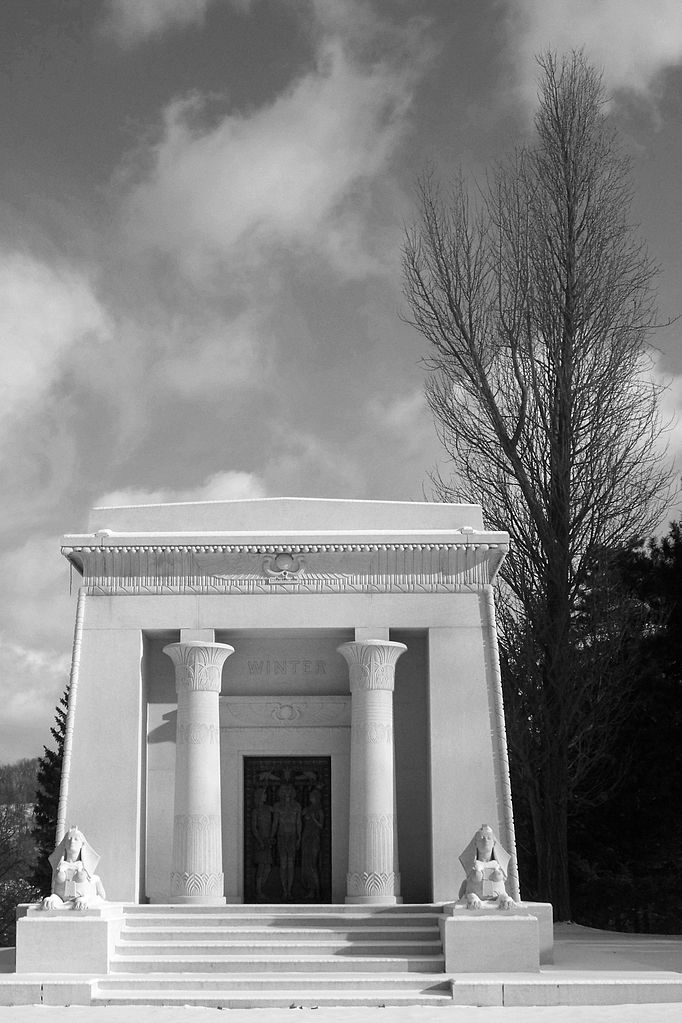
2013-08-18-Allegheny-Cemetery-Winter-03

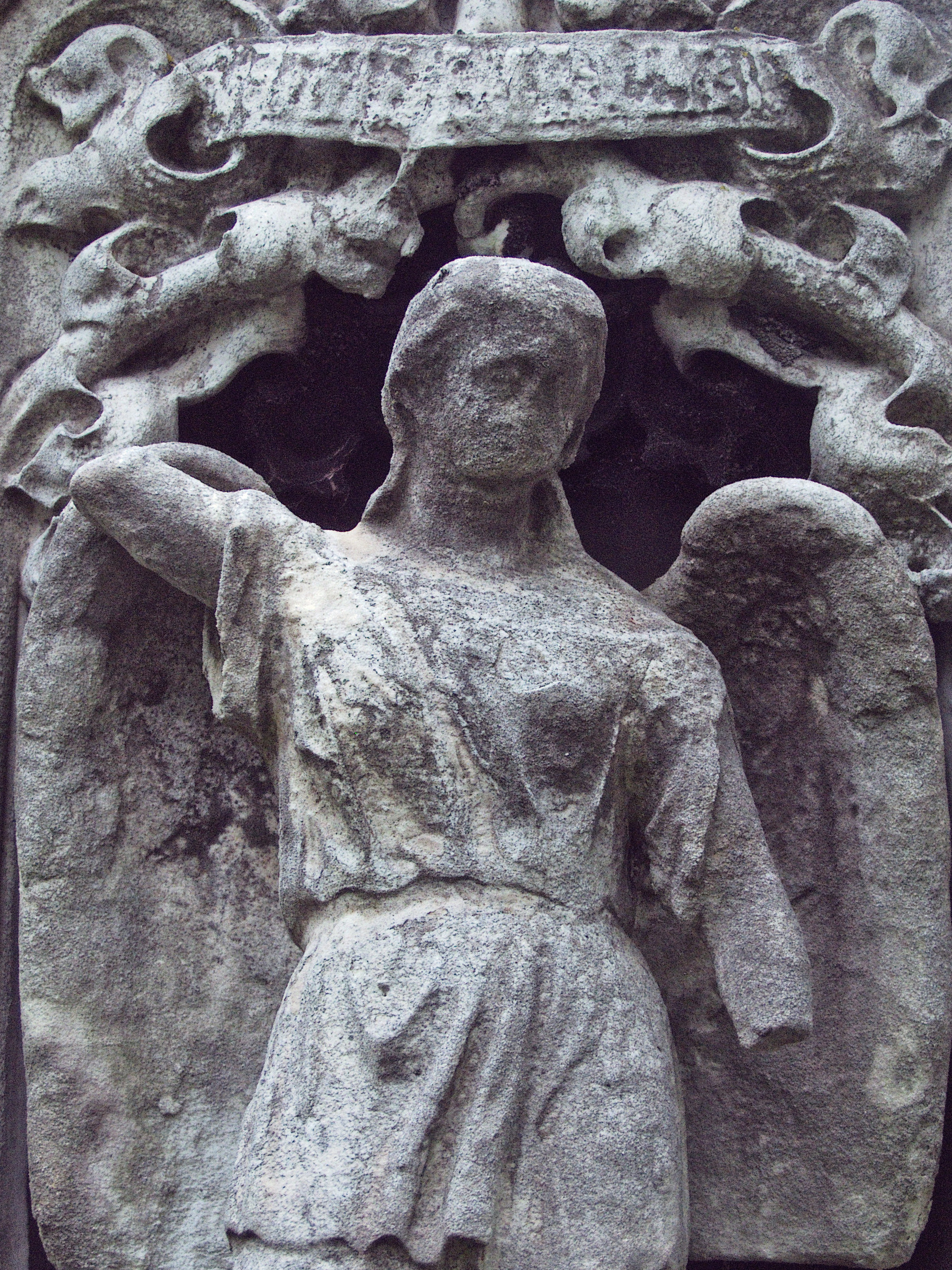
According to the cemetery’s Web site, this is probably the monument for Verlinda Stevens, who died in 1872. The marble is so badly eroded that we cannot read any of the inscriptions, but even—or perhaps especially—in this state it is quite picturesque.